Every now and then our bodies like to tell us, in no uncertain terms, to stop and take note. A common cold politely tells us to back off when we’re pushing too hard. More serious illness can arrive as a “canary down the mine shaft”, signalling the need to quit the toxic job or leave that relationship that’s run your spirit into a cul-de-sac. Some of us get the message too late. Some of us are lucky enough to get our wake-up call just in time.
Five years ago, I was keeping myself frantically busy editing Cosmopolitan magazine. I was running over 30 miles a week and had just competed in a 24-hour mountain bike race. Sleep? I only needed four or five hours a night, and I propped myself up on a rotating cycle of black coffee in the morning and red wine at night. I was burning my rechargeable, ever-ready candle at both ends in the most spectacular of fashions. And getting away with it.
Among whites, there was no association between race consciousness and blood pressure, but race consciousness was associated with poor ratings of adherence.
.
African Americans with a hypervigilant sense of being black may have an increased risk of hypertension, a cross-sectional analysis found.
Among 266 patients in urban clinics in Baltimore who were surveyed, being a race-conscious black patient was associated with significantly higher diastolic blood pressure (roughly 5 mmHg) and a tendency toward a higher systolic blood pressure (about 4 mmHg) than black patients who were not preoccupied with race.
There was no similar effect on race-conscious whites, reported Lisa A. Cooper, MD, MPH, director of the Johns Hopkins Center to Eliminate Cardiovascular Health Disparities in Baltimore, and colleagues in the American Journal of Hypertension.
The findings suggest that heightened race consciousness could at least in part account for the disproportionately high rate of hypertension in black Americans — the highest prevalence of any group in the U.S. and one of the highest rates in the world, researchers said.
Adding omega-3 fatty acids to your diet won’t cure rheumatoid arthritis, but it just might help relieve some of your worst symptoms, like joint pain and stiffness. Omega-3 fatty acids are called essential fatty acids because your body needs them but can’t make them. That means it’s up to you to make sure they’re part of your diet. Shortchange yourself, and you could experience memory loss, memory loss, and even depression.
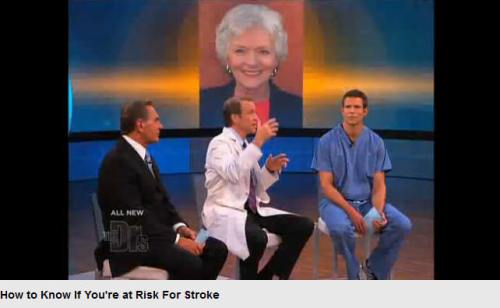
Under-detected “mini-strokes” cause brain damage, result in cognitive impairment, and dementia, says a new study.
Chances are if you’re a senior managing your health, you’ve already had a conversation with your doctor about stroke risk. While many patients know the warning signs of stroke — slurred speech, weakness on one side of the body, coordination problems, double vision, and headaches — health care providers often fail to educate patients about their risk for silent or “mini-strokes,” which can cause progressive, permanent damage and lead to dementia.
The way food is cooked may be one key to understanding aging and disease.
Chemicals called advanced glycation end-products (AGEs) are garnering more attention from scientists intent on finding ways to reverse the diabetes epidemic. AGEs occur in low amounts naturally in the body, but they also come from food.
The most popular methods of cooking today — grilling, baking, and frying — release more AGEs, and AGEs lead to more inflammation, disease, and aging. According to studies, reduce the amount of AGEs in your food can improve insulin resistance in type 2 diabetics in just a few months.
By wearing a specially designed suit, a doctor experiences firsthand the stiffness and discomfort of rheumatoid arthritis — and begins to understand his own father’s RA pain.
Film and Writing Festival for Comedy. Showcasing best of comedy short films at the FEEDBACK Film Festival. Plus, showcasing best of comedy novels, short stories, poems, screenplays (TV, short, feature) at the festival performed by professional actors.








 James' World 2