Home

Do AIs already process information in a way that gives rise to consciousness?

Leave a comment

Click the link below the picture

.

“Claude’s ears will be burning by the end of the week,” a fellow passenger tells me as I wait to pass through the airport security on Baltra Island, Ecuador. With my jet lag, it takes me a minute to realise that she is talking about Claude the chatbot, not another member of the group.

We are here in the Galapagos for an exclusive workshop organised by the International Center for Consciousness Studies. Some of the biggest names in philosophy and neuroscience meet in the lounge of a commercial yacht where, as it sails between islands, they thrash out the knotty problem of which entities – babies, octopuses and even chatbots – have an inner life.

Between treks and snorkelling, we attend empanada-fuelled discussions on this “distribution problem” and whether it can be solved by contrasting how information is processed in brains and machines. “It’s the defining topic of our era that we will have to grapple with practically and socially,” says philosopher Ned Block at New York University, who celebrated his 84th birthday on the yacht.

Just a month before we arrived, AI company Anthropic published a paper arguing that Claude had recently developed something akin to the human mind’s “global workspace”. According to one leading hypothesis, this is the seat of consciousness – where sights and sounds, thoughts and feelings pop into awareness. Its presence in Anthropic’s chatbot could therefore suggest a form of artificial consciousness. While it still seems highly unlikely that AIs have mental experiences like you or I, these emergent properties may allow us to understand what the differences between us are.

Exactly how we should interpret potential signs of consciousness in humans, animals or machines depends, in part, on a distinction Block outlined in the 1990s. An iguana may lazily walk into my path on the islands without me being aware of its presence, until I suddenly realise that I am about to step on its tail. Only then does this information pop into my mind so I can speak about it. Block defined this availability of information for report and reasoning as “access consciousness”. “Phenomenal consciousness”, on the other hand, describes the subjective experience itself: what it is like to be on the island and see the iguana’s mottled green scales or its sudden movements towards safety.

Many neuroscientists and philosophers believe that the global neuronal workspace theory (GNWT) is best placed to address access consciousness. According to workspace theory, the brain’s processing occurs in “modules” that tackle specific tasks. One module may process the ground in front of me, including the iguana, while another processes the face of the person I am speaking to, and another processes the words they utter.

We only become conscious of a piece of information when it is sent to the brain’s global workspace. Here it becomes integrated into our current mental model of the world and available for other areas of the brain to process. Noticing the lizard in my path, for instance, allows me to reflect and act on that information by taking its photo or pointing out its presence to the rest of the group. Importantly, the contents of the workspace are also available for our working memory, allowing us to keep them in mind long after an event has ended. “We can take [an event] that was extraordinarily brief, like a shooting star, and think about it for as long as needed,” says Stanislas Dehaene, a cognitive neuroscientist at the Collège de France in Paris.

Over the past 30 years, Dehaene and his colleagues have amassed considerable evidence for the existence of the global workspace as a long-range network of specialised neurons across the brain, including prefrontal areas associated with decision-making. In some experiments, the team flashed participants a target image, such as a number or word, followed by another picture. With the correct timings, the target appeared just at the threshold of conscious awareness – meaning sometimes the participants reported seeing it and sometimes they didn’t. In both cases, the researchers usually observed a flicker of activity in the brain region associated with vision. But when the participants were conscious of the target, there was a surge of later activity across a widespread network of neurons. Dehaene calls this process “ignition”.

What’s more, GNWT may explain the strange phenomenon of inattentional blindness, which leaves us unaware of events occurring right in front of our eyes. In a famous experiment, students were asked to count the number of times certain players passed a basketball in a video. Quite remarkably, many of the viewers completely missed a woman dressed as a gorilla walking across the scene. This seems inexplicable unless you recognise that there is enormous competition for different kinds of information to enter the global workspace. “Consciousness is a bottleneck,” Dehaene tells me on the deck of the yacht in between academic sessions.

All of which makes workspace theory highly appealing for tackling the distribution problem in animals. In our walks on the islands, conference attendees speculate about whether the iguanas, sea lions and blue-footed boobies we see are capable of thought and feeling. Unlike humans, you can’t ask these creatures to report their inner experiences. But if GNWT is correct, you might expect them to also have global workspaces.

In his talk in the lounge of the yacht, Dehaene describes experiments in which primates and crows were also flashed barely perceivable images. Like the humans, these animals revealed a late surge in widespread neural activity suggestive of global workspace whenever they responded to the image – by focusing their gaze, for instance. “The global workspace that we originally postulated for human consciousness seems to also exist and have similar properties in these animals,” he says. So why not machines too?

As my fellow passenger predicted at the very start of our trip, that possibility is the subject of much debate as we sail. This is largely because of the lengthy paper published in July by Wes Gurnee and his colleagues at Anthropic. The team claims that a global workspace has spontaneously appeared within Claude’s neural networks.

Most large language models (LLMs) like Claude weren’t programmed with workspace theory in mind. They operate statistically, using copious amounts of training data to work out the most probable word and punctuation sequences that would follow a user’s prompt. And the exact nature of their computations evolves with the data they receive, so new ways of processing information, perhaps even a global workspace, can emerge.

To discover whether this had occurred, Gurnee and his colleagues created a decoding tool that allowed them to read out the units of information that appear in each stage of Claude’s processing. From this, they identified a focused zone that contains a small list of potential words, some of which appear directly in its responses and some of which don’t.

Claude’s ‘covert thoughts’

The engineers named this set of representations the J-space. Like the brain’s hypothesised global workspace, the J-space seems to contain important information that must be broadcast to other processing areas for higher-level reasoning. When Claude was given a mental arithmetic calculation, for example, the engineers found the individual steps of the calculation in the J-space in much the same way that a human would work out the separate parts – something that hadn’t been observed in an LLM before.

Next, they tried tweaking the contents of the J-space to see if and how this disrupted Claude’s “thinking”. When the engineers asked Claude to read a Spanish text, they found that the name of the language appeared in its J-space. Changing this to “French” created some comical confusion in its subsequent answers. “Hello” was translated to bonjour rather than hola, and when asked to name a famous author, Claude answered “Victor Hugo”, the French Romantic poet. In the paper, Gurnee and his colleagues argue that this resembles the way the contents of our own global workspace affect how we infer and make decisions.

The engineers also found some evidence of covert “thoughts” – the equivalent of the things we think but don’t say because they are impolite. When the team fed Claude false search results, its J-space filled with words related to deception, such as “fraud” and “fake”, but these didn’t appear in its response.

Hiding “thoughts” is a rudimentary sign of self-monitoring in LLMs, says Dehaene. In GNWT, consciousness is thought to arise when an entity reflects on the contents of its global workspace in this way. Even more intriguing signs of self-monitoring emerged when the Anthropic team asked Claude to write out the sentence “The old painting hung crookedly on the wall” while not thinking about the Golden Gate Bridge. If you try this kind of thought suppression yourself, you will see how hard it is to keep your own thoughts free of the San Francisco landmark.

Surprisingly, words related to the bridge still appeared in Claude’s J-space even when they weren’t included in the output, and these were accompanied by words suggestive of failure. The J-space included the word “damn”, for instance, as if it were aware of its inability to suppress the thought. “That connects directly to a line of research in my lab where we looked at the consciousness of errors,” Dehaene tells me. “There is a sort of ignition when you realise that you’ve made a mistake.”

“The J-space emerges exactly for the reason that we think that consciousness emerged in evolution,” he says. “It’s an extremely useful architecture for selecting relevant information and holding it long enough that you can use it flexibly in your reasoning and reporting.”

As the yacht nears San Cristóbal Island, I discuss these findings over lunch with Susan Schneider, a philosopher at Florida Atlantic University. “What an amazing place to be conscious,” she says, pointing out of the window towards white, sandy beaches. LLMs have already spontaneously developed other human-like abilities, she says, such as the capacity to infer someone’s knowledge, intentions or beliefs. So the news of Claude’s apparent global workspace didn’t come as a surprise to Schneider, who believes this may be a common feature of many intelligent systems.

Exactly what this means for the existence of an inner life remains an open question, though.

Dehaene is careful not to make strong claims about Claude’s internal experience, and most of the attendees are sceptical that the chatbot has anything approaching our own thoughts or feelings. Still, David Chalmers, a philosopher at New York University, argues that the findings force us to take the possibility seriously. Even if the answer is no, this is important work that can help refine our understanding of these issues, he says.

Some of the doubts that Claude has any form of experience arise from the technicalities of the J-space itself. Chalmers, for instance, expresses scepticism that it bears strong enough similarities to our own global workspaces to draw robust conclusions. It isn’t clear that its content is “broadcast” to other parts of Claude’s system to the same extent that we see in

brains, for instance.

Phenomenal consciousness

And even if Claude did have a fully-fledged global workspace, we may need to confront the fundamental distinction between phenomenal and access consciousness that Block outlined in the 1990s.

In humans, signs of access consciousness are assumed to be accompanied by thoughts, feelings and perceptions, but it is far from obvious that the same would be true of a silicon system. Covert thinking and self-monitoring are loaded terms in the context of a chatbot, and these behaviours can be more simply be considered as patterns of information processing.

Perhaps Claude is just modelling real-life phenomena that are involved in conscious experience, including things like thought suppression, without replicating the actual experience, much like an environmental simulation is incomparable to the weather itself.

The brain receives many sensory inputs, after all, which it processes through many different levels of activity, from the intricate molecular exchanges at synapses right up to abstract information processing. There is still little consensus on which elements matter, and which don’t, for phenomenal experience – with hundreds of plausible theories under discussion.

In his session, for instance, Peter Godfrey-Smith, a philosopher at the University of Sydney, examines how electrical waves might synchronise different brain regions, binding experience into a unified whole. What would happen if you retained similar information architectures but removed the global electrical waves, which LLMs lack? “Would you get a different kind of consciousness, or something other than consciousness?” he asks.

Dehaene has little patience for the idea that AIs can only be conscious if they mimic our biology. “When it comes to machines, can’t we be satisfied with the computational level?” he responds to one of these objections. He compares it to the case of flight in machines versus birds. “If you want to build a plane, you’d better not use feathers.”

He admits, however, that examining Claude at rest raises more serious questions about the existence of an inner life – a doubt that Godfrey-Smith shares. Between prompts, the LLM is completely idle, whereas the human brain is constantly mulling things over. Could consciousness exist without that hum of activity and constant interaction with an environment? “I think that, in itself, is a reason to doubt that Claude has any experiences,” Godfrey-Smith tells me.

Will opinions change in the future as these models become more sophisticated? Dehaene says we could look for signs of learning abilities that require something to be held in mind over time. For example, trace conditioning – the capacity to associate two stimuli, such as a sound and a puff of air, even when they are separated in time – is thought to require a stable conscious representation in animals. Finding an analogue in LLMs might help bolster the case for machine consciousness.

Such tests cannot offer definitive evidence, however, which may make it difficult to ever reach a consensus. We have been arguing about ways to tell “zombie” agents from conscious minds for over half a century, after all. “We’re still waiting for the major breakthrough,” says Tim Bayne, a philosopher at Monash University in Melbourne. The rise of AI simply makes this question more urgent.

I ask him if it is frustrating to keep returning to the same questions, but he believes these discussions will ultimately help us formulate more sophisticated lines of inquiry. “You can spend a week on a boat and visit a lot of cool islands,” says Bayne. “At the end of the week, you’re back where you were dropped off – but you’re not the same person.” As a field, he says, “I think that’s where we’re at”.

.

https://www.newscientist.com/wp-content/uploads/2026/10/Is-AI-Conscious.gif?w=840Andy Carter

.

.

Click the link below for the complete article:

https://www.newscientist.com/article/2591107-do-ais-already-process-information-in-a-way-that-gives-rise-to-consciousness/

.

__________________________________________

20 Sweet-and-Savory Apple Recipes to Make Throughout Fall

Leave a comment

Click the link below the picture

.

Tis the season for cozy sweaters, foliage peeping, game-day tailgates, and—of course—apple picking. A trip to the orchards can leave you with bags full of all types of apples—Gala, Granny Smith, you name it. These apple recipes from the Good Housekeeping Test Kitchen offer delicious ways to use up your haul.

There’s more to apples than classic apple pie (though we have a recipe for that too!). These ideas prove apples are just as good in savory dishes as they are in crumbles and cobblers. Find inspiration for feel-good sides, fiber-packed breakfasts, effortless dinners, and fun treats—including a throwback cocktail.

With so many tasty ways to enjoy apples, it’s no wonder they’re a fall favorite.

.

Click the link below for all of the 20 recipes

pie spice roasted applesmike garten

.

.

Click the link below for the complete article:

https://www.goodhousekeeping.com/food-recipes/g74064901/apple-recipes/

.

__________________________________________

Trump Gives Putin a Hand in Russia’s Economic War With Ukraine

Leave a comment

Hmmmm … The trump administration is a Fascist Organization already!

Click the link below the picture

.

With the front lines largely frozen, Russia and Ukraine have turned the war into a contest of economic endurance. Kyiv has gone after Russia’s oil refineries. Moscow has hit Ukraine’s ports and heavy industries.

On Friday, President Trump sided with Russia in this all-important battle.

The American leader announced a deal to buy Russian diesel fuel and stepped up pressure on Ukraine to stop striking Russian refineries. The diesel agreement, if it goes ahead, could send some $4 billion of American money into the Russian economy, energy experts said. A halt to refinery strikes, if Ukraine accedes to one, could be much more valuable to the Kremlin.

Mr. Trump is enlisting Russian help in his effort to bring down sky-high diesel prices, caused mostly by the U.S.-Israeli war against Iran, before the midterm election early next month. Ukraine is expected to get nothing in exchange, even as the American president demands an end to Kyiv’s refinery attacks, its most potent tool for depriving the Russian war machine of income.

Moscow remains free to continue hitting Ukrainian ports, steel factories, warehouses, power plants and data centers, a campaign that is gradually pushing Ukraine’s economy toward a breaking point. Such attacks destroy nearly $10 billion in business assets each year, Ukraine’s economy minister has said.

President Volodymyr Zelensky of Ukraine has condemned Mr. Trump’s decision to buy Russian diesel, saying in a social media post on Friday that “Russia will ‘repay’ the diesel with further terror and perfidy.”

Mr. Trump, who lifted sanctions to allow Russia to sell the fuel to the United States, struck an economic deal with Mr. Putin even as Russian attacks have driven civilian casualties in Ukraine to what the United Nations called a “new horrifying level.”

More than 100 Ukrainian civilians were killed in the past week alone. Moscow is striking Ukraine with an ever growing arsenal of increasingly powerful and precise weapons, taking advantage of gaps in Ukrainian air defenses.

Mr. Zelensky said on Monday that Ukraine had refrained from attacks on Russian oil refineries overnight. But he has said that Ukraine will agree to an extended cease-fire only if Moscow stops attacking Ukrainian energy infrastructure. There are fears of a humanitarian crisis in Ukraine this winter if Russia succeeds in its goal of taking down the Ukrainian power and water systems.

The diesel deal is another sign of Mr. Trump’s willingness to tip the scales toward Russia, the aggressor in the conflict. This time, he is offering the Kremlin assistance in an economic battle that could help decide the fate of the war, with both armies largely bogged down at the front.

Ukraine’s campaign against Russian oil infrastructure began in 2024, with strikes on oil depots and refineries. The effort at first had little effect. But as Ukraine expanded its fleet of attack drones and learned how to target critical components that are hard to repair, the effects increased.

Ukrainian attacks on Russian refineries, combined with those on other businesses, have cost Russia about 1 percent of its gross domestic product, President Vladimir V. Putin acknowledged this month.

Reported gasoline output is down by 20 percent compared with 2025 levels, and diesel production is estimated to have fallen by nearly 30 percent, the International Energy Agency said in a report last month. The Ukrainian attacks prompted Russia to impose restrictions on diesel exports that Moscow now says it will lift to sell fuel to the United States.

The energy agency added that Russia’s oil tax revenue from January to August was nearly 17 percent below the level of the same period in 2025.

Should Kyiv be forced to halt its refinery strikes, Russia’s advantage in the two countries’ contest to starve the other of money will only grow.

Nowhere is that imbalance clearer than in the near closure of Ukraine’s ports.

For months, Russia has attacked commercial ships sailing in and out of the ports in the southern region of Odesa, aiming to discourage them from calling there. The ports are a lifeline for Ukraine’s economy, accounting for 60 percent of the country’s total export volume. They are used to export grain from the country’s fertile farmland, a key source of revenue.

Because of the Russian attacks, traffic through the three Odesa ports was down nearly 95 percent in August and September, compared with the same period last year, according to port data obtained by The New York Times. In September, only 12 ships made it out of the ports, compared to 266 in the same month last year.

Ukraine has tried to redirect some of the traffic to its ports on the Danube River, which connects the country to Romania. Ships can travel down the river through Romania and back into the Black Sea, sailing off the coast of NATO countries toward Turkey. But the Danube ports can handle only about half of the cargo that normally moves through the Odesa ports.

And the Danube route is now under threat, too. Last week, drones struck three ships off the coasts of Romania and Bulgaria, sinking two and killing several crew members. All three vessels had carried Ukrainian grain in the past, according to Romanian authorities and port data.

Ukraine has accused Russia of carrying out the attacks, though Romania and Bulgaria have steered clear of assigning blame. Russia did not comment on the attacks.

The halt to Ukraine’s seaborne exports could have catastrophic consequences for the country’s economy, with effects across many sectors. Ukraine’s agriculture minister said this month that farmers were unable to export about 30 million tons of agricultural products, worth about $30 billion.

Russia has also suffered from Ukrainian strikes on its Black Sea ports, which have constrained its agricultural exports. But economists say the impact is not comparable because Russia has more export routes than Ukraine, including through the Baltic and Caspian Seas, which Ukrainian weapons cannot reach as easily.

In a sign of that imbalance, Russia became the world’s largest exporter of sunflower oil in the 2025-26 marketing year, overtaking Ukraine for the first time in two decades, according to estimates from the U.S. Department of Agriculture.

.

https://static01.nyt.com/images/2026/10/12/multimedia/12int-ukraine-economy-01-tfgm/12int-ukraine-economy-01-tfgm-jumbo.jpg?quality=75&auto=avifSmoke rising from fires at an oil refinery after what the authorities said was a Ukrainian drone strike in Moscow last month. Credit…Reuters

.

.

Click the link below for the complete article:

https://www.nytimes.com/2026/10/12/world/europe/russia-diesel-trump.html

.

__________________________________________

Isaiah 59:14, Jeremiah 5:21

24 Comments


.

.

“It is not 

Necessary for a presidential candidate to be able to read or even write even a congenital idiot can run for the presidency of the United States of America and serve if you were elected “

Edgar Rice Burroughs 


Proverbs 27:22
New Living Translation
22 You cannot separate fools from their foolishness,
    even though you grind them like grain with mortar and pestle.

.

EVIL PEOPLE

They had been long accustomed to do evil. They were taught to do evil; they had been educated and brought up in sin; they had served an apprenticeship to it, and had all their days made a trade of it. It was so much their constant practice that it had become a second nature to them. – Matthew Henry

“When a clown moves into a palace, he doesn’t become a king, the palace instead becomes a circus. — Turkish proverb,”


Hmmmmm…History is repeating itself yet again!


Isaiah 59:14

New Living Translation

14 Our courts oppose the righteous,
and justice is nowhere to be found.
Truth stumbles in the streets,
and honesty has been outlawed.


Jeremiah 5:21

New Living Translation

21 Listen, you foolish and senseless people,
with eyes that do not see
and ears that do not hear.

.

__________________________________________

Isaiah 59:9-15

11 Comments

.

This sounds just like today’s World although it was written about Israel in Babylonian captivity.

History repeats itself

Isaiah 59:9-15

New Living Translation

9 

So there is no justice among us,
and we know nothing about right living.
We look for light but find only darkness.
We look for bright skies but walk in gloom.
10 We grope like the blind along a wall,
feeling our way like people without eyes.
Even at brightest noontime,
we stumble as though it were dark.
Among the living,
we are like the dead.
11 We growl like hungry bears;
we moan like mournful doves.
We look for justice, but it never comes.
We look for rescue, but it is far away from us.
12 For our sins are piled up before God
and testify against us.
Yes, we know what sinners we are.
13 We know we have rebelled and have denied the Lord.
We have turned our backs on our God.
We know how unfair and oppressive we have been,
carefully planning our deceitful lies.
14 Our courts oppose the righteous,
and justice is nowhere to be found.
Truth stumbles in the streets,
and honesty has been outlawed.
15 Yes, truth is gone,
and anyone who renounces evil is attacked.

The Lord looked and was displeased
    to find there was no justice.

.

__________________________________________

Words From a Follower of Christ

8 Comments

Click the link below the picture

.

You might find these videos enlightening!

.

A. R. Bernard: one of many

.

.

Click the link below for the videos:

https://www.youtube.com

.

__________________________________________

This beer-making waste may offer a new stream for cleaner water

Leave a comment

Click the link below the picture

.

Scientists still haven’t cracked how to turn water into wine—but they might have figured out how to turn beer into clean water. From the literal ashes of breweries’ by-products, researchers made a charcoal-like substance that clings to bacteria, and they are using it to test a new way of filtering water.

In a recent study, scientists heated up a common waste product from beer making called spent malt rootlets, which are little sprouts that grow from barley during the malting process, to produce biochar, a porous material created from burned organic matter. They found that when they mixed this substance with sand and sent water through it, the biochar was able to remove around five times as much Escherichia coli bacteria as a filtration system that used only sand.

Sending water through sand filtered bacteria like a colander: by physically stopping microbes from moving through. But when the team used a sand mix that was 10 percent biochar, the biochar actively glommed on to slow microbes’ passage.

Groundwater is constantly moving through soil. There it can become contaminated with agricultural waste or fecal matter—potentially infecting any humans who drink it. Adding biochar to certain soils could offer a public health solution and “a sustainable approach for water remediation and the protection of groundwater,” says Ioannis Manariotis, senior author on the study and an environmental engineer at the University of Patras in Greece.

Manariotis and his team have also tested whether waste from olive oil and coffee production can have similar water-purifying effects. Now that the researchers have found the beer by-product can filter out bacteria in laboratory conditions, he says, they plan to test its efficacy under more unpredictable real-life conditions. The results were published in the journal Biochar.

Using brewery waste for water filtration in this way is a “proof of concept,” says Alcina Johnson Sudagar, an independent chemistry researcher who studies other beer-making by-products and was not involved in the study. But the repurposing of by-products from this industry for other applications is already common, she says. Leftover brewery grain is frequently used to make animal feed, and other research suggests beer-making by-products can be used for everything from sunscreen to electricity. The brewing process can have up to 11 steps, and each step produces organic waste materials with different chemical makeups—potentially ideal for different uses.

Sudagar says she hopes Manariotis and his team continue to study biochar. Her most pressing question is whether the material can be used more than once for filtration. If it can trap bacteria only once, it quickly becomes waste again, negating its value as a consistent filtration system or sustainable brewery by-product.

As the global beer industry grows, these new and innovative ways of using the by-products are crucial to sustainability, Sudagar adds. “It’s important to continue because the waste produced will keep increasing, and you would need different applications,” she says. “You cannot just send it to one place and say that we are done with it.”

.

https://static.scientificamerican.com/dam/asset/3df6c7e0-d47c-40ec-99d7-e8cc9ce9ebb4/saw1126Adva07.jpg?m=1790615788.531&w=900

Beer moves down a brewery conveyor belt. industryview/Getty Images

.

.

Click the link below for the complete article:

https://www.scientificamerican.com/article/this-beer-making-waste-may-offer-a-new-stream-for-cleaner-water/

.

__________________________________________

Four dead as Isaias weakens to post-tropical cyclone after striking Florida panhandle

Leave a comment

Click the link below the picture

.

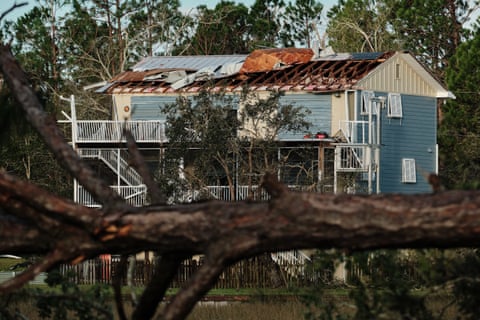
At least four people were reported dead on Saturday amid Isaias after it made landfall late on Friday on Florida’s panhandle as a category 2 hurricane, according to authorities.

The storm also took down trees, knocked out electricity for hundreds of thousands and flooded highways – but as Saturday evening approached, the region was reopening.

Despite warnings of storm surges ahead of the storm, several major routes along the coast were open by daybreak on Saturday and free of downed trees and power lines typically seen after major hurricanes.

Two of the deaths reported during Isaias occurred in Escambia county, Florida, and two others were reported in Alabama, as the storm moved inland, local officials said. Of those deaths, one each occurred in Escambia and Birmingham, Alabama, when trees fell on homes.

Another person whose death was linked to Isaias was found in a closed garage with a running generator in Escambia county. Four members of that person’s family have been transported to the hospital with carbon monoxide poisoning, the Escambia sheriff’s office said.

“Don’t run any generators inside your home, it can be very, very hazardous,” Florida governor Ron DeSantis said in a press conference.

In Alabama, governor Kay Ivey said Isaias – predicted to dissipate on Sunday – “cannot clear fast enough”.

Meanwhile, though it had weakened on Saturday to a post-tropical cyclone as it passed through central Alabama, Isaias still posed flooding and tornado threats as it moved inland, forecasters and officials warned.

Hurricane-force winds in the Florida panhandle blew the roof off a Pensacola hotel, and the city’s mayor said the airport “took some damage”. The storm flattened a boathouse in Destin and ripped away part of the facade of a high-rise in Panama City Beach.

A worker in a condominium parking lot swept piles of the building’s insulation while others put back beach chairs that had been tossed about.

“Remember, there can still be flooding from rising rivers,” Jared W Perdue, the secretary of Florida’s state transportation department, said at a news conference. “I’m just going to remind all of you – please, if there’s standing water or flowing water on top of a road, please do not drive through it.

“It does not have to be that deep, and it can wash away your car, it can wash away a human, it can become very dangerous very quickly.”

Nearly 550,000 customers were still without power across Florida, Alabama and Georgia on Saturday afternoon as those in the path of the storm began the cleanup process, according to PowerOutage.us. Though still high, the number of outages was down from more than 900,000 earlier on Saturday.

Storm surge and tropical storm warnings associated with Isaias by then had been discontinued, the National Hurricane Center (NHC) warned there would still likely be “considerable impacts” associated with Isaias across much of southern Alabama, Florida’s panhandle and south-western Georgia.

“Flash, urban and river flooding is possible across the region,” the NHC said in a Saturday-morning advisory, adding that there was a considerable potential for flash flooding and landslides across the southern Appalachians. “A risk for tornadoes will persist … through [Saturday] afternoon across parts of the eastern Florida panhandle, Georgia and the Carolinas.”

Isaias through Sunday is expected to produce rainfall amounts of 4-8in across southern Alabama, Florida’s panhandle and Big Bend regions, and south-west Georgia. Localized totals up to 15in are possible, particularly within rain bands across the Florida panhandle and Big Bend.

Across much of the remainder of the south-east US, rainfall amounts of 2-5in are expected, and localized higher amounts up to 10in are possible, especially across the southern Appalachians and coastal Carolinas.

The hurricane’s maximum sustained winds were 105mph (169km/h). That was intense enough to sound like “a train whistle”, Tim Mowry told the Associated Press after enduring the storm as his home in Pensacola, Florida.

Mowry described losing power on Friday afternoon but said could rely on a generator. He said his son tried to drive to his home after his place about 15 minutes away lost power but had to turn around because downed trees and power lines blocked the road.

All things considered, Mowry said he was “really fortunate” with respect to how he fared during Isaias.

Along Alabama’s Gulf coast, authorities in Mobile reported numerous downed trees and power lines.

Maranie Adams, who rode out the storm with her family and their chickens in Gulf Shores, Alabama, said the winds rocked their home, but it was nothing like Hurricane Sally, which left water under their elevated house.

“I feel very much more relieved today,” she said.

Donald Trump has allowed the Federal Emergency Management Agency (Fema) to provide resources to Georgia to help grapple with the ongoing storm, including possible tornadoes, the agency said on Saturday.

Several roads have already been blocked by fallen trees around Atlanta, local outlets have reported.

Trump previously approved emergency declarations for Florida and Alabama ahead of the landfall of Hurricane Isaias.

While the stronger El Niño seemed to limit the number of hurricanes in the Atlantic for the year so far, Isaias forming in October with maximum sustained winds of 105mph marked a stark contrast from historical trends.

The National Oceanic and Atmospheric Administration (Noaa) predicted a quiet year in terms of hurricanes at the beginning of a season that officially begins annually on 1 June. Noaa anticipated between three and six hurricanes, well below the average of seven. An August forecast from Noaa cut the expected number to between two and six.

Isais is one of the two latest-forming Atlantic hurricanes on record, tying a record set on 8 October 1905. Otherwise, the second-latest date for the first Atlantic hurricane was 11 September – in 2002 and 2013.

None of the eight previous named storms of the 2026 Atlantic season intensified above tropical storm status.

.

A house with its roof torn off, a tree in the foregroundA home damaged by Hurricane Isaias in Milton, Florida, on 10 October 2026. Photograph: Dan Anderson/EPA

.

.

Click the link below for the complete article:

https://www.theguardian.com/world/2026/oct/10/isaias-weakens-to-post-tropical-cyclone

.

__________________________________________

The Authoritarian Future Is Already Here

Leave a comment

Click the link below the picture

.

Plainclothes thugs frog-marching a radio commentator from the microphone midbroadcast. An opposition activist dying after reportedly being barricaded in his house, which was then set on fire. Security forces raiding a powerful independent media company, cutting electricity and imposing a monthlong closure.

A reign of terror grips Uganda. Specifically, the reign of Gen. Muhoozi Kainerugaba, the country’s belligerent and erratic military chief, who also happens to be the only son of Yoweri Museveni, the octogenarian autocrat who’s ruled Uganda for four decades. Critics of General Kainerugaba, who recently announced his intention to become Uganda’s next president, risk finding themselves in the “basement,” his nickname for the torture chambers he brags about on social media.

Ugandans have discovered that, increasingly, there is nowhere to hide. Civic life here is defined by thickening webs of state surveillance built with foreign help. Chinese cameras and facial-recognition software monitor the streets; Russian radio frequency chips implanted in license plates have been tracking cars in real time; Israeli software plunders the private contents of phones. Technology has created an intrusive eye that never blinks — a stealthy weapon for dictators keen to stifle speech and thought.

Welcome to our menacing new world, a place where authoritarians — established and aspiring alike — enjoy tolerance from the international community; wield cheaper, quieter and far more powerful surveillance tools at home; and reach across borders to help one another hang on to power.

Africa has become a testing ground for all of this. Authoritarianism is spreading on the continent, where Freedom House’s 2026 report found that only 10 percent of people now live in countries classified as “free,” a dismal statistic outdone only by the Middle East.

China has quietly fueled this political hardening. With unparalleled trade reach, a voracious appetite for natural resources and a compelling authoritarian model, Beijing has deepened its economic and political presence across Africa. Along the way, it has exported many of the technologies that the Communist Party uses for political and social control at home. African governments have spent at least $2 billion on the Chinese artificial-intelligence-powered surveillance systems that hound dissidents from Mozambique to Zimbabwe to the Republic of Congo.

China is not the only one. Israeli spyware such as the notorious Pegasus piracy software, which can use a phone to spy on its owner, has been snapped up by rulers around the world. And companies from the United States, Canada, Britain, France, Germany and other European states have exported surveillance technologies to Africa and other regions. Such tools have sometimes been used to target opposition figures, journalists and activists.

I visited Uganda recently to explore the aftermath of President Trump’s abrupt retreat from human rights, clean government and public diplomacy. I was told, over and over, that American silence during this clampdown has made it easier for other Western countries to remain similarly quiet and has radically emboldened an increasingly ruthless Ugandan regime.

This is not to overstate past U.S. altruism. America has always chased its interests overseas — sometimes violently, often cynically, selectively calling out the abuses of disfavored regimes while ignoring repression carried out by strategic allies. But it’s also true that America stood up for dissidents and human rights defenders when it was not inconvenient and sometimes when it was. It pressured despotic governments, criticized rigged elections and imposed sanctions on officials.

Now, suddenly, Beijing’s rules prevail: Make money, extract resources, turn economic ties into leverage. Whatever you do, respect local power; don’t criticize other governments for tyranny or abuse. Mr. Trump plays by those rules, too — “trade, not aid,” his administration pithily calls it.

“I really believe, if we look at the next 20 years, our politics will be influenced by the Chinese very, very much,” said Job Kiija.

I met Mr. Kiija in Kampala, the Ugandan capital, at a coffee shop wedged over a gas station on a ramshackle street fringed with palms and groaning with traffic. He runs Innovations for Democratic Engagement and Action, a civil society group that now works in the legal shadows since it was shuttered and defunded by government crackdowns.

He showed me threatening texts he’d been receiving on his phone (“U said some not nice things … U mayb in trouble soon”). He fretted about whether his group should publicly release an extensive report about the much-criticized elections this year that — yet again — kept Mr. Museveni in power.

To depend upon international law or support from friendly Western diplomats, Mr. Kiija said, is “no longer sustainable.”

“You live knowing you’re in danger,” he said. “But if you don’t do something about it, nobody will.”

It’s a mask-off moment in Uganda. For people caught in the cross hairs, these are days of dread.

Kakwenza Rukirabashaija has read the classified documents that list, in black and white, the arms of state power and surveillance tech that attacked him.

Mr. Rukirabashaija is a Ugandan lawyer and novelist. His first book, “The Greedy Barbarian,” is the sprawling, satirical story of a president who becomes a dictator, spiraling deep into greed and corruption until he is finally ousted by popular revolt.

.

Marcel Top

.

.

Click the link below for the complete article:

https://www.nytimes.com/2026/10/08/opinion/surveillance-autocrats-uganda.html

.

__________________________________________

Nearly 1 in 10 young adults could have fatty, narrow arteries

2 Comments

Click the link below the picture

.

Nearly 1 in 10 younger adults have plaque in their arteries, according to a study of almost 17,000 people. Known as atherosclerosis, the build-up of fatty plaque can cause narrowing that reduces blood flow, leading to heart attacks and strokes. Atherosclerosis is more common in people aged over 50, so younger individuals may be assumed to be at low risk.

“The most important message is that atherosclerosis is already present in a meaningful fraction of people in their 20s and 30s,” says Olli Raitakari at the University of Turku in Finland, who wasn’t involved in the study. “Atherosclerosis is a lifelong process, not a disease of old age.”

Previous studies have already suggested that atherosclerosis can occur surprisingly early. In 2025, Raitakari and his team found plaque in the carotid arteries – which supply blood to the head, face and neck – of about 5 per cent of Finnish adults aged under 30. But there hadn’t been large-scale investigations spanning multiple adult age categories that examined several artery locations.To fill this gap, Borja Ibáñez at the Spanish National Centre for Cardiovascular Research in Madrid and his colleagues recruited almost 17,000 adults, aged 18 to 70, in Denmark and Spain. They divided the participants, who had no known atherosclerotic cardiovascular disease, into five age groups, starting at 18 to 29. The study was made up of around the same number of men and women.

The researchers looked for plaque using CT angiography, which creates detailed 3D images of blood vessels, for arteries supplying the heart. They also used ultrasound for arteries in the neck and legs. Overall, they found “silent” atherosclerosis in 57 per cent of the participants, including 63 per cent of men and 51 per cent of women. This is defined as plaque that isn’t causing any symptoms, but may lead to cardiovascular issues down the line.

In the youngest group, 9 per cent of the men and 7 per cent of the women had some degree of atherosclerosis.

Among those in their 30s, 35 per cent of the men and 21 per cent of the women had atherosclerosis. The numbers continued to rise with each decade, with women beginning to catch up with men around the age of menopause.

Atherosclerosis was generally more common among the participants with known risk factors, such as higher LDL cholesterol and blood pressure or a family history of the condition. But these factors didn’t reliably predict the presence of plaque, particularly among the younger adults.

The findings suggest that measures to detect plaque could identify people who seem to be at low risk of atherosclerosis, but might benefit from earlier preventive measures, such as medication or dietary changes.

But the presence of plaque doesn’t necessarily predict a future heart attack or stroke, says Raitakari, and there is no evidence that screening people without known health problems would prevent such events. The researchers also state that it is unclear if the results apply outside of Denmark and Spain.

.

https://www.newscientist.com/wp-content/uploads/2026/10/SEI_315872431.jpg?w=840

Fatty plaques narrow arteries, restricting blood flow KATERYNA KON/SCIENCE PHOTO LIBRARY

.

.

Click the link below for the complete article:

https://www.newscientist.com/article/2592977-nearly-1-in-10-young-adults-could-have-fatty-narrow-arteries/

.

__________________________________________

Older Entries

Moara de Vânt

Să facem glume, nu război

🇲🇲Dear all peace-loving people around the world🇲🇲

In the world, human beings are facing various problems. People who are full of greed, anger, and ignorance are seen to be fighting with each other in words and deeds. As the fighting continues, various problems such as civil wars, wars of aggression, and wars of aggression are occurring. As world peace is being destroyed, humans are facing unbearable problems. Innocent children and women are not getting the rights they deserve and deserve. I can't think of one thing every time. What is it? The United Nations. If we look at the responsibilities and duties of the United Nations, I think it is not suitable for solving the problems that are happening in the world today. In fact, the United Nations and the World Security Council, such an organization must rule the world, must be able to give orders, and must have various ways to obey orders. There must be no organization that can influence more than that organization. There should be experts from each country. They can even dominate the superpowers like the US, China, and Britain. Only then will global peace be achieved quickly. Now, if a country with power develops more militarily, economically, or socially than its own country, then powerful countries will jealously seek out enemies and wage war. Or they will attack with fighter jets. In this, innocent people are losing their lives. No one understands the value of a life. You should think about how to achieve global peace by controlling these. If the US continues to be the permanent president of the UN, world peace will never be achieved. If you think carefully, no one sees that they are working for the common good, but for their own benefit, for the benefit of their own country. The permanent president of the UN and the Security Council has rejected this, As a young Rohingya, I have come to realize that only by electing the president and secretary from among the countries in the world through a secret ballot system and governing the world fairly can we achieve global peace. The United Nations and the Security Council are organizations in which any country must govern, give orders, and make them obey their orders. For example, only when a defendant is tried in court can we hold the leaders of the countries in check and control them, can we achieve global peace smoothly. Otherwise, it will not be easy for powerful countries to use various excuses to end this war every year, every year, for the benefit of themselves and their countries. No country's leaders pay any attention to the words of the United Nations and the Security Council. If we look at it in practice, look at the Rohingya issue. Myanmar is a small country. Even that country has been under siege for 8 years. What action can be taken? Why is the UN and the Security Council Powerless? Without such Power, how can the organization bring about global peace? Everyone should think about it. Whether there is a veto or a strong one, all countries in the world can only achieve global peace if they are subject to the UN and the Security Council. Seek peace in the quiet embrace of nature. Peace is an indispensable need of the human race. It is not as if one person can kill another person, and it is as if one country can attack another country, but instead of trying to build peace, we must try to destroy the peace now, and the world is getting hotter and is on the verge of collapse. I especially appeal to all the world experts to urgently try to bring about peace in all parts of the world. Mr, Noor Muhamed Arkhan Rohingya Youth Myanmar

Gazeta cuiburilor de cuc

Publicație umoristică dedicată glumeților de pretutindeni

JaZzArt en València

Faith saved us from the savages that we were, losing faith makes us savages again

PeopleTalky

Where Trends Meet Truth

MRS. T’S CORNER

https://www.tangietwoods

Srikanth’s poetry

Freelance poetry writing

MediaNegy

Zalai Betti

INOVATION BLOG AND NEWS

INOVATION BLOG PEOPLE AND NEWS

szigetingy | budapest

Németh György

PT. LPPL Lombok

Konsultan Lingkungan Hidup di Lombok - NTB

Idézetek – LeaArt21

Lea Krasznai (LeaArt21) – Idezetek (Idézetek) WordPress (Budapest, Hungary)

danielecolleoni

Appunti, spunti e passioni in liberta'

تعلم وعلم، ادخر،سافر واستجمم .

تعنى بتقديم نصائح للمعلمين المبتدئين، والطلبة الممتحنين، ومشاركة الاخرين تجربة الادخار في المال، بترشيد الاستهلاك المنزلي، وترتيب البيت، والحفاظ على البيئة، وتشجيع السيارات صديقةالبيئة، والسياحة والاسفار، ونماء رؤوس الاموال، والطب البديل وتشجيع التعليم الرقمي والذكاء الاصطناعي، والعناية بالنحل وتربية الاسماك، والاسثمار في رؤوس الاموال، الزراعة العضوية، والعناية باسنان الرضع، و صحة الحوامل، وتفسير القران

scientifique

apprendre pour évoluer

In Between the Lines

Thoughts on books, language, meaning, and the culture around it.

Great Lakes Mindset

Outdoor Recreation & Adventure in the Great Lakes Region

Nelsapy

News, Info, Bio, Articles, Reviews, Lyrics, Technology, Science, Inspiration, Motivation, Philosphy and many more...

Becoming HIS Tapestry

Christian Lifestyle Blogger

Joe Mullins Commissioner

CEO and president of The Mullins Companies

The Luttie Board

Two Cultures. One Life. Endless Stories

Charles Maxwell DeCook

Real Estate Development Specialist

Amor Entre Estrellas

¡Bienvenido de vuelta viajero!

Heart of Loia `'.,°~

so looking to the sky ¡ sing and from my heart to YOU ¡ bring...

Michael Ciullo

CEO and Founder of Nsight Health

Nelson MCBS

Catholic News, Prayers, HD Images, Rosary, Music, Videos, Holy Mass, Homily, Saints, Lyrics, Novenas, Retreats, Talks, Devotionals and Many More

global geopolitics

Decoding Power. Defying Narratives.

Talk Photo

A creative collaboration introducing the art of nature and nature's art.

Movie Burner Entertainment

The Home Of Entertainment News, Reviews and Reactions

C r i s t i a n a' s Fine Arts ⛄️

•Whenever you are confronted with an opponent, conquer him with love.(Gandhi)

TradingClubsMan

Algotrader at TRADING-CLUBS.COM

Comedy FESTIVAL

Film and Writing Festival for Comedy. Showcasing best of comedy short films at the FEEDBACK Film Festival. Plus, showcasing best of comedy novels, short stories, poems, screenplays (TV, short, feature) at the festival performed by professional actors.

Bonnywood Manor

Peace. Tranquility. Insanity.

Warum ich Rad fahre

Take a ride on the wild side

Madame-Radio

Découvre des musiques prometteuses (principalement) dans la sphère musicale française.

Ir de Compras Online

No tiene que Ser una Pesadilla.

Kana's Chronicles

Life in Kana-text (er... CONtext)

Jam Writes

Where feelings meet metaphors and make questionable choices.

emotionalpeace

Finding hope and peace through writing, art, photography, and faith in Jesus.

Essu Center

Eyasu The Wonderful