July 19, 2026
Mohenjo
Business, Food For Thought, Human Interest, Political, Science, Technical
amazon, business, Business News, current-events, Future, Hotels, human-rights, medicine, mental-health, research, Science, Science News, technology, Technology News, travel, vacation

.
.
“It is not
Necessary for a presidential candidate to be able to read or even write even a congenital idiot can run for the presidency of the United States of America and serve if you were elected “
Edgar Rice Burroughs
Proverbs 27:22
New Living Translation
22 You cannot separate fools from their foolishness,
even though you grind them like grain with mortar and pestle.
.
EVIL PEOPLE
They had been long accustomed to do evil. They were taught to do evil; they had been educated and brought up in sin; they had served an apprenticeship to it, and had all their days made a trade of it. It was so much their constant practice that it had become a second nature to them. – Matthew Henry
“When a clown moves into a palace, he doesn’t become a king, the palace instead becomes a circus. — Turkish proverb,”
Hmmmmm…History is repeating itself yet again!
Isaiah 59:14
New Living Translation
14 Our courts oppose the righteous,
and justice is nowhere to be found.
Truth stumbles in the streets,
and honesty has been outlawed.
Jeremiah 5:21
New Living Translation
21 Listen, you foolish and senseless people,
with eyes that do not see
and ears that do not hear.
.
__________________________________________

July 19, 2026
Mohenjo
Business, Food For Thought, Human Interest, Political, Science, Technical
amazon, business, Business News, current-events, Future, Hotels, human-rights, medicine, mental-health, research, Science, Science News, technology, Technology News, travel, vacation

.
This sounds just like today’s World although it was written about Israel in Babylonian captivity.
History repeats itself
Isaiah 59:9-15
New Living Translation
So there is no justice among us,
and we know nothing about right living.
We look for light but find only darkness.
We look for bright skies but walk in gloom.
10 We grope like the blind along a wall,
feeling our way like people without eyes.
Even at brightest noontime,
we stumble as though it were dark.
Among the living,
we are like the dead.
11 We growl like hungry bears;
we moan like mournful doves.
We look for justice, but it never comes.
We look for rescue, but it is far away from us.
12 For our sins are piled up before God
and testify against us.
Yes, we know what sinners we are.
13 We know we have rebelled and have denied the Lord.
We have turned our backs on our God.
We know how unfair and oppressive we have been,
carefully planning our deceitful lies.
14 Our courts oppose the righteous,
and justice is nowhere to be found.
Truth stumbles in the streets,
and honesty has been outlawed.
15 Yes, truth is gone,
and anyone who renounces evil is attacked.
The Lord looked and was displeased
to find there was no justice.
.
__________________________________________
July 19, 2026
Mohenjo
Business, Food For Thought, Human Interest, Political, Science, Technical
amazon, business, Business News, current-events, Future, Hotels, human-rights, medicine, mental-health, research, Science, Science News, technology, Technology News, travel, vacation

Click the link below the picture
.
You might find these videos enlightening!
.
A. R. Bernard: one of many
.
.
Click the link below for the videos:
.
__________________________________________
July 19, 2026
Mohenjo
Business, Food For Thought, Human Interest, Political, Science, Technical
amazon, business, Business News, current-events, Future, Hotels, human-rights, medicine, mental-health, research, Science, Science News, technology, Technology News, travel, vacation

Click the link below the picture
.
Much of the U.S. is shrouded in smoke. Wildfires burning across Canada have sent plumes of air pollution to the Midwest and the Atlantic Coast. As of the time of writing, Chicago, Detroit, and Washington, D.C., topped a ranking of the worst air quality in the world.
The smoke has serious health consequences. Even distant wildfire smoke can be dangerous to human health—and possibly much more so than other forms of air pollution.
In one 2021 study, researchers analyzed respiratory hospitalizations in southern California and determined that residents’ exposure to particulates in wildfire smoke appeared to be 10 times more dangerous than exposure to other forms of particulate matter of the same size, smaller than 2.5 microns—that’s small enough to enter the bloodstream. It’s unclear if the smoke is so much more dangerous because of its unique chemical composition, the way that it burns, or another reason, the authors wrote.
And in a February study, researchers estimated that, between 2006 and 2020, wildfire smoke caused more than 24,000 deaths per year in the U.S. The authors wrote that there was “no evidence of a ‘safe’ threshold” of exposure to wildfire smoke—any exposure corresponded with an increase in all-cause mortality.
As wildfire smoke travels across vast distances, it can react with sunlight and urban air pollutants to produce ozone, a primary ingredient of smog. In a June study published in Science, researchers estimated that the number of deaths resulting from ozone produced by wildfires has increased by more than 300, on average, each year since 2013.
Some evidence suggests wildfire smoke, like air pollution in general, puts a strain on mental health. As Scientific American reported in 2023, wildfire smoke, smog, and other toxic air have been linked to lower test scores in schoolchildren and higher rates of stress and depression. But these kind of studies are rare, and it’s unclear what exact effect wildfire smoke has on the brain.
What is clear, however, is that climate change has made wildfires both more frequent and more deadly. Droughts and heat waves have become more common and more severe, leading to a greater amount of dry vegetation at risk of burning.
As dangerous as wildfire smoke is, there are several ways you can stay safe. The U.S. Environmental Protection Agency recommends people remain inside in accordance with local advisories, keep windows and doors closed, and consider using an air filter indoors if possible.
People who have underlying conditions such as asthma and heart disease or who are pregnant, as well as children, are at an increased risk and should be extra cautious, according to the U.S. Centers for Disease Control and Prevention.
If you do go outside, the CDC recommends wearing an N95 mask or P100 respirator for the best protection. Avoid exercising outdoors—it remains to be seen what that means for this weekend’s World Cup final.
Experts also recommend checking your area’s Air Quality Index (AQI) to understand what the air conditions are like near you. Here’s a helpful guide on how to read the AQI.
.

A satellite image of atmospheric conditions above the northeastern U.S. NOAA
.
.
Click the link below for the complete article:
.
__________________________________________
July 19, 2026
Mohenjo
Business, Food For Thought, Human Interest, Political, Science, Technical
amazon, business, Business News, current-events, Future, Hotels, human-rights, medicine, mental-health, research, Science, Science News, technology, Technology News, travel, vacation

Click the link below the picture
.
It was the triumph of an idea, an identity. Of an unshakable and patient faith. And when it was over, Spain’s new generation, having emulated the one from the 2010 World Cup- all of those legendary names, there was simply delirium for them.
Spain were the only team that turned up to play this World Cup final, from the first whistle to the last in extra time. Argentina were damned by their lack of ambition even before they had Enzo Fernández sent off towards the end of the regulation time. It was extraordinary to report that they did not have an attempt on goal until the 115th minute.
Spain did not let them play. Just as they have barely let any of their opponents do so during the course of this tournament. Their miserly defence has been the cornerstone of everything. They have been breached just once in their eight matches.
The question that came to pound concerned their ability to find a way through the sky blue and white ranks. It was the only question. Spain stayed true to their style; to who they are. The possession. The cohesive movements. The control. When they found the answer, it was the moment when they knew that a second World Cup triumph was about to become gloriously real.
The goal came in the 106th minute, and it was nothing less than they deserved. Pedro Porro crossed deep, and it was a wonderful header back by the substitute Nico Williams. It teed up another replacement, Ferran Torres, for the opportunity of his lifetime. The finish was high and true.
The Argentina manager, Lionel Scaloni, looked ready to cry. It was a white-knuckle ride that carried his team to this stage, defined by late goals and a never-say-die spirit. At no point in any of their knock-out games were they ahead in the 90th minute.
Argentina flickered in the very closing stages. The substitute, Guiliano Simeone, lashed a half chance high. But there would be no successful defence of the title they won in 2022; no fairytale sign-off for Lionel Messi. He could not suppress the tears as he gazed at the Argentina support afterwards.
Messi and his team had won their previous three tournaments – two Copa Américas either side of the last World Cup. They had not lost a knockout tie since the 2019 Copa América. They got what they deserved here. There was an ugly flashpoint after full time when Leandro Paredes, who had come on as a substitute, was given a red card for grabbing the Spain replacement Eric García by the throat.
Argentina’s reaction in defeat was shameful. They turned their backs on the Spain players as the trophy was presented, preferring to keep their eyes on the fans behind one of the goals. Donald Trump, who did not want to leave the stage as the Spain captain, Rodri, got his hands on those six kilograms of solid gold bliss, was not the only person to make a spectacle of himself.
It was quite the show overall in the land of the spectacular show. It started with a ceremony, one to officially close the most bloated tournament there has been, which took in all manner of performances. Jennifer Hudson’s rendition of the US anthem before kick-off was certainly something; ditto Tom Cruise’s speech about the beautiful game. We kicked off six minutes late. There was plenty more at half-time. The action on the field did not keep pace.
Argentina had one flicker in the early running when the Spain goalkeeper, Unai Simon, left his line to deal with a Julián Álvarez throughball for Messi. The clearance was straight to Álvarez, but his first touch was poor. That was pretty much it from them in forward-thinking terms.
The game was all about Spain’s dominance of the ball. Nobody cherishes it quite like them. Rodri set the tempo at the back of the midfield while Lamine Yamal had a few eye-catching moments. He went close at the outset. Spain finessed their patterns. They tried to wear Argentina down.
Did anybody enjoy the half-time show? It was a strange detail that Madonna, one of the headline acts, did not actually perform on the pitch. Instead, there was big-screen video of her singing in the back of a car, which was driven by Ronaldo and Ronaldinho.
Spain pressed high. They forced turnovers. They probed. Argentina could not free themselves from the choke hold. The chances started to come for Spain after the hydration break in the second half of normal time, and Argentina were indebted to their goalkeeper, Emi Martínez. He finished with 11 saves, some of them excellent. Were Argentina trying to win the World Cup without taking a shot? Scaloni could scarcely have built a lower block, although he doubled down still further in the 101st minute when he introduced Marcos Senesi for Álvarez and went to 5-3-1.
Scaloni restructured in midfield, introducing Paredes in the holding role for the left-winger Nico González. The Argentina manager wanted his players to get closer to their opponents. It was not long before Paredes barged Rodri off the ball and was booked.
Fernández was guilty of losing his composure. Booked in the 83rd minute for dissent, he was asking for trouble when he left something in on Pau Cubarsí to send the Spain defender spinning. Argentina just about reached extra time when Martínez dived to repel a Lamine Yamal free-kick. His best saves before that had denied Cubarsí, Aymeric Laporte and Williams.
Spain turned the screw in extra time. Martínez continued to resist, saving once again from Williams. Spain were denied when Mikel Merino, on as a substitute, was adjudged to have fouled another replacement, Nicolás Otamendi, moments before Williams swept home. It was a generous decision for Otamendi, who appeared to throw himself to the ground. Merino glanced wide from a Williams cross when gloriously placed.
Spain’s pressure reached the point when the breakthrough felt inevitable. Torres provided the release, the joy. He would also run through in the 113th minute to beat Martínez again, only to be pulled back for offside. The goal he did score was all that mattered. Luis de la Fuente’s unstarry team have a second one on their shirts.
.
Rodri, Spain’s captain and player of the tournament, lifts the World Cup trophy alongside teammates as they celebrate winning the World Cup. Photograph: Hannah McKay/Reuters
.
.
Click the link below for the complete article:
.
__________________________________________

July 19, 2026
Mohenjo
Business, Food For Thought, Human Interest, Political, Science, Technical
amazon, business, Business News, current-events, Future, Hotels, human-rights, medicine, mental-health, research, Science, Science News, technology, Technology News, travel, vacation

Click the link below the picture
.
The Pentagon said on Sunday that a third member of the American military had died during a weekend of intense exchanges of attacks with Iran, as the war escalated and the United States began sending more warplanes to the Middle East.
The soldier was killed in northern Iraq during the disposal of a downed Iranian attack drone on Saturday, the Pentagon said. There was no sign of diplomacy between the two sides, and the U.S. military said Sunday evening Eastern time that it had begun conducting a new wave of strikes against Iran for the ninth consecutive night.
Iran’s Islamic Revolutionary Guards Corps said on Monday that two oil tankers had been disabled after they tried to traverse the Strait of Hormuz via a route that Tehran has warned ships not to use. “Both vessels exploded and were forced to cease movement,” the Guards said in a statement, without providing details or directly claiming responsibility for strikes on the ships. United Kingdom Maritime Trade Operations, a monitoring group, earlier reported a vessel on fire off the coast of Oman.
The U.S. military said it had completed another round of strikes against Iran on Sunday night, marking the ninth consecutive night of attacks. U.S. forces’ targets included Iranian military command centers, surveillance sites, missile and drone launch sites, and communications networks, Central Command said on social media.
The U.S. Embassy in Manama, Bahrain’s capital, said early Monday that it had “information to suggest that Iran may seek to target unspecified locations in central Manama” and urged Americans to “remain vigilant.” Earlier, Bahrain’s Interior Ministry warned residents to head to safe spaces while sirens were sounding but provided no other details. The embassy’s warning came soon after the U.S. military said it was attacking Iran.
A vessel was on fire early Monday local time about eight nautical miles off of the coast of Oman, according to United Kingdom Maritime Trade Operations, a monitoring group run by the British navy. The cause of the fire has not yet been verified, the agency said, noting it had receved the information from unspecified “military authorities” and advising vessels “to transit with caution and report any suspicious activity” while the incident was being investigated. The warning from the maritime authority came shortly after the U.S. military said it was launching attacks on Iran for the ninth consecutive night and Iranian state media reported firing missiles at “enemy targets.
”U.S. Central Command said on Sunday evening that it had begun conducting a new wave of strikes against Iran for the ninth consecutive night to degrade “Iranian military capabilities used to attack commercial vessels and civilian mariners transiting the Strait of Hormuz.”Kuwaiti air defenses were intercepting drone attacks by Iran, the Kuwaiti military said on social media early Monday local time. Sirens have also sounded in Bahrain, according to its Interior Ministry.
Oil prices cross $90 a barrel as the U.S.-Iran conflict widens.
Oil prices rose, and U.S. stock futures were little changed on Sunday evening after a weekend of fighting between the United States and Iran that left at least three American service members dead in Jordan and Iraq.
The United States has also begun sending more warplanes to the Middle East, signaling that the war may soon ratchet up further, an ominous sign for both oil and stock markets.
The U.S. military said that forces implementing the renewed blockade against Iranian ports, which began again on Tuesday, had as of Sunday redirected six commercial vessels and disabled one to ensure “full compliance.” The blockade was reinstated amid escalating hostilities with Iran, just a few weeks after the two sides reached a truce. During the initial American blockade, from April 13 to June 18, U.S. Central Command said that its forces had “redirected” more than 140 vessels and disabled nine ships that had attempted to get past the blockade.
.
A satellite image of the Muwaffaq Salti Air Base, in Azraq, Jordan, which came under Iranian fire last week. Credit…Planet Labs Pbc, via Reuters
.
.
Click the link below for the complete article:
.
__________________________________________

July 18, 2026
Mohenjo
Business, Food For Thought, Human Interest, Political, Science, Technical
amazon, business, Business News, current-events, Future, Hotels, human-rights, medicine, mental-health, research, Science, Science News, technology, Technology News, travel, vacation

Click the link below the picture
.
By adding just one minute to their daily car commutes, U.S. drivers could be saving more than $20 million—and preventing nearly 60,000 metric tons of carbon dioxide emissions—every day, a new study finds.
The fact that speeding increases fuel use isn’t new, says study co-author Will Northrop, a professor of mechanical engineering at the University of Minnesota. As a car speeds up, the air resistance pushing against it increases and forces the engine to work harder, using more fuel to achieve the same speed. But we hadn’t put numbers to this effect, which is where Northrop’s team and a dataset of car trajectories from the U.S. came in.
“What’s unique about our work and what motivated us was that we had availability of this very large dataset, which allowed us to really understand the real impact of the vehicle trajectories and speeding on fuel economy,” he says.
The team used a raw dataset collected from vehicle manufacturers that tracked the locations and speeds of cars all over the country every three seconds on four separate days at different points of the year. From there, the researchers mapped the locations onto speed limits and studied the vehicle trajectories; they anonymized the specific GPS coordinates after they made the speeding calculations.
Out of 120 million trips, 43.2 percent included some speeding. Using a supercomputer, Northrop’s team modelled a hypothetical version of each trip without speeding—an intimidating data-processing task that took years.
When the authors extrapolated their findings to an entire year of driving, they estimated that by forgoing speeding, drivers would have saved $22 million per day, based on 2021 gas prices. In a recent analysis adjusted for 2026 gas prices, the daily cost rose to $26 million.
Though the study, published on Thursday in Communications Sustainability, emphasizes the “sheer magnitude of the savings on a daily basis,” Northrop says, further research questions remain. His team is curious about the fuel effects of acceleration and aggressive driving, and other air pollutants that might increase with speeding. This study also doesn’t account for the real-life circumstances around speeding, such as traffic patterns, he adds, which can make it more difficult to stop the habit altogether.
“We don’t have a social solution; we’re engineers,” Northrop says. “We’re putting the data out there for people to know that this is what speeding causes.”
.
James Osmond/Getty Images
.
.
Click the link below for the complete article:
.
__________________________________________
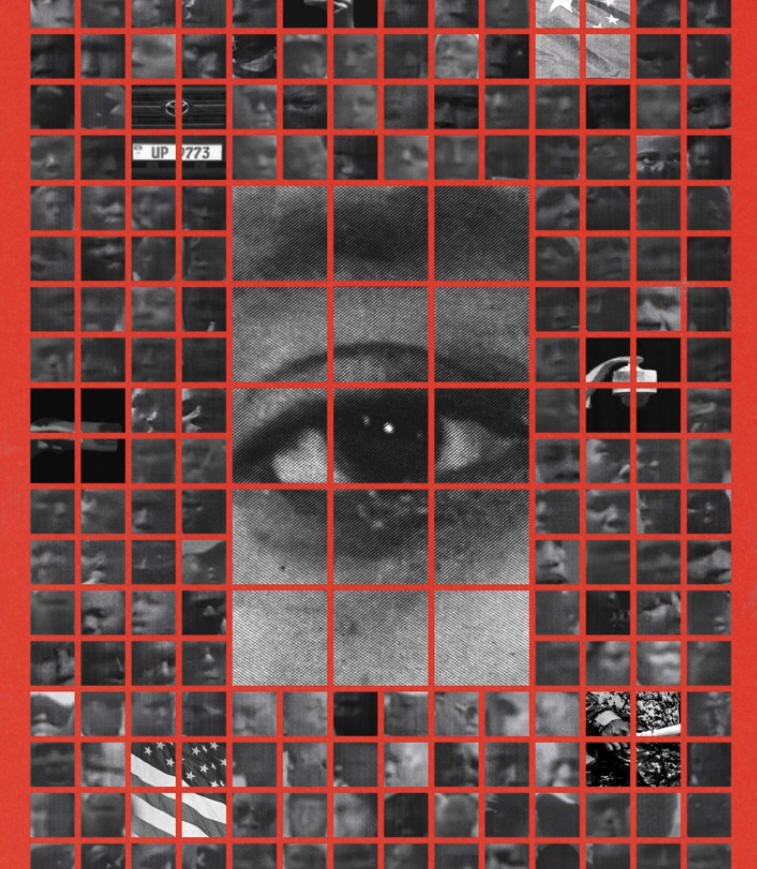
July 18, 2026
Mohenjo
Business, Food For Thought, Human Interest, Political, Science, Technical
amazon, business, Business News, current-events, Future, Hotels, human-rights, medicine, mental-health, research, Science, Science News, technology, Technology News, travel, vacation

Click the link below the picture
.
Once, in town to help me take care of our 6-month-old while her son was traveling, my mother-in-law and I watched a movie about a woman whose dad is dying. Nodding toward the baby asleep on my chest, she leaned in and whispered to me: “You don’t want her to have to deal with your death all by herself.”
She was kidding, I think. But 14 months later, I gave birth again. It was intense, insane, having two kids under 2 in a tiny New York apartment. Our younger kid was born in May, and my husband’s job that year meant he was on the road almost nonstop from June through August. We hardly survived the whir and wreck of it.
But I love babies, their smells, weight, and texture. I’m embarrassed by what a cliché I am when it comes to my children, but they are my favorite people in the world. For years, my husband reminded me very calmly that we had neither the time nor space nor money for more children — especially after I’d joke about watching a YouTube video on do-it-yourself IUD removal.
But my husband is a far too involved partner to make that choice without him. Our kids are 10 and 12 now. I’m 41. I think, still, sometimes about how much I would have loved to have more children. “A gaggle,” I used to say to my husband; they’d be their own organism. He’s the oldest of three, and I’m the second of four. We both know what that gaggle feels like, the way that, once the parents are outnumbered, the kids possess a different sort of power. The pressure shifts, and alliances and tensions shift with it. We know how it’s both easier and more difficult to harbor secrets: shared bedrooms and bathrooms, the backseats of cars. So many overlapping limbs on late-night drives that you could sometimes forget who’s whose.
My mom had a van with a third row because we were so many. There’s shit you can get away with in that last row that you can’t get away with in the front. It’s fun and terrifying, the way the older gets, so quickly, so much responsibility. The way the parents have no choice but cede some of the work to the older kids. A friend of mine, right after they found out they were pregnant with their fourth kid: “Once you switch from man-to-man, all bets are off.”
I have not always been close with my three siblings, but there is no one on Earth who understands the shape and texture, the weight and strangeness of one’s formative years like the person you clawed your way through them with.
My older sister used to hit me with a paddle brush on the drive to high school. We both now love this story. She was angry at me because she was 16 and I was 14, and really, what else could she be. She was struggling in all sorts of ways, and had we been more grown-up, maybe we could have helped each other, but as it was, she got some release before her day started. The brush was plastic. I was fine. I learned how not to piss her off, and once she found out I’d told other kids on the track team about it, I was able to shame her into doing it much less. We learned, in other words, plenty about how to be with other people, how to love and care but also to survive when love and care weren’t as immediately available to us.
I have not always been close with my three siblings, but there is not anyone on Earth who understands the shape and texture, the weight and strangeness of one’s formative years like the person you clawed your way through them with.
Of course, what I want my kids to have is not just siblings. Of course, no matter how many siblings one has, as one grows, there’s no guarantee they’ll be there to hold your hand, to collude with when the hard sh*t comes, to show up. For years, I hardly spoke to my siblings. The other day, I called my sister on my drive home from work. New Jersey to Brooklyn, my drive is an hour and a half. We talked the whole time, and then, after I found parking, I sat in the car another half an hour so we could talk more. It was thrilling. My big sister. What was most exciting to me was that we finally got to also talk like we were friends.
Recently, in our little house in Brooklyn, we’ve started having large groups of people over once a month, kids encouraged. The children all go upstairs to our kids’ room, or our room, and tear it to shreds. The grown-ups seldom check on them. Our older daughter has set up a station in her room for making zines, and often, after a few hours, you can no longer make out the floor. Our bathroom doorknob has been broken for a long time, and there’s only the one bathroom. A couple months ago, (we decided finally to fix it after) grown-ups kept getting locked in, and the kids decided, depending on who the grown-up was and how much they liked them, how long they’d make them wait before they let them out. Sometimes, on these weekends, I get to hold a baby for an hour or two, to experience that quick hit of the physicality, all that need and constancy, but also the pleasure of knowing the mom who the baby belongs to gets a rest. After, our younger kid, who can be controlling and particular, has to suck it up when they see what a mess one of the toddlers has made of their room.
What I want for my kids, in other words, is community; their own version of that sibling gaggle. A world of groups separate from adults, and all the ways it is both more and less high stakes, all the ways it forces you to stretch and reconsider to whom and why you owe your care and attention. The ways it reminds you other people’s attention isn’t always guaranteed. I want them to know the pleasure of being the older one, sometimes, of telling someone what to do, of having someone who is not your parent, not an adult, serve as your guide; the reality that sometimes you have to put up with someone, even when you do not like them, that outside of school or any other sanctioned way of being, you have to be flexible, amenable; that sometimes the people you’re with won’t be and aren’t. What I want is for my kids to have a solid, rich, and layered sense of other people. People who, if they don’t always necessarily like them, still understand that they have to try.
.

.
.
Click the link below for the complete article:
.
__________________________________________

July 18, 2026
Mohenjo
Business, Food For Thought, Human Interest, Political, Science, Technical
amazon, business, Business News, current-events, Future, Hotels, human-rights, medicine, mental-health, research, Science, Science News, technology, Technology News, travel, vacation

Click the link below the picture
.
The worst part about living in Donald Trump’s Washington has been seeing just how much fun he and all the MAGA vandals he brought to power have been having sacking and pillaging the place. This while the rest of us longtime Washingtonians who abided by norms, shared values and even bipartisanship were filled first with shock, then a feeling of helplessness, and hopelessness. It could border on passivity. What could be done?
A year ago, I wrote a guest essay for Times Opinion about how scared many of us were in Washington: “Nobody feels safe. Nobody feels protected. This is a city where people seek and, if it all goes well for them, wield power. But today in Washington, those who hold — or once held — the most power are often the most scared. It is not something they are used to feeling.”
Sometimes it felt as if the Trumpists could smell our fear, and seemed to be enjoying it.
Last fall, when the MAGA revolution was at its most brazen and apparently unstoppable, I remember running into Kellyanne Conway at a newish private club, already packed with crypto types, who scolded me: “Sally, I wish you would stop writing all these pieces about how terrible Washington is now and how everyone is so depressed and scared. We’re having fun! You know what your problem is? You’re not invited to the right dinners and parties.”
I held my tongue. But there is a reason I have avoided the gleeful, glitzy new MAGA society that has sprung up over the last year and a half, and tried to ride it out with my friends.
Lately, the vibe has shifted. The MAGA Republicans don’t seem to be having such a good time ransacking the place anymore.
It’s not that the party is over, exactly. And to be clear, there’s lots more damage that will be done to this city, and to our democracy — not to mention America’s place in the world — before Mr. Trump and his rabble are through. But it’s clearly starting to dawn on the MAGA minions that the morning after is going to be a doozy.
Now they’re the ones in despair, fearful and losing hope.
Even the true believers are questioning the MAGA theology.
Why are we at war with Iran still? Our military is humbled, our reputation in tatters, and now gas prices are going up again.
The distractions keep coming, of course. The cage fights on the White House lawn; the sweltering, sparsely attended 250th celebrations; the desperate speech claiming rigged elections. Even the algae-clotted Reflecting Pool has become a spiritual destination, a shrine for democratic pilgrims.
Many Republican lawmakers are beginning to quiet-quit. The Wall Street Journal called it the G.O.P. “zombie Congress” — not in open revolt, exactly, but not ready to take a bullet for the president and his self-serving crusades as the midterms approach.
Then there’s Mr. Trump’s estrangement from some of his biggest allies: Tucker Carlson, Megyn Kelly, Candace Owens, Alex Jones and Ann Coulter, not to mention former Representative Marjorie Taylor Greene. Even onetime Trump-skeptical Republican senators who had joined the bandwagon, like Bill Cassidy and John Cornyn, have, after being primaried by Trump-endorsed challengers, been more vocally critical. And even Joe Rogan has had his altercations with the president.
All of that is heartening to Washingtonians who see these rifts as representative of Mr. Trump’s weakening fan base throughout the country.
One night last month, the New York financier and Times Opinion contributor Steven Rattner and his wife, Maureen White, had their popular annual cocktail buffet at the Hay Adams Hotel on the rooftop overlooking the White House. Everyone gathered on the balcony to see the Claw — the U.F.C. fighting stage built on the South Lawn of the White House — which then dominated the view. The minute people looked at it, they would burst out laughing. It was so garish, so grotesque, and so bizarre that the only proper reaction was disbelief.
The many Democratic politicians and supporters in attendance were feeling energized. There were signs of — dare we say it — bipartisanship, a cause for optimism: The Senate had just voted against Mr. Trump’s war with Iran, and his poll numbers were sliding perilously toward the 20s. Mr. Rattner’s toast was simple: “I feel hopeful.”
One of the Democrats at the Rattner dinner was Senator Mark Warner of Virginia, vice chairman of the Intelligence Committee. Mr. Warner said that the mood in Washington, especially among the Republicans, had changed considerably since the early days of the second Trump administration. The proposed $1.776 billion fund for those supposed victims of government persecution “is such an abuse that nobody can defend it. Will that translate into huge electoral wins? I think so.”
Mr. Warner pointed to the war in Iran: “absolute folly.” Not to mention the self-dealing, the ballroom, the Reflecting Pool, the pardons, the at least $2.2 billion the president made in his first year back in office. “My colleagues say: ‘We can’t go on like this. This is obscene.’ But will they say it publicly?”
Even Lindsey Graham, whom I considered a friend and who was popular in the Senate and one of the few senators always advocating bipartisanship, had lost his moral compass. Before his death last week, he’d remade himself into one of Mr. Trump’s staunchest supporters. What will he be remembered for? His loyalty to a president he once openly despised?
The cage fights may have been the tipping point for many here — the moment, with the combatants tromping with cartoonish bravado through the White House, that it became clear that Mr. Trump was punch-drunk, raging against his enemies.
The day before the cage fights, Cafe Milano, one of the hottest restaurants in Washington for the past 34 years, was packed. Much to the chagrin of some of the regulars, a number of the MAGA crowd in town for the U.F.C. event were there, including Ivanka Trump, Jared Kushner and David Ellison, whose Paramount+ had exclusive broadcast rights to the fights.
But the mood felt off. Less jubilant. As if they knew that the U.F.C. fights were really going to be the moment when MAGA jumped the shark.
“The Republican Party is in shambles today,” J. Michael Luttig, a former judge on the U.S. Court of Appeals for the Fourth Circuit who turned against Mr. Trump, told me.
“Trump eats his own,” he said, pointing to Senators Cornyn and Cassidy, whom the president successfully had primaried. “Taking them out was a turning point for Congress.”
The presidential historian Michael Beschloss, who from Day 1 of Mr. Trump’s first term warned of a potential dictatorship, likened the mood in Washington today to an earlier time. In 1931, with the country in the grips of the Great Depression, Republicans lost control of the House for the first time in 12 years. Two years later, they lost the White House. “I don’t see people looking fearful, helpless and hopeless here anymore,” Mr. Beschloss said. “We have now seen that democracy is alive and kicking.”
“People are genuinely disgusted, and they’re now combative,” said Leon Wieseltier, editor of Liberties magazine, about the mood shift. “Like Popeye, they’re essentially saying, ‘That’s all I can stands, and I can’t stands no more.’ Before he eats his spinach to fortify himself.”
.
Aisha Franz
.
.
Click the link below for the complete article:
.
__________________________________________

July 17, 2026
Mohenjo
Business, Food For Thought, Human Interest, Political, Science, Technical
amazon, business, Business News, current-events, Future, Hotels, human-rights, medicine, mental-health, research, Science, Science News, technology, Technology News, travel, vacation

Click the link below the picture
.
A “space mirror” test satellite meant to beam sunlight and turn night into day on targeted swaths of Earth just received approval to proceed—and astronomers are aghast. The satellite, called Eärendil-1 and built by the California-based startup Reflect Orbital, would be the first of some 50,000 similar spacecraft the company hopes to launch by 2035. Critics say such plans are wholly unacceptable because light pollution from so many large, bright satellites would radically degrade views of the night sky.
Eärendil-1’s formal approval to proceed came last week from the U.S. Federal Communications Commission (FCC). That ruling addressed not only Reflect Orbital’s proposal but also more than 1,800 public comments expressing concerns about the project’s potential impact on the night sky and Earth’s orbital environment. To these objections, the FCC had one response: that’s not our problem.
Reflect Orbital’s sunny proposition is to provide “sunlight on demand” for solar power plants, emergency search and rescue operations, and round-the-clock construction projects. Once launched, Eärendil-1 would deploy an 18-meter-wide steerable mirror to demonstrate that technological feat; anyone or anything in the path of its beam would see the satellite as a glaring dot shining up to four times brighter than a full moon.
The FCC’s decision “really scares me,” says Samantha Lawler, an associate professor of astronomy at the University of Regina in Saskatchewan, “because it shows what gigantic holes there are in the regulatory framework for outer space and lets Reflect Orbital just sail on through one of those holes. I’m really worried about the future of astronomy.”
Lawler and many other scientists are concerned about Reflect Orbital and Eärendil-1 for a few reasons. Whether for people, wildlife or astronomical observatories, the beam from this single test satellite is far from innocuous. Directly viewing it through a telescope, for example, could permanently damage eyes and sensors alike. And even outside the direct beam, the scattering of its photons through the atmosphere would create a still-bright smudge of light pollution in the surrounding night sky.
The FCC’s accompanying commentary for its decision pointedly notes the approval only applies to Eärendil-1 and that it had to consider “the small risk” of damage to individuals “against the benefits of permitting American companies to test innovative technology in space” via a single experimental satellite.
But 50,000 satellites is a different story. Olivier Hainaut, an astronomer at the European Southern Observatory, recently conducted a study on the potential light pollution from Reflect Orbital’s plans, based on computer simulations of the satellites and their operations in space. The full complement of satellites, he found, could collectively make the global night sky three to four times brighter than it is today, all around the world. Even the planet’s darkest skies could become about as bright as the heavens above a suburban town, he says.
For many animals, this brightening could disrupt circadian rhythms. For naked-eye stargazers, it could vastly limit what can be seen in the night sky. For astronomers, it could make much of their observational work effectively impossible.
“We astronomers are certainly not in favor of forbidding satellites,” Hainaut says. “And I would say that as citizens of planet Earth, it’s really in the interest of everybody to take this into account before it happens, not to slow progress but just not to do anything stupid.”
Hainaut’s study also looked at the broader implications of the rising overall numbers of satellites, with more than 14,500 now active and orbiting our planet. More than 10,000 of those are members of SpaceX’s Starlink megaconstellation for global broadband internet. And the surge is just beginning: proposals now exist for more than 1.7 million additional satellites, including Reflect Orbital’s mirrors and SpaceX’s space-based data centers. These satellite constellations, he says, would dramatically change the night sky and greatly increase risks of spacecraft collision and debris.
.

Reflect Orbital’s Eärendil-1, a test satellite equipped with a large deployable mirror to demonstrate the company’s “sunlight on demand” business plan, could launch before the end of 2026. Reflect Orbital
.
.
Click the link below for the complete article:
.
__________________________________________

Older Entries