Home

How becoming a dad changes men’s brains

2 Comments

Click the link below the picture

.

Father’s Day is an opportunity to recognize the efforts of dads everywhere. But becoming a father is more than just a lifestyle change—it alters one’s brain, too.

Scientific American spoke with Devika Bhushan, a public health physician and adjunct faculty member at Stanford University School of Medicine, who studies gender norms, about the ways in which fatherhood affects men’s brains and the mental health struggles dads face. Bhushan also served as acting surgeon general of California in 2022.

The following article is based on our conversation with Bhushan.

“Dad brain” is real

Most of the research on parental brain changes focus on those that occur during pregnancy and early motherhood. Much less attention has been given to the neurological and mental changes that occur in fatherhood, Bhushan says.

A 2014 study compared the brains of heterosexual, primary caregiver mothers, heterosexual, secondary caregiver fathers and gay primary caregiver fathers. All three groups showed brain changes in a “parental caregiving network” comprising a part of the brain’s cortex called the mentalizing network, which plays a role in visual processing and empathy, and a subcortical emotional processing network, which involves vigilance and reward processing. The mothers showed greater activation of the emotional network, whereas the heterosexual, secondary caregiver fathers had more activation of the mentalizing network. Gay, primary caregiver fathers displayed some changes in the emotional network that resembled those seen in heterosexual mothers, but they also showed some similarities to the brain changes seen in heterosexual fathers.

A more recent study in 2023 of men in Spain and California showed that they experienced reductions in gray matter after they became fathers—much like studies have shown in first-time mothers. This shrinking likely doesn’t represent a decline in brain function but rather a “pruning” of connections that could make the brain more efficient for the demands of caregiving.

Taken together, these studies suggest that at least some of the brain changes seen in new parents result from caregiving itself, not from the biological changes associated with pregnancy, birth, and breastfeeding, Bhushan notes.

Given that people of all genders experience brain changes when they become parents, perhaps it’s not surprising that, just as mothers are vulnerable to postpartum depression and anxiety, fathers, too, can have similar mental health struggles.

Fathers can get postnatal depression, too

As many as one in 10 men will experience paternal postnatal depression or anxiety. The symptoms often look different in dads—anger or sudden outbursts, irritability and substance misuse, for example. Such postnatal depression can affect not only the father’s well-being but also the mother’s, as well as their child’s development, Bhushan says.

The American Academy of Pediatrics recommends screening mothers for postpartum depression at every doctor’s visit for their infants through the first six months. Mothers are typically screened using the Edinburgh Postnatal Depression Scale, but this is not validated for use in nonbirthing parents. Men also tend to have fewer social networks than women do, so they could have less support from friends or family to help them deal with mental health struggles.

Postnatal depression and anxiety tend to peak later in fathers than in mothers—closer to three to six months after the birth of a child. This may be because most fathers in the U.S. go back to work within two weeks of having a child, whereas mothers tend to stay home longer. As a result, mothers typically bear the brunt of the caregiving burden in the earliest weeks and months, whereas fathers may take on more responsibility later, around the time many mothers go back to work.

In the U.S., fathers have taken on an increasingly larger share of childcare responsibilities in recent years—and with it, an increased share of the stresses and burdens. Bhushan says maternal support systems should be restructured to parental systems that cater to both mothers and fathers.

.

https://static.scientificamerican.com/dam/asset/1c8197f2-1408-400a-aa04-61e3588965f5/father_holding_baby_at_home.jpg?m=1781989822.793&w=900Cavan Images/Getty Images

.

.

Click the link below for the complete article:

https://www.scientificamerican.com/article/how-becoming-a-dad-changes-mens-brains/

.

__________________________________________

Trump news live: President defends massive crypto windfall as he gets set for Mount Rushmore speech

Leave a comment

Click the link below the picture

.

After a day defined by scrutiny of the president’s finances, Donald Trump next heads to Mount Rushmore on Friday for another round of 250th-anniversary celebrations.

In the Black Hills, South Dakota Gov. Larry Rhoden will welcome the president, who will also be joined by Interior Secretary Doug Burgum.

Together, they will take in a fireworks show above the iconic landmark, an event environmentalists fear could risk sparking wildfires.

Throughout Thursday, Trump spent the day defending his ethics record, after financial disclosures showed he earned more than $1 billion from his family’s crypto businesses last year.

The Republican told CNBC he has been uninvolved with the effort, as well as his other businesses, since taking office.

“I could know about it,” Trump said. “I didn’t. There’s nothing illegal.”

Democratic lawmakers, meanwhile, are accusing Trump of capitalizing on America’s 250th anniversary by misleading donors into giving money to Freedom 250, an administration-backed planning group, rather than America250, the congressionally-backed effort to organize the historic celebrations.

“Donald Trump hijacked what was supposed to be a unifying, non-political celebration of our country’s 250th birthday and made it all about him,” Democrats on the House Natural Resources Committee said in a report released Thursday.

Key Points

  • Donors were misled into giving to a Trump-backed group instead of bipartisan America 250 team: report
  • Trump claims he didn’t know about crypto moves, which made him more than $1 billion last year
  • Donald Trump calls for gas price drop for Fourth of July weekend
  • Hegseth honors members of National Guard in DC to the sound of protesters
  • President ‘livid’ over crowd size at National Mall state fair
  • US economy added 57,000 jobs in June – underperforming expectations
  • Trump claims US achieved ‘regime change’ in Iran

ICYMI: Trump allegedly has staff furiously deleting social media photos about failing State Fair

President Donald Trump became so upset over photos showing less-than-enthusiastic turnout at his Great American State Fair kickoff speech that White House staff scrambled to delete the images from social media after he melted down at them.

The president was “livid” over an aerial image of his MAGA rally-style remarks to mark the opening of the shambolic event last week, which NBC News later reported as having drawn “nowhere near” the 45,000-strong crowd he boasted about on Truth Social, CNN reported.

The network reported that his angry reaction prompted his own staff to scrub photos of the small crowds from official and personal social media channels in a vain attempt to memory-hole the poor turnout.

Trump had turned the launch event for his Freedom 250 project into a celebration of himself as much as America’s 250th birthday after a group of artists booked to perform backed out because they’d been led to believe it had been organized by America 250, the bipartisan, Congressionally chartered group celebrating America’s 250th anniversary that has been sidelined by the MAGA-aligned Freedom 250 organization.

.

President defends massive crypto windfall

.

.

Click the link below for the complete article:

https://www.the-independent.com/news/world/americas/us-politics/trump-news-live-america-250-updates-b3006235.html

.

__________________________________________

MAGA Base Stays Quiet After Trump Reports Billions in Personal Gains

Leave a comment

Click the link below the picture

.

President Trump’s $2.2 billion in personal earnings during his presidency has been met largely with silence from his MAGA base, which has been increasingly willing to revolt against policies they view as an abandonment of his promises to put everyday Americans first.

Far-right members of Congress, prominent media pundits and grass-roots activists have criticized Mr. Trump’s war with Iran and openly broken ranks to demand the release of the Jeffrey Epstein files. They have accused him of prioritizing his own interests over the needs of the voters who elected him to office.

But few far-right voices aligned with Mr. Trump have criticized him over the scale of his personal haul, reported this week, or the conflict inherent in his status as a major cryptocurrency industry operator and its top policymaker.

Some described his earnings as a validation of the business acumen they have long admired in him.

“Nobody who voted for Donald Trump — a guy with skyscrapers with his name on it, with a plane that has his name on it — is suspect of him making money,” Joe Borelli, the former New York City Council Republican leader and managing director of Chartwell Strategy Group, a lobbying firm, told CNN. “He made his whole career talking about how much money he makes.”

Mr. Trump earned about $1.4 billion from his family’s cryptocurrency businesses, new mandatory financial disclosures show. A significant portion of that came in 2025, when an investment firm tied to the United Arab Emirates bought nearly half of the Trump family’s main crypto company, World Liberty Financial. He also collected hundreds of millions of dollars from sales of his $TRUMP memecoin and World Liberty’s sale of its own digital tokens.

Mr. Trump both benefits from the crypto industry and dictates policy that shapes it. He has insisted he does not direct the people who run his private enterprises.

Kelley Koch, chair of an Iowa group called MAGA Nation, said Mr. Trump’s earnings were proof of his ability to navigate the complicated new frontier of digital finance.

“We live in a free country — capitalism,” Ms. Koch said. “He’s extremely smart. He’s a businessman. My kids follow Bitcoin, Polymarket, Kalshi, all of this new tech stuff. If you don’t, you’re going to be left behind.”

Democrats, however, seized on the financial disclosures to start a campaign accusing Mr. Trump of corruption, looking to draw contrast between his wealth and the economic reality experienced by most Americans.

“Donald Trump stands with the billionaire class,” Representative Haley Stevens of Michigan, who is in a competitive Democratic Senate primary, said on X. “He has no idea what it’s like to live on a Social Security check, and he’s shown he doesn’t care.”

Gov. Gavin Newsom of California, widely thought to be a 2028 presidential contender, wrote on social media that “Donald Trump is the most corrupt president in America history.”

While most Republican officials remained silent on the topic on Thursday, Republicans who have become alienated from Mr. Trump said the revelations from his financial gains validated their belief that he had abandoned his populist platform.

Former Representative Marjorie Taylor Greene, who has formally broken with the Republican Party, said Mr. Trump’s personal enrichment was further proof that MAGA voters needed to abandon the G.O.P.

“The GOP is a disaster,” she wrote on X. “The Republican Party hijacked MAGA, pretended to be America First and MAHA, and then sold us all out. Then Trump rubber-stamped the entire con job while taking checks from literally everyone.”

Ms. Koch said the president’s personal enrichment had not been a topic of conversation among her friends in Iowa, who love Mr. Trump but are also willing to disagree with him. Most recently, they have been frustrated by his decision to sign an executive order that protects production of glyphosate, a pesticide that they believe is causing soaring cancer rates in the state.

But Mr. Trump’s billions of dollars in profit did not inspire any outrage — especially not during this time of the year, she said.

“Let’s just be honest, people are checked out right now,” Ms. Koch said. “It’s the Fourth; schools are out, and it’s hot here in Iowa.”

U.S. Politics: News and Analysis

Here’s a look at the political landscape across America.


  • Trans Athletes Ruling: While Republicans celebrated the Supreme Court ruling, many Democrats stayed quiet on an issue that had proved divisive in the last election.

  • Colorado Governor Fires Officials: Gov. Jared Polis fired two members of his clemency board after they spoke out against his decision to commute the sentence of Tina Peters, who tampered with voting machines in an attempt to show that the 2020 election had been rigged against President Trump.

  • Prosecuting Women Who Get Abortions: More abortions are happening now than when Roe v. Wade fell and a growing number of conservative leaders are starting to argue that the only way to stop women from ending their pregnancies could be to arrest them.

  • Gay Marriage Is Dividing Republicans, Again: A look at the backlash to same-sex marriage — its strength, seriousness and the reasons behind it.

  • Rise of Democratic Socialists: Harnessing generational frustration over affordability, left-wing politicians are leading New York City and Seattle, and are knocking on the door in Los Angeles and Washington.

.

https://static01.nyt.com/images/2026/07/02/multimedia/02pol-trump-money-reax-jqgh/02pol-trump-money-reax-jqgh-jumbo.jpg?quality=75&auto=webpSome supporters of President Trump described his earnings as a validation of the business acumen they have long admired in him. Credit…Pete Marovich for The New York Times

.

.

Click the link below for the complete article:

https://www.nytimes.com/2026/07/02/us/politics/trump-earnings-maga-reaction.html

.

__________________________________________

How quantum sensing could reveal hidden faults in thousands of U.S. bridges

Leave a comment

Click the link below the picture

.

Every bridge has parts that drivers never see: steel buried in concrete, welds tucked under girders, and soil packed around foundations below the waterline. A bridge can look fine from the road while rust spreads around steel hidden inside concrete. A small fatigue crack can lengthen. A flood can wash soil away from a pier. By the time cracks, loose concrete or lane closures appear, the cheapest repair window may already have closed.

When it comes to these damaged bridges, this problem is national. The United States has more than 624,000 highway bridges. About 220,000 need major repair or replacement, and 41,677 are rated poor, also called structurally deficient. While “poor” does not mean unsafe, it does mean at least one key bridge element received a poor rating, indicating deterioration or cracking that will require significant repair.

As a researcher who studies photonics and quantum sensing, I work on devices that measure faint or hidden signals. My lab applies physics to develop devices, including quantum sensors. Advanced sensors of this type might one day be able to help engineers pinpoint where to look to determine whether hidden damage in infrastructure is worsening. However, they cannot replace human inspectors.

Inspections keep bridges safe, but are snapshots

Federal bridge inspections—rooted in National Bridge Inspection Standards mandated by Congress in 1968—exist because past failures showed that small defects can threaten large structures.

Under current federal rules, many bridges must be inspected in, at most, 24-month intervals. Higher-risk bridges, such as those carrying heavy interstate traffic, those with aging structures or known defects, or those built over saltwater, may require shorter intervals. Lower-risk bridges with lighter traffic and sound materials may qualify for longer intervals.

Those inspections remain essential, but they are snapshots. A bridge may change during the months between visits. Corrosion can spread below a deck that looks sound. A small crack can sit inside a weld. A river can displace soil from a foundation while the roadway above looks unchanged. Sensors extend inspections by tracking these change that form between scheduled checks.

Hidden damage can grow quietly

The three common hidden threats to bridges are corrosion, fatigue, and scour. Corrosion begins when water, oxygen and salts reach steel. A concrete layer usually protects steel, but cracks, salt spray, and chloride ions from seawater or deicing salts can break that protection. The rust then expands, much like ice widening a crack in a sidewalk. It pushes the concrete outward and can cause the material to come loose or the layers to separate.

Fatigue damage is the bridge version of bending a paper clip back and forth. Just as a paper clip eventually snaps after repeated bending, a bridge’s steel components weaken and break down under continuous cycles of stress. Thousands of heavy vehicles can make tiny cracks grow near welds, bolted connections, or older steel details.

Scour damage is different: Moving water removes soil around the bridge’s foundations. The bridge above can look stable, while the support below loses the ground it needs.

Waiting costs more

The earlier engineers can identify damage to aging bridges, the more time and options they have to fix them. The average U.S. bridge is about 47 years old. Many bridges are near or past the 50-year life they were designed for, and about 45 percent have exceeded their planned design lives.

Typically, it’s less costly to preserve bridges in fair condition than those already in poor condition. Making all the identified necessary U.S. bridge repairs would cost about $467 billion.

Past failures show why small details matter. As one example, the 2007 I-35W bridge collapse in Minneapolis was partially due to undersized gusset plates—steel plates that connect the intersecting beams in a bridge’s structural framework – along with added weight and construction loads. The collapse killed 13 people and injured 145.

Sensors alone are not a cure for such failures, but better measurements can help engineers notice when important details are changing.

.

https://static.scientificamerican.com/dam/asset/3851a8b6-e0dd-45c2-9254-4add1cb86b09/Bridges.jpg?m=1782078266.236&w=900

Top Down Aerial photo of High Five Interchange in Dallas, Texas, adamkaz via Getty Images

.

.

Click the link below for the complete article:

https://www.scientificamerican.com/article/how-quantum-sensing-could-reveal-hidden-faults-in-thousands-of-u-s-bridges/

.

__________________________________________

Toddler rescued from rubble six days after devastating Venezuela earthquakes

Leave a comment

Click the link below the picture

.

A child has been rescued from the rubble in Venezuela, six days since the country was hit by devastating twin earthquakes.

The boy, identified by the Reuters news agency as Klieber Moran, was rescued early on Tuesday, the only reported survivor on the sixth day of rescue efforts, according to Venezuelan authorities.

Moran was pulled from the Los Corales Garden ⁠1 building in La Guaira state by rescuers from Jordan, ⁠Venezuela’s acting president, Delcy Rodríguez, said in a message via ​Telegram.

Venezuela was hit by ‌two earthquakes of ‌magnitudes 7.2 and 7.5 less than a minute apart last ‌Wednesday, toppling buildings and trapping thousands of people beneath the rubble, according to authorities and rescue teams.

Moran, described as three years old by Rodríguez, but as two years old by National Assembly president Jorge Rodríguez, was taken for medical treatment, ‌the message said.

“We must hold on to the hope of continuing to find people alive beneath the ​rubble,” Jorge said in a televised address. “Early this morning, a two-year-old boy was rescued and is currently receiving care at a health centre in Caracas.”

A shipment from the UN children’s agency, Unicef, carrying 47 ⁠metric tons of humanitarian supplies arrived in Venezuela on ​Tuesday, UN spokesperson ​Stéphane Dujarric said, adding ​the equipment would help support children and families in ​need.

The shipment ‌includes emergency ​health kits ​for urgent medical care, including supplies for safe births, newborn care, disease prevention, and treatment, Dujarric added.

The government puts the death toll at more than 1,900, with more than 10,000 people injured. Experts say that is a significant undercount as more bodies are hauled from the rubble every day and morgues struggle to handle the influx.

Among the living, a humanitarian crisis is unfolding. UN agencies expressed concern about the health effects of thousands of displaced people sleeping for days in the open, or in crowded, unsanitary shelters.

Nasa estimates that nearly 59,000 buildings have been damaged or destroyed by the earthquakes, which would put the number of people affected by the quakes in the hundreds of thousands. UNICEF said on Tuesday that 680,000 children are in need of humanitarian assistance nationwide.

.

Klieber Moran after being freed from underneath rubble in VenezuelaThe child was rescued by a team from Jordan, one of many international groups working on the ground. Photograph: Jordan Public Security/Reuters

.

.

Click the link below for the complete article:

https://www.theguardian.com/world/2026/jun/30/toddler-rescued-from-rubble-six-days-after-devastating-venezuela-earthquakes

.

__________________________________________

Left-Wing Insurgent Ousts 15-Term Congresswoman in Colorado

Leave a comment

Click the link below the picture

.

Melat Kiros, a 29-year-old democratic socialist, defeated Representative Diana DeGette on Tuesday in the Denver area, according to The Associated Press, in a show of force for the progressive wing of the Democratic Party.

The triumph by Ms. Kiros unseats a 15-term incumbent and further propels the insurgent coalition that swept a series of congressional contests last week in New York.

Ms. Kiros, an immigrant and first-time candidate, was born the year after Ms. DeGette, 68, took office. Her victory in the solidly Democratic district all but ensures her election in November.

A lawyer and doctoral student in public affairs, Ms. Kiros cast herself as a political outsider capable of addressing the affordability crisis that she argued the Democratic establishment had failed to resolve. Her opposition to U.S. support for Israel was also a cornerstone of her campaign and central to her political identity.

Her grass-roots campaign overcame a fund-raising advantage held by Ms. DeGette, who was helped by a last-minute influx of spending from outside groups. Early Wednesday, Ms. Kiros was leading by more than five percentage points with nearly 80 percent of votes counted.

n her campaign biography, Ms. Kiros highlighted the fact that the Manhattan law firm where she once worked had fired her in 2023 after she refused to take down a letter that raised questions about Israel’s historical legitimacy, defended pro-Palestinian campus protesters and challenged the firm’s response to activist law students.

She has faced criticism for declining to call antisemitic a fatal firebombing attack in Boulder, Colo., on people who were marching in support of Israeli hostages.

Her victory “is part of a pattern of our democratic socialist politics resonating across the country,” said Ashik Siddique, a co-chairman of the Democratic Socialists of America, of which Ms. Kiros is a member. “It just shows that Americans want politicians who are going to address the cost of living with universal policies that apply to everybody.”

If she prevails in November, as she is expected to do, Ms. Kiros will join a growing group of left-wing Democrats in Congress who want to see universal, single-payer health care, bans on corporate donations to political campaigns and an end to American support for Israel. Her campaign was bolstered by an endorsement from Senator Bernie Sanders of Vermont.

A longtime progressive, Ms. DeGette leads a powerful subcommittee overseeing health care and had said she would push to pass “Medicare for all” if Democrats retook the House. She campaigned heavily on her liberal credentials, running a TV ad that featured Representative Alexandria Ocasio-Cortez of New York praising her support of universal health care. Ms. Ocasio-Cortez did not endorse anyone in the race.

But Ms. DeGette appeared to find herself increasingly at odds with her own district on issues including American support for Israel and the acceptance of corporate donations to her campaign.

Ms. DeGette in the past has called herself a “strong supporter” of Israel. Her campaign got a boost from late spending by outside groups, including some with connections to pro-Israel PACs. Ms. Kiros argued that those donations made her opponent beholden to special interests rather than to her own constituents.

Denver and its suburbs are far younger and more diverse than they were when Ms. DeGette first won the seat in 1996.

More on the 2026 Midterm Elections


  • Campaign Finance: The Supreme Court lifted limits on how much political parties can spend on advertising and other expenses in coordination with candidates, in a major victory for Republicans.

  • Gen Z Runs for Office: In Colorado, Melat Kiros’s Democratic primary challenge to Representative Diana DeGette is the latest Gen Z test in a year defined by generational upheaval.

  • Alaska’s Dan Sullivans: The Alaska Supreme Court ruled that Dan J. Sullivan could appear on the ballot alongside Senator Dan S. Sullivan, despite arguments from the Republican incumbent that he was not a good-faith candidate.

  • U.S. Senate in Texas: The Democrat James Talarico is tied with Ken Paxton, the Republican state attorney general, according to a new poll, giving Democrats a serious chance to win a Senate seat in the state for the first time in a generation.

  • Israel and Iran Fracture Both Parties: Raging internal debates over foreign policy threaten both parties’ fortunes in November — and in 2028. Is a major ideological shift underway?

.

https://static01.nyt.com/images/2026/06/30/multimedia/30pol-colorado-1-hfo-alt-kiros-ftjm/30pol-colorado-1-hfo-alt-kiros-ftjm-jumbo.jpg?quality=75&auto=webpMelat Kiros, an immigrant and first-time candidate, is likely to head to Congress in a deep-blue Colorado district.

Credit…Chet Strange for The New York Times

.

.

Click the link below for the complete article:

https://www.nytimes.com/2026/07/01/us/politics/melat-kiros-degette-colorado-democratic-primary.html

.

__________________________________________

Dozens of countries are trying to lure U.S. scientists abroad—and it’s working

2 Comments

Click the link below the picture

.

By day, American physicist Kenneth Long works with the world’s largest particle accelerator, the Large Hadron Collider at CERN near Geneva. He wants to better understand the W boson, a subatomic particle that is responsible for some kinds of radioactivity and for fusion. But he also likes bikes, and this July you might find him on a scenic roadside, cheering on competitors in the Tour de France. He won’t have to take an international flight to spectate: Long moved abroad in February, splitting time between Lyon and Geneva as a scientist with the French National Center for Scientific Research (CNRS).

Long was brought to France by a recruitment program called Choose CNRS. The organization launched it last April, a few months after the Trump administration began cutting scientific programs in the U.S. The initiative aims to lure foreign researchers to Europe with stable positions, generous funding, and promises of academic freedom. For many scientists from the U.S., programs like this one are a lifeline: a way to pursue world-class research without fighting against the funding cuts and disruptive policies currently stifling American science.

According to polls, application numbers and anecdata, many young American scientists are considering such moves. Three quarters of U.S. researchers who responded to a Nature poll conducted last March were thinking about moving abroad. The trend was especially apparent among early-career scientists: of the 690 postdocs and 340 Ph.D. students who responded, 803 said they were considering sailing for other shores.

Nature’s poll went out in the midst of significant threats to the American research enterprise. Last year, the National Science Foundation terminated about $1 billion in grants and fired 10 percent of its employees; the National Oceanic and Atmospheric Administration let roughly the same proportion go, and the National Institutes of Health lost 5 percent of its workers. At that agency, grants amounting to more than $1.8 billion were canceled. The government also proposed large future cuts to the research agencies that award scientists research grants. By early 2026, more than 10,000 people with STEM Ph. D.s had lost or left their jobs because of federal workforce cuts, according to data from the U.S. Office of Personnel Management.

Interventions by courts and Congress have prevented or reversed some of the administration’s cuts, but for plenty of researchers, science and academia still feel perilous—particularly for scientists like Long, who are just getting started. “Early-career and younger scientists definitely are affected more,” says Joanne Padrón Carney, chief government relations officer at the American Association for the Advancement of Science, one of the largest professional organizations for researchers. Older, more established scientists have their reputations and track records to rely on when they apply for grants from the smaller pot of money. Early-career scientists who are still forging those reputations will have a harder time getting their first big grants—and fewer of them will be able to do so. “There is an immeasurable level of anxiety,” Carney says.

A Nature poll found that three-quarters of U.S. respondents were thinking of moving abroad.

Other countries are eager to benefit from this turmoil. Canada, for instance, is investing more than $1 billion in getting foreign scientists to come on board and Canadians to come home. The European Union has devoted hundreds of millions to programs designed to attract scientists from other lands. The most geographically expansive is Choose Europe for Science, which was launched last May and includes incentives for younger researchers. The continent-scale initiative is complemented by 100 more from individual countries and regions, and Europe has expedited visa and residency processes so that scientists can capitalize on the opportunities with less bureaucracy. “This is Team Europe in action,” says Maciej Berestecki, a spokesperson for the European Commission.

What all of them offer, according to Berestecki, is to fill the gaps other nations leave. “We offer three things,” he says, “that researchers increasingly cannot take for granted elsewhere: stable and long-term funding, the freedom to pursue bold ideas, and an exceptional quality of life.” It’s not hard to figure out which countries he’s comparing the Continent to. “At a time when science is increasingly under pressure worldwide, Europe stands out ever more clearly as a place where the freedom of scientific research is actively protected and promoted,” Berestecki says. That’s appealing to young researchers who want to be able to build a scientific career and worry less about it being unbuilt underneath them.

Long didn’t initially plan to have a scientific career at all. “I was really thinking maybe I wanted to study theology,” he says, smiling from a Microsoft Teams screen this past March, just a couple of weeks after his big move. “I felt that’s where people answered the great questions of the world.”

Long thinks that those spiritual questions are still important but that they’re harder to answer objectively than those he explores in physics. That’s what he studied at Tennessee Tech University, where he did his undergraduate work. “To be honest, I wanted to get out of Tennessee back then, and I was pretty devastated to go study at a small university,” he says. “But I think in the end it was good for me, and I had very good professors, and sometimes it’s good to stay small.”

At least small was good before he decided to go big. When Long enrolled in graduate school at the University of Wisconsin–Madison, he did so in part because of the school’s partnership with CERN, which operates the Large Hadron Collider. There, scientists like Long gather data to try to understand things smaller than the atom so they can map how they fit together to form our world, our universe. “The most fundamental thing,” Long says, almost wistfully. The questions the collider can study are not really so very different from those theologists do—they just involve a lot more numbers.

Long eventually did a postdoc at the Massachusetts Institute of Technology, but spent much of his time back at CERN. Choose CNRS helped him move to France permanently, providing the kind of funding a young researcher needs to transition from precarious temporary worker to established and independent employee. With the program’s start-up funds, Long has been able to hire his own student and postdoc and, for the first time, become a principal investigator. It helps that in France, the research infrastructure is much more centralized, with large, publicly funded science laboratories hiring scientists as permanent civil-servant employees.

“You have relatively more permanent researchers with a lot of research freedom,” Long says. And he doesn’t have to formulate his scientific questions based on what grant might pay him—which in the U.S. depends more on what the government wants to fund. “I think it’s nice to not have to chase your research topics based on what’s hot,” he says. Plus, he gets to play on the CERN soccer team against very European competitors, such as Rolex—a win-win in his view.

Work-life balance is something Finland’s foreign-recruitment efforts also emphasize. In fact, it’s part of the country’s new tagline for its Work in Finland program, which aims in part to bring onboard U.S. scientists and other high-tech talent: “Find your superposition in Finland.”

Superposition” is the quantum ability of a subatomic particle to be in multiple states at once. “We think there is a nice analogy to that,” says Laura Lindeman, senior director and head of business for Work in Finland. “In Finland, you can have both a very beautiful career and other things in your life at the same time.”

.

https://static.scientificamerican.com/dam/asset/30a85ab3-97e3-4454-9ee5-c39b2c0179c8/sa070826Scol01.jpg?m=1779995322.74&w=900Olga Aleksandrova

.

.

Click the link below for the complete article:

https://www.scientificamerican.com/article/u-s-scientists-are-being-lured-abroad-and-they-arent-looking-back/

.

__________________________________________
Natural Disasters Are Increasing. Here’s What Happens If You Go Into Labor During One.

Leave a comment

Click the link below the picture

.

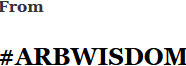
When Hurricane Milton made landfall along Florida’s Gulf Coast as a Category 3 storm on the evening of Wednesday, Oct. 9, hospitals were hunkered down statewide. Even those on the East Coast prepared for the worst. The hospital Baptist Health is situated on the bank of the St. Johns River in downtown Jacksonville, where most days, you can see the reflection of the city’s skyline in the calm waters. But in extreme weather conditions, the river becomes a looming threat to the patients and providers inside.

Hospitals are critical to any community, but Baptist Health serves more people in its emergency room than any other hospital in the county, and its adjoining pediatric hospital, Wolfson Children’s, houses a level IV NICU that serves kids not just in Florida but southeast Georgia, too. When a hurricane is bearing down on them, how is anyone supposed to decide how to keep them safe? And what about the parents giving birth in the labor delivery unit, or coming in for needed C-sections or inductions?

In 2024 alone, the United States endured 27 “climate disaster events” exceeding $1 billion in damages each, according to the National Oceanic and Atmospheric Administration. Storms battered Florida and Texas, and Hurricane Helene decimated countless homes and businesses in North Carolina, killing 105. The 2025 new year began with the Los Angeles fires, which have destroyed more than 16,000 structures and torched almost 60,000 acres of land so far.

The climate crisis is here, and Mother Nature is demanding our attention. It has become everyone’s problem, and like all systemic problems, it has a particular effect on families. Whether it’s rescheduling one person’s routine induction before a hurricane or a health care desert is created when a hospital burns down and never gets rebuilt, the climate crisis is already changing the way pregnant people, children, and babies get quality health care.

The options for a hospital in a hurricane are simple on the surface: remain open, or close and evacuate. But no two patients are alike, and when you’re talking about birth, well, babies wait for nothing and no one. In fact, incoming hurricanes have a way of making more of them decide it’s time to be born, according to stories from medical experts.

“If we close the door and a pregnant person has nowhere to go, what’s going to happen?” says registered nurse Shannon Wainright, MBA, director of women’s and children’s services at Southeast Georgia Health System in Brunswick. “Our goal is to provide services at a scale that is reasonable during a storm. We’re not going to be doing elective surgeries. We’re not going to be doing anything that’s not necessary, but birth is necessary. These patients are pregnant, and the baby is coming, and oftentimes changes in [barometric] pressure and stress can definitely have an impact on a patient going into labor.”

Tornadoes, earthquakes, and wildfires happen suddenly, with little to no warning. A report from Stanford University’s & The West includes a harrowing description from a Paradise, California, nurse on duty during the 2018 Camp Fire. Her supervisor assured her they’d be alerted if they needed to leave, and then she looked out the window to see a fire burning just across the parking lot. She and her team evacuated 69 patients via helicopter, ambulance, and the nurses’ own personal vehicles. Natural disasters are one thing, but a failure to evacuate patients in advance can lead to unspeakable tragedies.

When it comes to extreme weather events, hurricanes tend to have the longest lead time. The National Weather Service monitors their formation closely, so there is usually about a week’s notice between when a hurricane’s path is expected to affect weather on land and its actual arrival. Its wind speeds, the direction it’s spinning, whether it will approach at high or low tide — all these factors matter when you’re deciding whether to evacuate a hospital full of patients who need your care.

That said, hospitals nearly always opt to stay open during major weather events. They have a duty to care for first responders who stay behind to help, Wainwright says, and they know pregnant people in their areas don’t get to choose when their babies come. “Labor is such an unpredictable event. It’s one of the many reasons why we feel like it is imperative to stay. I can’t imagine a mom showing up at our door and not being able to get in.”

Wainwright tells me about the rare occasion they evacuated patients during a hurricane in 2017. Most of her prenatal patients with due dates in the coming weeks were instructed to print their prenatal care records and evacuate early. Everyone knew holding off until mandatory orders would lead to traffic on all major roadways, and these women needed to wait out the storm somewhere with a different hospital nearby. Those that could be safely discharged early were sent home. The rest were transported to nearby adult and pediatric hospitals, “which was not fun,” she recalls.

“There’s a website that we all log into, and hospitals put their [available] beds up there. One hospital says, ‘I have this many postpartum beds, I have this many NICU beds, I have this many labor beds, and I have this many critical care.’ We would get on that database, and we would say, ‘We need this many.’ Then hospitals can grab up those patients, call us, and make that connection so we can safely transfer the patient.”

Transferring patients is a huge undertaking, says registered nurse Christine Smith, MSN, vice president of patient care services for Baptist Medical Center Jacksonville. The Baptist Health system has seven inpatient hospital locations, and the one closest to the coast was evacuated during Hurricane Irma. “It takes a village. It’s not just the hospital doing that but the city,” she says. To evacuate, hospitals coordinate with local EMS and, one by one via ambulance ride, take patients (including NICU babies and laboring parents, if they’re there) to other facilities.

But with robust generator systems, most hospitals don’t fear losing power. And thanks to innovative flood prevention barriers, they don’t have to close just in case the storm surge gets too high either. “During Milton, we were most concerned with flooding from the river based on how that storm was coming across the state and what we thought was going to happen when high tide hit,” says Allegra C. Jaros, MBA, president of Wolfson Children’s Hospital. To keep the river out of the lobby, their facilities team erected waterproof barriers ahead of the storm, allowing operations inside to continue uninterrupted.

Because the hospital is fortified with an emergency generator system to keep medical equipment functioning in the event of a power outage, they also make room for children in the community who rely on power to sustain their lives, like those on ventilators. There are 43 such families in the Jacksonville area who are registered to ride out the storms inside the hospital, where their kids will be safe.

As for scheduled C-sections and inductions, those procedures get assessed one by one to determine if they’re still on. That means nursing leadership is calling OB-GYNs and midwives to ask about each individual patient on the schedule.

“Women have babies 24/7. It’s about figuring out who needs to come in, and who can be put off safely, if need be,” says Dr. Tiffany Wells, M.D., vice chair of obstetrics and gynecology at Baptist Medical Center Jacksonville. Medically necessary inductions or C-sections take priority, she says. “Generally, if we have to limit anything, the elective inductions will be taken away first to reserve space.”

During 2017’s Hurricane Irma, Wells slept in an office onsite for three days in between caring for patients. The storm caused record flooding throughout the city, and Baptist Health’s basement — which houses its generators — also took on water. “That created an emergency,” she says. “We had to physically move all of our labor and delivery patients from one side of the hospital to the other until they made sure everything was safe to move everyone back.” A veritable moat formed around the base of the hospital. From inside, Wells could see cars driving on I-95 and taking the exit ramp to approach the hospital, before having to reverse back up the ramp and look for another route.

The picture Wainwright paints of sheltering in the hospital during that storm sounds like the sweetest kind of community — nurses bringing in food from home to have meals potluck-style, with patients and their families grabbing plates too. Getting weather updates here and there as they circulate on the floor, hearing different bits of info from each patient as they go and catching glimpses of the weather radar on the TVs in their rooms. “We’d talk about their stories of where their family was and did they evacuate, and they’d want to know the same about us,” she says.

Wainwright, and many caregivers like her, usually persuade their families to get out of dodge before the evacuation order is issued. “I don’t want to have to worry about them when there’s so much to focus on at work,” she says. “It feels good to know they’re gone. They worry about me a lot.” She shared that in the aftermath of storms, nurses and doctors have organized rides for colleagues who couldn’t get their cars out of their neighborhoods due to flooding or downed trees, bringing each other clothes and shoes to work in when their homes flooded. Workers sometimes stay on-site until their homes are safe to return to. With all the generators, water barriers, and safety measures at their disposal, hospitals are often the safest place to be in a storm.

But the number of helpers running towards the onslaught of natural disasters will soon dwindle. There will be a massive nationwide shortage of providers in the next decade. OB-GYNs, pediatricians, and family medicine providers are three disciplines notorious for being compensated less than their colleagues in other specialties, and they’re among the most likely doctors to be sued, making recruiting new grads difficult. On a planet that is heating up, freezing over, and generally seething at our presence, we know natural disasters are increasing in frequency and intensity. When there are fewer of these specialists picking up calls about whose C-sections are medically necessary during a hurricane, or whether a NICU baby can be safely relocated to another facility via ambulance, it is once again the health of parents and children that will suffer.

.

https://imgix.bustle.com/uploads/image/2025/2/24/52949b19/nicu_header.jpg?w=1320&h=989&fit=crop&crop=facesEmma Chao/Romper; Getty

.

.

Click the link below for the complete article:

https://www.romper.com/life/what-happens-to-nicu-babies-during-natural-disasters

.

__________________________________________

Trump Had a Billion-Dollar Windfall After Returning to the White House

Leave a comment

Click the link below the picture

.

President Trump reaped a stunning windfall in his first year back in the White House, including about $1.4 billion from his family’s cryptocurrency businesses, a new filing shows.

That number does not include money he brought in from other parts of his vast holdings, including stocks, bonds and real estate.

One of his biggest hauls in 2025 came when an investment firm tied to the United Arab Emirates bought nearly half of the Trump family’s main crypto company, World Liberty Financial, a transaction that blurred the line between foreign policy and private enterprise.

Mr. Trump also collected hundreds of millions of dollars from sales of his $TRUMP memecoin and World Liberty’s sale of its own digital tokens.

The results, detailed in Mr. Trump’s mandatory financial disclosure report for 2025 and released on Tuesday, pulled back the curtain on the president’s business operations. His crypto ventures, the report shows, are now some of his most lucrative enterprises, a remarkable turnabout for a man who once slammed crypto as a haven for drug dealers and scammers.

The returns, which had been something of a mystery, highlight a conflict in the president’s crypto business: Not only is Mr. Trump a major crypto industry operator, but he is also its top policymaker. 

It is hardly the only issue to arise from having a businessman serve as president. The president’s family business, the Trump Organization, has also capitalized on Mr. Trump’s popularity in certain parts of the world, licensing the Trump name to properties in countries that are crucial to U.S. foreign policy interests, including Saudi Arabia and Qatar.

The White House did not immediately respond to a request for comment, though in the past, Mr. Trump has noted that he is exempt from federal conflict of interest laws.

Anna Kelly, a White House spokeswoman, said in a recent statement that Mr. Trump “only acts in the best interests of the American public,” and that “there are no conflicts of interest.”

Although the report released on Tuesday offered revenue figures for Mr. Trump’s crypto and real estate ventures, it did not reveal whether all of the businesses turned a profit or a loss, which is consistent with his previous filings.

What is clear from the report, however, is that Mr. Trump’s crypto operation was a top money maker.

Once an outspoken skeptic of crypto, Mr. Trump embraced the industry on the campaign trail in 2024 and started a series of ventures that have reaped enormous sums.

With his three sons, he helped create World Liberty, a crypto firm that sells a digital currency called $WLFI.

Last year, World Liberty marketed its coin to investors around the world, with 75 percent of each sale allocated to a Trump business entity, after the deduction of certain expenses, guaranteeing the president would make money even if the value of the token declined.

World Liberty enriched the Trump family in other ways, as well. In January 2025, days before Mr. Trump’s inauguration, an investment firm tied to the government of the U.A.E. bought a 49 percent stake in World Liberty for $500 million, raising a slew of ethical concerns. Soon, the Emiratis struck a deal with the Trump administration — over the objections of some national security officials — for the export of valuable computer chips that power artificial intelligence.

The filing released Tuesday did not explicitly refer to the deal, but it mentioned unnamed investments that generated more than $200 million for Mr. Trump.

The other major source of Mr. Trump’s crypto wealth was his memecoin, a novelty currency known as $TRUMP that he started selling days before his inauguration. He earned more than $600 million from sales of the coin, according to the filing.

The coin’s price shot up briefly, before plummeting, with its price now hovering at $1.67, an 80 percent drop from a year ago.

The Latest on the Trump Administration


  • Fed Vulnerable to Trump: President Trump promised to “take appropriate action immediately” against Lisa Cook, the Fed governor he had tried to fire, even as the Supreme Court affirmed that Fed officials can be fired only for cause.

  • Billion-Dollar Mining Deal: An agreement between the U.S. and Kazakhstan has given a group of American investors with ties to the president and the commerce secretary access to one of the world’s largest untapped reserves of tungsten.

  • White House Pressure Campaign: Behind the scenes, the Trump White House went to extensive lengths to advance its theory of executive power, potentially giving the president remarkable leeway to install loyalists at nearly every echelon of government.

  • New ICE Director: The president said he was nominating Lance Schroyer, an adviser to Markwayne Mullin, the D.H.S. secretary, to lead the high-profile agency.

  • Informants for the Trump Administration: President Claudia Sheinbaum of Mexico has pushed back against U.S. investigations into Mexican politicians. Now some politicians want to cooperate.

.

https://static01.nyt.com/images/2026/06/29/multimedia/29dc-trump-disclosure-tjck/29dc-trump-disclosure-tjck-jumbo.jpg?quality=75&auto=webpPresident Trump entering the White House on Sunday. His mandatory financial disclosure report for 2025 pulled back the curtain on his secretive business operations. Credit…Eric Lee for The New York Times

.

.

Click the link below for the complete article:

https://www.nytimes.com/2026/06/30/us/politics/trump-financial-disclosure-crypto-windfall.html

.

__________________________________________

Will humanity be able to protect Earth from a deadly asteroid?

Leave a comment

Click the link below the picture

.

In late May, in broad daylight, residents across Massachusetts and beyond saw a brilliant flash in the sky, followed by two sonic booms that rattled windows, shook houses, and prompted a flood of 911 calls. Some people thought they had just experienced an earthquake. Others thought it was thunder, an explosion, or a military flyover.

But the true source of all the commotion was out of this world—literally. A small meteoroid, about five feet wide and as heavy as an elephant, had entered the atmosphere at a blinding 42,000 miles per hour before disintegrating dozens of miles above the ground. The midair explosion released a pressure wave equivalent to 230–300 tons of TNT, and any surviving fragments likely fell into Cape Cod Bay.

The story quickly captivated an American public already more space-crazed than usual, thanks to the recent success of Artemis II. However, it has also served as a stark reminder that space is not as benign or empty as it may seem. Rather, our solar system is a celestial shooting gallery, chock-full of flying projectiles—not just meteoroids but larger bodies, such as comets, asteroids, and other cosmic detritus—and Earth is right in the firing line. Earlier in May, for instance, the newly discovered asteroid 2026 JH2, estimated at 50 to 115 feet wide, missed Earth by a “mere” 56,000 miles. Had it been on a collision course, it could have easily destroyed a big city.

But even that would not have been humanity’s worst nightmare scenario. After all, some celestial Goliaths can run a lot larger than JH2—large enough to decimate entire countries and even continents. British physicist Stephen Hawking believed that a cosmic impact poses one of the greatest threats to humanity, far greater than any global pandemic or terrestrial natural disaster. The question is not if we will suffer a direct hit but when.

Unfortunately, we humans would be powerless against a rare giant projectile many miles in diameter. Unlike the dinosaurs, we might well see the approach of a six-mile-wide killer asteroid, like the one that collided with Earth 66 million years ago. However, stopping it or deflecting its course is out of the question: It would be like trying to stop an oncoming truck by throwing ping-pong balls at it. And although we’ve discovered the vast majority of near-Earth objects (NEOs) larger than about two-thirds of a mile across, finding that none are on a collision course with Earth, astronomers could very well discover an enormous comet next week that will crash into the planet in a few years’ time. And again, there’s nothing we could do to stop it.

If we do want to protect ourselves from cosmic impacts, we need to focus on medium-sized objects, ranging from about 100 yards to about a half a mile. These are relatively numerous, and they can easily cause many tens of millions of casualties. Earth is hit by a 400-yard asteroid on average once every 100,000 years. If the collision occurs in Europe, a country like France will disappear completely from the map, and the entire continent will become an unimaginable disaster area. Such an impact is, in theory, preventable, so we would be crazy not to explore the possibilities of doing just that.

That’s what Dutch astrophysicist Piet Hut of the Institute for Advanced Study in Princeton, New Jersey, thought too. A few years after the 1998 Hollywood blockbusters Deep Impact and Armageddon brought the general public face-to-face with the possibility of an impact, Hut organized a workshop on how to avert such doomsday scenarios. A year later, in October 2002, together with a fellow astronomer and two former astronauts, he founded the B612 Foundation—a private nonprofit foundation that aimed to investigate how to deflect approaching celestial bodies.

Ten years ago, the foundation had ambitious plans to launch a satellite, called Sentinel, that would search for potentially dangerous asteroids. Although the project was canceled for lack of funds, the B612 Foundation remains one of the leading advocates of serious research into planetary defense techniques.

Meanwhile, government organizations such as NASA and the European Space Agency (ESA) are not sitting idly by.

NASA has its own Planetary Defense Coordination Office, while ESA has invested in NEOShield and NEOShield-2, European Union–funded research programs that studied the most plausible methods for asteroid deflection. The U.S. National Science and Technology Council has developed its own National Near-Earth Object Preparedness Strategy, and even within the United Nations Committee on the Peaceful Uses of Outer Space (COPUOS), there is an action team addressing the threat of cosmic impacts. In addition to its own International Asteroid Warning Network, the UN now has a Space Mission Planning Advisory Group.

Needless to say, many, many meetings are being held now on how to protect humanity from attacks by the cosmos.

How will we protect Earth?

When it comes to protecting Earth from a fatal collision, there are a number of ideas currently under consideration, ranging from good to bad to very bad.

For example, blowing an asteroid up with an atomic bomb, as happened in “Armageddon,” is not a smart idea. It is an option that Edward Teller, known as “the father of the hydrogen bomb,” proposed long ago, but it simply wouldn’t help. The numerous fragments created in such an explosion would still be moving through the solar system in more or less the same direction and at the original high speed. As a result, Earth would then have to endure not one big impact but a whole series of smaller ones, with all the attendant consequences.

A more practical solution would be to slightly deflect the approaching celestial body so that it passes close to Earth rather than colliding with it. Particularly if you can see the impact coming many years in advance, a small nudge can be enough to avert disaster. When astronomers discovered the 1,100-foot-wide near-Earth object Apophis, which for a while looked as if it would wreak havoc on Earth in 2029, they were already calculating that a minimal change in speed of just a few micrometers per second would be enough to prevent that anticipated catastrophe. Luckily, in the case of Apophis, there’s no need to intervene: The asteroid will safely fly by the Earth on April 13, 2029, at a distance of some 20,000 miles.

Still, for what it’s worth, NASA did manage to execute its first successful intentional asteroid deflection test rather recently: In September 2022, it deflected a small celestial body when the DART (Double Asteroid Redirection Test) spacecraft intentionally slammed into the 525-foot-wide asteroid Dimorphos, successfully changing its orbit around the larger parent body Didymos.

Meanwhile, at Lawrence Livermore National Laboratory, the HAMMER project is on the drawing board. HAMMER (Hypervelocity Asteroid Mitigation Mission for Emergency Response) is a celestial battering ram, 10 yards long and weighing almost 9 tons, that can be fired at high velocity at a small near-Earth object. With a 10-year warning period, it could deflect a 100-yard-wide object enough to prevent an impact. If something larger is speeding toward Earth, you just send out 10 or 20 HAMMERs. Or 50, or 100. Admittedly, that is a hugely expensive proposition, but if it means you can save 100 million lives, cost is obviously a secondary consideration.

Incidentally, there is a cheaper way to nudge a small asteroid out of its original orbit: just place a giant rocket motor on its surface. If a small rocket motor can transport a launcher into space, a big one should let you accelerate or decelerate an entire NEO at least a tiny bit. As for the raw material needed for the rocket fuel, you could use the composition of the asteroid itself: Hydrogen can be extracted from ice, and oxygen from rock. Or, rather than using a rocket motor, you simply catapult material from the NEO into space at high speed. That is, thanks to Newton’s third law—every action produces an equal and opposite reaction—which results in a kind of rocket effect in the opposite direction.

Thermodynamics could also be of use. For instance, we could heat a small area on one side of the asteroid until the surface material evaporates and jets off into space. The effect is the same as that of a rocket engine on the surface: Gas is blasted away in one direction, propelling the asteroid a tiny bit in the other direction. If you can set a piece of paper or a shoelace on fire using a magnifying glass, you can also focus sunlight on the surface of an asteroid using a large swarm of satellites equipped with gigantic lenses. Additionally, an entire fleet of laser cannons is an option, as is a nuclear explosion at a short distance from the celestial projectile. Another suggestion is to wrap an approaching NEO in thin, reflective foil, either strengthening or weakening the Yarkovsky effect (i.e., the tiny “push” that sunlight exerts on a rotating asteroid). Giving it a once-over with a can of spray paint is another way to achieve the same result.

Finally, perhaps the least invasive option would involve what’s known as a gravity tractor, developed by former astronaut Ed Lu (cofounder of the B612 Foundation) and his colleague Stan Love. The device, which might be a large, heavy space probe, would fly alongside the near-Earth object for an extended period (years to decades) and slowly drag it away from its collision course. The probe would need to keep its rocket engine on the whole time; otherwise, it would be pulled in by the celestial body’s gravity. With a bit of careful maneuvering and enough time, you could pull a killer asteroid into a safe orbit.

It’s not too late

It goes without saying that all of these planetary defense strategies sound rather fantastical. And that’s to say nothing of the complex political obstacles to the whole idea of planetary defense.

Suppose a relatively small near-Earth object is speeding toward our planet, threatening to wipe the city of Dallas (whose population is over a million) off the map. Will Russia and China be willing to help pay for a “rescue mission?” Do Americans have money to spare for the preservation of Chengdu? Do people in Europe care about Zimbabwe’s possible fate? American astronomer Carl Sagan foresaw yet another problem: If a country has the capability to deflect a small asteroid so that it passes close to Earth, the same technology can also be used to bring the asteroid down on an enemy. On this basis, the utopian concept of planetary defense could also turn into a celestial version of the Cold War—or worse.

These are exactly the kinds of issues that are on the agenda of the UN special committee dealing with the threat of cosmic impacts.

For the time being, any form of consensus is still a long way off. Nonetheless, something has to be done. If you are in the firing line, you have to protect and defend yourself as best you can. We must identify the danger, study all the conceivable countermeasures, and be ready to act when necessary. As with fighting the coronavirus pandemic and the climate crisis, the urgency of the problem will likely only sink in when the need arises. Hopefully, it won’t be too late by then.

.

https://static.scientificamerican.com/dam/asset/e660666a-3b7e-46a3-8fe7-95a7957a683f/-Huge-asteroid-impacting-Earth-illustration.jpg?m=1782075876.964&w=900

ANDRZEJ WOJCICKI/SCIENCE PHOTO LIBRARY via Getty Images

.

.

Click the link below for the complete article:

https://www.scientificamerican.com/article/how-to-protect-earth-from-a-deadly-asteroid-impact/

.

__________________________________________

Older Entries

Becoming HIS Tapestry

Christian Lifestyle Blogger

Finanzalibera.com

Finanzalibera.com per una libertà finanziaria

MRS. T’S CORNER

https://www.tangietwoods

Joe Mullins Commissioner

CEO and president of The Mullins Companies

The Luttie Board

Two Cultures. One Life. Endless Stories

Charles Maxwell DeCook

Real Estate Development Specialist

Amor Entre Estrellas

¡Bienvenido de vuelta viajero!

Heart of Loia `'.,°~

so looking to the sky ¡ will sing and from my heart to YOU ¡ bring...

Michael Ciullo

CEO and Founder of Nsight Health

Nelson MCBS

Catholic News, Prayers, HD Images, Rosary, Music, Videos, Holy Mass, Homily, Saints, Lyrics, Novenas, Retreats, Talks, Devotionals and Many More

global geopolitics

Decoding Power. Defying Narratives.

Talk Photo

A creative collaboration introducing the art of nature and nature's art.

Movie Burner Entertainment

The Home Of Entertainment News, Reviews and Reactions

C r i s t i a n a' s Fine Arts ⛄️

•Whenever you are confronted with an opponent, conquer him with love.(Gandhi)

TradingClubsMan

Algotrader at TRADING-CLUBS.COM

Comedy FESTIVAL

Film and Writing Festival for Comedy. Showcasing best of comedy short films at the FEEDBACK Film Festival. Plus, showcasing best of comedy novels, short stories, poems, screenplays (TV, short, feature) at the festival performed by professional actors.

Bonnywood Manor

Peace. Tranquility. Insanity.

Warum ich Rad fahre

Take a ride on the wild side

Madame-Radio

Découvre des musiques prometteuses (principalement) dans la sphère musicale française.

Ir de Compras Online

No tiene que Ser una Pesadilla.

Kana's Chronicles

Life in Kana-text (er... CONtext)

Jam Writes

Where feelings meet metaphors and make questionable choices.

emotionalpeace

Finding hope and peace through writing, art, photography, and faith in Jesus.

Essu Center

Essu Center TV

Wearing2Gowns.Com

For the wages of sin is death, but the free gift of God is eternal life through Christ Jesus our Lord

...

love each other like you're the lyric to their music

Luca nel laboratorio di Dexter

Comprendere il mondo per cambiarlo.

Tales from a Mid-Lifer

Mid-Life Ponderings

Creative

Travel,Tourism, Life style "Now in hundreds of languages for you."

freedomdailywriting

I speak the honest truth. I share my honest opinions. I share my thoughts. A platform to grow and get surprised.

The Green Stars Project

User-generated ratings for ethical consumerism

Cherryl's Blog

Travel and Lifestyle Blog

Sogni e poesie di una donna qualunque

Questo è un piccolo angolo di poesie, canzoni, immagini, video che raccontano le nostre emozioni

My Awesome Blog

“Log your journey to success.” “Where goals turn into progress.”

pierobarbato.com

scrivo per dare forma ai silenzi e anima alle storie che il mondo dimentica | Sito Gratuito No-Profit

Thinkbigwithbukonla

“Dream deeper. Believe bolder. Live transformed.”

Vichar Darshanam

Vichar, Motivation, Kadwi Baat ( विचार दर्शनम्)

Komfort bad heizung

Traum zur Realität