The Thomas fire burning in Southern California is on the verge of becoming the largest blaze on state record, accomplishing a shocking feat for this time of year.
The relentless wildfire burning in Ventura and Santa Barbara counties has burned a total of 272,000 acres and remains 60 percent contained as of Wednesday, the California Department of Forestry and Fire Protection, also known as Cal Fire, said in a release.
While the fire’s growth has slowed since igniting on Dec. 4, it’s on track to claim the title of the state’s largest fire on record from the 2003 Cedar Fire, which burned more than 280,000 acres in San Diego County. The data is based on records dating back to 1932.
While good weather conditions in recent days have allowed firefighters to make progress in fighting the blaze, wind gusts of up to 70 mph are expected to pick up tonight or tomorrow and could challenge firefighters working on the Thomas fire, Cal Fire spokesman Daniel Berlant said in a Wednesday update.
.
Gene Blevins / Reuters
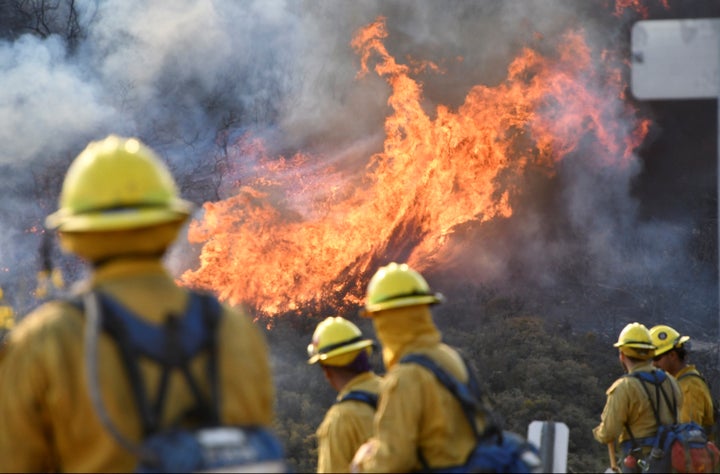
Firefighters attack the Thomas fire’s north flank with backfires near Ojai, Dec. 9, 2017.
Countless human-made troubles in the Indonesian capital pose an imminent threat to the city’s survival. And it has to deal with mounting threats from climate change.
The aviation industry has made steady progress in cutting its fuel use and carbon emissions. Planes have become lighter, engines more efficient, and airlines are starting to use biofuel blends and to better manage their traffic flow in order to save money and reduce emissions.
Still, aviation produces about 2 percent of the world’s carbon emissions. To reduce them further, Zunum Aero has a bold plan for a low-carbon flying future. The Kirkland, Wash.-based startup plans to deliver its first hybrid electric plane in 2022.
The company, which came out of stealth in 2017 and has backing from Boeing and JetBlue’s venture capital arms, unveiled details of its aircraft in October. The 12-seater jet will have a range of 700 miles and maximum cruise speed of 340 miles per hour. It will generate 80 percent fewer emissions and produce 75 percent less noise.
. An illustration shows the Zunum Aero 12-seater hybrid jet flying through clouds.
I hold no responsibility over what you do with your body after watching any of my videos. You should not recreate any of the presented situations. The images shown here are dramatizations of the actual story which has been documented in writing. These videos are not intended to be medical advice. I do not give individualized medical advice over the internet, see your physician for that.
In a first for astronomy, scientists trained a neural network to sift through scads of data from a planet-hunting telescope, and it found a whole new world.
Dubbed Kepler-90i, the newfound planet had been hiding in the buckets of data gathered by NASA’s Kepler spacecraft. It joins seven other planets circling a star roughly 2,500 light-years away, which means the Kepler-90 system ties our own planetary family for hosting the most known worlds.
“Kepler has already shown us that most stars have planets,” NASA’s Paul Hertz said during a press conference revealing the discovery. ”Today, Kepler confirms that stars can have large families of planets, just like our solar system.”
.
An illustration of NASA’s Kepler spacecraft, which started hunting for new planets in 2009.
Illustration by Wendy Stenzel, Ames Research Center/NASA
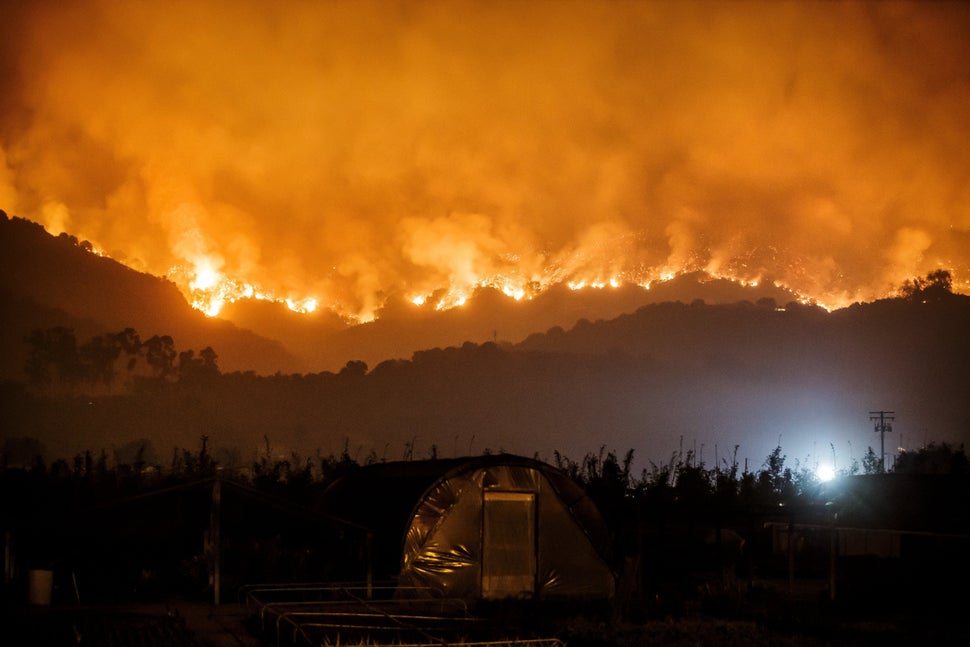
It’s Monday morning at 10 a.m., and I’m driving north up California’s famously stunning coastline toward the Thomas fire, the largest and most uncontrolled of five massive wildfires that have brought devastation to Southern California for the past week. I can see the enormous gloom ahead from 50 miles away ― brown smoke hovering over the southern edge of a fire that had consumed a staggering 230,000 acres so far.
I’m on my way to Ventura County, where the fire first began on Dec. 4 and from where it would eventually grow into the fifth largest in state history over the week that followed. Ventura is an iconic place, a once rugged beach town known for its citrus fruit farming and local surf spots, so often overshadowed by its big neighbor, Los Angeles.
By the time I got there, a grey haze had once again settled over the county, and smoke filled the air. To the east, a massive fire was rapidly spreading, producing a thick brown smoke cloud that reached all the way north, to Santa Barbara County. Firefighters and firetrucks peppered the landscape, racing toward the still active sections of the blaze while other rigs drove further up the coast. A pizza delivery driver wore a dust mask to keep some of the smoke out of his lungs as he carried on with his day.
It’s not a joke – half a lemon dipped in baking soda works wonders! Watch the video to find out several more curious and quite unusual lemon + soda benefits!
This year has been terrible for wildfires, and the ones currently blazing a path of destruction through Southern California are shaping up to the be the worst of the worst. Remember the wildfires that devastated Northern California wine country in October? The Thomas Fire, which is the largest of the fires currently burning, is three times larger than the largest of the wine country fires.
The blazes are massive, dramatic and dangerous. Here’s why they’re so historic, and how they’re affecting everything: Traffic, weather, thousands of lives and homes, and the future of one of America’s largest, most populous cities.
They could be the most destructive in California history
There are four different fires burning in the Los Angeles area. The biggest, the Thomas fire, has already burned 96,000 acres north of Los Angeles – an area more than twice the size of Washington, DC. In fact, it is on pace to become one of the most destructive fires in the state’s history. It’s also raging at a shocking pace. At one point, it spread over 31,000 acres in about nine hours. That’s an acre a second.
Together, the four fires – the Thomas and Rye fires, which are north of LA, and the Creek and Skirball fires, which are directly in the LA metro area, have burned more than 116,000 acres.
Film and Writing Festival for Comedy. Showcasing best of comedy short films at the FEEDBACK Film Festival. Plus, showcasing best of comedy novels, short stories, poems, screenplays (TV, short, feature) at the festival performed by professional actors.



 .
.
 An illustration shows the Zunum Aero 12-seater hybrid jet flying through clouds.
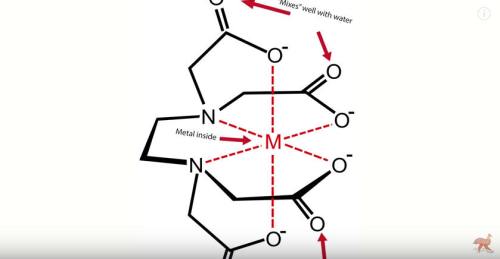 Encapsulating mercury
 From small to large


 .
.
 .
. James' World 2