As the Los Angeles area battles massive wildfires that have scorched more than 140,000 acres and forced nearly 200,000 people to evacuate, a rapidly advancing blaze in nearby San Diego County is sparking new concerns.
Firefighters from across California, some 5,700 in total, traveled to Ventura and Los Angeles counties on Thursday to help halt the massive wildfires that have destroyed more than 500 structures.
In San Diego County, firefighters worked to stop a rapidly intensifying blaze that prompted officials to clarify burn estimates from about 500 to some 4,000 acres in less than three hours. Authorities continued to release evacuation warnings throughout the night as the fire spread with zero percent containment.
The blazes are fueled by strong winds, which have made it increasingly difficult to get them under control. The Santa Ana winds, which blow in hot and dry from the California desert, could potentially reach hurricane-force speeds of 75 mph on Thursday, creating an “extreme fire danger,” according to an alert sent by the countywide emergency system in Los Angeles.
.
MARK RALSTON via Getty Images
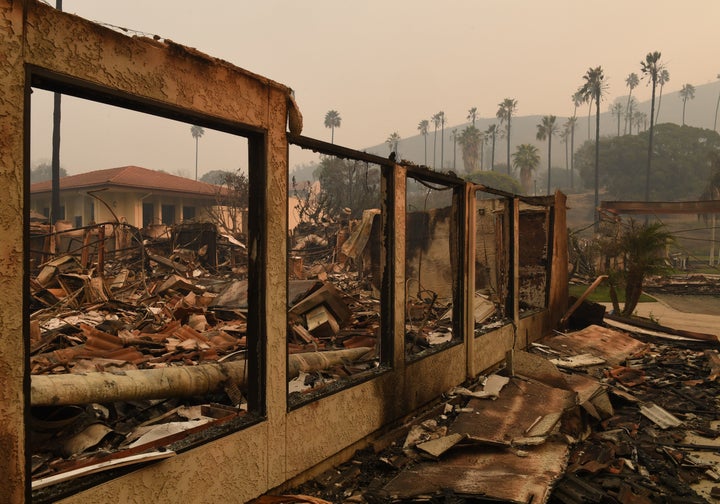
A wall stands in the burned-out Vista del Mar Hospital after the Thomas wildfire swept through Ventura, California, on Wednesday.
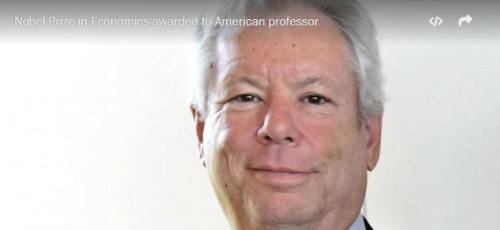
University of Chicago professor Richard Thaler has won the 2017 Nobel Prize in economics for his work on behavioral economics, which tries to understand how humans make decisions, especially bad ones.
Thaler, an American, is one of the leading experts in the relatively new field that combines psychology and economics. He has made a career of studying people’s poor choices — everything from why people save so little for retirement to why National Football League teams that go early in the annual draft typically do a poor job of selecting new players. He’s even looked at how to make bathroom floors cleaner.
“We Americans eat too much, take on too much debt, save too little and put off anything mildly unpleasant as long as possible,” Thaler wrote in a New York Times op-ed in 2011.
.
American economist Richard Thaler won the 2017 Nobel Economics Prize for his research on behavioral economics, the study of how humans make decisions.(Reuters)
“To expect China to be able to solve the problem by having tougher sanctions is unrealistic,” an expert warns.
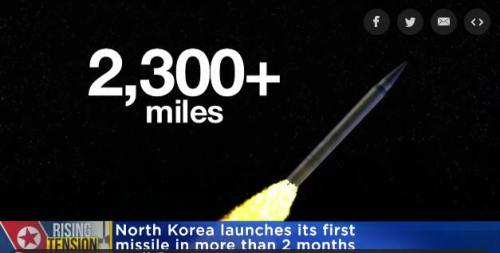
North Korea fired yet another intercontinental ballistic missile this week, prompting U.S. President Donald Trump’s now-familiar call for China to crack down on its defiant trading partner with tougher sanctions.
In a phone call Wednesday, Trump told Chinese President Xi Jinping that his country must “use all available levers to convince North Korea to end its provocations and return to the path of denuclearization,” according to a statement from the White House.
Trump subsequently announced that additional “major sanctions” against North Korea are forthcoming and claimed the situation “will be handled!” But the tired strategy of sanctioning Pyongyang ― a regime hellbent on advancing its nuclear abilities at all costs ― has not yet proved to be an effective one.
The Earth is not a solid mass of rock: its hot, dark, fractured subsurface is home to weird and wonderful life forms.
The living landscape all around us is just a thin veneer atop the vast, little-understood bulk of the Earth’s interior. A widespread misconception about the deep subsurface is that this realm consists of a continuous mass of uniform compressed solid rock. Few are aware that this mass of rock is heavily fractured, and water runs in many of these fractures and faults, down to depths of many kilometres. The deep Earth supports an entire biosphere, largely cut off from the surface world, and is still only beginning to be explored and understood.
The amount of water in the subsurface is considerable. Globally, the freshwater reservoir in the subsurface is estimated to be up to 100 times as great as all the available fresh water in the rivers, lakes and swamps combined. This water, ranging in ages from seven years to 2 billion years, is being intensely studied by researchers because it defines the location and scope of deep life. We know now that the deep terrestrial subsurface is home to one quintillion simple (prokaryotic) cells. That is two to 20 times as many cells as live in all the open ocean. By some estimates, the deep biosphere could contain up to one third of Earth’s entire biomass.
.
A scanning electron microscope image shows a nematode in biofilm (blue), in its natural deep-subsurface habitat. The scale bar is 20 micrometres (μm) long. All images courtesy Gaetan Borgonie
Why do some people seem immune to colds and flu? Follow these tips from real people and experts, and you can learn how to avoid them too.
Everyday mistakes can raise your risk of catching a cold and that includes touching surfaces that many, many other people have touched. A University of Arizonastudy found that a virus spreads to over 50 percent of surfaces and other employees within hours when a single person in an office is infected. Partha Nandi, MD, a leading physician and author of Ask Dr. Nandi, advises avoiding touching common surfaces when possible. Even after you wash your hands, ‘use a paper towel to turn off the faucet,’ he says.
Cassini disintegrated in the skies above Saturn early on Friday, following a remarkable journey of 20 years.
21 Photos
.
Signs of Life?
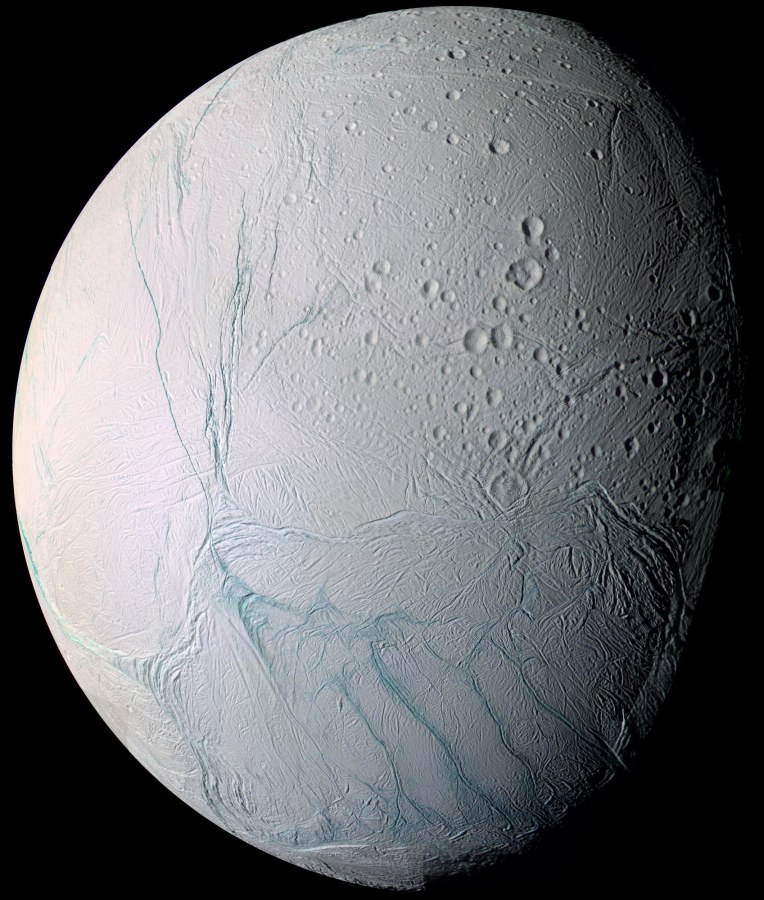
Saturn’s sixth largest moon, Enceladus, has loomed large in the minds of astrobiologists since 2005, when Cassini first spotted geysers of water ice erupting from “tiger stripe” fissures near its south pole.
Scientists think these geysers are blasting material from a sizable ocean buried beneath the satellite’s ice shell, indicating that Enceladus has liquid water, one of the key ingredients required for life.
Cassini space probe offers a never-before-seen perspective on Saturn’s intricate rings just weeks before its mission-ending plunge into the planet.
Talk about ringside seats!
We’ve known about Saturn’s rings since 1610, when Galileo turned his telescope skyward and took a close look at the sixth planet from the sun. But never before have we had a view of the rings like this: a dazzling new movie made from photos snapped by the Cassini space probe show the rings from the inside out — that is, looking outward from the narrow gap between the rings and the planet itself.
The 21 photos were taken over a span of four minutes on Aug. 20 as Cassini dove through the gap. At the time, the school bus-sized craft was about 1,100 miles above the cloud tops that mark Saturn’s uppermost layer (the gas giant planet has no surface) and about the same distance from the innermost ring.
The mayhem that Hurricane Harvey unleashed on Houston didn’t only come from the sky. On the ground, it came sweeping in from the Katy Prairie some 30 miles west of downtown.
Water drains naturally in this stretch of Texas, or at least it used to. At more than 600 square miles, Houston has grown to be as big as Chicago, Cleveland, Detroit and Philadelphia combined, a giant spread of asphalt smothering many of the floodplains that once shuttled water from the prairies to the sea. When finished, the newest road to ring the city and propel its expansion, called the Grand Parkway, will encircle an area equivalent to all of Rhode Island.
.
For years, the local authorities turned a blind eye to runaway development. Thousands of homes have been built next to, and even inside, the boundaries of the two big reservoirs devised by the Army Corps of Engineers in the 1940s after devastating floods. Back then, Houston was 20 miles downstream, its population 400,000. Today, these reservoirs are smack in the middle of an urban agglomeration of six million.
.
The Texas city’s response to a powerful storm says much about polarized visions of the country and diverging attitudes toward cities, race, liberty and science.
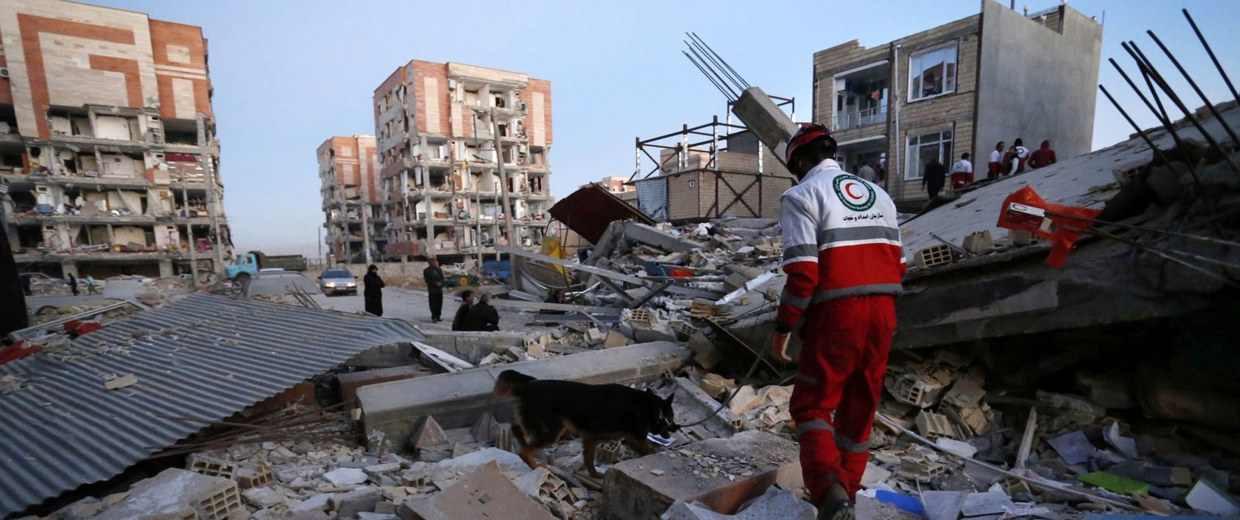
At least 437 people were killed and more than 7,600 others injured after a 7.3-magnitude earthquake struck near Iran’s border with Iraq, authorities said Monday.
In Iran, rescuers who worked through dozens of aftershocks and were hindered by landslides ended their efforts late Monday night/early Tuesday morning, the country’s top emergency management official, Pir-Hossein Kolivand said, according to Reuters.
Many houses in rural areas of Iran are made of mud bricks that can crumble easily in a quake.
.
A rescue worker searches for earthquake survivors in Sarpol-e-Zahab, Iran, on Monday. Pouria Pakizeh / ISNA via AP
Film and Writing Festival for Comedy. Showcasing best of comedy short films at the FEEDBACK Film Festival. Plus, showcasing best of comedy novels, short stories, poems, screenplays (TV, short, feature) at the festival performed by professional actors.



 .
.
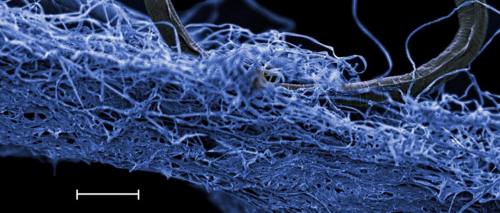 A scanning electron microscope image shows a nematode in biofilm (blue), in its natural deep-subsurface habitat. The scale bar is 20 micrometres (μm) long. All images courtesy Gaetan Borgonie
 They press elevator buttons with their elbow

 Saturn’s rings from the inside looking out




 James' World 2