U.S. government officials say they’ve moved more than 100 kids back to a remote border facility where lawyers reported detained children were caring for each other and had inadequate food, water, and sanitation.
An official from U.S. Customs and Border Protection said Tuesday that the “majority” of the roughly 300 children detained at Clint, Texas, last week have been placed in facilities operated by the Office of Refugee Resettlement.
The official, who briefed reporters on the condition of anonymity, wouldn’t say exactly how many children are currently detained there. But the official says Clint is better equipped than some of the Border Patrol’s tents to hold children.
Attorneys involved in monitoring care for migrant children who visited Clint last week said older children were trying to take care of toddlers, The Associated Press reported Thursday.
They described a 4-year-old with matted hair who had gone without a shower for days, and hungry, inconsolable children struggling to soothe one another.
The mayhem that Hurricane Harvey unleashed on Houston didn’t only come from the sky. On the ground, it came sweeping in from the Katy Prairie some 30 miles west of downtown.
Water drains naturally in this stretch of Texas, or at least it used to. At more than 600 square miles, Houston has grown to be as big as Chicago, Cleveland, Detroit and Philadelphia combined, a giant spread of asphalt smothering many of the floodplains that once shuttled water from the prairies to the sea. When finished, the newest road to ring the city and propel its expansion, called the Grand Parkway, will encircle an area equivalent to all of Rhode Island.
.
For years, the local authorities turned a blind eye to runaway development. Thousands of homes have been built next to, and even inside, the boundaries of the two big reservoirs devised by the Army Corps of Engineers in the 1940s after devastating floods. Back then, Houston was 20 miles downstream, its population 400,000. Today, these reservoirs are smack in the middle of an urban agglomeration of six million.
.
The Texas city’s response to a powerful storm says much about polarized visions of the country and diverging attitudes toward cities, race, liberty and science.
The water burbled from the floors of Vickie Carson’s cottage in the semirural northern edge of Houston, saturating everything she owned.
It seeped through the ceiling of Ebony Harrison’s apartment in the impoverished Sunnyside neighborhood, dousing her newborn daughter as she slept.
It swept so swiftly into Lidia Peña’s rental home in the city’s north side that she and her young son fled without taking any spare clothes.
It drove Rick Christie out of his midcentury ranch house in the southwest Houston neighborhood of Meyerland, leaving him to sleep on a couch above his garage.
Each of their homes was left uninhabitable by Hurricane Harvey, a Category 4 storm that plowed through southeast Texas in late August. Its floodwaters capsized lives of the comfortable and the struggling, black and white, Latino and Asian. Tens of thousands of people across spectrums of race and income were left without permanent places to live, inspiring a newfound saying: Harvey was the storm that didn’t discriminate.
It was a hard choice, but in the end it was no choice at all. A small rescue boat had come up the driveway, offering help. Carl Ellis was with his frail, 73-year-old mother, Wilma Jean. The boat had room for one.
The water was already up to Mr. Ellis’s knees, so there was no time to wait for rescuers with more room. His mother would have to go alone.
Using the back of a pickup truck as a gangplank, Mr. Ellis helped his mother into the boat, her belongings trussed up in garbage bags. There were no life jackets, but it was a short trip and the rescuers promised to come right back for him.
He never saw them — or his mother — again.
Any catastrophic weather event has its measurable aspects: inches of rain, speed of wind, cubic yards of debris. Others are incalculable: waterlogged photos, frayed communities, the invisible moorings of permanence and safety swept away.
.
Lyndon B. Johnson Hospital in Houston, where Wilma Jean Ellis, after being rescued twice, arrived in a body bag.Credit Bryan Thomas for The New York Times
A Houston-area teenager accused of killing a girl in a satanic ritual had gouged out her eye as she begged for her life, prosecutors said Monday during the opening of the teen’s capital murder trial.
Opening statements began in the trial of 18-year-old Jose E. Reyes, who prosecutors say is responsible for the February death of 15-year-old Corriann Cervantes in a vacant apartment southeast of Houston.
A 16-year-old boy also is charged with capital murder and is expected to stand trial later.
.
This booking photo provided by the Houston Police Department shows Jose E. Reyes. Police say evidence of occultism was found in the weekend slaying of a 15-year-old girl. They say evidence of occultism was found on the girl’s body and in the vacant apartment where she was found. Authorities did not provide further details. Harris County jail records show 17-year-old Reyes was being held without bond Tuesday. A 16-year-old boy also was also charged and remains in custody awaiting an appearance in | ASSOCIATED PRESS
A house overflowing with more than 100 people presumed to be in the U.S. illegally was uncovered just outside Houston on Wednesday, a police spokesman said.
The suspected stash house was found during a search for a 24-year-old woman and her two children, a 7-year-old girl and a 5-year-old boy, that were reported missing by relatives late Tuesday after a man failed to meet them as planned at an undisclosed location on the city’s north side, said John Cannon, a spokesman for the Houston Police Department. Many of the people in home that authorities said appeared to be part of a human smuggling operation were dressed only in undergarments and they were sitting in in filthy conditions and surrounded by trash bags full of old clothing, Cannon said.
.
Immigration officials believe they uncover a human smuggling ring when they found 100 people inside a Houston home. | KPRC
Health authorities in western Mexico said Thursday they have detected a probable case of flesh lesions due to the drug Krokodil, often referred to as “the poor man’s heroin.”
The head of the council on addictions in the western state of Jalisco, Dr. Enrico Sotelo, said the patient is a 17-year-old woman who is a resident of Houston, Texas. She came to Mexico to visit the Pacific coast resort city of Puerto Vallarta, where she has relatives, in November. Soon after, she checked into a local health clinic for digestive problems, and it was there that doctors detected the flesh lesions.
Sotelo, who in accordance with privacy guidelines did not reveal the patient’s name, said she told authorities she used the drug in Houston. Her current condition is unknown because she did not return to the health clinic there for any further treatment.
“She acquired this problem with Krokodil in Houston, not here in Puerto Vallarta,” said Sotelo, who in any case has implemented an educational program to warn about the drug’s ill effects.
Long stuck in fourth place, T-Mobile made itself a relevant mobile player in the United States again on Tuesday, with plans to rapidly roll out its 4G LTE network and offer bargain plans with no contracts to entice potential customers.
Oh, and it now offers that quaint little device called the iPhone 5.
In the world, human beings are facing various problems. People who are full of greed, anger, and ignorance are seen to be fighting with each other in words and deeds. As the fighting continues, various problems such as civil wars, wars of aggression, and wars of aggression are occurring. As world peace is being destroyed, humans are facing unbearable problems. Innocent children and women are not getting the rights they deserve and deserve. I can't think of one thing every time. What is it? The United Nations. If we look at the responsibilities and duties of the United Nations, I think it is not suitable for solving the problems that are happening in the world today. In fact, the United Nations and the World Security Council, such an organization must rule the world, must be able to give orders, and must have various ways to obey orders. There must be no organization that can influence more than that organization. There should be experts from each country. They can even dominate the superpowers like the US, China, and Britain. Only then will global peace be achieved quickly. Now, if a country with power develops more militarily, economically, or socially than its own country, then powerful countries will jealously seek out enemies and wage war. Or they will attack with fighter jets. In this, innocent people are losing their lives. No one understands the value of a life. You should think about how to achieve global peace by controlling these. If the US continues to be the permanent president of the UN, world peace will never be achieved. If you think carefully, no one sees that they are working for the common good, but for their own benefit, for the benefit of their own country. The permanent president of the UN and the Security Council has rejected this, As a young Rohingya, I have come to realize that only by electing the president and secretary from among the countries in the world through a secret ballot system and governing the world fairly can we achieve global peace. The United Nations and the Security Council are organizations in which any country must govern, give orders, and make them obey their orders. For example, only when a defendant is tried in court can we hold the leaders of the countries in check and control them, can we achieve global peace smoothly. Otherwise, it will not be easy for powerful countries to use various excuses to end this war every year, every year, for the benefit of themselves and their countries. No country's leaders pay any attention to the words of the United Nations and the Security Council. If we look at it in practice, look at the Rohingya issue. Myanmar is a small country. Even that country has been under siege for 8 years. What action can be taken? Why is the UN and the Security Council Powerless? Without such Power, how can the organization bring about global peace? Everyone should think about it. Whether there is a veto or a strong one, all countries in the world can only achieve global peace if they are subject to the UN and the Security Council. Seek peace in the quiet embrace of nature. Peace is an indispensable need of the human race. It is not as if one person can kill another person, and it is as if one country can attack another country, but instead of trying to build peace, we must try to destroy the peace now, and the world is getting hotter and is on the verge of collapse. I especially appeal to all the world experts to urgently try to bring about peace in all parts of the world. Mr, Noor Muhamed Arkhan Rohingya Youth Myanmar
Film and Writing Festival for Comedy. Showcasing best of comedy short films at the FEEDBACK Film Festival. Plus, showcasing best of comedy novels, short stories, poems, screenplays (TV, short, feature) at the festival performed by professional actors.

 .
.


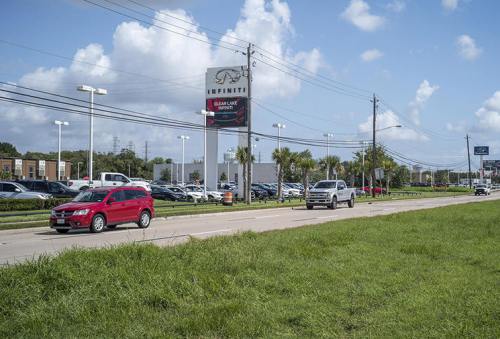 Before
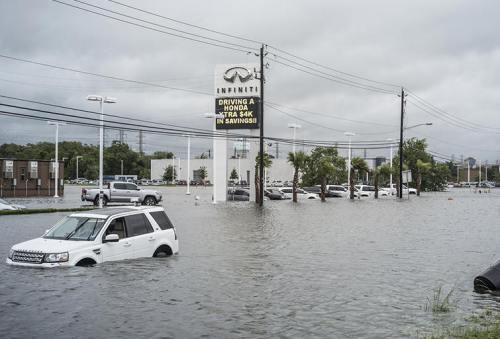 After
After