Centroamericano, a new variety of coffee plant, hasn’t sparked the buzz of, say, Starbucks’s latest novelty latte. But it may be the coolest thing in brewing: a tree that can withstand the effects of climate change.
Climate change could spell disaster for coffee, a crop that requires specific temperatures to flourish and that is highly sensitive to a range of pests. So scientists are racing to develop more tenacious strains of one of the world’s most beloved beverages.
In addition to Centroamericano, seven other new hybrid varieties are gradually trickling onto the market. And this summer, World Coffee Research — an industry-funded nonprofit group — kicked off field tests of 46 new varieties that it says will change coffee-growing as the world knows it.
.
Coffee is under attack from climate change and other woes. In the race to save America’s favorite beverage, science may offer a solution.(Kolin Pope/The Washington Post)
Unforgiving cold has punished the eastern United States for the past 10 days. But the most severe winter weather yet will assault the area Wednesday night into the weekend.
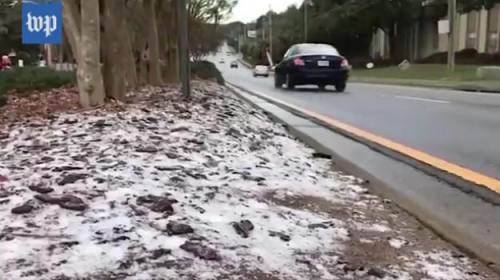
First, a monster ocean storm is taking shape, which pasted parts of Florida, Georgia and South Carolina with rare ice and snow early Wednesday. By Thursday, the exploding storm will, in many ways, resemble a winter hurricane, battering easternmost New England with potentially damaging winds in addition to blinding snow. Blizzard warnings have been issued for the Virginia Tidewater region up the coast to eastern Maine, including Ocean City, Atlantic City, eastern Long Island, Boston and Portland.
“This rapidly intensifying East Coast storm will produce strong, damaging winds — possibly resulting in downed trees, power outages and coastal flooding,” the National Weather Service tweeted Wednesday.
.
Capital Weather Gang’s Jason Samenow tells us how much snow the bomb cyclone could dump and its expected impact on the already bitter temperatures.(Claritza Jimenez/The Washington Post)
A massive “bombogenesis” — an area of rapidly declining low pressure — will wreak havoc on the Northeast this week, threatening hurricane-force winter wind gusts and blinding snow.
The bombogenesis will result in what’s known as a “bomb cyclone.” And the bomb cyclone, expected to strike Thursday, will likely dump 6 to 12 inches of snow in New England and hurl 40- to 60-mph gusts.
.
By the end of this week, parts of the Northeast will be colder than Mars.
At Mount Washington Observatory in New Hampshire, the temperature will plunge to minus 35 degrees Friday night into Saturday, weather observer Taylor Regan said. At last check several days ago, the high temperature on Mars was minus 2 degrees Fahrenheit.
.
But it’s not just New England suffering winter’s wrath. Freezing rain, sleet and snow are smothering parts of the Southeast on Wednesday.
Is the outlook for technology in 2018 exciting — or slightly terrifying? Flip a coin. You’d be right either way.
As I look into my crystal ball at what new technologies are most likely to shape our lives in the next 12 months, I see science-fiction dreams coming to life: glasses that mix reality and imagination, an electric car in my driveway and gadgets that charge without plugs.
But coming out of a year where most Americans were hacked and Silicon Valley got scolded by Congress, there’s plenty to worry about. How many ways will artificial intelligence make decisions without us? And how long should we remain panicked about cybersecurity lapses?
.
After such a hectic year for tech, here’s what The Post’s Geoffrey A. Fowler expects in 2018.(Jhaan Elker/The Washington Post)
Five Sherpas surrounded the frozen corpse. They swung axes at the body’s edges, trying to pry it from its icy tomb. They knocked chunks of snow from the body, and the shattered pieces skittered down the mountain. When they finally freed a leg and lifted it, the entire stiff and contorted body shifted, down to its fingertips.
The sun was shining, but the air was dangerously cold and thin at 27,300 feet above sea level. A plume of snow clouded the ridge toward the summit of Mount Everest, so close above. When the Sherpas arrived — masks on their faces, oxygen tanks on their backs — the only movement on the steep face came from the dead man’s frayed jacket pockets. They were inside out and flapping in the whipping wind.
More than a year of exposure to the world’s wickedest elements had blackened and shriveled the man’s bare face and hands. His hydrant-yellow summit suit had dulled to the hue of a fallen leaf. The bottom of his boots pointed uphill. His frozen arms were bent at the elbows and splayed downhill over his head. It was as if the man sat down for a rest, fell backward and froze that way.
.
Subhas Paul, left, and his guide, Lakpa Sherpa, at the summit.Subhas Paul
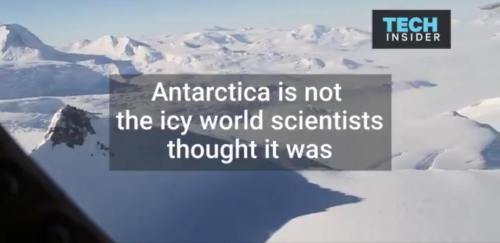
Antarctica is melting more than expected, and it’s changing sea levels. A team of scientists recently compiled the most detailed map yet of liquid water across Antarctica. They found water in places where it was thought to be impossible.
Here are 7 milestones Musk reached this year. From restoring power in Puerto Rico to making the fastest street car on Earth, Elon Musk had a pretty big 2017.
Mathematics gets down to work in these talks, breathing life and logic into everyday problems. Prepare for math puzzlers both solved and unsolvable, and even some still waiting for solutions.
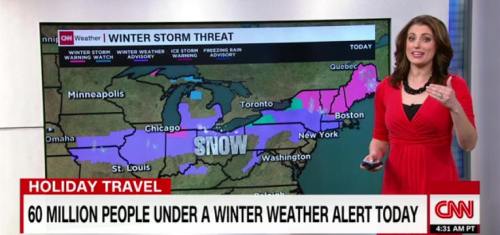
A broad swath of the US won’t have to dream of a white Christmas as winter weather bears down on much of the Northwest, Midwest and Northeast on Sunday. They’ll be seeing snow from two separate storms.
More than 60 million people live in areas that are under winter weather alerts, which includes advisories, warnings and lake-effect snow warnings.
One storm system was located over Des Moines, Iowa, and Kansas City on Sunday morning and is moving eastward over the course of the day.
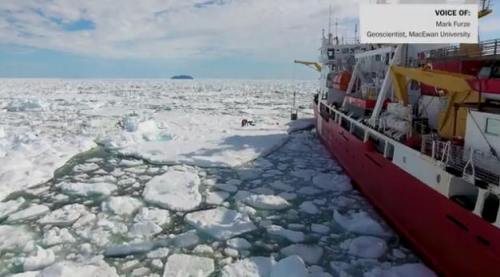
The football field-size CCGS Amundsen, breaking through the icy waters of the Northwest Passage, came to a halt. Traversing one of the most unexplored regions of Earth’s oceans, the Canadian coast guard vessel found itself amid ice 10 feet thick. It reversed course, turned 30 degrees, and proceeded forward again, trembling along the way.
This icebreaker’s objective was to carry scientists into little-charted seas high in the Canadian Arctic. There they planned to map regions of the seafloor at high resolution and pull up a sample that could reveal what happened here at the close of the last ice age, 10,000 to 12,000 years ago.
But the dilemma the scientists on this vessel faced had less to do with ancient history than the near future. By helping to map a region that’s only now becoming navigable, thanks to climate change, they’re part of a broader opening of one of Earth’s most untouched environments to a growing volume of ship traffic.
.
Mark Furze, a geoscientist and professor at MacEwan University, discusses the importance of understanding how climate change is impacting the Arctic.(Alice Li/TWP)
Film and Writing Festival for Comedy. Showcasing best of comedy short films at the FEEDBACK Film Festival. Plus, showcasing best of comedy novels, short stories, poems, screenplays (TV, short, feature) at the festival performed by professional actors.

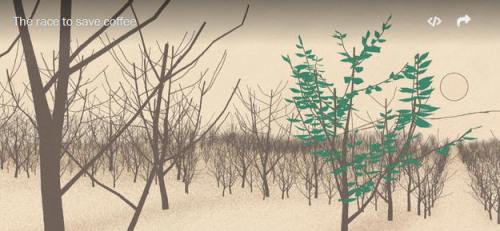 Coffee is under attack from climate change and other woes. In the race to save America’s favorite beverage, science may offer a solution.

 .
.


 .
.
 .
.
 Mathematics gets down to work in these talks.
 .
.
 James' World 2