October 7, 2022
Mohenjo
Business, Enthralling, Human Interest, Photographs
amazon, business, Business News, current-events, Future, Hotels, human-rights, medicine, mental-health, research, Science, Science News, technology, Technology News, travel, vacation

Click the link below the picture
.
Moorland or moor is a type of habitat found in upland areas in temperate grasslands, savannas, and shrublands and montane grasslands and shrublands biomes, characterised by low-growing vegetation on acidic soils. Moorland, nowadays, generally means uncultivated hill land (such as Dartmoor in South West England), but also includes low-lying wetlands (such as Sedgemoor, also South West England). It is closely related to heath, although experts disagree on what precisely distinguishes these types of vegetation. Generally, moor refers to highland and high rainfall zones, whereas heath refers to lowland zones which are more likely to be the result of human activity. Moorland habitats mostly occur in tropical Africa, northern and western Europe, and neotropical South America. Most of the world’s moorlands are diverse ecosystems. In the extensive moorlands of the tropics, biodiversity can be extremely high. Moorland also bears a relationship to tundra (where the subsoil is permafrost or permanently frozen soil), appearing as the tundra and the natural tree zone. The boundary between tundra and moorland constantly shifts with climatic change.
Heathland and moorland are the most extensive areas of semi-natural vegetation in the British Isles. The eastern British moorlands are similar to heaths but are differentiated by having a covering of peat. On western moors, the peat layer may be several meters thick. Scottish “muirs” are generally heather moors, but also have extensive covering of grass, cotton grass, mosses, bracken, and under-shrubs such as crowberry, with the wetter moorland having sphagnum moss merging into bog-land.
There is uncertainty about how many moors were created by human activity. Oliver Rackham writes that pollen analysis shows that some moorland, such as in the islands and extreme north of Scotland, are clearly natural, never having had trees, whereas much of the Pennine moorland area was forested in Mesolithic times. How much the deforestation was caused by climatic changes and how much by human activity is uncertain.
A variety of distinct habitat types are found in different world regions of moorland. The wildlife and vegetation forms often lead to high endemism because of the severe soil and microclimate characteristics. An example of this is the Exmoor Pony, a rare horse breed which has adapted to the harsh conditions in England’s Exmoor.
In Europe, the associated fauna consists of bird species such as red grouse, hen harrier, merlin, golden plover, curlew, skylark, meadow pipit, whinchat, ring ouzel, and twite. Other species dominate in moorlands elsewhere. Reptiles are few due to the cooler conditions. In Europe, only the common viper is frequent, though in other regions moorlands are commonly home to dozens of reptile species. Amphibians such as frogs are well represented in moorlands. When moorland is overgrazed, woody vegetation is often lost, being replaced by coarse, unpalatable grasses and bracken, with a greatly reduced fauna.
Some hill sheep breeds, such as Scottish Blackface and the Lonk, thrive on the austere conditions of heather moors.
Burning of moorland has been practised for a number of reasons, for example, when grazing is insufficient to control growth. This is recorded in Britain in the fourteenth century. Uncontrolled burning frequently caused (and causes) problems and was forbidden by statute in 1609.[citation needed] With the rise of sheep and grouse management in the nineteenth century, it again became common practice. Heather is burnt at about 10 or 12 years old when it will regenerate easily. Left longer, the woodier stems will burn more aggressively and will hinder regrowth. Burning of moorland vegetation needs to be very carefully controlled, as the peat itself can catch fire, and this can be difficult if not impossible to extinguish. In addition, uncontrolled burning of heather can promote alternative bracken and rough grass growth, which ultimately produces poorer grazing. As a result, burning is now a controversial practice; Rackham calls it “second-best land management”.
.
 An image from Heather Moorland
.
.
Click the link below for images:
.
__________________________________________
October 7, 2022
Mohenjo
Business, Food For Thought, Human Interest, Political, Science, Technical
amazon, business, Business News, current-events, Future, Hotels, human-rights, medicine, mental-health, research, Science, Science News, technology, Technology News, travel, vacation
Click the link below the picture
.
Mark didn’t mean to cut the guy off. The man in the pickup truck honked repeatedly. Mark nodded at him: Sorry. But a few minutes later Mark accidentally cut the guy off again. And that’s when things went sideways…
The man raced his truck forward and blocked Mark’s car. With both vehicles now stopped, the guy got out. All six-foot-five and three hundred pounds of him. (If I was Mark I would have considered calling ahead to reserve one of the nicer rooms in the ICU.)
The guy started banging his fist on Mark’s door. Bellowing at him with rage. Inexplicably, Mark rolled down his window:
“Have you ever had such an awful day that you’re just hoping to meet someone who will pull out a gun, shoot you, and put you out of your misery? Are you that someone?”
The man’s jaw dropped. “What?”
“Yeah, I really mean it. I don’t usually cut people off, and I never cut someone off twice. I’m just having a day where no matter what I do or who I meet—including you!—I seem to mess everything up. Are you the person who is going to mercifully put an end to it?”
The man’s demeanor changed instantly. He became calm. Reassuring.
“Hey. C’mon, man. It’ll be okay. Really! Just relax, it’ll be okay. Everyone has days like this.”
They talked for a while. Nicely. The guy got back into his truck. He waved to Mark in the rearview mirror. And drove off.
.
 True
True
.
.
Click the link below for the article:
.
__________________________________________
October 7, 2022
Mohenjo
Business, Food For Thought, Human Interest, Political, Science, Technical
amazon, business, Business News, current-events, Future, Hotels, human-rights, medicine, mental-health, research, Science, Science News, technology, Technology News, travel, vacation
Some content on this page was disabled on April 15, 2025 as a result of a DMCA takedown notice from Guardian Media Group. You can learn more about the DMCA here:
https://wordpress.com/support/copyright-and-the-dmca/
October 6, 2022
Mohenjo
Business, Enthralling, Human Interest, Photographs
amazon, business, Business News, current-events, Future, Hotels, human-rights, medicine, mental-health, research, Science, Science News, technology, Technology News, travel, vacation
Click the link below the picture
.
San Francisco, officially the City and County of San Francisco, is the commercial, financial, and cultural center of Northern California. The city proper is the fourth most populous in California and 17th most populous in the United States, with 815,201 residents as of 2021. It covers a land area of 46.9 square miles (121 square kilometers), at the end of the San Francisco Peninsula, making it the second most densely populated large U.S. city after New York City, and the fifth most densely populated U.S. county, behind only four of the five New York City boroughs. Among the 331 U.S. cities proper with more than 100,000 residents, San Francisco was ranked first by per capita income (at $133,856) and fifth by aggregate income as of 2019. Colloquial nicknames for San Francisco include SF, San Fran, The City, Frisco, and Baghdad by the Bay.
San Francisco and the surrounding San Francisco Bay Area are a global center of economic activity and the arts and sciences, spurred by leading universities, high-tech, healthcare, FIRE, and professional services sectors. As of 2020, the metropolitan area, with 6.7 million residents, ranked 5th by GDP ($874 billion) and 2nd by GDP per capita ($131,082) across the OECD countries, ahead of global cities like Paris, London, and Singapore. San Francisco anchors the 12th most populous metropolitan statistical area in the United States with 4.7 million residents, and the fourth-largest by economic output, with a GDP of $592 billion in 2019. The wider San Jose–San Francisco–Oakland, CA Combined Statistical Area is the fifth most populous, with 9.6 million residents, and the third-largest by economic output, with a GDP of $0.5 trillion in 2020. Of the 105 primary statistical areas in the U.S. with over 500,000 residents, this CSA had the highest GDP per capita in 2019, at $112,910. In the same year, San Francisco proper had a GDP of $200.5 billion, and a GDP per capita of $228,118. San Francisco was ranked seventh in the world and third in the United States on the Global Financial Centres Index as of March 2022.
As of June 2022, the Bay Area was home to four of the world’s fifteen largest companies by market capitalization, and the city proper is headquarters to companies such as Wells Fargo, Salesforce, Uber, First Republic Bank, Airbnb, Twitter, Block, Levi’s, Gap Inc., Dropbox, PG&E, Lyft, and Cruise, although the COVID-19 pandemic in the United States has accelerated the exodus of business from downtown San Francisco. The city is home to a number of educational and cultural institutions, such as the University of California, San Francisco (UCSF), the University of San Francisco (USF), San Francisco State University (SFSU), the de Young Museum, the San Francisco Museum of Modern Art, the San Francisco Symphony, the San Francisco Ballet, the San Francisco Opera, the SFJAZZ Center, the California Academy of Sciences, the San Francisco Giants, and the Golden State Warriors. A popular tourist destination, San Francisco is known for its steep rolling hills and eclectic mix of architecture across varied neighborhoods, as well as its cool summers, fog, and landmarks, including the Golden Gate Bridge, cable cars, Alcatraz, and Chinatown and Mission districts.
San Francisco was founded on June 29, 1776, when colonists from Spain established the Presidio of San Francisco at the Golden Gate and Mission San Francisco de Asís a few miles away, both named for Francis of Assisi. The California Gold Rush of 1849 brought rapid growth, transforming an unimportant hamlet into a busy port making it the largest city on the West Coast at the time; between 1870 and 1900, approximately one-quarter of California’s population resided in the city proper. In 1856, San Francisco became a consolidated city-county. After three-quarters of the city was destroyed by the 1906 earthquake and fire, it was quickly rebuilt, hosting the Panama-Pacific International Exposition nine years later. In World War II, it was a major port of embarkation for nval service members shipping out to the Pacific Theater. It then became the birthplace of the United Nations in 1945. After the war, confluence of returning servicemen, significant, liberalizing attitudes, the rise of the “beatnik” and “hippie” countercultures, the sexual revolution, the peace movement growing from opposition to United States involvement in the Vietnam War, and other factors led to the Summer of Love and the gay rights movement, cementing San Francisco as a center of liberal activism in the United States. More recently, statewide droughts in California have strained the city’s water security.
.
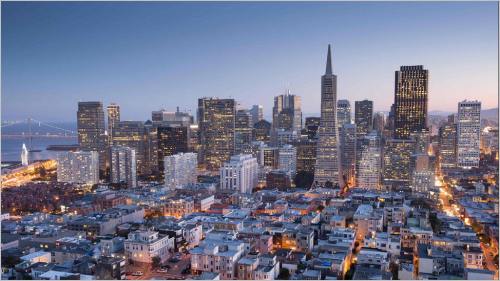 An image from San Francisco, California
.
.
Click the link below for images:
.
__________________________________________
October 6, 2022
Mohenjo
Business, Food For Thought, Human Interest, Political, Science, Technical
amazon, business, Business News, current-events, Future, Hotels, human-rights, medicine, mental-health, research, Science, Science News, technology, Technology News, travel, vacation

Click the link below the picture
.
Whether it’s Megan and Thomas Markle or Britney and her teen sons, celebrity family feuds are having a moment. Nevertheless, with roughly 10 percent of Americans estranged from a parent or child, you very likely know someone in your own life with parental problems.
Therapists and researchers believe that rifts in families are becoming more common, particularly with adult children stopping contact with one or both parents. A study in 1997 explored family relationships in later life and found that 7 percent of adult children had cut ties with their mother and 27 percent from their father. In 2020, research by sociologist Karl Pillemar showed that 1 in 4 Americans are estranged from their families—roughly 67 million people.
Simone Bose is a relationship therapist based in London. She deals with family issues every day in her practice, including estrangement, with her clients coming from a range of backgrounds and circumstances.
“It’s never an easy decision,” she told Newsweek. “It’s the hardest thing in the world to separate yourself from your parents.
“They were your everything as a child, and no matter what age they are your parents can be huge in your life.
.
 A stock photo of an adult daughter giving her mother the silent treatment, while her mother places her hand on her shoulder. Toxic and narcissistic behaviors are just one reason why adult children are distancing themselves from their parents. JackF/iStock/Getty Images Plus
.
.
Click the link below for the article:
.
__________________________________________
October 6, 2022
Mohenjo
Business, Food For Thought, Human Interest, Political, Science, Technical
amazon, business, Business News, current-events, Future, Hotels, human-rights, medicine, mental-health, research, Science, Science News, technology, Technology News, travel, vacation

Click the link below the picture
.
Since the first James Webb Space Telescope images were released in July, our feeds have been flooded with mind-bogglingly gorgeous photos of space – from insanely detailed images of Jupiter to the most distant known star.
Now, Webb has done it again, this time capturing an almost perfect Einstein ring whose light has traveled roughly 12 billion light-years to reach us. And we can’t stop staring.
You can see the colorized image, which was shared by astronomy grad student Spaceguy44 on Reddit, below.
As Spaceguy44 explains on Reddit, an Einstein ring occurs when a distant galaxy has been magnified and wrapped into an almost-perfect ring by a massive galaxy in front of it.
The galaxy in question is called SPT-S J041839-4751.8.
.
 Colorized image of a distant Einstein ring. (JWST/MAST; Spaceguy44/Reddit)
.
.
Click the link below for the article:
.
__________________________________________
October 5, 2022
Mohenjo
Business, Enthralling, Human Interest, Photographs
amazon, business, Business News, current-events, Future, Hotels, human-rights, medicine, mental-health, research, Science, Science News, technology, Technology News, travel, vacation
Click the link below the picture
.
Loch Etive (Scottish Gaelic, Loch Eite) is a 30 km sea loch in Argyll and Bute, Scotland. It reaches the sea at Connel, 5 km north of Oban. It measures 31.6 km (193⁄4 miles) long and from 1.2 km (3⁄4 mile) to 1.6 km (1 mi) wide. Its depth varies greatly, up to a maximum of 150 m (490 ft).
The name Etive is believed to mean “little fierce one” from the Gaelic goddess associated with the loch. It heads east for half its length alongside the main road and rail link to Oban, before heading northeast into mountainous terrain. A road along Glen Etive makes the head of the loch accessible from Glen Coe. The narrow mouth of the loch results in its most unusual feature, the Falls of Lora. Part of the north bank has been designated a Special Area of Conservation in particular due to old sessile oak woods. Surprisingly, a small colony of around 20 common seals is resident in Loch Etive.
Just seaward of the mouth of the loch is Dunstaffnage Castle. This was a stronghold of the kingdom of Dál Riata until the 9th century, and possibly it’s center at one time. It is believed to have held the Stone of Scone before its transfer to Scone Palace. The current ruins date from 1275. Cruises up Loch Etive followed by carriage trip to Glen Coe were started in 1881 as Oban developed as a fashionable resort.
Connel Bridge, a cantilever bridge over the loch at the Falls of Lora, was built in 1903 for the Connel to Ballachulish railway. A rail bus ferried foot passengers across from 1909 until 1914 when the bridge was converted to allow for rail, road, and passenger traffic (on the same track). Since the railway line closed in 1966, the bridge has been solely for road traffic.
In the parish of Ardchattan, on the north shore, stands the beautiful ruin of St. Modan’s Priory, founded in the 13th century for Cistercian monks of the Valliscaulian Order. It is said that Robert Bruce held within its walls the last parliament in which the Gaelic language was used. On the coast of Loch Nell, or Ardmucknish Bay, is the vitrified fort of Beregonium, not to be confounded with Rerigonium (sometimes miscalled Berigonium) on Loch Ryan in Wigtownshire town of the ancient Novantae tribe, identified with Innermessan. The confusion has arisen through a textual error in an early edition of Ptolemy’s Geography. Wikipedia
.
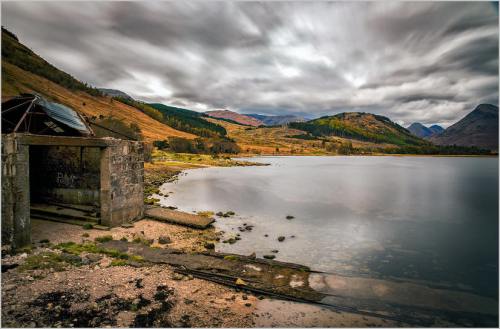 An image from Loch Etive
.
.
Click the link below for images:
.
__________________________________________
October 5, 2022
Mohenjo
Business, Food For Thought, Human Interest, Political, Science, Technical
amazon, business, Business News, current-events, Future, Hotels, human-rights, medicine, mental-health, research, Science, Science News, technology, Technology News, travel, vacation

Click the link below the picture
.
Learning new things is a huge part of life — we should always be striving to grow and learn a new skill. Whether you’re learning Spanish or want to do math fast, it takes time to learn each lesson, and time is precious. So how can you make the most of your time by speeding up the learning process? Thanks to neuroscience, we now have a better understanding of how we learn and the most effective ways our brains process and hold on to information.
If you want to get a jump start on expanding your knowledge, here are 10 proven ways you can start being a quick learner. (see article)
.

.
.
Click the link below for the article:
.
__________________________________________
October 5, 2022
Mohenjo
Business, Food For Thought, Human Interest, Political, Science, Technical
amazon, business, Business News, current-events, Future, Hotels, human-rights, medicine, mental-health, research, Science, Science News, technology, Technology News, travel, vacation

Click the link below the picture
.
An asteroid from space slammed into the Earth’s surface 66 million years ago, leaving a massive crater underneath the sea and wreaking havoc with the planet.
No, it’s not that asteroid, the one that doomed the dinosaurs to extinction, but a previously unknown crater 248 miles off the coast of West Africa that was created right around the same time. Further study of the Nadir crater, as it’s called, could shake up what we know about that cataclysmic moment in natural history.
Uisdean Nicholson, an assistant professor at Heriot-Watt University in Edinburgh, happened on the crater by accident – he was reviewing seismic survey data for another project on the tectonic split between South America and Africa and found evidence of the crater beneath 400 meters of seabed sediment.
“While interpreting the data, I (came) across this very unusual crater-like feature, unlike anything I had ever seen before,” he said.
“It had all the characteristics of an impact crater.”
To be absolutely certain the crater was caused by an asteroid strike, he said that it would be necessary to drill into the the crater and test minerals from the crater floor. But it has all the hallmarks scientists would expect: the right ratio of crater width to depth, the height of the rims, and the height of the central uplift – a mound in the center created by rock and sediment forced up by the shock pressure.
“The discovery of a terrestrial impact crater is always significant because they are very rare in the geologic record. There are fewer than 200 confirmed impact structures on Earth and quite a few likely candidates that haven’t yet been unequivocally confirmed,” said Mark Boslough, a research professor in Earth and Planetary Sciences at the University of New Mexico. He was not involved in this research but agreed that it was probably caused by an asteroid.
.
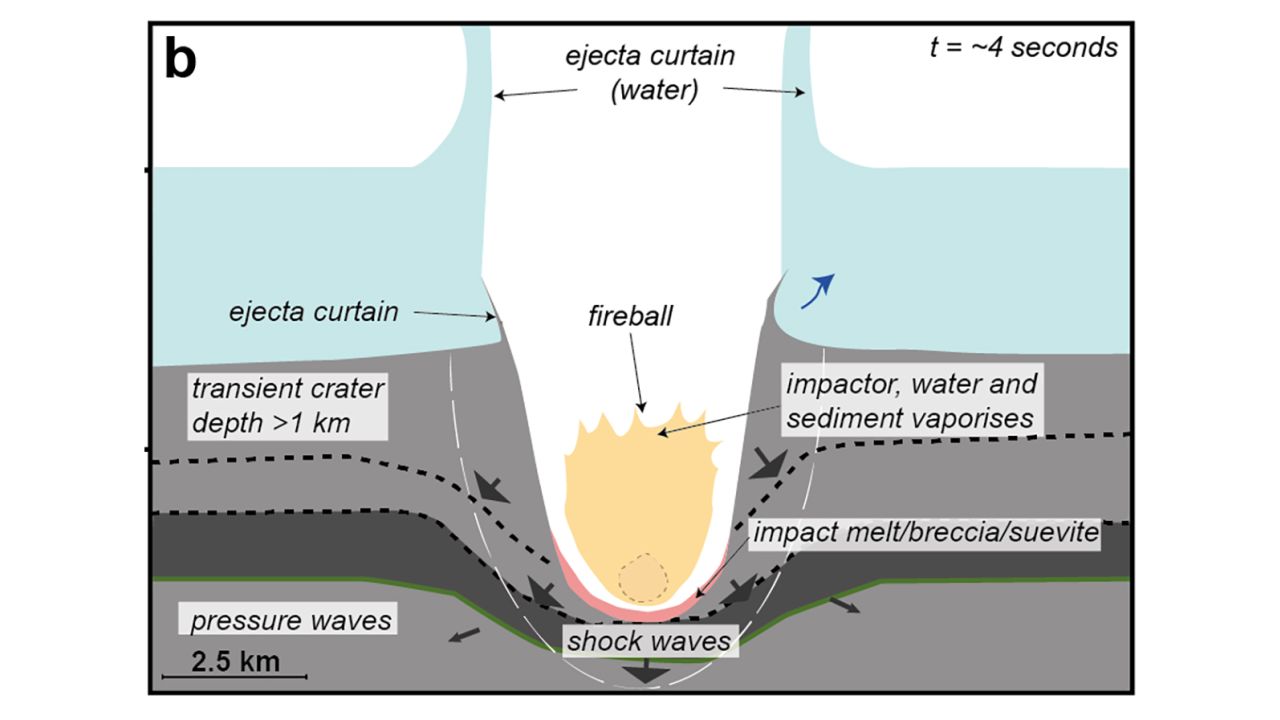 A diagram, incorporating seismic observations and computer simulations, of how the Nadir Crater formed. Courtesy Republic of Guinea, TGS and Western Geco
.
.
Click the link below for the article:
.
__________________________________________
October 4, 2022
Mohenjo
Business, Enthralling, Human Interest, Photographs
amazon, business, Business News, current-events, Future, Hotels, human-rights, medicine, mental-health, research, Science, Science News, technology, Technology News, travel, vacation
Click the link below the picture
.
Glen Etive (Scottish Gaelic: Gleann Èite) is a glen in the Highlands of Scotland. The River Etive (Scottish Gaelic: Abhainn Èite) rises on the peaks surrounding Rannoch Moor, with several tributary streams coming together at the Kings House Hotel, at the head of Glen Coe. From the Kings House, the Etive flows for about 18 km, reaching the sea loch, Loch Etive. The river and its tributaries are popular with whitewater kayakers and at high water levels, it is a test piece of the area and a classic run.
At the north end of Glen Etive lie the two mountains known as the “Herdsmen of Etive”: Buachaille Etive Mòr and Buachaille Etive Beag. Other peaks accessible from the Glen include Ben Starav, located near the head of Loch Etive, and Beinn Fhionnlaidh on the northern side of the glen. The scenic beauty of the glen has led to its inclusion the Ben Nevis and Glen Coe National Scenic Area, one of 40 such areas in Scotland.
A narrow road from the Kings House Hotel runs down the glen, serving several houses and farms. This road ends at the head of the loch, though rough tracks continue along both shores.
The River Etive is one of Scotland’s most popular and challenging whitewater kayaking runs. It provides a multitude of solid Grade 4(5) rapids with a variety of falls and pool drops. It is home to a herd of Scottish red deer that have become accustomed to the presence of humans.
In the Ulster Cycle of Irish mythology, Deirdre and her love Naoise founded Glen Etive after fleeing Ulster.
The Fachen is also known as the Dwarf of Glen Etive.
Glen Etive has been used as the backdrop to many movies, among them Braveheart and Skyfall. The resulting influx of visitors has led to concerns about the spoilage of the glen through littering and fly-tipping. Wikipedia
.
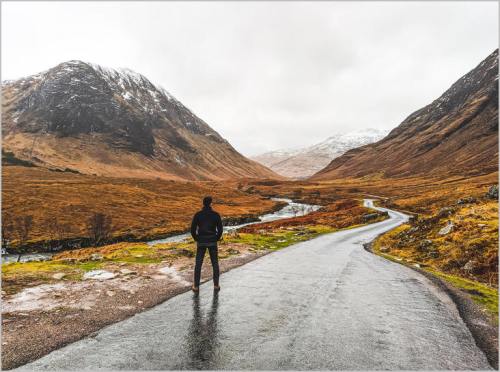 An image from Glen Etive
.
.
Click the link below for images:
.
__________________________________________
Older Entries
Newer Entries

