October 4, 2022
Mohenjo
Business, Food For Thought, Human Interest, Political, Science, Technical
amazon, business, Business News, current-events, Future, Hotels, human-rights, medicine, mental-health, research, Science, Science News, technology, Technology News, travel, vacation

Click the link below the picture
.
Dear Prudence,
My long-term boyfriend has developed a habit that’s driving me nuts. Whenever he gets tired of his beard, he shaves it into a retro, ridiculous mustache or sideburns. The first few times he did it, I thought it was funny—until I realized I would be living with “the Tom Selleck” or “the Elvis” for more than a few hours. Now I just cringe every time he picks up his razor. He works in a creative field where he can get away with it (and I don’t), so maybe that’s part of it, but in my opinion, your mid-30s is too old for ironic facial hair, especially at formal events like weddings. He knows I hate it but continues to do it regularly. Does he need to grow up, or do I need to let it go? I don’t care if he has a beard, a mustache, or goes clean-shaven. I just don’t want to sit across from Gen. Burnside at dinner!
There’s always a balance to be struck between making a reasonable request (like “Please don’t wear a handlebar mustache to Florin’s wedding”) and acknowledging your boyfriend’s right to style his facial hair as he likes it. You say he knows you hate it, but I’m not sure you two have sat down for a conscientious discussion, or if you just said, “Oh God, not the Yosemite Sam” when he last pulled out his clippers. If you haven’t yet done the former, tell him you recognize that it’s his choice and that he may get something out of that look beyond just ironic pleasure at an old-timey set of mutton chops. You might ask him to share what exactly he likes about that look, so you have a better sense of where he’s coming from. But if it’s something he only does out of boredom and whimsy, and he’s not especially attached to the looks, tell him that you vastly prefer him either bearded or clean-shaven. Once you’ve said your piece, it’s time to let it go. After that, there’s not much more you can do to make your case about his face. —Danny M. Lavery
.
 Photo illustration by Slate. Photo by Getty Images Plus.
.
.
Click the link below for the article:
.
__________________________________________
October 4, 2022
Mohenjo
Business, Food For Thought, Human Interest, Political, Science, Technical
amazon, business, Business News, current-events, Future, Hotels, human-rights, medicine, mental-health, research, Science, Science News, technology, Technology News, travel, vacation
Some content on this page was disabled on April 15, 2025 as a result of a DMCA takedown notice from Guardian Media Group. You can learn more about the DMCA here:
https://wordpress.com/support/copyright-and-the-dmca/
October 3, 2022
Mohenjo
Business, Enthralling, Human Interest, Photographs
amazon, business, Business News, current-events, Future, Hotels, human-rights, medicine, mental-health, research, Science, Science News, technology, Technology News, travel, vacation

Click the link below the picture
.
The Ennedi Plateau is located in the northeast of Chad, in the regions of Ennedi-Ouest and Ennedi-Est. It is considered a part of the group of mountains known as the Ennedi Massif found in Chad, which is one of the nine countries that make up the Sahelian belt that spans the Atlantic Ocean to Sudan. The Ennedi is a sandstone bulwark in the middle of the Sahara, which was formed by erosion from wind and temperature. Many people occupied this area, such as hunters and gatherers (5,000-4,000 cal BC) and pastoralists (beginning 4,000 cal BC). The Ennedi area is also known for its large collection of rock art depicting mainly cattle, as these animals were the main source of financial, environmental, and cultural impact. This art dates back nearly 7,000 years ago. Today, two semi-nomadic groups, mainly of the Muslim religion, have permanent villages in the Ennedi during the rainy months and pass through the area during the dry season. They rely on their herds of camels, donkeys, sheep, and goats to survive.
The Ennedi makes up an area of approximately 60,000 km2 (23,000 sq mi), as large as Switzerland, and its highest point is approximately 1,450 m (4,760 ft) above sea level. The Massif is composed of sandstone overlaying a Precambrian granite base. In the Ennedi, there are at least twenty perennial or semi-perennial springs, gueltas (desert ponds), and pools, but they rarely reach greater than a few dozen meters in the dry season. It is considered part of the Sahelian Acacia savanna, which extends across the entire continent which once contained diverse ungulates whose population has since been reduced. The landscape has geological structures, including towers, pillars, bridges, and arches, which serve as major tourist attractions. Interestingly, much of the sand found in the Sahara is due to the generation of dust in the Tibesti-Ennedi triangle.
Evidence of a change in climate occurred between 6000 BP, with a savanna region with ~250 mm annual rainfall, to ~150 mm annual rainfall 4300 BP.[] It later reached an annual rainfall of 50 mm around 2700 BP, similar to the amount of annual rainfall observed today. There are also monsoons common in the area, generating around 50–150 mm of rain per year. These natural disasters create a diverse mixture of vegetation within the area. However, precipitation allows for greater moisture in the thin soil during the winter months, with lower run-off. The mountains are also known to have a north-Sahelian climate in the southern region, with greater amounts of precipitation between the months of May and September. The rainfall is subject to the Intertropical Convergence Zone (ITCZ).
.
 An image from Ennedi Plateau Chad
.
.
Click the link below for images:
.
__________________________________________
October 3, 2022
Mohenjo
Business, Food For Thought, Human Interest, Political, Science, Technical
amazon, business, Business News, current-events, Future, Hotels, human-rights, medicine, mental-health, research, Science, Science News, technology, Technology News, travel, vacation

Click the link below the picture
.
For those lucky enough to have worked from home over the past two and a half years or seven years or whatever it was, it’s back to the office time. We are finally R.T.O. and I.R.L., at least until the next wave hits. And some people can’t wait.
But for those less excited, reluctant to face the creepy supervisor they’ve been avoiding, the department suck-up they’ve been Slacking about, the portion of the job they’ve been faking, here’s a nifty tip for easing the transition: Do not “bring your whole self” to work.
That’s right! Defy the latest catchphrase of human resources and leave a good portion of you back home. Maybe it’s the part of you that’s grown overly attached to athleisure. The side that needs to talk about candy (guilty). It could be the getting-married part of you still agonizing over whether a destination wedding is morally defensible in These Times.
Leave those things behind and I promise: No one in your workplace will miss them. And remember, it works both ways. Anyone worth sharing a flex desk with is not someone you want to see every last ounce of either. They, too, can reserve their aches, grievances, flimsy excuses and noisy opinions for the roommate, the pandemic puppy, and the houseplants.
.
 Phillip Toledano/Trunk Archive
.
.
Click the link below for the article:
.
__________________________________________
October 3, 2022
Mohenjo
Business, Food For Thought, Human Interest, Political, Science, Technical
amazon, business, Business News, current-events, Future, Hotels, human-rights, medicine, mental-health, research, Science, Science News, technology, Technology News, travel, vacation

Click the link below the picture
.
China has discovered a crystal from the Moon made of a previously unknown mineral, while also confirming that the lunar surface contains a key ingredient for nuclear fusion, a potential form of effectively limitless power that harnesses the same forces that fuel the Sun and other stars.
The crystal is part of a batch of lunar samples collected by China’s Chang’e-5 mission, which landed on the Moon in 2020, loaded up with about four pounds of rocks, and delivered them to Earth days later. After carefully sifting through the samples—which are the first Moon rocks returned to Earth since 1976—scientists at the Beijing Research Institute of Uranium Geology spotted a single crystal particle, with a diameter smaller than the width of a human hair.
The crystal is made of the novel mineral Changesite—(Y), named after the Chinese Moon goddess, Chang’e, that also inspired China’s series of lunar missions. It was confirmed as a new mineral on Friday by the Commission on New Minerals, Nomenclature and Classification (CNMNC) of the International Mineralogical Association (IMA), according to the Chinese state-run publication Global Times.
Change site—(Y) is the sixth new mineral to be identified in Moon samples and the first to be discovered by China. Before China, only the U.S. and Russia could claim to have discovered a new Moon mineral. It is a transparent crystal that formed in a region of the northern lunar near-face that was volcanically active about 1.2 billion years ago.
.
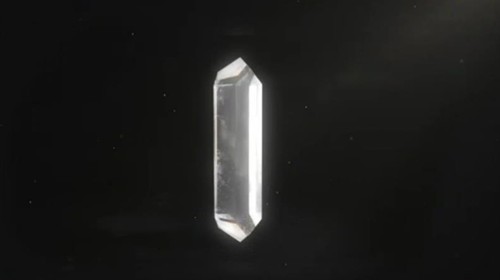 Image: Twitter/@PDChina
.
.
Click the link below for the article:
.
__________________________________________
October 2, 2022
Mohenjo
Business, Food For Thought, Human Interest, Political, Science, Technical
amazon, business, Business News, current-events, Future, Hotels, human-rights, medicine, mental-health, research, Science, Science News, technology, Technology News, travel, vacation

Click the link below the picture
.
The National Aeronautics and Space Administration’s does more than create ambitious telescopes that can see the beginning of time and send people to the moon and back. It’s also responsible for Michael Phelps’ swimsuit, LASIK surgery, and the selfie. The everyday products listed below are only 15 of the more than 2,000 consumer products NASA considers “spinoff technology” from the space program. They are all based on technology and discoveries either developed directly by NASA, in partnership with NASA, or through funding from NASA.
If your mattress, pillow, couch, desk chair, or bike seat contains memory foam (aka “tempur” or “temper foam”), you can thank NASA. The material was developed by NASA-funded aeronautical engineer Charles Yost and used to create better shock-absorbing aircraft seats for test pilots.
The computer mouse was invented at Stanford in the early 1960s by Doug Englebart, whose research into interactive computer inputs was funded by NASA. The research was championed by NASA’s Bob Taylor, who moved on to manage Xerox and further developed the computer mouse.If you ever check your temperature with an infrared thermometer like I do, you wouldn’t be able to do it without NASA. The space agency developed infrared thermometers to gauge the temperature of distant cosmic object, and the technology eventually found its way to home thermometers used by hypochondriacs everywhere.
.
 Photo: Dima Zel (Shutterstock)
.
.
Click the link below for the article:
.
__________________________________________
October 2, 2022
Mohenjo
Business, Human Interest
amazon, business, Business News, current-events, Future, Hotels, human-rights, medicine, mental-health, research, Science, Science News, technology, Technology News, travel, vacation

Click the link below the picture
.
A wind turbine’s blades can be longer than a Boeing 747 wing, so at the end of their lifespan, they can’t just be hauled away. First, you need to saw through the lissome fiberglass using a diamond-encrusted industrial saw to create three pieces small enough to be strapped to a tractor-trailer.
The municipal landfill in Casper, Wyoming, is the final resting place of 870 blades whose days making renewable energy have come to end. The severed fragments look like bleached whale bones nestled against one another.
“That’s the end of it for this winter,” said waste technician Michael Bratvold [at the time this was written in February 2020], watching a bulldozer bury them forever in sand. “We’ll get the rest when the weather breaks this spring.”
Tens of thousands of aging blades are coming down from steel towers around the world and most have nowhere to go but landfills. In the U.S. alone, about 8,000 will be removed in each of the next four years. Europe, which has been dealing with the problem longer, has about 3,800 coming down annually through at least 2022, according to BloombergNEF. It’s going to get worse: Most were built more than a decade ago, when installations were less than a fifth of what they are now.
.

Fragments of wind turbine blades await burial at the Casper Regional Landfill in Wyoming. Photo by: Benjamin Rasmussen for Bloomberg Green
.
.
Click the link below for the article:
.
__________________________________________
October 1, 2022
Mohenjo
Business, Enthralling, Human Interest, Photographs
amazon, business, Business News, current-events, Future, Hotels, human-rights, medicine, mental-health, research, Science, Science News, technology, Technology News, travel, vacation
Click the link below the picture
.
Yoshino-Kumano National Park is a national park comprising several non-contiguous areas of Mie, Nara, and Wakayama Prefectures, Japan. Established in 1936, the park includes Mount Yoshino, celebrated for its cherry blossoms, as well as elements of the UNESCO World Heritage Site Sacred Sites and Pilgrimage Routes in the Kii Mountain Range.
Notable places of interest include the Dorokyō Gorge, Kumano Hongū Taisha, Kushimoto Marine Park, Mount Ōdaigahara, Mount Ōmine, Mount Yoshino, and Nachi Falls.
.
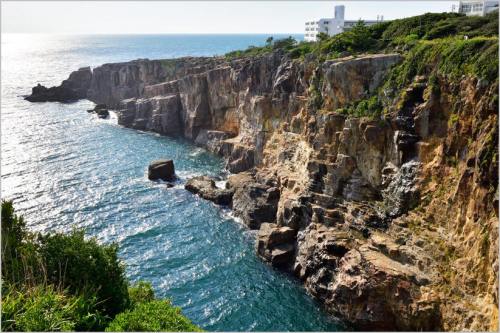 An image from Yoshino-Kumano National Park
.
.
Click the link below for images:
.
__________________________________________
October 1, 2022
Mohenjo
Business, Food For Thought, Human Interest, Medical, Political, Science, Technical
amazon, business, Business News, current-events, Future, Hotels, human-rights, medicine, mental-health, research, Science, Science News, technology, Technology News, travel, vacation
Some content on this page was disabled on April 15, 2025 as a result of a DMCA takedown notice from Guardian Media Group. You can learn more about the DMCA here:
https://wordpress.com/support/copyright-and-the-dmca/
October 1, 2022
Mohenjo
Business, Food For Thought, Human Interest, Political, Science, Technical
amazon, business, Business News, current-events, Future, Hotels, human-rights, medicine, mental-health, research, Science, Science News, technology, Technology News, travel, vacation

Click the link below the picture
.
It would be mixing ad campaigns if not metaphors to say that Swedes think differently about design, but I think there’s something to it: Saab was famously left field, even down to where it located the ignition switch; Volvo carefully treads its own path with safety foremost in its mind but with crisp modern design. And then there’s Koenigsegg.
Located at a former Swedish fighter base, this company has been ploughing its own furrow through the automotive superlatives: supercars, hypercars, now megacars. But always in its own way—how else to explain a three-cylinder engine with pneumatic actuators instead of camshafts, a V8 with no flywheel, or a transmission with seven clutches that’s both nine-speed automatic but also six-speed manual, with clutch pedal no less?
At this year’s Monterey Car Week, few are as close to automotive royalty as the company’s eponymous founder, Christian von Koenigsegg. The company’s stand at one end of The Quail was among the most mobbed throughout the day, as young TikTokkers in their best suits competed for his attention, or maybe just another look at his latest creation, the CC850. Part 50th birthday present to himself, part celebration of the company entering its third decade, it’s a new take on Koenigsegg’s first offering, the CC8S.
.
 Making a success of the supercar game is not easy, but Christian von Koenigsegg’s company has survived two decades and continues to develop innovative new technology that’s years ahead of the competition. Ars talked to him to find out what he’s most proud of.
.
.
Click the link below for the article:
.
__________________________________________
Older Entries
Newer Entries

