
Click the link below the picture
.
Eastern Ukraine —There is a whirr, a flurry of dust, a pause as the grainy image recalibrates, and then a devastating blast.
Underground, dozens of miles away, veterans of the most brutal urban battles in Ukraine, of Avdiivka and Bakhmut, are commanders in a new kind of killing – one they cannot feel, smell, or see up close. An entire mission directing six blasts against three Russian frontline targets in eastern Ukraine will involve no Ukrainian troops on the ground; the battle instead directed from gamer chairs, observed from reconnaissance drones above, run over dedicated livestreams.
Ukraine, suffering for months from manpower crises and uncertain backing from the United States, has undergone a remarkable evolution. Large parts of its war effort are now unmanned, the robots, drones, and remotely piloted tanks giving it a sudden, albeit fragile, edge over a lumbering and strained Russian invader. In April, President Volodymyr Zelensky claimed the first capture of a Russian position purely by robots and drones and added that since January, unmanned machines had conducted 22,000 missions.
Survival is the mother of invention, under the orange glow of computer processor fans and subtle overhead lighting. The unit here has learned from Russian prisoners of war that their enemy calls these robots – each carrying a huge payload of explosive on a four-wheel chassis – “silent death.” They can only hear their approach when they are 10 meters away – well within their blast radius.
The first robot stumbles on aluminum debris, its wheels furiously trying to get traction and move around the obstacle. Eventually, it navigates around the crater in its path, and from the observation drone above, the white heat of a small mushroom cloud flares up – the thermal footprint of the first blast. A second follows. The opening salvo of the assault is intended to distract the Russians and permit four other robots to get behind enemy lines.
The calculations here are simple: over 164 assaults, the “NC13” unit of the Third Assault Brigade has calculated they would have needed 2,300 troops for the same effect as their robot attackers. They would expect to have lost half their unit – dead or wounded – in the attacks, meaning the unmanned, doddering bombs on the screen in front of them are a technological advance that has saved a thousand Ukrainians.
“I couldn’t even imagine such a thing, back then”, said Bar, the unit’s deputy commander, of his time in brutal urban combat in Donbas. “But I realize that if such equipment had been available at the time… more of my comrades would have survived.”
For Mykola “Makar” Zinkevych, the unit’s commander, the new world is lacking. “Back then, war was somehow more, shall we say, masculine. It was your skills that mattered there – how well you’d trained, how disciplined you were, and so on. Now, technology decides everything. There is no going back.” It is simply a case of who can adapt and evolve faster in the world of unmanned, remote killing.
New warfare, new heroes
The Ukrainian approach is born of a manpower crisis, where a smaller population has been ravaged by a devastating toll from four years of Russian invasion. But Kyiv’s early embrace of drones, and the mass-industrialization of their accuracy and power, has begun to exact a defining toll on Moscow.
Ukraine’s policy now is to kill or injure 35,000 Russians a month, something they have achieved this year, the goal being to force the Kremlin into uncomfortable and unpopular recruitment from the urban center and the middle classes. An estimate from the British spy agency GCHQ released Wednesday put the total Russian death toll at 500,000, citing new information.
.
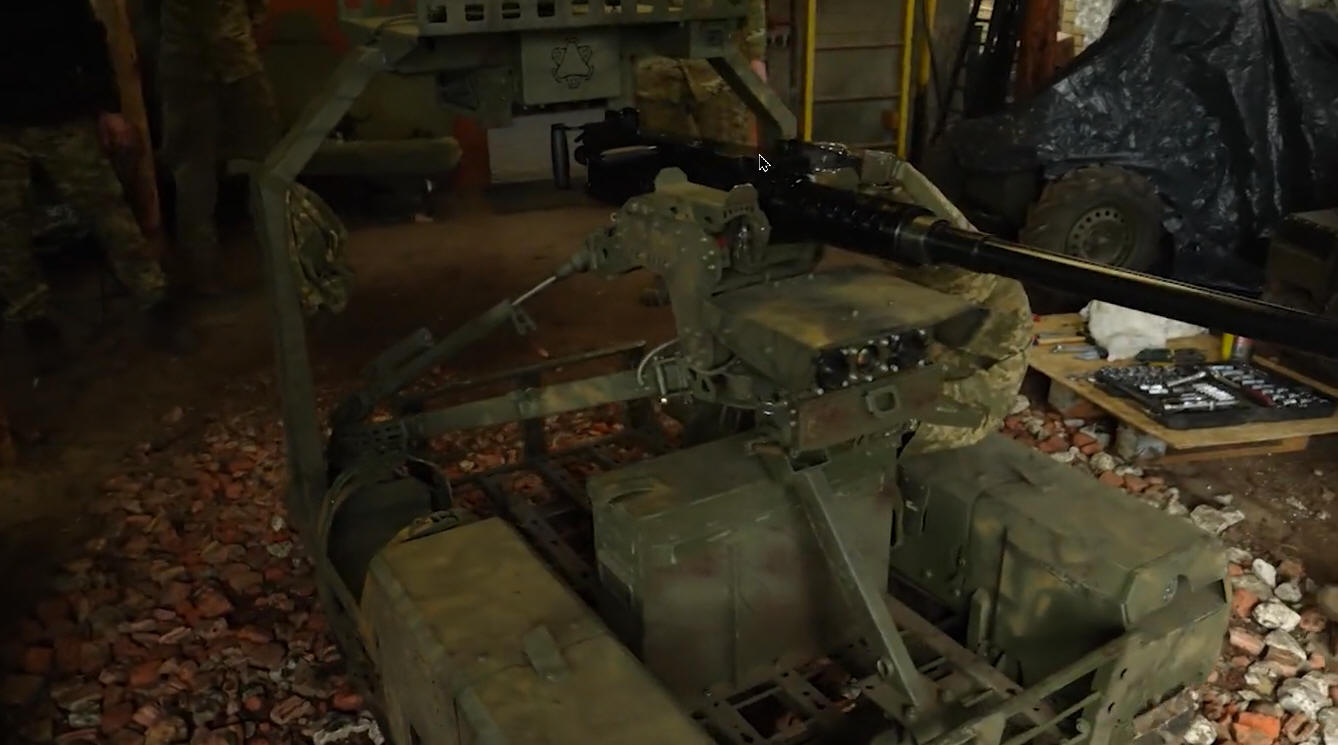 Technology is giving an advantage to Ukraine against a bigger enemy. CNN
.
.
Click the link below for the complete article:
.
__________________________________________


Leave a comment