May 14, 2021
Mohenjo
Business, Human Interest, Science, Technical
amazon, business, Business News, current-events, Future, Hotels, human-rights, medicine, mental-health, research, Science, Science News, technology, Technology News, travel, vacation

Click the link below the picture
.
On April 26, 1986, Reactor No. 4 exploded at the Chernobyl Nuclear Power Plant in Ukraine, causing the worst nuclear accident in history. Now, thirty-five years later, smoldering nuclear “embers” are still buried within the Chernobyl site, raising questions about just what might happen there—and what’s at stake.
Ukrainian scientists recently realized that leftover nuclear fission fuel made of uranium has begun reacting again in an “inaccessible room” deep within a damaged area of the shuttered plant. The telltale sign is increased readings of neutron activity—a measurable byproduct of nuclear fission, according to the scientists from the Institute for Safety Problems of Nuclear Power Plants (ISPNPP) in Kyiv, Ukraine, who held discussions about dismantling the reactor last month, according to Science magazine.
Chernobyl Nuclear Power Plant is surrounded by a massive megastructure called Chernobyl New Safe Confinement (NSC). At NSC, there are hundreds of sensors working around the clock to monitor factors like air quality, and the sensors have detected increased neutron activity near the fallen reactor hall where the “embers” are.
.
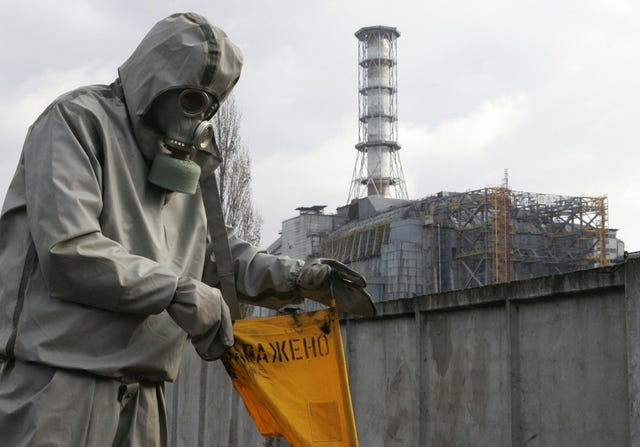
SERGEI SUPINSKYGetty Images
A melted amalgam of nuclear fuel at Chernobyl is beginning to react.
The issue is rainwater, which has activated materials buried deep within the closed plant.
The reaction could burn out naturally, but it could also require human intervention.
.
Click the link below for the article:
.
__________________________________________
May 14, 2021
Mohenjo
Business, Food For Thought, Human Interest, Technical
amazon, business, Business News, current-events, Future, Hotels, human-rights, medicine, mental-health, research, Science, Science News, technology, Technology News, travel, vacation

Click the link below the picture
.
In 1997, East Williamsburg was a mostly industrial neighborhood — just northwest of Bushwick, it was home to fabricators, manufacturers, and clothing producers along with working-class Latino families that occupied two-story rowhouses and the residents of NYCHA’s sprawling Bushwick and Hylan Houses. But that year, a group of recent college grads, eager for the kind of cheap rent and customizable space that was becoming increasingly hard to find even a mile away in Williamsburg, moved onto the fourth floor of a factory on McKibbin Street and converted most of the space into lofts. Before long, the building entered borough lore, with no shortage of stories about its apartment designs (bi-level hobbit holes sleeping eight in a two-bedroom; communal-space half-pipes); tenants’ in-building ventures (steampunk-fashion ateliers; porn studios); and, of course, the endless parties. Soon, the warehouse across the way, too, was packed with Vice-reading, American Apparel–clad DJs, skaters, and filmmakers — the brand of early-aughts hipster who would change the area permanently. Despite being separate buildings, they soon became known citywide as the McKibbin Lofts. By 2002, developers had taken notice of this abundance of neglected, and suddenly desirable, commercial space. The Opera House Lofts popped up on Arion Place, the Tea Factory appeared on Stockholm, and others followed. Of course, not everyone benefited from this rapid development: The neighborhood’s longtime residents found themselves dodging beer bottles and bicycles that were thrown off the lofts’ rooftops — and, later, felt the squeeze of the area’s surging real-estate valuations. Now, million-dollar luxury condos are everywhere in the neighborhood, as are restaurants selling $23 bowls of squid-ink pasta. And apartments in the lofts, whose average rents are now nearly $3,700 (some $2,300 more than 13 years ago), are being systematically gutted, combined, and decked out with subway tile and freestanding tubs. The culture in the buildings has changed, too — it’s grown up a little. Though not entirely: There are still impromptu concerts (which can draw hundreds even during a pandemic), but now they tend to wrap up by 2 a.m. instead of continuing until dawn.
.
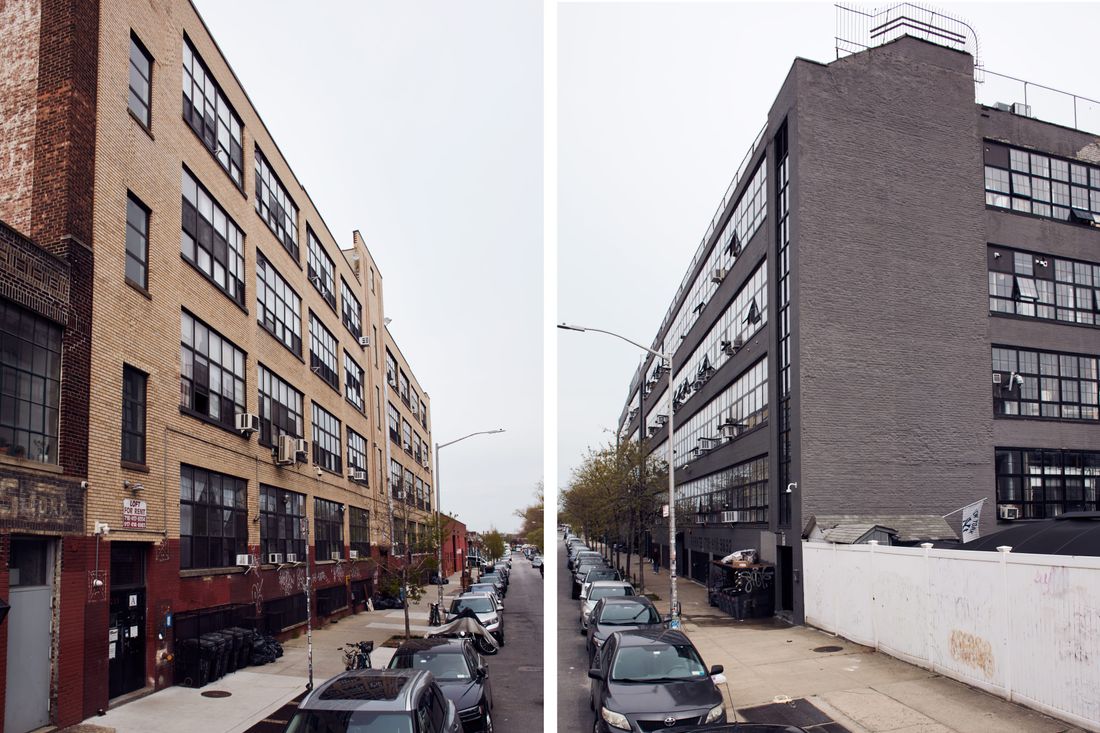 Left: 255 McKibbin St., the original McKibbin loft. Right: 248 McKibbin St., which was converted a few years later. Photo: Frankie Alduino
.
.
Click the link below for the article:
.
__________________________________________
May 14, 2021
Mohenjo
Crime, Food For Thought, Human Interest, Medical, missed News, Political, Science, sports, Technical
amazon, business, Business News, current-events, Future, Hotels, human-rights, medicine, mental-health, research, Science, Science News, technology, Technology News, travel, vacation

.
News You might have missed!
Use your browser or smartphone back arrow (<-) to return to this table for your next selection.
.
__________________________________________
May 13, 2021
Mohenjo
Business, Enthralling, Human Interest, Photographs
amazon, business, Business News, current-events, Future, Hotels, human-rights, medicine, mental-health, research, Science, Science News, technology, Technology News, travel, vacation

Click the link below the picture
.
Oakland is the largest city and the county seat of Alameda County, California, US. A major West Coast port city, Oakland is the largest city in the East Bay region of the San Francisco Bay Area, the third-largest city overall in the San Francisco Bay Area, the eighth-most populated city in California, and the 45th most populated city in the United States. With a population of 433,031 as of 2019, it serves as a trade center for the San Francisco Bay Area; its Port of Oakland is the busiest port in the San Francisco Bay, the entirety of Northern California, and the fifth busiest in the United States of America. An act to incorporate the city was passed on May 4, 1852, and incorporation was later approved on March 25, 1854, which officially made Oakland a city. Oakland is a charter city.
Oakland’s territory covers what was once a mosaic of California coastal terrace prairie, oak woodland, and north coastal scrub. Its land served as a rich resource when its hillside oak and redwood timber were logged to build San Francisco. Oakland’s fertile flatland soils helped it become a prolific agricultural region. In the late 1860s, Oakland was selected as the western terminal of the Transcontinental Railroad. Following the 1906 San Francisco earthquake, many San Francisco citizens moved to Oakland, enlarging the city’s population, increasing its housing stock, and improving its infrastructure. It continued to grow in the 20th century with its busy port, shipyards, and a thriving automobile manufacturing industry.
.
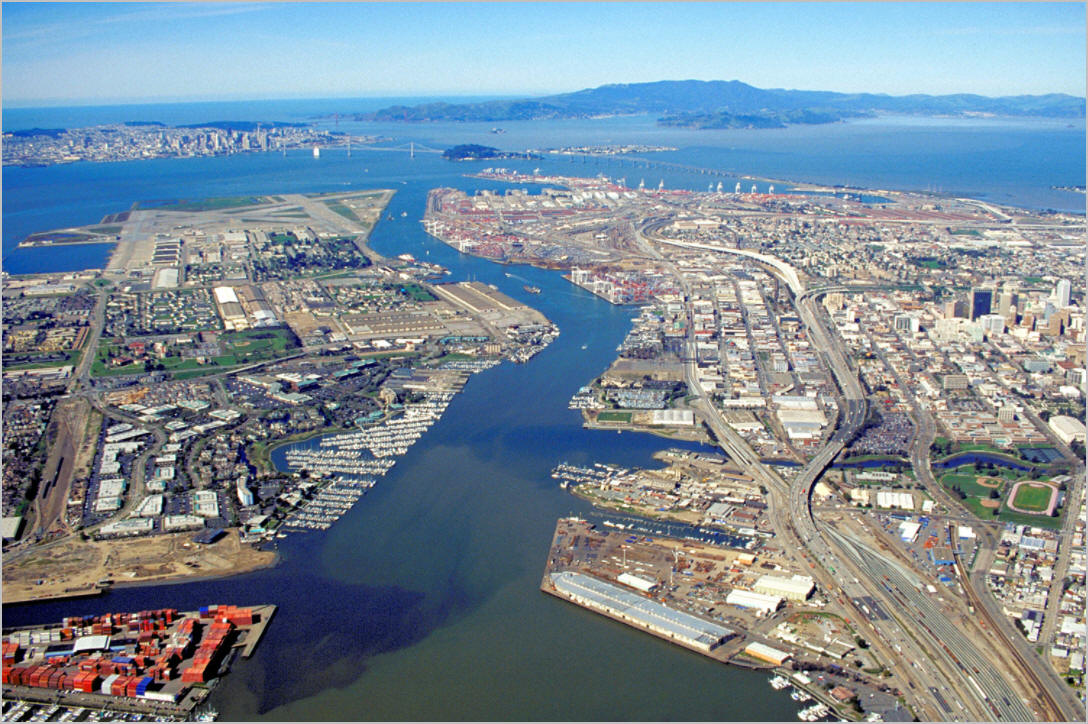 An image from Oakland, CA, USA
.
.
Click the link below for images:
.
__________________________________________
May 13, 2021
Mohenjo
Arts, Business, Human Interest, Technical
amazon, business, Business News, current-events, Future, Hotels, human-rights, medicine, mental-health, research, Science, Science News, technology, Technology News, travel, vacation

Click the link below the picture
.
How surreal is it that even as India and Brazil are at the gates of pandemic hell, much of Europe is still easing out of lockdown, parts of Canada remain shut down, and many in the United States are not yet vaccinated, a big, glitzy art fair was able to open in New York? Does the return of the fairs signal a return to the old business-as-frenzied-usual that, even pre-pandemic, everyone agreed had become obscene — an art world catering mainly to the ultrarich, performing power and price-fixing in plain view? Is it a sign of mindless addiction, of a market endlessly self-replicating — or is it an affirmation of art as a transformative force, a site of commonality and can-do spirit?
Last week saw the latest iteration of Frieze New York, the hippest of the hundreds of global art fairs that, pre-pandemic, had become some of the most economically risky but necessary components of financial survival on the nonstop money-go-round art-world trading floor. These fairs burned more spiritual and caloric energy than they ever put out. Greater and greater percentages of annual sales took place at these massive convergences, while gallery foot traffic dwindled and actual art shows went nearly unseen; galleries had to participate in fairs or go under. If they threatened to pull out, they risked triggering their artists’ FOMO — and possibly defection for more monied pastures. It was a system no one liked but that no one knew how (or was willing) to stop because it supported thousands of galleries and tens of thousands of artists in sales. Even if many of those galleries and artists were no good, the art-fair system had the power to turn the art-world trickle-down into a gushing market firehose.
.
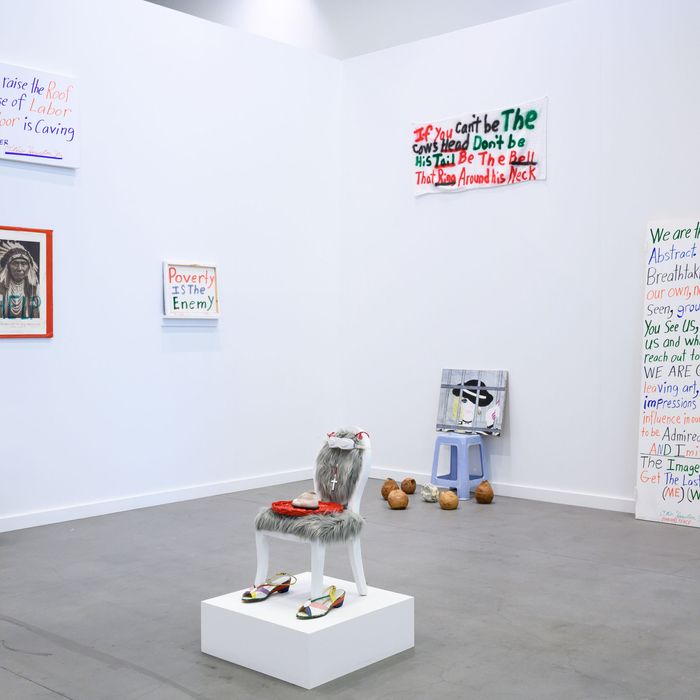 Work by Otis Houston Jr. at Gordon Robichaux’s Frieze booth. Photo: Casey Kelbaugh
.
.
Click the link below for the article:
.
__________________________________________
May 13, 2021
Mohenjo
Arts, Business, Food For Thought, Human Interest, Technical
amazon, business, Business News, current-events, Future, Hotels, human-rights, medicine, mental-health, research, Science, Science News, technology, Technology News, travel, vacation
Click the link below the picture
.
By the time Alison Bechdel sat down in earnest to draw her third book, The Secret to Superhuman Strength, she was drinking less and had stopped going to therapy. She felt — dare she say it? — happy. The cartoonist, whose comic strip “Dykes to Watch Out For” was a serial fixture in queer newspapers from 1983 to 2008, is best known for her graphic memoirs Fun Home (2006), which became a hit Broadway musical (it’s now being adapted into a film featuring Jake Gyllenhaal), and Are You, My Mother? (2012). While both of these books are deeply personal excavations into her family history, Superhuman Strength examines her relationship to the world through her body and exercise. Her partner, Holly Rae Taylor, did the coloring work, which meant Bechdel needed to relinquish some measure of control — a theme throughout her work and her life. “I was very trained to be completely stuck in my head,” she says from her studio in Vermont. “Queerness brought me into my body; therapy brought me into my feelings. With this book, I’ve tried to come back out into the world.”
.
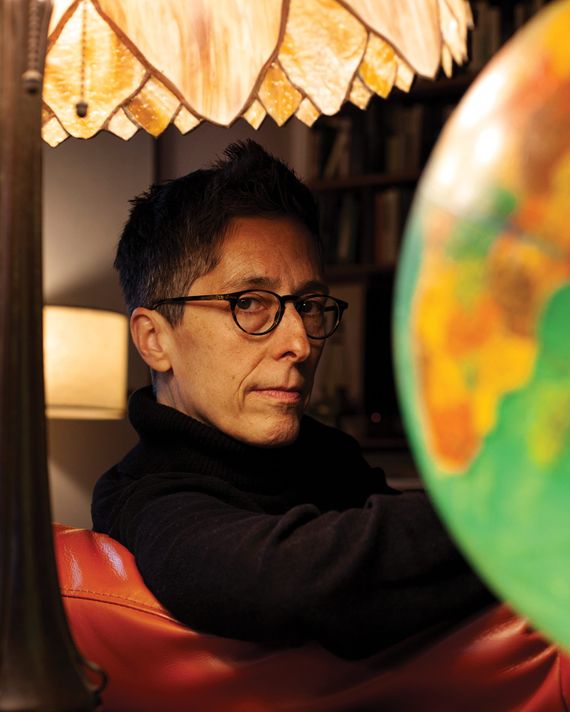 Photo: Jeanette Spicer
.
.
Click the link below for the article:
.
__________________________________________
May 13, 2021
Mohenjo
Crime, Human Interest, Medical, missed News, Science, Technical
amazon, business, Business News, current-events, Future, Hotels, human-rights, medicine, mental-health, research, Science, Science News, technology, Technology News, travel, vacation
.
News You might have missed!
Use your browser or smartphone back arrow (<-) to return to this table for your next selection.
.
__________________________________________
May 12, 2021
Mohenjo
Business, Enthralling, Human Interest, Photographs
amazon, business, Business News, current-events, Future, Hotels, human-rights, medicine, mental-health, research, Science, Science News, technology, Technology News, travel, vacation
Click the link below the picture
.
Salzburg literally “Salt Fortress”; Bavarian: Soizbuag) is the capital city of the State of Salzburg and the fourth-largest city in Austria. In 2020, it had a population of 156,872
The town is located on the site of the former Roman settlement of Iuvavum. Salzburg was founded as an episcopal see in 696 and became a seat of the archbishop in 798. Its main sources of income were salt extraction and trade and, at times, gold mining. The fortress of Hohensalzburg, one of the largest medieval fortresses in Europe, dates from the 11th century. In the 17th century, Salzburg became a center of the Counter-Reformation, where monasteries and numerous Baroque churches were built. Wikipedia
.
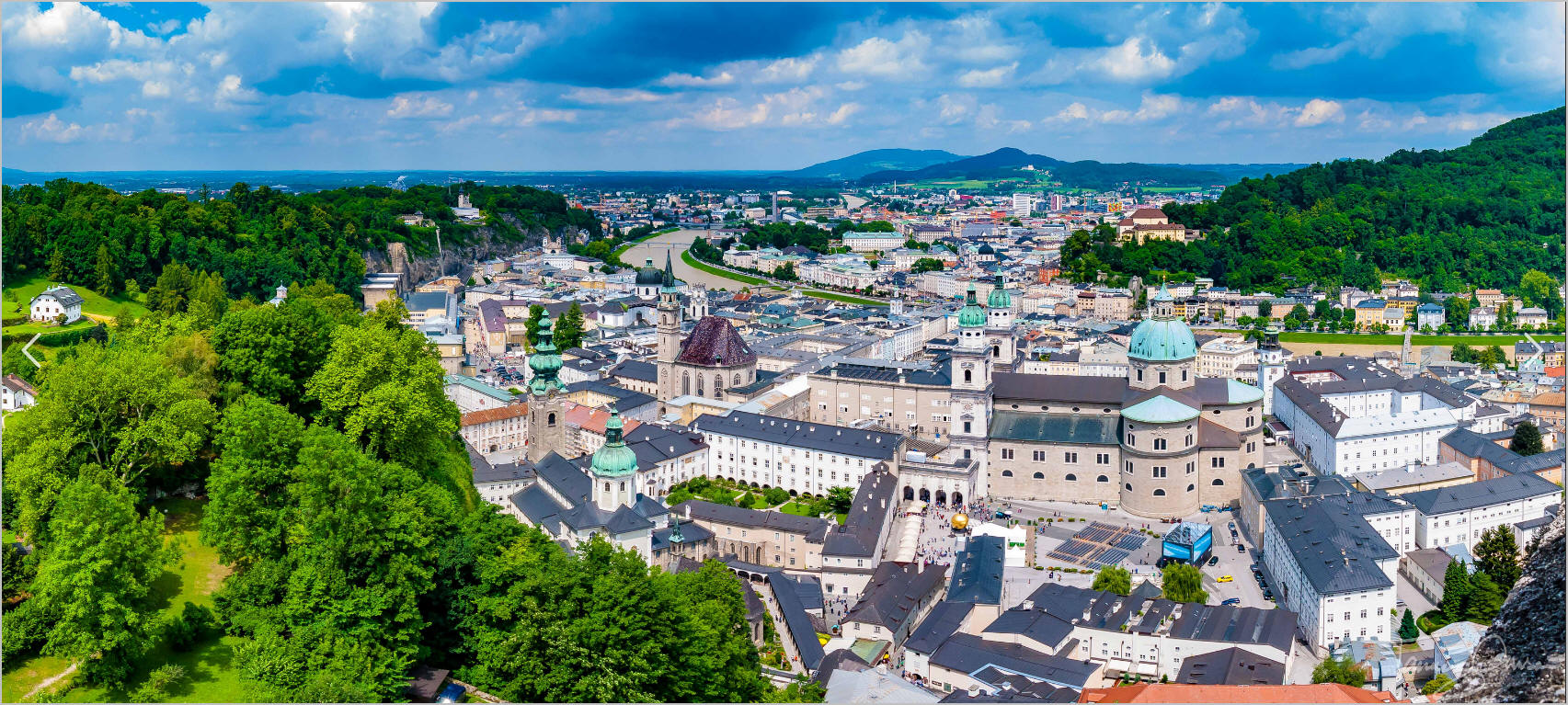 An image from Salzburg Austria
.
.
Click the link below for images:
.
__________________________________________
May 12, 2021
Mohenjo
Arts, Business, Human Interest, Science, Technical
amazon, business, Business News, current-events, Future, Hotels, human-rights, medicine, mental-health, research, Science, Science News, technology, Technology News, travel, vacation

Click the link below the picture
.
In the recently released documentary Sisters with Transistors, beloved avant-garde artist Laurie Anderson poses a provocative question: “How do you exorcise the canon of classical music of misogyny?” She pauses a beat, eventually answering: “With two oscillators, a turntable, and tape delay.”
The issue Anderson raises is a familiar one. In the last few years, electronic music has undergone a discursive reckoning: scholars, producers, DJs, journalists, and select labels and festivals have called for a feminist reimagining of electronic music’s past and present. This narrative shift has spotlit the women behind the boards; those tinkering with tape machines and oscillators, searching for a sense of freedom in the technology that once upended the traditional structures of composition and music.
Efforts to center women in this musical canon have ranged from comprehensive to dubious. In 2017, Caroline Polachek pulled out of the electronic music and technology festival Moogfest after it announced a lineup of exclusively “female, transgender, and non-binary artists,” saying she was skeptical of the low-level political signaling and the use of gender as a curatorial tool. Documentaries like Underplayed have focused on exposing artists’ personal struggles with discrimination, while all-female collectives and networks, including Discwoman, female: pressure, NÓTT, and dozens of others, have emerged to denounce the realities of a sexist industry across the world. The conversation is taking place in academia too; Columbia University recently organized a symposium devoted to excavating the contributions of long-forgotten forbears. To amend a fragmented history is difficult, particularly in a comprehensive and equitable way.
.
 Graphic by Drew Litowitz. From left: Clara Rockmore (courtesy of the Clara Rockmore Foundation), Jacqueline Nova (courtesy of Ana María Romano G), Suzanne Ciani (center, courtesy of Suzanne Ciani), Pauline Oliveros (courtesy of Mills College), and Daphne Oram (courtesy of the Daphne Oram Trust).
.
.
Click the link below for the article:
.
__________________________________________
May 12, 2021
Mohenjo
Business, Food For Thought, Human Interest, Science, Technical
amazon, business, Business News, current-events, Future, Hotels, human-rights, medicine, mental-health, research, Science, Science News, technology, Technology News, travel, vacation
Click the link below the picture
.
Richard Zamboni walks around the first ice-surfacing machine his father built seven decades ago. The 88-year-old is taking his time to remember.
“We’re using the same framework today, basically, that [my dad] came up with,” he says, his hands on the wood-paneled machine.
It’s late February 2020. Fifteen miles south of downtown Los Angeles, in Paramount, California, Zamboni is giving a tour of the family’s factory as well as one of the oldest operating ice skating rinks in the country, Iceland. In a corner of Iceland is the Model A. First built in 1949, it’s the original Zamboni machine, a name that’s become indistinguishable from the thing itself, like Xerox, Kleenex, or Google.
From an amateur’s eye, this large, wooden, double-decked Rube Goldberg–type contraption looks a whole lot different from the smooth, slick, boxy modern Zamboni that’s resurfacing ice rinks today. Yes, the engine is much more powerful now, Zamboni explains. Components have shifted, and the water tank is much larger.
.
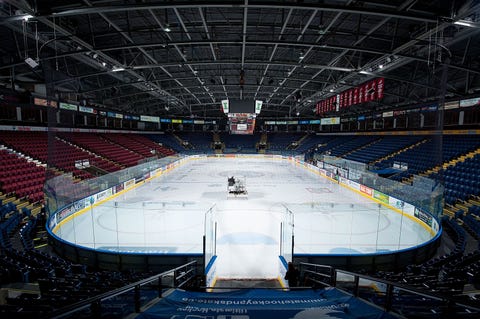
Marissa BaeckerGetty Images
.
.
Click the link below for the article:
.
__________________________________________
Older Entries
Newer Entries

