It all started years ago when I first learned my wife and I were going to be parents: I began collecting science-based parenting advice, both here on Inc.com and in my continuously updated (free) e-book, How to Raise Successful Kids, now in its 7th edition.
Shown are seven of the most interesting and useful studies.
My ex-wife and I divorced three years ago because of irreconcilable differences. We are fairly amicable, but we don’t talk unless it’s related to the kids. Before COVID I had weekends and holidays, and she had weekdays. My mom has cancer and lives with me, so once the pandemic started we agreed that the kids would stay at their mom’s house for the immediate future and my mom and I would have Zoom calls with them every day.
Now, for some context, my ex has been overweight for pretty much her entire life, even as a young child. Her parents were overweight, and they passed down their habits to her, as it so often goes. By the time we met, she was 250 pounds. Throughout our relationship, I encouraged her to take steps towards a healthier lifestyle, but she never wanted to. Our kids (7 and 10 years old) were on the heavy side of an average weight while my ex and I were still married. When we were together, I did most of the cooking and did my best to make sure that my kids ate nutrient-dense, healthy food, and that junk food was kept as an occasional treat. As we have been separated, though, my kids have slowly gotten more and more overweight.
.
Photo illustration by Slate. Photos by Getty Images Plus.
In recent weeks, Dr. Kali Cyrus has struggled with periods of exhaustion.
“I am taking a nap in between patients,” says Cyrus, a psychiatrist at Johns Hopkins University. “I’m going to bed earlier. It’s hard to even just get out of bed. I don’t feel like being active again.”
Exhaustion is also one of the top complaints she hears from her patients these days. They say things like, “It’s just so hard to get out of bed” or “I’ve been misplacing things more often,” she says.
Some patients tell Cyrus they’ve been making mistakes at work. Some tell her they can “barely turn on the TV. ‘All I want to do is stare at the ceiling.’ ” Others say they are more irritable.
While some people who have had COVID-19 report brain fog and fatigue as lingering symptoms of their infection — what’s known as long COVID — mental health care providers around the U.S. are hearing similar complaints from people who weren’t infected by the virus. And many providers, like Cyrus, are feeling it themselves.
.
Feelings of exhaustion, irritability, and mental fogginess are our bodies’ normal response to an abnormal year of pandemic life.
There are many simplistic but entertaining binaries by which to classify the types of people in the world, but one I find to be instructive is whether you believe in therapy. On the one hand, there are people like me, who exist in a somewhat constant state of telling people that they ought to at least consider seeing someone professionally. (I’ve personally found it so worthwhile that I don’t even think my friends need to have “real” problems to try it.) On the other hand are people like my mother, who just last week asked me, “Are you still seeing your … person? Aren’t you healed by now?” This may (doubly) explain why I am such a susceptible audience for Lori Gottlieb’s 2019 book, Maybe You Should Talk to Someone. The subtitle—A Therapist, Her Therapist, and Our Lives Revealed—makes clear that this book will attempt to invert our normal perception of therapists by putting its subject on the couch.
Gottlieb became a therapist relatively late in the game. As she chronicles in the more memoir-y sections of the book, she had several previous careers, including a false start in medical school and a long period as a journalist, before she decided to go back to school to become a clinical psychologist. Today, she combines journalism and therapy, most notably in her “Dear Therapist” advice column for the Atlantic, which itself somewhat makes the argument for therapy based on the fact that the questions are often far too complicated ever to be answered in the span of one response, though Gottlieb does her best. Maybe You Should Talk to Someone counters this particular issue by following a small handful of Gottlieb’s patients’ therapeutic journeys alongside her own journey as a therapist and as a patient.
.
Photo illustration by Slate. Photos by KatarzynaBialasiewicz/iStock/Getty Images Plus.
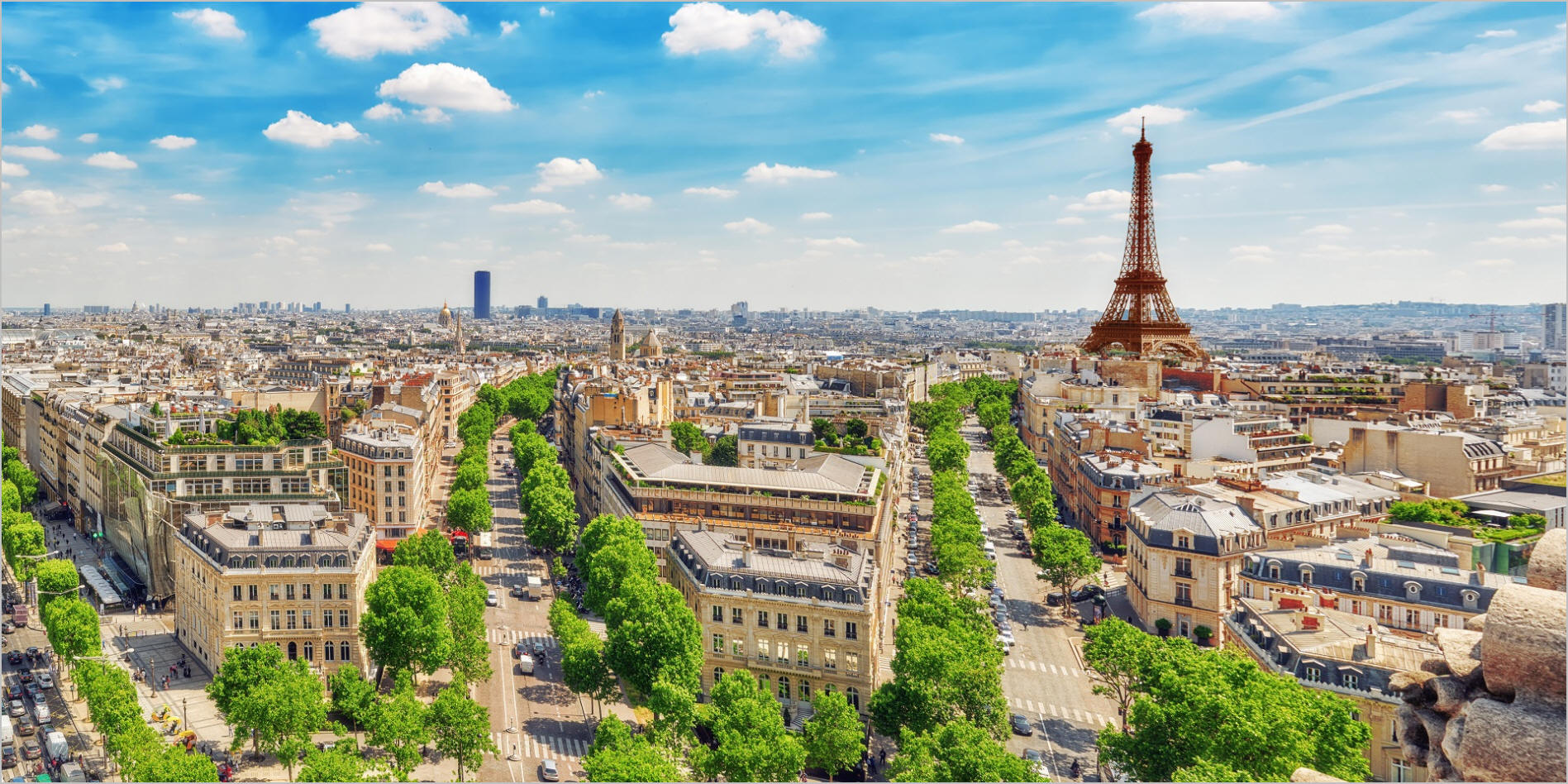
Paris is the capital and most populous city of France, with an estimated population of 11,079,000 residents as of 2021, in an area of more than 105 square kilometers (41 square miles). Since the 17th century, Paris has been one of Europe’s major centers of finance, diplomacy, commerce, fashion, gastronomy, science, and arts. The City of Paris is the center and seat of government of the Île-de-France, or Paris Region, which has an estimated population of 12,174,880, or about 18 percent of the population of France as of 2017. The Paris Region had a GDP of €709 billion ($808 billion) in 2017. According to the Economist Intelligence Unit Worldwide Cost of Living Survey in 2018, Paris was the second most expensive city in the world, after Singapore, and ahead of Zürich, Hong Kong, Oslo, and Geneva. Another source ranked Paris as the most expensive, on a par with Singapore and Hong Kong, in 2018.
Paris is a major railway, highway, and air-transport hub served by two international airports: Paris–Charles de Gaulle (the second busiest airport in Europe) and Paris–Orly. Opened in 1900, the city’s subway system, the Paris Métro, serves 5.23 million passengers daily; it is the second busiest metro system in Europe after the Moscow Metro. Gare du Nord is the 24th busiest railway station in the world, but the first located outside Japan, with 262 million passengers in 2015. Paris is especially known for its museums and architectural landmarks: the Louvre was the most visited art museum in the world in 2019, with 9.6 million visitors. The number of visitors plunged by 72 percent to 2.7 million visitors in 2020, due to the COVID virus and the drop in the number of foreign visitors, but it remained the most-visited art museum in 2020. The Musée d’Orsay, Musée Marmottan Monet, and Musée de l’Orangerie are noted for their collections of French Impressionist art. The Pompidou Centre Musée National d’Art Moderne has the largest collection of modern and contemporary art in Europe. The Musée Rodin and Musée Picasso exhibit the works of two noted Parisians. The historical district along the Seine in the city center is classified as a UNESCO Heritage Site, and popular landmarks there included the Cathedral of Notre Dame de Paris on the Île de la Cité, now closed for renovation after the 15 April 2019 fire. Other popular tourist sites include the Gothic royal chapel of Sainte-Chapelle, also on the Île de la Cité; the Eiffel Tower, constructed for the Paris Universal Exposition of 1889; the Grand Palais and Petit Palais, built for the Paris Universal Exposition of 1900; the Arc de Triomphe on the Champs-Élysées, and the Basilica of Sacré-Coeur on the hill of Montmartre. Wikipedia
Exercise and I have a tumultuous relationship. At best, it’s sunshine, roses, and defined triceps; at worst, it’s, in the wise words of Miss Britney Jean Spears, toxic. Here’s how it usually goes: I get really into working out, I go too hard, get burnt out, and then stop exercising for months (or years). Here’s an example: After playing sports my entire life, I got recruited to play soccer in college, which obviously meant working out constantly. At the start of my sophomore year, I decided that, for the sake of my mental health, I was going to quit. For the first time in 19 years, there was no coach yelling at me to do another lap—no real need to exercise at all. I was completely over the idea of physical exertion, so I just…stopped. Unsurprisingly, I gained weight and was completely unhappy, so I embarked on another intense bout of fitness, which eventually led to another break.
In the year since the cycle has continued. A few months ago, as I’m wont to do, I decided that enough was enough and it was time to get back into some sort of workout routine. Not only was I not happy with my body, but I felt down, mentally.
So I set out to do some sort of physical activity every day for two weeks to see if it would make me a happier person and—spoiler alert—it did.
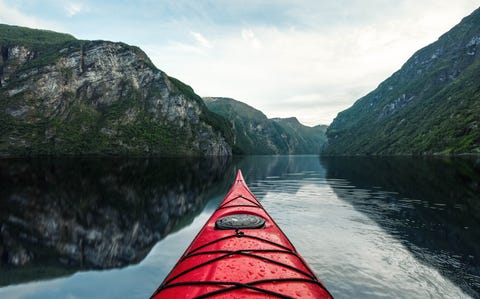
Traveling in a kayak feels like you’re tricking the universe. The boat has the impression of being vulnerable because it’s so small—an ocean-going boat that you can pick up with one hand. But once you gain some skills in it, the kayak is the safest, most seaworthy boat in the world. The universe thinks that you’re out there doing something dangerous, but really you’re in total control.
I’ve traveled the world in a kayak, thousands of miles on many expeditions. I’ve gone around Cape Horn near Antarctica, through the gnarliest piece of the ocean on the planet, even for big ships. I’ve paddled from Japan to Alaska, retracing the steps of Stone Age mariners. In 2012, I circumnavigated Ellesmere Island in the Arctic Circle on a 1,500-mile trip.
The thing about the kayak is it puts you in direct, intimate contact with nature. Yachts are great, but a kayak requires personal, tactile skill and interaction with your surroundings. When you’re in a kayak, your butt is below the level of the water and waves are washing over your boat, your chest, maybe even over your head. I’ve paddled past grizzly bears feeding on clams and come eye-to-eye with a gray whale. I’ve sat on top of a 60-foot wave, then surfed down it in a 65-pound boat.
But that’s not where you’ll start. You might start on a lake or a stream behind your house. And it’s just as fun.
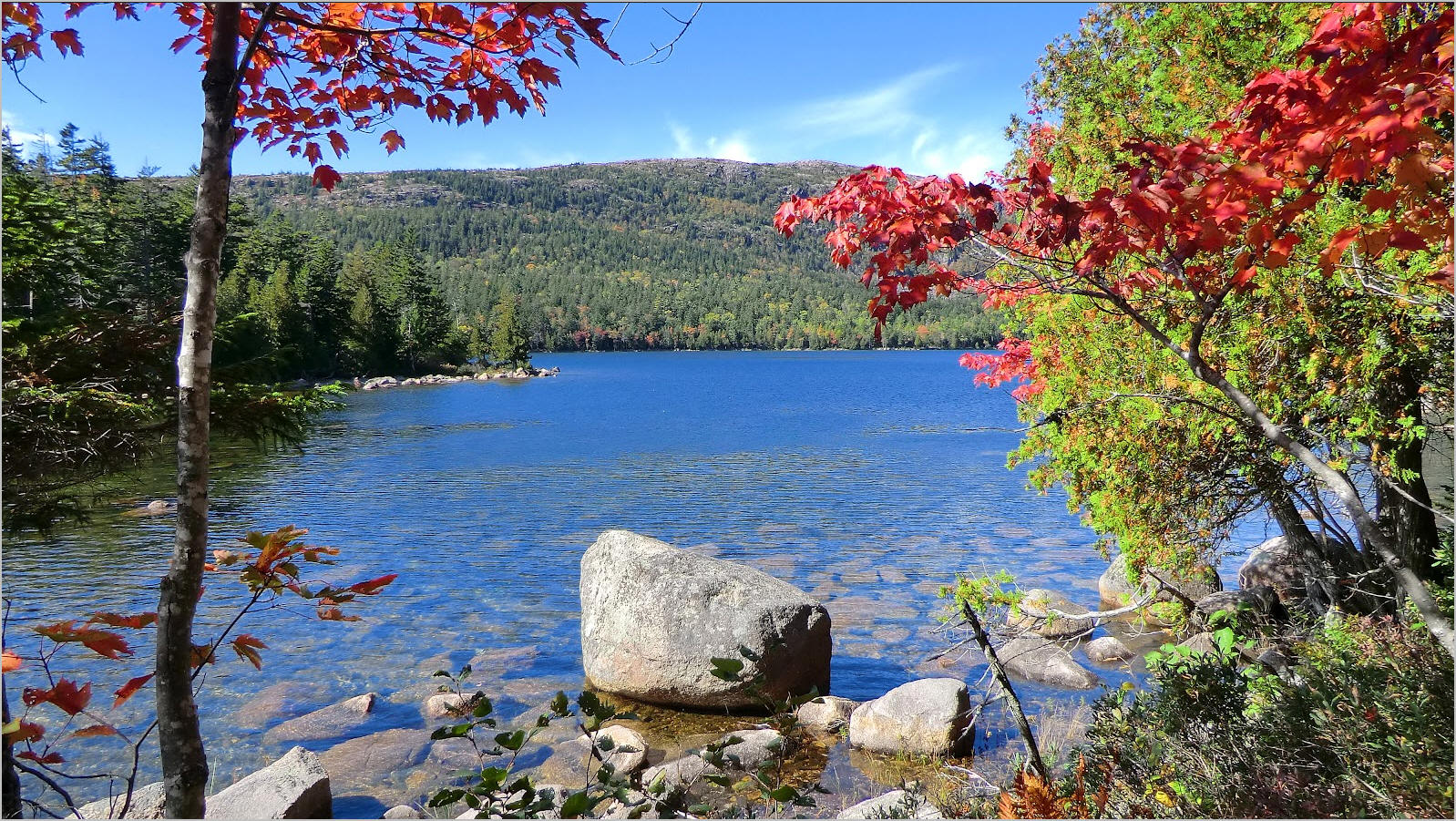
Acadia National Park is an American national park located along the mid-section of the Maine coast, southwest of Bar Harbor. The park preserves about half of Mount Desert Island, part of the Isle au Haut, the tip of the Schoodic Peninsula, and portions of 16 smaller outlying islands. The park preserves the natural beauty of the rocky headlands, including the highest mountains along the Atlantic coast. The park boasts a glaciated coastal and island landscape, an abundance of habitats, a high level of biodiversity, clean air and water, and a rich cultural heritage.
The park contains the tallest mountain on the Atlantic Coast of the United States (Cadillac Mountain), exposed granite domes, glacial erratics, U-shaped valleys, and cobble beaches. Its mountains, lakes, streams, wetlands, forests, meadows, and coastlines contribute to a diversity of plants and animals. Weaved into this landscape is a historic carriage road system financed by John D. Rockefeller Jr.. In total, it encompasses 49,075 acres (76.7 sq mi; 198.6 km2) as of 2017.
Acadia has a rich human history, dating back more than 10,000 years ago with the Wabanaki people. The 17th century brought fur traders and other European explorers, while the 19th century saw an influx of summer visitors, then wealthy families. Many conservation-minded citizens, among them George B. Dorr (the “Father of Acadia National Park”), worked to establish this first national park east of the Mississippi River and the only one in the Northeastern United States. Acadia was initially designated Sieur de Monts National Monument by proclamation of President Woodrow Wilson in 1916, then renamed and redesignated Lafayette National Park in 1919. The park was renamed Acadia National Park in 1929. Wikipedia
Film and Writing Festival for Comedy. Showcasing best of comedy short films at the FEEDBACK Film Festival. Plus, showcasing best of comedy novels, short stories, poems, screenplays (TV, short, feature) at the festival performed by professional actors.








 BROOK PIFER/Getty Images