June 11, 2015
Mohenjo
Science
amazon, Antibiotics, business, Business News, Hotels, human-rights, infectious bacteria, medicine, mental-health, research, resistant to antibiotics, Science, Science News, Superbugs, technology, Technology News, Tel Aviv University, travel, vacation

Click link below picture
.
Here’s how a hijacked superbug could be made sensitive to drugs again.
As infectious bacteria become increasingly resistant to antibiotics, researchers are looking for new ways to combat the so-called ‘superbugs’ that are predicted to kill 300 million people by 2050 if we don’t find a solution.
And now a team of microbiologists at Tel Aviv University in Israel has devised a way for bacteria-killing viruses – known as phages – to make superbugs become sensitive to our antibiotics once more.
.
 Image: Bacteriophage infecting bacteria. Credit: Andrea Danti/Shutterstock.com
.
.
Click link below for article and video:
http://www.sciencealert.com/scientists-have-figured-out-how-to-pit-viruses-against-superbugs
.
__________________________________________
June 5, 2015
Mohenjo
Science
amazon, Amblyopia, Brain Plasticity, Brain Science, business, Business News, Hotels, huffingtonpost, Huffpost Science Click, human-rights, Inner Space Brain Science, learning, medicine, mental-health, Neurons, Neuroplasticity, Neurotransmitters, research, Science, Science News, Slideshow, technology, Technology News, travel, vacation, What's Working
FROM
Huffpost Science
Click link below picture
.
Can an old brain learn new tricks?
The answer could soon be a resounding “yes.”
Scientists from the University of California at Irvine may have found a way to restore the youthful flexibility of the still-developing brain. In a study on mice recently published in the journal Neuron, the researchers were able to re-activate a younger neural state in an older brain.
.
.
.
Click link below for story and slideshow:
http://www.huffingtonpost.com/2015/05/22/brain-aging-neuroplasticity_n_7307662.html?cps=gravity_1787_3149956806053155669
.
__________________________________________
May 30, 2015
Mohenjo
Science
amazon, business, Business News, Death, Death Microbiome Forensic Science, Forensic Science, Holly Williams, Hotels, huffingtonpost, Huffpost Science Click, human-rights, medicine, mental-health, microbiome, Moheb Costandi, mortician Holly Williams, research, Science, Science News, technology, Technology News, travel, vacation
FROM
Huffpost Science
Click link below picture
.
Most of us would rather not think about what happens to our bodies after death. But that breakdown gives birth to new life in unexpected ways, writes Moheb Costandi.
“It might take a little bit of force to break this up,” says mortician Holly Williams, lifting John’s arm and gently bending it at the fingers, elbow and wrist. “Usually, the fresher a body is, the easier it is for me to work on.”
Williams speaks softly and has a happy-go-lucky demeanor that belies the nature of her work. Raised and now employed at a family-run funeral home in north Texas, she has seen and handled dead bodies on an almost daily basis since childhood. Now 28 years old, she estimates that she has worked on something like 1,000 bodies.
.

(Photo: © Lightning + Kinglyface and Jess Bonham)
.
.
Click link below for article:
http://www.huffingtonpost.com/2015/05/21/what-happens-when-you-die_n_7304232.html
.
__________________________________________
May 24, 2015
Mohenjo
Science
31 days under water, amazon, business, Business News, Cousteau, Cousteau family business, Fabien Cousteau, florida, Hotels, human-rights, jacques cousteau, medicine, mental-health, Mission 31 YouTube channel, Red Sea, research, Science, Science News, technology, Technology News, travel, underwater cities, underwater laboratory, vacation, world record

Click link below picture
.
Ocean exploration has been the Cousteau family business for three generations. In this fascinating Q&A, aquanaut Fabien Cousteau discusses everything from why we need underwater cities to what it’s like to beat your grandfather’s world record.
In 1963, Jacques Cousteau lived for 30 days in an underwater laboratory positioned on the floor of the Red Sea, and set a world record in the process. This summer, his grandson Fabien Cousteau broke that record. The younger Cousteau lived for 31 days aboard the Aquarius, an underwater research laboratory nine miles off the coast of Florida. While he and his team conducted experiments — they did three years worth of science in 31 says — and held virtual classroom sessions with students around the world, each moment of their adventure was captured on film. Lots of the footage can be found on the Mission 31 YouTube channel, and Cousteau is making a documentary about his Mission 31 experience.
.
 underwater laboratory
.
.
Click link below for article and video:
What Fabien Cousteau learned from living underwater for 31 days
.
__________________________________________
May 19, 2015
Mohenjo
Science
 James' World

Click link below picture
.
They’re descending by the millions
Baby spiders appear to be raining down from the sky in Australia.
“Millions” of baby spiders have been pouring down in the Southern Tablelands region of Australia, blanketing the area in webs, according to The Sydney Morning Herald.
One resident said it looked like his house was “abandoned and taken over by spiders.”
.
 A house is surrounded by spiderwebs next to flood waters in Wagga Wagga, Australia. Dani
.
.
Click link below for article:
http://time.com/3882445/raining-spiders-australia/
.
__________________________________________
View original post
May 19, 2015
Mohenjo
Science
amazon, biofuels and natural gas, Biomass from corn-based ethanol, business, Business News, electricity, Ethanol, Hotels, human-rights, hydrogen, medicine, mental-health, Mit, moving away from petroleum, natural gas, research, Science, Science News, technology, Technology News, transportation sector, travel, U.S. Energy Information Administration (EIA)., US moving away from oil, vacation

Click link below picture
.
The transportation sector is moving away from oil slowly but surely. Driven by growth in the use of biofuels and natural gas, non-petroleum energy now makes up the highest percentage of total fuel consumption for transport since 1954, according to a new report from the U.S. Energy Information Administration (EIA).
In total, 8.5% of fuel used by the transportation sector came from non-petroleum sources in 2014. Biomass from corn-based ethanol—still supported by generous government subsidies—represented the largest non-petroleum energy source and was used primarily to fuel cars and other light vehicles. Use of natural gas to operate pipelines followed close behind. The report also shows smaller but still significant increases in the use of electricity, biodiesel and natural gas in vehicles.
Climate change and fluctuating oil prices has made moving away from petroleum when possible a priority for governments and corporations alike. But it’s still uncertain which fuel will be the best and greenest replacement, according to Christopher R. Knittel, an MIT professor of energy economics . Ethanol, natural gas, hydrogen and electricity are all possibilities.
.
 Courtesy of U.S. Energy Information Administration
.
.
Click link below for article:
http://time.com/tag/energy/
.
__________________________________________
May 13, 2015
Mohenjo
Science
amazon, and Blood Institute, business, Business News, Cancer Institute, cryo-electron microscope, cryo-EM, Dr. Sriram Subramaniam, highest-resolution device of its kind, Hotels, human-rights, Lung, mapping atomic protein contours, medicine, mental-health, molecular or near-atomic level, molecule bound to its protein, National Heart, National Heart Lung and Blood Institute, red orbit, research, Science, Science News, technology, Technology News, travel, US National Cancer Institute, vacation, x-ray crystallography

Click link below picture
.
A team of researchers from the US National Cancer Institute and the National Heart, Lung, and Blood Institute has developed an enhanced version of a cryo-electron microscope, meaning that these powerful tools for determining protein structures are more powerful than ever.
Cryo-electron microscopes (also known as cryo-EM) are used for analysis on the molecular or near-atomic level, and according to Science, the new one created by NCI structural biologist Dr. Sriram Subramaniam and his colleagues is the highest-resolution device of its kind to date.
The research team used their cryo-EM to create a new image that reveals a drug-like molecule bound to its protein at closer to atomic resolution than previously possible. The resolution is so sharp, the publication said, that it rivals the “gold standard” of mapping atomic protein contours, x-ray crystallography.
.

This image shows what the clarity was 2 years ago (left) to what protein blobs look like now under the microscope (right). (Veronica Falconieri/LAB/CCR/NCI/NIH)
.
.
Click link below for article:
http://www.redorbit.com/news/science/1113389251/electron-microscope-close-to-imaging-individual-atoms-051215/
.
__________________________________________
May 13, 2015
Mohenjo
Science
May 7, 2015
Mohenjo
Science
amazon, business, Business News, Doppler Effect, Hotels, huffingtonpost, HufFYI, human-rights, light travels, Looking Into the Past, medicine, mental-health, Redshift, Redshifted Space, research, Science, Science News, Slideshow, Space Time, Space Time Video, Speed Of Light, Talk Nerdy To Me, technology, Technology News, travel, Universe Expanding, Universe Expansion, vacation, Video
FROM
Click link below picture
.
Every time you open your eyes to look at something, you’re literally looking back in time.
Consider: light travels at a speed of 186,000 miles per second (or 300 million meters per second), so if you’re looking at someone or something from a distance of one meter, you’re seeing it not as it is but as it was three-billionths of a second ago.
.
 .
.
.
Click link below for story, video and slideshow:
http://www.huffingtonpost.com/2015/05/04/space-time-video_n_6843164.html?utm_hp_ref=science
.
__________________________________________
May 7, 2015
Mohenjo
Science
James' World
FROM
Click link below picture
.
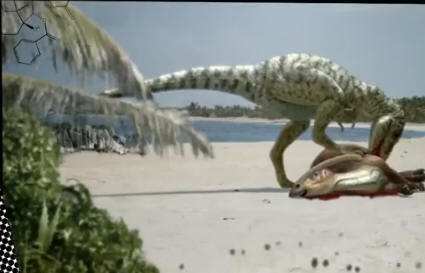
How much do you know about dinosaurs? If you’re still relying on what you learned in grade school — and saw in Hollywood classics like “Jurassic Park” — you’ve got dinosaurs all wrong.
Yes, the scientific understanding of dinosaurs — and dinosaur behavior — has changed drastically in recent years.
“‘Jurassic Park’ fossilized an image of scaly dinosaurs in our imagination,” Brian Switek, dinosaur expert and author of the book My Beloved Brontosaurus, told The Huffington Post in an email. “Despite scores of fluffy and fuzzy dinosaur fossils, many people still prefer the scabrous, reptilian versions they grew up with. Nostalgia’s great, but paleontology has kept altering our perceptions of what dinosaurs were like in the 20 years since Spielberg’s classic film.”
.
 .
.
.
Click link below for story, video and slideshow:
http://www.huffingtonpost.com/2014/09/09/dinosaur-myths-video_n_5698082.html?utm_hp_ref=talk-nerdy-to-me
.
__________________________________________
View original post
Older Entries
Newer Entries

 Genetically Modified Silk Is Stronger Than Steel Photo Courtesy of Indigo Moon Yarns.


