Relatively few tropical storms ever make it as far north as Greenland, the ice-covered island that straddles the Arctic Circle east of Canada. But the ones that do appear to be inflicting serious damage — and not just to Greenland.
A study published Monday shows that warm, tropical air masses are accelerating the melting of Greenland’s ice sheets, exacerbating a problem that already is contributing to rising sea levels around the globe. The Greenland Ice Sheet currently covers more than 650,000 square miles, an area three times the size of Texas. Previous studies have documented rapid melting on the periphery of the ice sheet, which is losing mass at a rate 30 percent faster than in the late 1970s.
But the new research shows that tropical systems that hit Greenland in the autumn months cause a sharp spike in thawing. Unusually warm topical air and…
In May, waters around Dallas rose above normal levels. The Trinity River, which runs through the city, had retained so much rainfall that its depth more than doubled to 40 feet by the end of the month. Among the destroyed homes and human lives lost, wildlife were also affected by the rising waters.
Andrés Ruzo, a geoscientist and National Geographic explorer, captured this image of a recently deceased fish who’d gotten carried away by the floodwater — and, sadly, lodged in a fence.
The fish is part of a 100-million-year-old species. And even though he has a bit of a monstrous appearance, he’s of course not a river monster at all. He’s a juvenile longnose gar, a freshwater fish with a sizable population of over 100,000 adults in North America. Though other subspecies of gar can reach up to 10 feet long, this particular fish is 2 feet, which is about the subspecies’s average size.
Part of the excitement of seeing a meteor is the dumb luck involved in being in the right place at the right time.
Outside of known meteor showers, these celestial wonders don’t exactly appear when you expect them to. But a Japanese company is hoping to change that, taking luck out of the equation and making meteors appear right on time, exactly where expected.
The company, called ALE, is raising funds to launch a small satellite filled with pellets that would orbit at about 250 to 300 miles above Earth. The satellite would release pellets on cue, which — like natural meteoroids — would burn up as they fall.
.
Lena Okajima of space startup ALE shows the pellets she says can be used to create artificial meteor showers. | YOSHIKAZU TSUNO/AFP/Getty Images
So might open the conversation with All Nippon Airways, if you’re one of the fans who attempt to book a seat aboard the Japanese airline’s new “Star Wars” jet coming this fall. In honor of the iconic movie series, the airline will paint one of its brand-new Boeing 787s with an R2-D2 motif.
An apparent video rendering of the R2-D2 plane, released on YouTube Thursday, shows the nose of the plane decorated with R2-D2’s signature blue and white stripes, along with graphics depicting the robot’s various ports.
SCIENCE has a poor track record when it comes to comparing our brains to the technology of the day. Descartes thought that the brain was a kind of hydraulic pump, propelling the spirits of the nervous system through the body. Freud compared the brain to a steam engine. The neuroscientist Karl Pribram likened it to a holographic storage device.
Many neuroscientists today would add to this list of failed comparisons the idea that the brain is a computer — just another analogy without a lot of substance. Some of them actively deny that there is much useful in the idea; most simply ignore it.
Often, when scientists resist the idea of the brain as a computer, they have a particular target in mind, which you might call the serial, stored-program machine. Here, a program (or “app”) is loaded into a computer’s memory, and an algorithm…
Few methods beat email for sending communication blasts, getting a note in front of a far-flung sales prospect or employer, or attaching pictures and documents.
Too bad about the downside: You may not sound your smartest.
New research shows that text-based communications may make individuals sound less intelligent and employable than when the same information is communicated orally. The findings imply that old-fashioned phone conversations or in-person visits may be more effective when trying to impress a prospective employer or, perhaps, close a deal.
Even conservative calculations show the world is in the midst of a sixth mass extinction that’s being caused by our species — and is likely to lead to humanity’s demise if unchecked, scientists reported Friday.
The scientists’ analysis, published in the open-access journal Science Advances, follows up on more than a decade’s worth of warnings about a rapid loss of global biodiversity. Many experts say the loss has risen to the scale seen during five previous global extinction events — the most recent of which occurred 65 million years ago when the dinosaurs died off.
The claims provide the theme of Elizabeth Kolbert’s Pulitzer Prize-winning book, “The Sixth Extinction.” But such claims have drawn skeptical responses as well. The skeptics say it’s difficult to judge the “background rate” of extinctions, as well as the current rate of species extinction.
.
An Imbabura tree frog (Hypsiboas picturatus) perches on a finger at the Jambatu Center for Research and Conservation of Amphibians in Quito, Ecuador. Amphibian species have been particularly hard-hit by environmental threats. Guillermo Granja / Reuters
When it comes to drought, California is getting all the attention these days. This makes sense. The Golden State is huge—in area, in population, in business, in culture, in agriculture—and it all relies on water. But the state’s problems are a drop in the proverbial bucket compared to the developing world’s water woes.
Globally, drought affects more than 1.5 billion people in the developing world. And with some of the world’s largest underground aquifers running low, many more face huge shortages. But California’s drought could be a boon for dried-out developing countries.
.
29 Jul 2014, 30 inch water pipe burst under Sunset blvd, producing a geyser of water that flooded the UCLA campus. Ted Soqui/Corbis
Europe’s Airbus Group will design and build about 900 satellites for privately owned OneWeb Ltd, which plans to offer high-speed, space-based Internet access to billions of people worldwide, company officials said on Monday.
About 700 of the satellites, each of which will weigh less than 330 pounds (150 kg), will be launched into orbit around Earth beginning in 2018. The rest will stay on the ground until replacements are needed, said OneWeb, based in Britain’s Channel Islands.
Bankrolled in part by Richard Branson’s London-based Virgin Group and chipmaker Qualcomm Inc, the project will cost between $1.5 billion and $2 billion, OneWeb founder and Chief Executive Officer Greg Wyler said.
.
People are silhouetted past a logo of the Airbus Group during the Airbus annual news conference in Colomiers, near Toulouse January 13, 2015.
Film and Writing Festival for Comedy. Showcasing best of comedy short films at the FEEDBACK Film Festival. Plus, showcasing best of comedy novels, short stories, poems, screenplays (TV, short, feature) at the festival performed by professional actors.





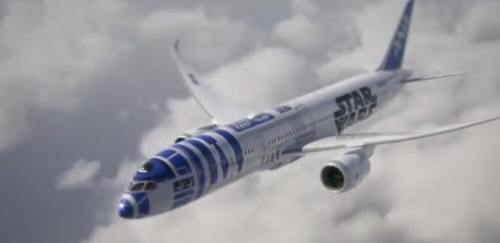 “Star Wars” jet Boeing 787s with an R2-D2 motif






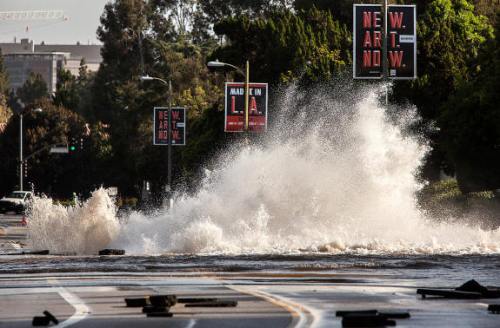 29 Jul 2014, 30 inch water pipe burst under Sunset blvd, producing a geyser of water that flooded the UCLA campus.


