One morning last August, while making my bed, my entire visual field shifted sharply to the left, as though I were watching a movie and someone had bumped into the projector. After half a second, my vision snapped back into position. I froze, pillow in hand, and carefully looked around. The furniture in my room was still, apparently innocent of whatever had just happened. But I felt a lingering unease that my surroundings were not bolted down.
I went for a jog along the East River, in Brooklyn. Everything seemed to be in the right place—clouds above me, wooden boardwalk below. Still, the 7 A.M. sunlight seemed brighter than usual, and the water rippled in a disjointed way, like a film reel missing a few frames. My head was heavy on my shoulders. Confusingly, it also felt as though it might float away.
Back in my apartment, I rolled out a yoga mat and stretched. When I tilted my head to touch my foot, the room began to rotate like a carousel. I’d had dizzy episodes before, but never anything this intense. I lay down, but the spinning only sped up. I curled up and waited—prayed—for it to end. When it didn’t, I reached for my phone and called a friend who lived nearby.
To let my friend in, I had to crawl the length of my apartment. “Something is wrong,” I told her softly.
At the emergency room, I was helped into a wheelchair because I could barely stand. During the next hour, the E.R. staff ruled out anything life-threatening, like a stroke, yet they couldn’t say what was wrong. It was difficult to diagnose the cause of a dizzy spell, the doctors said, because dizziness is a sensation, not a disease. Many different conditions can produce it. One said that I probably had labyrinthitis, or inflammation of the inner ear, and typed it into my chart.
The swirling behind my forehead lasted all day and night. I couldn’t look at computer screens, so after a week and a half, I took sick leave from my writing job.
I scheduled appointments with virtually every relevant specialist. An audiologist checked my hearing and an ear, nose, and throat doctor shined a light into my ears. Neurologists inspected the movement of my eyes. A physical therapist who specializes in balance issues asked me to close my eyes and stand on one foot. Simply visiting all these doctors was dizzying. As I crisscrossed the city, I had to focus on every footstep to keep from toppling over. Through it all, my tests were coming back normal. My hearing and sight were fine; an MRI was clear.
They call it Q-Day: the day when a quantum computer, one more powerful than any yet built, could shatter the world of privacy and security as we know it.
It would happen through a bravura act of mathematics: the separation of some very large numbers, hundreds of digits long, into their prime factors.
That might sound like a meaningless division problem, but it would fundamentally undermine the encryption protocols that governments and corporations have relied on for decades. Sensitive information such as military intelligence, weapons designs, industry secrets, and banking information is often transmitted or stored under digital locks that the act of factoring large numbers could crack open.
Among the various threats to America’s national security, the unraveling of encryption is rarely discussed in the same terms as nuclear proliferation, the global climate crisis, or artificial general intelligence. But for many of those working on the problem behind the scenes, the danger is existential.
“This is potentially a completely different kind of problem than one we’ve ever faced,” said Glenn S. Gerstell, a former general counsel of the National Security Agency and one of the authors of an expert consensus report on cryptology. “It may be that there’s only a 1 percent chance of that happening, but a 1 percent chance of something catastrophic is something you need to worry about.”
The White House and the Homeland Security Department have made clear that in the wrong hands, a powerful quantum computer could disrupt everything from secure communications to the underpinnings of our financial system. In short order, credit card transactions and stock exchanges could be overrun by fraudsters; air traffic systems and GPS signals could be manipulated; and the security of critical infrastructure, like nuclear plants and the power grid, could be compromised.
The danger extends not just to future breaches but to past ones: Troves of encrypted data harvested now and in coming years could, after Q-Day, be unlocked. Current and former intelligence officials say that China and potentially other rivals are most likely already working to find and store such troves of data in hopes of decoding them in the future. European policy researchers echoed those concerns in a report this summer.
Staring into the mirror, on a Tuesday morning, you decide that your self needs all the help it can get. But where to turn? You were reading James Clear’s “Atomic Habits: An Easy & Proven Way to Build Good Habits & Break Bad Ones” and doing well until you spilled half a bottle of Knob Creek over the last sixty pages. Now you’ll never know how it ends. You tried listening to David Goggins’s “Can’t Hurt Me: Master Your Mind and Defy the Odds,” on Audible, in your car, but so thrilling was Goggins’s prose style that you stomped on the gas and rear-ended a Tesla. Do not despair, though. Succor is at hand. Roosting on Amazon’s best-seller list is “Build the Life You Want: The Art and Science of Getting Happier,” by Arthur C. Brooks and Oprah Winfrey (Portfolio).
At this point, your conscience rebels. By buying a book on Amazon, you tell yourself, you will be directly funding a new angora lining for Jeff Bezos’s monogrammed slippers in the master bedroom of his private yacht—not the main one, but the backup vessel currently moored off Patmos. Quivering with righteousness, you close your laptop and stride to your nearest bookstore, only to bump into a dilemma: whereabouts in the store, exactly, can “Build the Life You Want” be found?
It is not an easy volume to place. You’d assume that it belongs on the self-help table. Yet the title suggests home improvement or even civil engineering, and so ardently does Brooks insist on the “four big happiness pillars”—family, friendship, work, and faith—that readers of a nervous disposition may choose to wear a hard hat. On the other hand, Brooks is a professor of management practice at Harvard Business School, so he would slot into the business section with ease. Given that, as he says, “the macronutrients of happiness are enjoyment, satisfaction, and purpose,” there’s an equally strong case for the cookery shelf. Or how about philosophy? Anyone who cites Marcus Aurelius, Thomas Aquinas, Kant, Mick Jagger, Epicurus, and Epictetus, as Brooks does, would be totally stoked to hang out in such lofty company. No one, of course, is loftier than his co-author, and, if your bookstore is furnished with an Oprah wing, that is where the book must be displayed
When two writers join forces, it can be tricky to sort out who did what. Not in this case. Brooks is the principal player, and Oprah is his guest star. Only four times does she enter the action to offer “A Note from Oprah,” and the four notes, added together, take up less than fourteen pages in a book that is more than two hundred and forty pages long. What does she bring, then, apart from the humongous commercial clout of her blessing? Well, she reveals that “The Oprah Winfrey Show” was “always at heart a classroom. I was curious about so many things, from the intricacies of the digestive system to the meaning of life.” (Had she been French, of course, those two items would have been the same.) Near the start of the book, ever alert to her audience, she scrunches what she considers Brooks’s most valuable lesson into “words you should tape to your refrigerator,” and, for extra clarity, accelerates into italics: “Your emotions are only signals. And you get to decide how you’ll respond to them.” One more scrunch, and Oprah has the mantra she wants: “Feel the feel, then take the wheel.”
.
In the publishing world, the care and maintenance of the self is no longer a branch of the social sciences or an offshoot of popular psychology. Personhood, like religion and politics, is a business.Illustration by Till Lauer
Today, I’m talking to Kashmir Hill, a New York Times reporter whose new book, Your Face Belongs to Us: A Secretive Startup’s Quest to End Privacy as We Know It, chronicles the story of Clearview AI, a company that’s built some of the most sophisticated facial recognition and search technology that’s ever existed. As Kashmir reports, you simply plug a photo of someone into Clearview’s app, and it will find every photo of that person that’s ever been posted on the internet. It’s breathtaking and scary.
Kashmir is a terrific reporter. At The Verge, we have been jealous of her work across Forbes, Gizmodo, and now, the Times for years. She’s long been focused on covering privacy on the internet, which she is first to describe as the dystopia beat because the amount of tracking that occurs all over our networks every day is almost impossible to fully understand or reckon with. But people get it when the systems start tracking faces — when that last bit of anonymity goes away. And, remarkably, Big Tech companies like Google and Facebook have had the ability to track faces like this for years, but they haven’t really done anything with it. It seems like that’s a line that’s too hard for a lot of people to cross.
But not everyone. Your Face Belongs to Us is the story of Clearview AI, a secretive startup that, until January 2020, was virtually unknown to the public, despite selling this state-of-the-art facial recognition system to cops and corporations. The company’s co-founders Hoan Ton-That and Richard Schwartz are some of the most interesting and complex characters in tech, with some direct connections to right-wing money and politics.
Clearview scraped the public internet from billions of photos, using everything from Venmo transactions to Flickr posts. With that data, it built a comprehensive database of faces and made it searchable. Clearview sees itself as the Google of facial recognition, reorganizing the internet by face searches, and its primary customers have become police departments and now the Department of Homeland Security.
Kashmir was the journalist who broke the first story about Clearview’s existence, starting with a bombshell investigation report that blew the doors open on the company’s clandestine operations. Over the past few years, she’s been relentlessly reporting on Clearview’s growth, the privacy implications of facial recognition technology, and all of the cautionary tales that inevitably popped up, from wrongful arrests to billionaires using the technology for personal vendettas. The book is fantastic. If you’re a Decoder listener, you’re going to love it, and I highly recommend it.
You might not think about it as much as you do eating healthy, exercising, and getting enough sleep, but maintaining good circulation is one of the most important building blocks to keeping your health on the rails.
“The circulatory system of the body delivers vital oxygen and nutrients to all of our muscles and organs,” says Vincent Varghese, D.O., a cardiac interventionist at Deborah Heart and Lung Center in New Jersey. “When plaque or arterial blockages develop, normal blood flow is hindered and can lead to devastating effects, such as heart attack, stroke, or even leg amputation [in severe cases].”
The process of plaque build-up is a slow one and usually takes decades, he adds, yet studies have shown the precursors of plaque developing as early as our twenties. A sedentary lifestyle, unhealthy eating, high blood pressure, diabetes, smoking, and a family history of early heart or vascular disease can all contribute to poor circulation.
“The most common symptom of impaired circulation to the legs is claudication,” says Caitlin W. Hicks, M.D., a board-certified vascular surgeon and associate professor of surgery at Johns Hopkins Hospital in Baltimore. “It’s a condition where you may experience pain in the buttocks or calves when walking that goes away with rest.”
Cold extremities, leg swelling, and foot wounds that take a while to heal, especially if you have a family history, are all signs you should check in with a vascular specialist.
With WiFi calling, you can make or receive calls with your smartphone over a WiFi connection in areas where you have poor cellular signal. It’s supported by most modern smartphones and most carriers, including Verizon, AT&T, and T-Mobile. Of course, you won’t be able to do any of this unless you know how to turn on WiFi calling in the first place.
Once you understand the basics and have enabled WiFi calling on your iPhone or Android phone, you can dig deeper into other important questions like how this technology actually works and if it’s free for international calls.
How does WiFi calling work?
WiFi calling is like a cross between regular cell phone calls and VOIP services like Skype that allow you to make phone calls from your computer. Instead of using a third-party service, your phone call is routed through the internet to your cell provider and then connected over the cellular network to the person you’re calling (or is calling you). This means that it still uses your phone number and your cell provider’s network, rather than a username, email address, or anything else.
The big difference between WiFi calling and regular calling is that it uses your WiFi network, not your mobile data. This means it works well in areas where you have bad cell signal but good WiFi signal, like if you have a satellite internet connection at your rural cabin or just live in a building with an unreliable cell service. WiFi calling won’t help you if you’re out on a hike or otherwise totally off-the-grid, though. And if you have a good mobile data connection at home, you won’t notice much difference.
How to turn on WiFi calling on an iPhone
To enable WiFi calling on an iPhone, go to Settings > Phone > WiFi Calling. If you don’t see the option, it is most likely because your carrier doesn’t support WiFi calling. You may be prompted to enter or confirm your address, so your phone can pass your location on to emergency services if you call them.
All modern iPhones support WiFi calling, although some networks only support the iPhone 6 (released in 2014) and newer. Basically, unless you are using a 10-year-old iPhone that you’ve somehow kept running, your iPhone supports WiFi calling.
.
Everything to know about WiFi calling. Brett Jordan / Unsplash
For 40 years there’s been an invisible hand guiding the way many of us write, work, and communicate. Its influence has been pervasive, yet its impact has been subtle to the extent that you’ve likely never noticed. That invisible hand is Microsoft Word.
At its launch in October 1983, this influential software was known as Multi-Tool Word, and not long after, changed to Microsoft Word for Dos. Back then, there were more than 300 word processing programs across multiple platforms. People of a certain age will remember WordStar or WordPerfect, yet in a little over a decade, Word eclipsed these rivals. By 1994, Microsoft says it had claimed a 90% share of the word-processing market, making it one of the most successful, well-known software products in history.
While establishing how many people use Word is tricky, recent filings show there are 1.4 billion Windows devices in use each month, and more than 90% of the Fortune 500 use the software. If only a third of those people used Word, it would still be more than the population of North America.
This context is important because it helps to explain why, and how, Word has had such influence on our lives.
Ironically, given its ubiquity, Word has rarely been a pioneer when it comes to features. As mentioned, it was far from the first word processor. It’s often credited with introducing grammar tools, despite the fact these were developed decades earlier. And the idea behind “track changes” – where you can see edits to a document – wasn’t a Microsoft invention.
Yet Word’s superpower was using smart, simple design choices to make such features accessible to a global audience, not just techies. Its “What You See is What You Get” (WYSIWYG) design philosophy is now commonplace in software and on the internet. Word introduced line breaks, along with bold and italic fonts on screen. It revolutionized typeset-quality printing, as well as the use of templates. And it was in these templates that Word’s early impact on communication emerged.
It’s been more than 40 years since the physicist Richard Feynman pointed out that building computing devices based on quantum principles could unlock powers far greater than those of “classical” computers. In a 1981 keynote speech often credited with launching the field of quantum computing, Feynman concluded with a now-famous quip:
“Nature isn’t classical, dammit, and if you want to make a simulation of nature, you’d better make it quantum mechanical.”
It’s been nearly 30 years since the mathematician Peter Shor came up with the first potentially transformative use for quantum computers. Much of the security of the digital world is built upon the assumption that factoring large numbers is a challenging and time-consuming task. Shor showed how to use qubits — quantum objects that can exist in mixtures of 0 and 1 — to do it in a heartbeat, at least relative to known classical methods.
Researchers feel quite confident (although not entirely certain) that Shor’s quantum algorithm beats all classical algorithms because — despite the tremendous incentives — no one has successfully broken modern encryption with a classical machine. But for tasks less glamorous than factoring, it’s hard to say for sure whether quantum methods are superior. Searching for further blockbuster applications has become something of a haphazard guessing game.
“This is a silly way to go about this,” said Crystal Noel, a physicist at Duke University.
Over the last 20 years, a loose confederation of mathematically inclined physicists and physically inclined mathematicians has endeavored to more clearly identify the power of the quantum realm. Their goal? To find a way to quantify quantumness. They dream of a number they can assign to an arrangement of qubits produced by some quantum calculation. If the number is low, then it would be easy to simulate that calculation on a laptop. If it’s high, the qubits represent the answer to a truly hard problem beyond the reach of any classical device.
.
How might we measure the computational power of a quantum system? Researchers have identified an assortment of physical properties that could do the trick. Peter Greenwood for Quanta Magazine
In 1925, a new, highly desirable trait was invented. Press reports hailed a new Hollywood star: Count Ludwig von Salm-Hoogstraeten, an Austrian noble and tennis champion, who was rumored to be appearing in a film from the megaproducer Samuel Goldwyn. What made the 39-year-old Hollywood material? “He is photogenic,” Goldwyn told a reporter. Newspapers quickly credited the producer with coining a new word.
As it turned out, von Salm-Hoogstraeten’s acting career did not take off, but Goldwyn’s turn of phrase sure did. Now, nearly a century later, photogenicity is essential to the vocabulary of the selfie era. A photogenic person, common thinking goes, looks effortlessly good in a photograph. On social media, photogenicity has become a kind of currency: the intangible “it” factor that can lead to a high follower count. As a result, articles now promise to unspool the secrets of photogenicity; people on TikTok have been taking random stills from their videos to apparently determine whether they’re photogenic. For the rest of us, the concept might serve to justify an aversion to selfies (we’re not unattractive; we’re just not photogenic).
.
Illustration by Jared Bartman / The Atlantic. Sources: Austrian National Library; Unsplash.
Film and Writing Festival for Comedy. Showcasing best of comedy short films at the FEEDBACK Film Festival. Plus, showcasing best of comedy novels, short stories, poems, screenplays (TV, short, feature) at the festival performed by professional actors.

 Illustration by Vartika Sharma
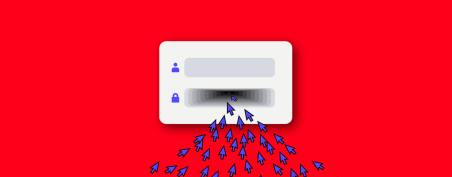



:format(webp)/cdn.vox-cdn.com/uploads/chorus_asset/file/25006282/Kashmir_Hill_Decoder.jpg) Photo illustration by Alex Parkin / The Verge
Photo illustration by Alex Parkin / The Verge


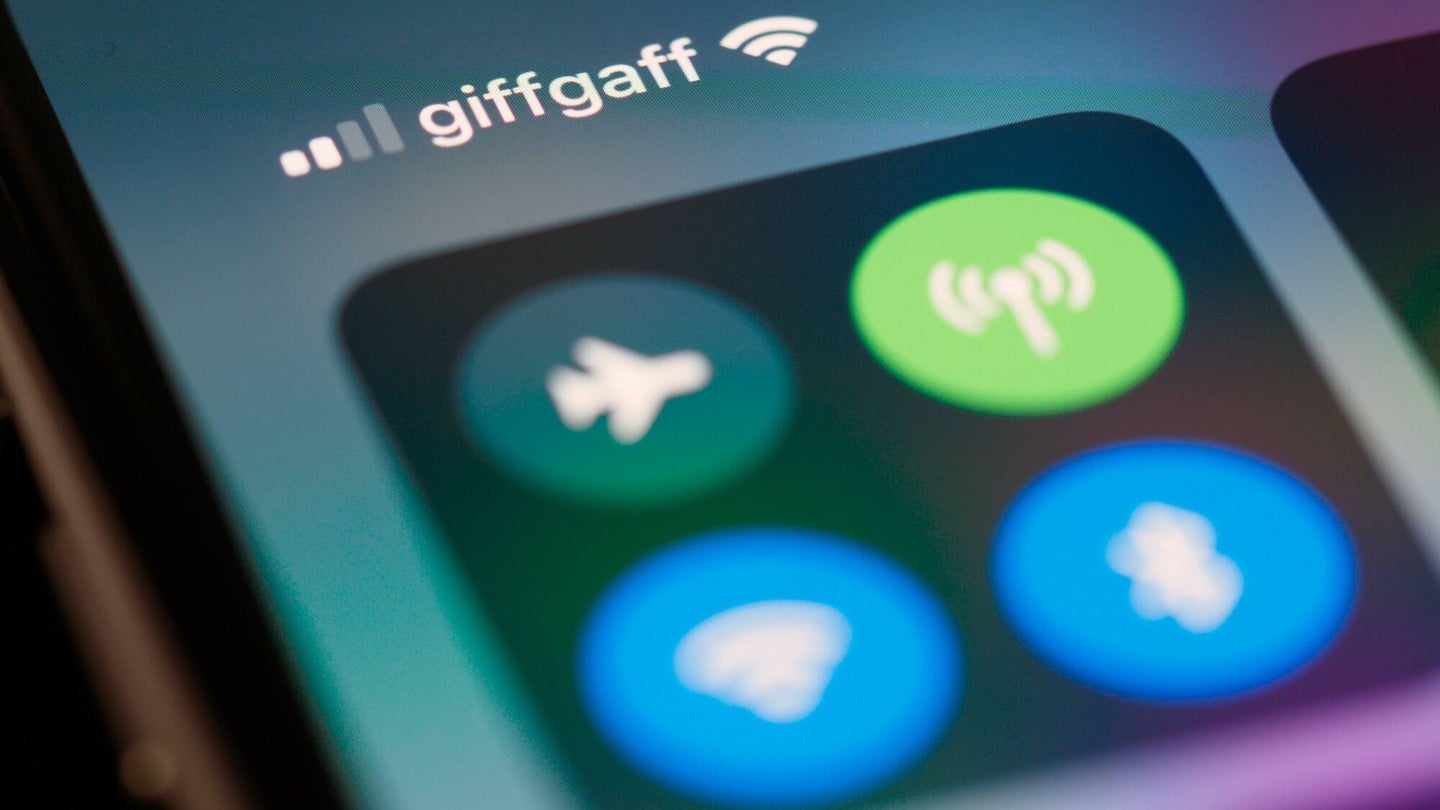 Everything to know about WiFi calling.
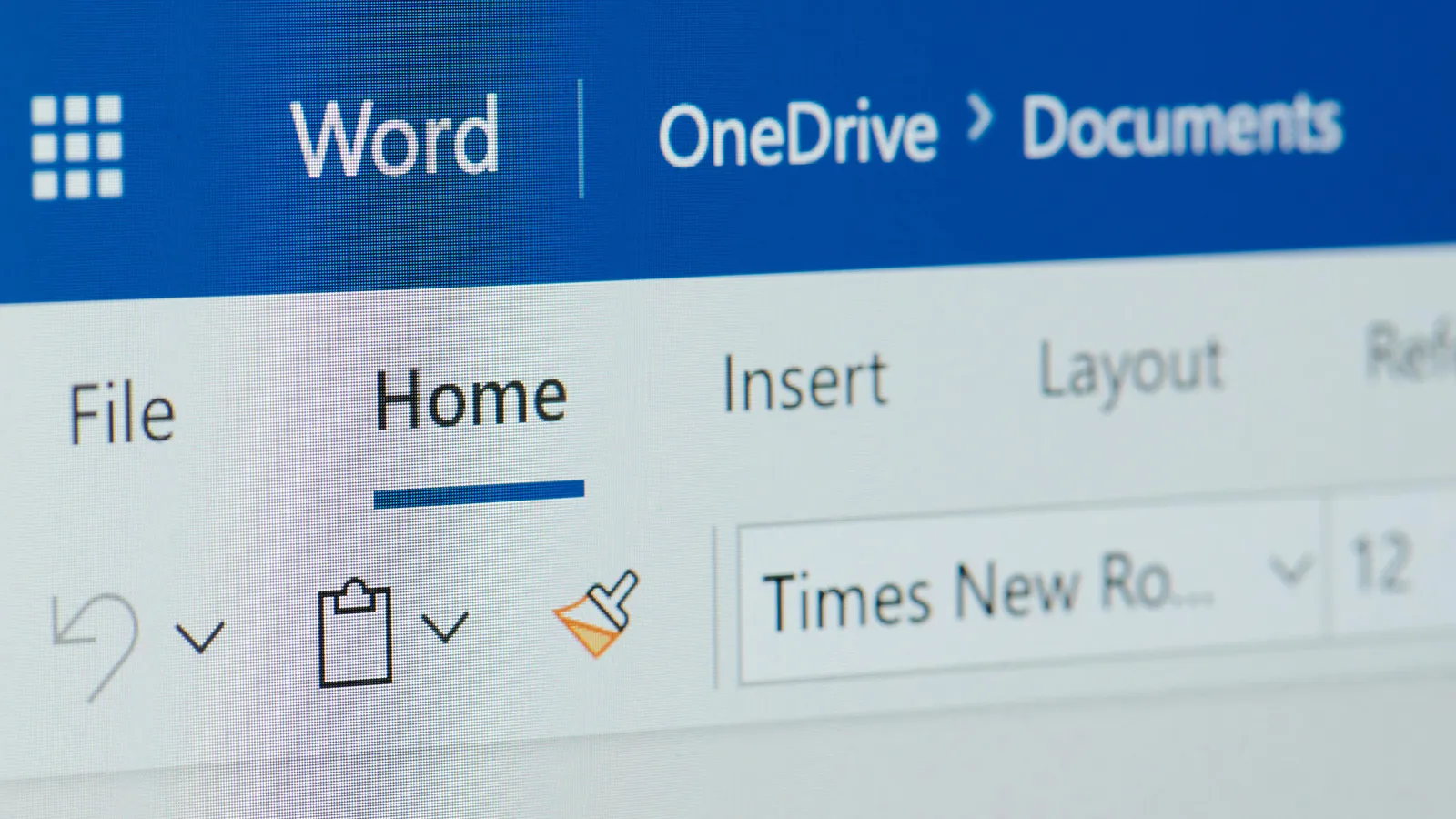 (Image credit: Alamy)


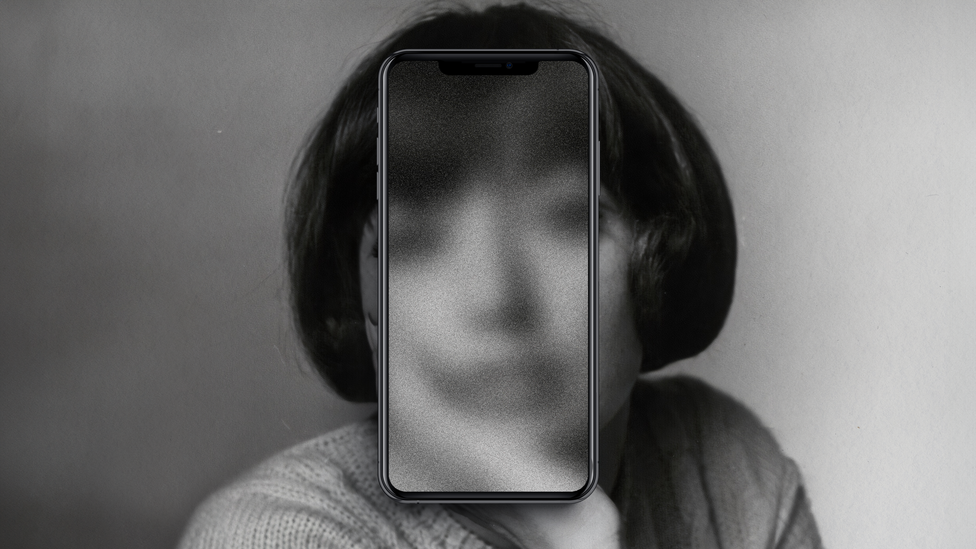 Illustration by Jared Bartman / The Atlantic. Sources: Austrian National Library; Unsplash.



 .
. James' World 2