Bojnice Castle is a medieval castle in Bojnice, Slovakia. It is a Romanesque castle with some original Gothic and Renaissance elements built in the 12th century. Bojnice Castle is one of the most visited castles in Slovakia, receiving hundreds of thousands of visitors every year and also being a popular filming stage for fantasy and fairy-tale movies.
Bojnice Castle was first mentioned in written records in 1113, in a document held at the Zobor Abbey. Originally built as a wooden fort, it was gradually replaced by stone, with the outer walls being shaped according to the uneven rocky terrain. Its first owner was Matthew III Csák, who received it in 1302 from the King Ladislaus V of Hungary. Later, in the 15th century, it was owned by King Matthias Corvinus, who gave it to his illegitimate son John Corvinus in 1489. Matthias liked to visit Bojnice and it was here that he worked on his royal decrees. He used to dictate them under a linden tree, which is now known as the “Linden tree of King Matthias”. After his death, the castle became the property of the Zápolya family (see John Zápolya). The Thurzós, the richest family in the northern Kingdom of Hungary, acquired the castle in 1528 and undertook its major reconstruction. The former fortress was turned into a Renaissance castle. From 1646 on, the castle’s owners were the Pálffys, who continued to rebuild the castle. Wikipedia
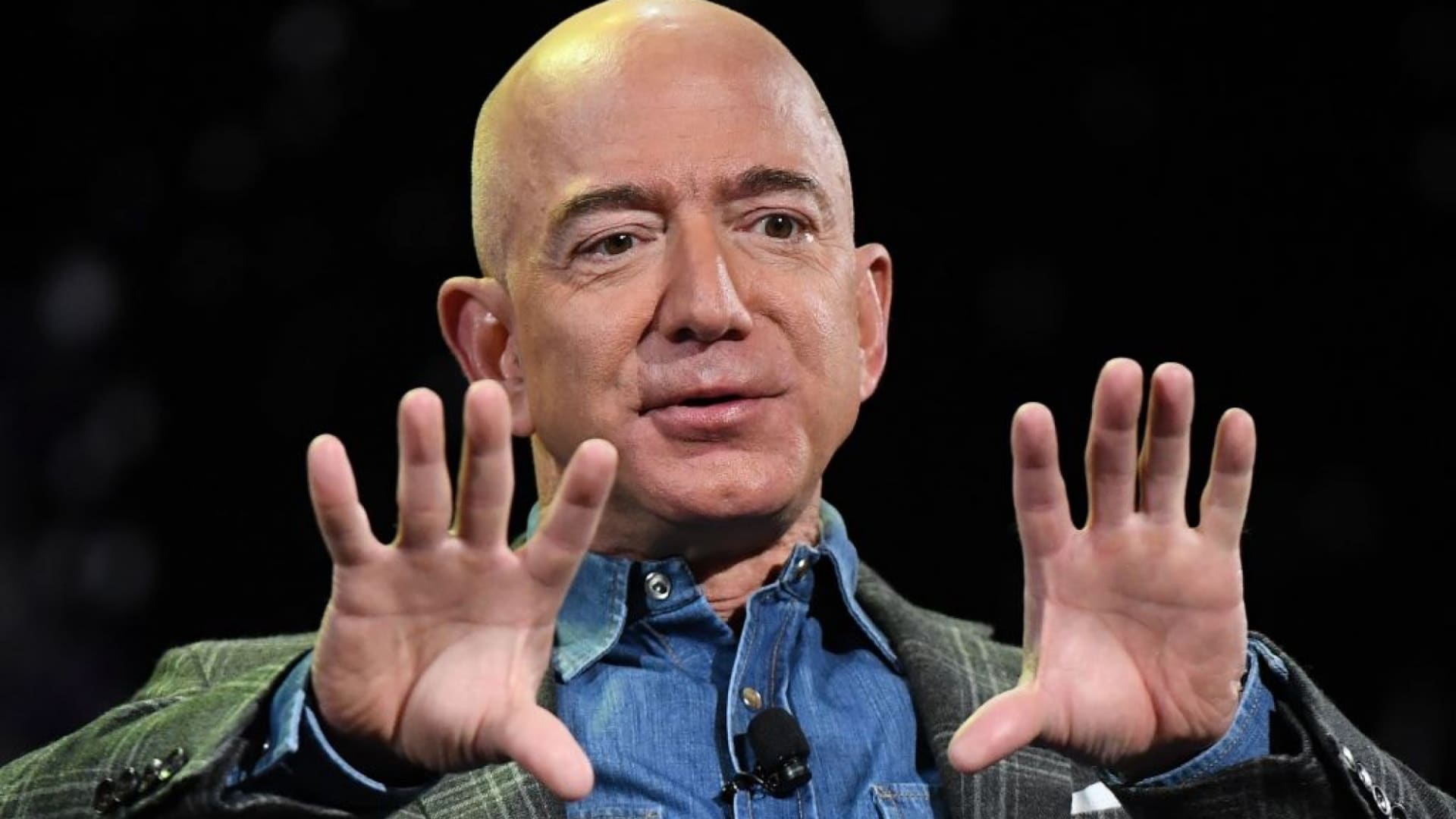
It’s about a habit that Bezos calls “super-important,” and that he has advised over and over. In fact, he explicitly encouraged parents to “preach” it to their kids. And, as a father of four, he says it’s the advice he’s tried to give his own children.
Granted, I’m sometimes hesitant to repeat child-raising advice from so-called icons of entrepreneurship. There’s too much opportunity to mistake correlation for causation.
But, in this case, the advice that Bezos gives aligns almost exactly with the research of Carol Dweck, a psychology professor at Stanford University.
If you don’t know Dweck’s work, she’s conducted some highly compelling studies on teaching children to adopt a “growth mindset,” as opposed to a “fixed mindset,” and why parents should appreciate the difference.
Not only does this tell you about the person you’re meeting with, Lares notes, it also gives you a potential way to build rapport. Do you see that they have a degree from the same college you went to? Is there are a beautiful piece of art you can compliment? On your end, choosing the right background for a video call or conference is key. “A clean background is good, but bare walls can be viewed as a negative thing, as it gives the other party nothing to connect with.” Basically, try to strike a balance between empty and cluttered when setting up your own background.
If you bike down a street on the edge of Los Angeles’s Echo Park neighborhood, you’ll see a sudden change in the pavement on one block, where the black asphalt shifts to white. A little over a year ago, the city covered the street with a special coating—light in color, so it reflects the sun—as part of a plan to help cool L.A. as the world keeps getting hotter.
Like most cities, L.A. is facing more frequent and extreme heatwaves. One new study that mapped out rising heat across the country found that if greenhouse gas emissions continue on their current path, the average number of days in a year across the U.S. that feel hotter than 100 degrees will more than double by the middle of the century. Some cities will have it worst: In Miami, by the end of the century, 153 days each year could feel that hot. Globally, cities that were relatively cool in the past are beginning to grapple with buildings that weren’t built for heat (like Berlin, where the average high in June is 72 degrees but climbed to 101 degrees one day last month, the hottest on record for the planet). Cities also suffer from the urban heat island effect: Hot temperatures get even hotter as pavement and buildings soak up and release radiation from the sun.
“Mommy, I wish I was never born,” my 4-year-old said to me last week. Crushed, I tried to keep from grimacing as I asked him why. “Because then, I would never die,” he replied.
My son often blurts out these types of thoughtful yet pessimistic musings. On Friday, I offered to take him to see his first movie at the cinema, and his initial reaction was concern that it might be too loud. Before a hike last weekend, he warned my husband and me that we’d better not forget to check everyone for ticks afterward. He’s a delightful kid who loves to let loose and have fun, but he sure knows how to worry.
Apparently, my son isn’t alone. Over the past few months, I’ve stumbled across a handful of articles and blog posts claiming that there is an epidemic of anxiety among youth today. Kids are stressed and worried about oh so many things, I’ve read, because they are over-tested, under-recessed, helicopter-parented, and spending too much time online. It seems 2016 is giving every American kid an anxiety disorder.
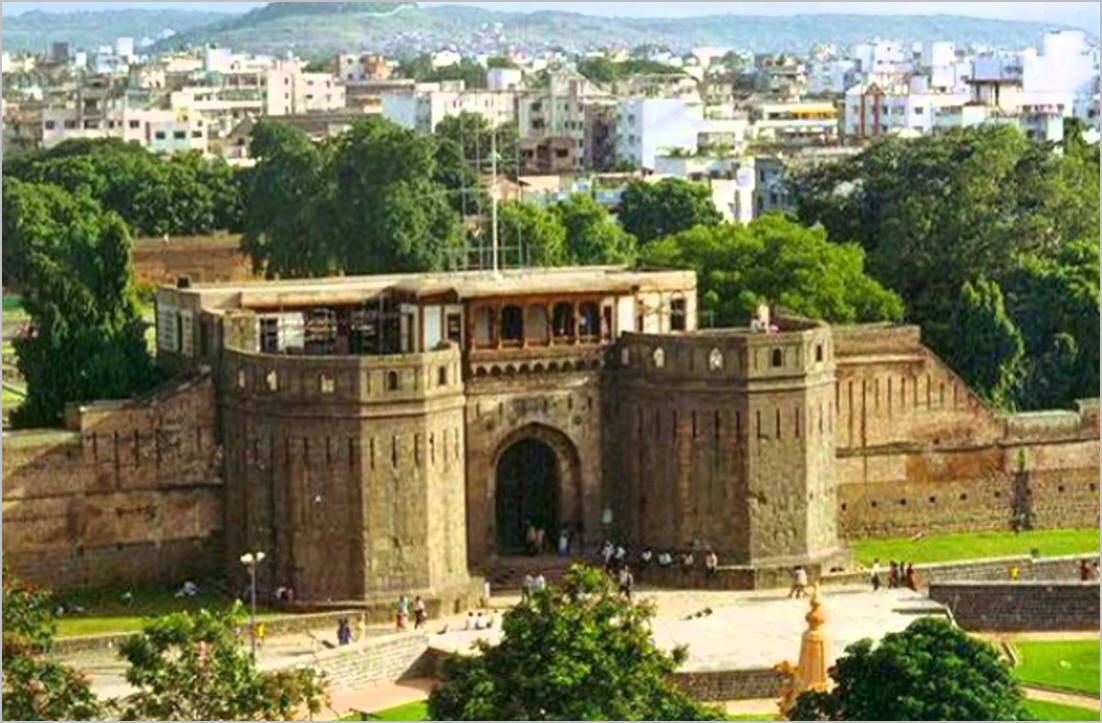
Pune, known as Poona until 1978 is the second-largest metropolitan city in the Indian state of Maharashtra and the eighth-most populous city in India, with an estimated population of 7.4 million as of 2020. It has been ranked as “the most livable city in India” several times. Along with the municipal corporation limits of PCMC and the three cantonment towns of Camp, Khadki, and Dehu Road, Pune forms the urban core of the eponymous Pune Metropolitan Region (PMR). According to the 2011 census the urban area had a combined population of 5.05 million whilst the population of the metropolitan region was estimated at 7.4 million. Situated 560 meters (1,837 feet) above sea level on the Deccan plateau on the right bank of the Mutha river, Pune is also the administrative headquarters of its namesake district.
In the 18th century, the city was the seat of the Peshwas, the prime ministers of the Maratha Empire, and one of the most important political centers on the Indian subcontinent. The city was also ruled by the Ahmadnagar Sultanate, the Mughals, and the Adil Shahi dynasty. Historical landmarks include Lal Mahal, the Kasba Ganapati temple, and Shaniwar Wada. Major historical events involving the city include the Mughal–Maratha Wars and the Anglo-Maratha Wars. Wikipedia
Manuel and Geiszel Godoy are military veterans, and they believe deeply in social justice. But above all, they are entrepreneurs who saw an underdeveloped sector in their industry and dove in.
“We have to show that we can pull a Tyler Perry as a community,” Manuel Godoy, president of Black Sands Entertainment, says in a recent video interview. “The idea is that the bigger the company gets, the better the IP does, the more everybody wins, and we can fund our projects ourselves because we have the experience, the expertise to do it.”
The Godoys’ niche is a growing one: indie comics by Black artists, written for Black families about Black people, with a focus on tales of Africa before slavery. Among their projects are an upcoming animated series and the Black Sands Publishing app, which will offer free access to 26 original comic books when it launches May 1, Free Comic Book Day. ’
“If we get this done,” Godoy says, “we’ve proven that you no longer have to walk through the gate they built in order to get to the main stage.”
Black Sands isn’t the first through the gate. It joins a growing hive of Black creators who’ve carved space in a format that for decades was steeped in racism and exclusion.
.
John Jennings is a comic book illustrator and professor of media and cultural studies at UC Riverside.
“I’m afraid of losing my partner because he wants kids, and I don’t know what I want. I think I don’t want them.”
“I’m afraid of losing my identity, freedom, and comfort if I have children. Afraid of regretting it if I don’t.”
“I’ve always wanted to have a baby, but is it even ethical, knowing the environmental and political climate?”
“I need some peace and clarity from the torture of sitting on the fence for too long.”
This is just a sample of the questions, fears, and concerns I hear all the time from my clients. I’m a therapist who has dedicated my life to helping people figure out if they want to have children. I’ve been doing this for 30 years and have seen more clients than I can count of all stripes — men, women, single, married, and partnered people. People just out of a relationship and people just starting a relationship. People from ages 28 to 59. Our goal is to help people make possibly the biggest decision of their lives: whether or not they want to become a parent.
Most people who contact me say they feel like they’re the only one who can’t decide. I let them know immediately: They’re not the only one. Our society allows little room for ambivalence around this topic.
In the world, human beings are facing various problems. People who are full of greed, anger, and ignorance are seen to be fighting with each other in words and deeds. As the fighting continues, various problems such as civil wars, wars of aggression, and wars of aggression are occurring. As world peace is being destroyed, humans are facing unbearable problems. Innocent children and women are not getting the rights they deserve and deserve. I can't think of one thing every time. What is it? The United Nations. If we look at the responsibilities and duties of the United Nations, I think it is not suitable for solving the problems that are happening in the world today. In fact, the United Nations and the World Security Council, such an organization must rule the world, must be able to give orders, and must have various ways to obey orders. There must be no organization that can influence more than that organization. There should be experts from each country. They can even dominate the superpowers like the US, China, and Britain. Only then will global peace be achieved quickly. Now, if a country with power develops more militarily, economically, or socially than its own country, then powerful countries will jealously seek out enemies and wage war. Or they will attack with fighter jets. In this, innocent people are losing their lives. No one understands the value of a life. You should think about how to achieve global peace by controlling these. If the US continues to be the permanent president of the UN, world peace will never be achieved. If you think carefully, no one sees that they are working for the common good, but for their own benefit, for the benefit of their own country. The permanent president of the UN and the Security Council has rejected this, As a young Rohingya, I have come to realize that only by electing the president and secretary from among the countries in the world through a secret ballot system and governing the world fairly can we achieve global peace. The United Nations and the Security Council are organizations in which any country must govern, give orders, and make them obey their orders. For example, only when a defendant is tried in court can we hold the leaders of the countries in check and control them, can we achieve global peace smoothly. Otherwise, it will not be easy for powerful countries to use various excuses to end this war every year, every year, for the benefit of themselves and their countries. No country's leaders pay any attention to the words of the United Nations and the Security Council. If we look at it in practice, look at the Rohingya issue. Myanmar is a small country. Even that country has been under siege for 8 years. What action can be taken? Why is the UN and the Security Council Powerless? Without such Power, how can the organization bring about global peace? Everyone should think about it. Whether there is a veto or a strong one, all countries in the world can only achieve global peace if they are subject to the UN and the Security Council. Seek peace in the quiet embrace of nature. Peace is an indispensable need of the human race. It is not as if one person can kill another person, and it is as if one country can attack another country, but instead of trying to build peace, we must try to destroy the peace now, and the world is getting hotter and is on the verge of collapse. I especially appeal to all the world experts to urgently try to bring about peace in all parts of the world. Mr, Noor Muhamed Arkhan Rohingya Youth Myanmar
Film and Writing Festival for Comedy. Showcasing best of comedy short films at the FEEDBACK Film Festival. Plus, showcasing best of comedy novels, short stories, poems, screenplays (TV, short, feature) at the festival performed by professional actors.

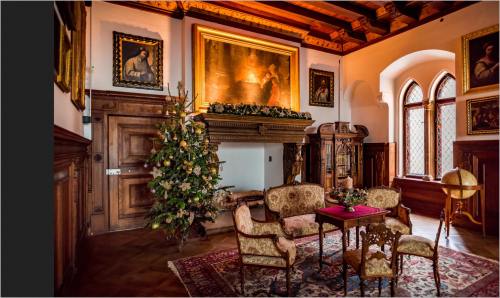 An image from Bojnice Castle Slovakia










/cdn.vox-cdn.com/uploads/chorus_image/image/69186404/VOX_FINALFINAL.0.jpeg)

