Congress’ failure to renew a program that provides health care to low-income children by year’s end could cause almost 2 million kids to lose their coverage as soon as next month.
That’s according to a report published Wednesday by the Georgetown University Center for Children and Families. Federal funding for the Children’s Health Insurance Program, which is jointly run and financed by the federal government and the states, expired nearly two months ago. The program covers about 9 million children in the U.S.
But the GOP-controlled Congress, which made time to pass a sweeping tax bill that largely benefits corporations and the rich, didn’t get around to reauthorizing CHIP ― and now millions of children are in jeopardy.
States are rapidly running out of money to pay these children’s medical bills, and several have started notifying parents that their kids’ health care is poised to disappear. At least 14 states plan to terminate CHIP by the end of January, according to the Henry J. Kaiser Family Foundation.
.
Andrew Montoya
Audrey, Katrina and Scarlett Montoya of Longmont, Colorado, could lose their health care next month because Congress failed to pass legislation renewing the Children’s Health Insurance Program.
Problem drinking is more pervasive and less frequently treated than previously thought, thanks to an updated definition of what constitutes “alcohol use disorder.”
A study published on June 3 in the journal JAMA Psychiatry surveyed U.S. adults 18 and older on their alcohol consumption habits between 2012 and 2013. Results were analyzed using the definition of alcohol use disorder in the latest edition of the Diagnostic and Statistical Manual of Mental Disorders, which was published in 2013.
While older editions divided alcohol use disorder into two categories, alcohol abuse and alcohol dependence, the new definition eliminated categories. Instead, it measures alcohol use disorder using a spectrum of abuse criteria ranging from mild to severe.
.
File photo dated 01/12/06 of a man drinking a pint of beer, as analysis of the latest crime figures showed that the majority of violent attacks on adults involved alcohol and often took place after the traditional pub closing time. | Johnny Green/PA Wire
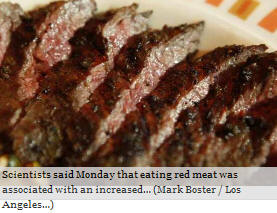
On Monday, researchers at the Harvard School of Public Health released study results showing that red meat consumption was associated with a higher risk of early death. The more red meat — beef, pork or lamb, for the purposes of the research — study participants reported they ate, the more likely they were to die during the period of time that data collection took place (more than 20 years). So what is it in red meat that might make it unhealthy?
Film and Writing Festival for Comedy. Showcasing best of comedy short films at the FEEDBACK Film Festival. Plus, showcasing best of comedy novels, short stories, poems, screenplays (TV, short, feature) at the festival performed by professional actors.




 James' World 2