People love to hate on pigeons for the way they foul up parked cars or flock to food scraps on the sidewalk. But with more than 300 species of wild pigeon found on Earth—many of them stunning—it’s past time the lowly pigeon gets its coo.
“Pigeons are biological marvels,” says Rosemary Mosco, author of A Pocket Guide to Pigeon Watching.
“They make milk for their young. They can take off almost vertically. They see colors we can’t, hear sounds we can’t, and find their way across hundreds of miles using mechanisms we don’t fully understand,” she says. “They’re the world’s most overlooked birds.”
Interestingly, there’s no scientific difference between pigeons and the much more beloved doves. Both birds are members of the Columbidae family, and while the term ‘pigeon’ tends to be applied to larger species and ‘dove’ to smaller ones, Mosco notes in her illustrated field guide that there is actually no scientific or evolutionary distinction to either group.
What’s more, the ubiquitous pigeon found in cities worldwide descends from a bird known as the rock dove, which people long ago domesticated. (Read how pigeons first landed in cities.)
.
A green imperial pigeon, Ducula aenea, flaps its wings at Kamla Nehru Zoological Garden in Ahmedabad, India.
Exploring the ‘dark side’ may be a psychological need that’s met when the scare is actually over.
Virtually everyone knows what it’s like to feel really scared: A pounding heartbeat. Faster breathing. Nervous perspiration. Butterflies in the stomach.
But whether that fright is caused by watching a nail-biting horror movie, listening to a spine-chilling story, or prowling through a dark-as-night haunted house on Halloween, some people actually revel in feeling frightened. They thrive on the latest Friday the 13th movie or Stephen King novel. They relish roller coasters, perhaps even sky diving. They crave having the bejesus scared right out of them.
Of course, for the mere mortals among us who feel that we’re liable to lose our lunch after just a glimpse of a slasher movie, it may seem unimaginable that others actually enjoy panic-button experiences. But experts believe that it’s not uncommon for individuals to push the envelope, seeing how much fear they can tolerate, and ultimately feeling a sense of satisfaction when they’re able to endure the anxiety.
Clint Kugler felt it while climbing 18,000 feet up the side of Volcan Cayambe in Ecuador. Zach Fackrell recognized it as he came face-to-face with a 19-foot shark off the coast of Fiji. It struck Neil Shea as he interviewed a traditional healer in a remote region of Africa, and James Lee is trying to get back to it by wakeboarding at 40 miles an hour. Though recognized in wildly different settings, the feeling was always the same: the pay-off of a thrill.
“It’s like having superpowers for a very brief time,” says Margaret King, Ph.D., director of the Center for Cultural Studies & Analysis in Philadelphia.The rush starts in the amygdala, a bundle of neurons at the base of the brain responsible for assessing the unknown. In a thrill-seeking situation—which almost always poses some kind of risk, whether perceived or real—the amygdala registers that risk, then releases a combination of dopamine, adrenaline, endorphins, and other chemicals in order to protect the body against it. How much of each is released depends on the perceived level of risk. At the peak, every bodily function, chemical brain reaction, and sensory input is hyper-focused on the experience.
Every person’s brain assesses unknown situations differently: Those with thinner sections of gray matter, for example, tend to perceive less of a threat and therefore seek greater thrills. No matter what type of thrill a person is seeking, the reaction triggers an increase in testosterone. Vision narrows. Adrenaline shoots into the body, which increases heart rate. With the heart beating faster, we get more oxygen. The body redirects oxygen to the brain as fast as it can. The feeling often lasts less than 60 seconds, and the immediate aftermath is another flood of mood-boosting chemicals. This is what leads thrill-seekers to chase the process again and again.
It’s cuffing season — that time of year when single people are ready to stop serial swiping and find the one to stick with. Yet finding a new bae can be easier said than done; dating, especially in this uniquely interesting time, can really suck. Of course, people use all kinds of techniques and tactics to find a new boo: apps, going to clubs and bars, matchmakers, asking friends — you name it. Yet there’s another simple but somewhat unorthodox method people use to nab The One: literally thinking them up, or in more formal language, manifesting them.
“Through manifesting and tapping into your own energy, you can find what you want,” says Lisa Stardust, the renowned astrologer who recently released The Love Deck: 70 Cards to Ignite Attraction, Passion, and Romance, a deck of beautifully illustrated cards that guide users through attracting love (and keeping it). “It’s about putting the energy out there.”
The idea of manifesting a partner or romantic relationship merely through the power of one’s own thoughts might sound out there or woo-woo, but manifesting, as a broader concept, is an age-old practice stretching back for generations, if not millennia. It’s the fundamental idea in the best-selling book The Secret, and popular ideas like the “law of attraction” have become so mainstream, they’re understood without much explanation.
Much like shopping for secondhand clothes, buying old books at stoop sales, online, or at used bookstores brings its own brand of excitement. There’s the thrill of happening upon a book that you’ve been wanting to read or letting spontaneity take over, choosing whatever calls to you. Plus, it doesn’t hurt that it saves money and a perfectly readable tome from ending up in a landfill. The one thing you might have to contend with is removing the dust, dirt, and grime that has built up on the covers and between the pages of an old book. Fortunately, learning how to clean old books is often easier than removing the inscriptions left behind by previous readers.
How to clean old books to get rid of dust, dirt, and grime
“To remove dust, dirt, or grime, my best advice is to use a paper towel,” says James Fraser, manager of The Grolier Poetry Bookshop in Boston. Alternatively, you can opt to use a microfiber cloth to dust off books. This method should work when you want to clean old paperback and hardbound books.
1. Wipe down the whole book, cover to cover, being careful when you clean the book’s pages.
2. If there are stubborn smudges and stains on the cover of the book, wet the paper towel or microfiber cloth with a little water and revisit those bits. Bear in the mind that books—particularly old books—can be fragile. “Any attempt to fix past wrongs may end up damaging the book even more,” says Fraser.
Lindsey Konchar has known her best friend, Caroline since Caroline was born. Their mothers have been best friends since the seventh grade, so even though Konchar is two years older than Caroline, and the two attended different schools in their hometown of Eden Prairie, Minnesota, there was no escaping each other. “We were quite literally forced to be friends,” Konchar told me. But even after they moved out of their mothers’ homes, the friendship continued.
Konchar stayed in Minnesota for college, while Caroline attended school in Boston and then moved to New York City, where she started dating someone. (Caroline is being identified by a pseudonym to protect her privacy.) At first, the new relationship seemed marvelous, “all butterflies and roses,” Konchar recalled. But over time, Caroline’s updates on the relationship grew less cheerful and more vague. To Konchar, a social worker, something seemed off, and a visit to NYC only solidified her concerns that Caroline’s partner wasn’t treating her well. “She wasn’t her happy-go-lucky self,” Konchar recalled. On the final day of her visit, Konchar decided to express her concerns about the relationship. She chose her words carefully, making sure to cite specific examples, use “I” statements, and clarify that she was speaking up only because she was worried about her friend’s safety. But Konchar could tell that Caroline wasn’t having it. “Her walls went up,” Konchar told me. “We didn’t talk for a long time.”
The dilemma that Konchar faced—whether to say something or bite her tongue—gets at a long-running debate about what it means to be a good friend. Is it appropriate to tell a friend when you think they’re making a bad decision? Or is a friend’s role to offer steadfast and unconditional support, and leave the unsolicited advice to parents, spouses, or siblings? Those parties may feel more entitled or obligated to speak up because their relationships are better defined and more formalized. But it’s difficult to speak about authority or obligation in friendship, which is to some extent defined by what it’s not: Friends are those who choose to be in one another’s lives although they don’t fulfill a specific role. Even between close friends, it can be tricky to pin down exactly what, if anything, two people owe each other.
The world’s tiniest rabbit is roughly the size of a softball—a very, very soft softball. An adult weighs less than a pound.
These little bunnies abound in the scrublands of the American West, but one population, known as the Columbia Basin pygmy rabbit, long ago colonized what is now central Washington, happily munching away at a smallish patch of fragrant sagebrush steppe for thousands of years.
Every last inch of a pygmy rabbit is built for sagebrush. The enzymes in its gut evolved to neutralize the plant’s toxins and maximize digestion, and it tunnels elaborately beneath the sagebrush’s roots. It even forfeited its archetypal cotton tail, and thus blends in with the gray-green bushes.
But in the last century or so, about 80 percent of the wild “sagebrush sea” of the Columbia Basin was converted into farms and ranchland. By the early 2000s, the genetically distinct Columbia Basin pygmy rabbit population had dwindled to just a few animals. Scientists crossbred survivors with pygmy rabbits from Idaho; reared in protected paddocks, the offspring retained at least three-quarters of their unique Columbia Basin pygmy rabbit DNA. Today only a few hundred of the rabbits remain, living in semi-captivity and in the wild.
.
The Columbia Basin pygmy rabbit relies on sagebrush for food and shelter, but the shrub has nearly disappeared. It’s also slow to regrow: it takes about two decades or ten pygmy rabbit lifetimes. Morgan Heim
In the world, human beings are facing various problems. People who are full of greed, anger, and ignorance are seen to be fighting with each other in words and deeds. As the fighting continues, various problems such as civil wars, wars of aggression, and wars of aggression are occurring. As world peace is being destroyed, humans are facing unbearable problems. Innocent children and women are not getting the rights they deserve and deserve. I can't think of one thing every time. What is it? The United Nations. If we look at the responsibilities and duties of the United Nations, I think it is not suitable for solving the problems that are happening in the world today. In fact, the United Nations and the World Security Council, such an organization must rule the world, must be able to give orders, and must have various ways to obey orders. There must be no organization that can influence more than that organization. There should be experts from each country. They can even dominate the superpowers like the US, China, and Britain. Only then will global peace be achieved quickly. Now, if a country with power develops more militarily, economically, or socially than its own country, then powerful countries will jealously seek out enemies and wage war. Or they will attack with fighter jets. In this, innocent people are losing their lives. No one understands the value of a life. You should think about how to achieve global peace by controlling these. If the US continues to be the permanent president of the UN, world peace will never be achieved. If you think carefully, no one sees that they are working for the common good, but for their own benefit, for the benefit of their own country. The permanent president of the UN and the Security Council has rejected this, As a young Rohingya, I have come to realize that only by electing the president and secretary from among the countries in the world through a secret ballot system and governing the world fairly can we achieve global peace. The United Nations and the Security Council are organizations in which any country must govern, give orders, and make them obey their orders. For example, only when a defendant is tried in court can we hold the leaders of the countries in check and control them, can we achieve global peace smoothly. Otherwise, it will not be easy for powerful countries to use various excuses to end this war every year, every year, for the benefit of themselves and their countries. No country's leaders pay any attention to the words of the United Nations and the Security Council. If we look at it in practice, look at the Rohingya issue. Myanmar is a small country. Even that country has been under siege for 8 years. What action can be taken? Why is the UN and the Security Council Powerless? Without such Power, how can the organization bring about global peace? Everyone should think about it. Whether there is a veto or a strong one, all countries in the world can only achieve global peace if they are subject to the UN and the Security Council. Seek peace in the quiet embrace of nature. Peace is an indispensable need of the human race. It is not as if one person can kill another person, and it is as if one country can attack another country, but instead of trying to build peace, we must try to destroy the peace now, and the world is getting hotter and is on the verge of collapse. I especially appeal to all the world experts to urgently try to bring about peace in all parts of the world. Mr, Noor Muhamed Arkhan Rohingya Youth Myanmar
Film and Writing Festival for Comedy. Showcasing best of comedy short films at the FEEDBACK Film Festival. Plus, showcasing best of comedy novels, short stories, poems, screenplays (TV, short, feature) at the festival performed by professional actors.

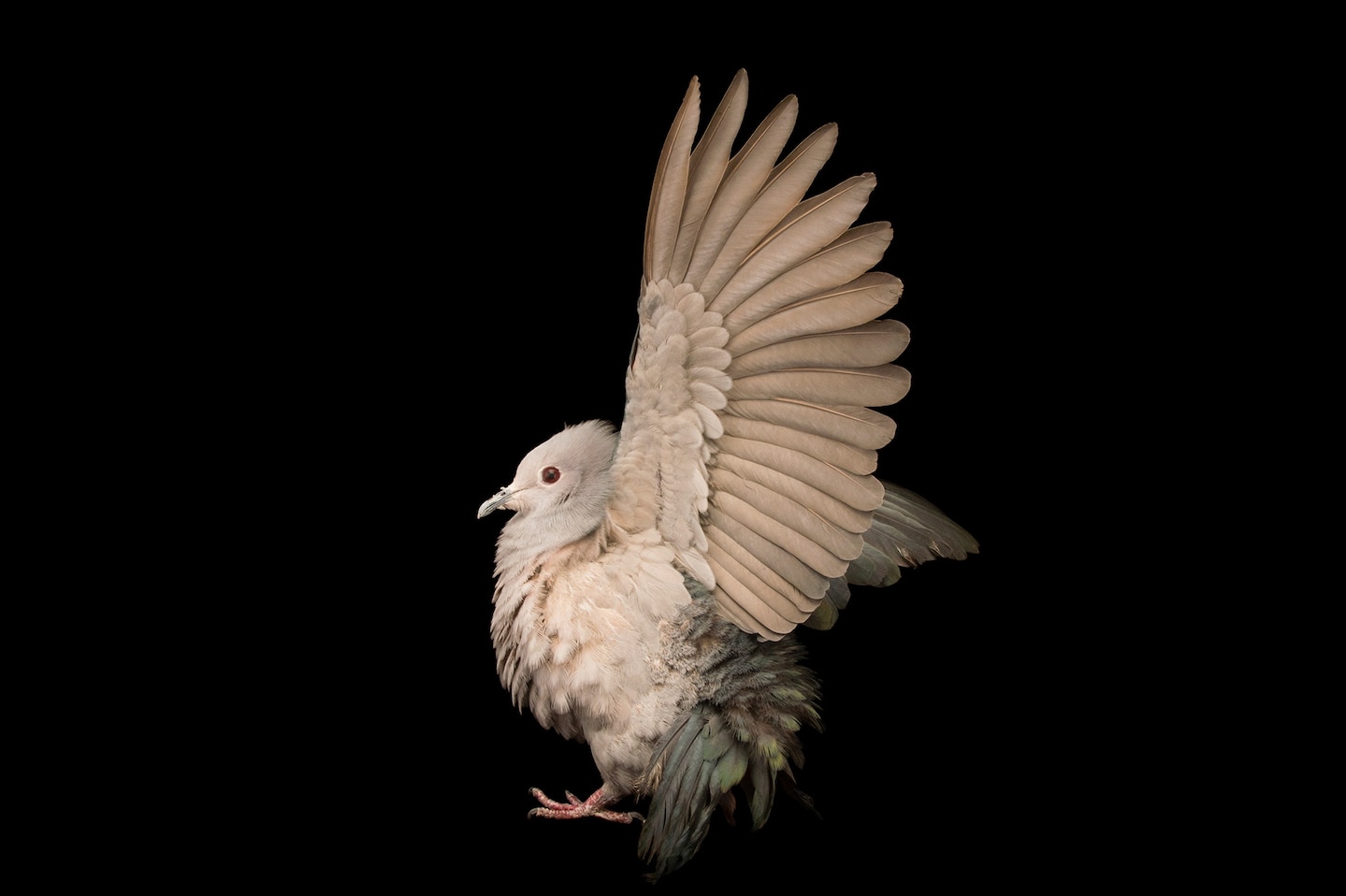 A green imperial pigeon, Ducula aenea, flaps its wings at Kamla Nehru Zoological Garden in Ahmedabad, India.

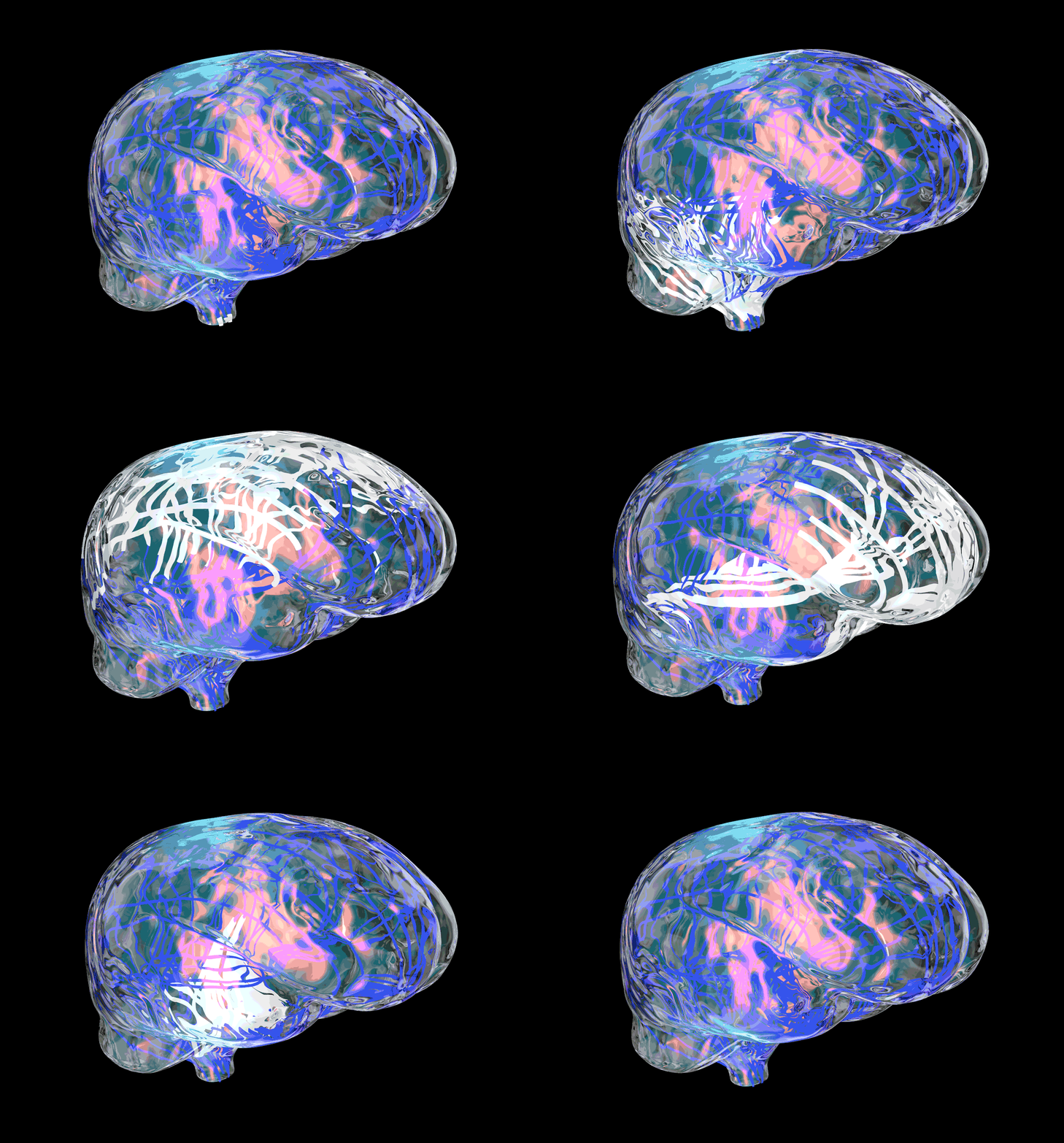




 Photo: Stocksy / Lauren Lee

/https://tf-cmsv2-smithsonianmag-media.s3.amazonaws.com/filer_public/32/2c/322c5bcc-3128-4006-a954-2e0c66f66fc8/janfeb2023_d01_endangeredpygmyrabbit_copy.jpg)

