
Click the link below the picture
.
Luke Borsten, age 38, has been backpacking and making music since childhood. Today the Portland, Ore.–based filmmaker and musician often combines the two by writing music on the trail. Likewise, Amanda McCracken, a 48-year-old, Boulder, Colo.–based runner and author, finds movement essential to her writing practice.
“There’s something in movement that allows me to better see the things I want to describe,” Borsten says. “There’s an underlying feeling of honesty that creates a through line for writing.”
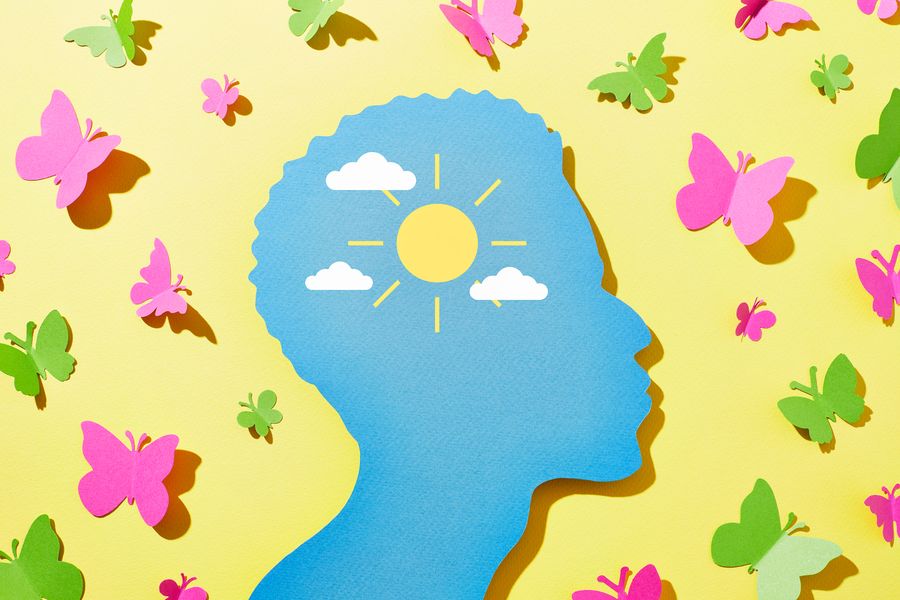
Borsten and McCracken are not unique in their habit of combining creativity with movement: from Ludwig van Beethoven to Henry David Thoreau, from Maya Angelou to Joyce Carol Oates, creative people are often in motion. And there’s solid science to back up that approach: consistent movement—especially in nature—helps unlock the words, notes or brushstrokes that make artists’ work.
Christian Rominger, a researcher in the department of psychology at the University of Graz in Austria, has spent years studying the link between creativity and movement. In 2022 he led a meta-analysis of 115 effect studies that found a link between motion and creativity. Another 2024 study found that the more movement—in terms of step count—participants engaged in, the greater the creative output they had.
“The empirical data is growing in this field,” he says. “We’re trying to capture this effect in detail.”
David Strayer, a professor of cognition and neural science at the University of Utah, co-authored a 2025 study that investigated how movement in nature influences brain activity. “We took measurements at the trail head, before and after hiking and backpacking trips,” he says. “We found a big boost in creativity after.”
Still, scientists have yet to identify exactly why movement seems to spur greater creative thinking. But there are several hypotheses. “We believe that all our multitasking on a daily basis overloads our mental workspace,” Strayer says. “Time moving outside frees up space to create.”
Another working theory is that movement often boosts mood, Rominger says, and that, in turn, allows you to create. “We know that creativity is related to mood,” he says, “but we can’t definitively tie the two together. It may also be that physical activity enhances brain health and therefore creativity. But these are all theories right now.”
When McCracken encounters writer’s block, she often takes a run or a swim to get the juices flowing again. She makes notes on her phone or on scraps of paper as ideas start popping up. “There’s something about it that shakes things loose,” McCracken says.
There is no clear optimal dose of movement that is guaranteed to boost creativity, but Strayer says that cognitive benefits appear to begin after about three sessions per week of 30 to 60 minutes of activity. “You start to develop new neurons at that dosage,” he says. “You think more clearly and have the mental space to support creative thinking.”
While the research is still nascent, McCracken is unequivocal. “Some of my best ideas have come during movement,” she says.
.
 Richard Drury/Getty Images
.
.
Click the link below for the complete article:
.
__________________________________________


Leave a comment