
Click the link below the picture
.
We asked experts to reassure us about the loyalties of the internet’s favorite animal.
Occasionally, I’ll ask my cat Cheddar a question, particularly when he’s buried himself deep into the crevice between my neck and pillow while on the bed: “I love you, do you love me?” Cheddar will typically respond as only a cat can: either by remaining perfectly still—the sole sign of life his diesel-truck purring—or by ramming his head into mine, often making sure to rub his cheek all over my face, too.
For me, that’s more than a satisfactory response. Many people, including animal behavioral experts, say that headbutting (also called bunting) can be a sign of a cat showing trust and affection toward you. Bunting and cheek-rubbing also allows them to leave their scent on you, which can be used to communicate ownership or familiarity.
Cheddar has been a part of my life for almost a decade now. My friend found him abandoned and worm-ridden inside a carrier at a park in Queens, and I offered to take him to my local vet for a checkup. Over the course of the lengthy subway ride back to Brooklyn, his constant pitiful meowing melted my heart, and he would end the day at my apartment, which he’s called home ever since. He was only a few months old at the time and scared of anything he came across, myself very much included. These days, he’s still afraid of a lot of things, but not so much me. People familiar with cats might say that Cheddar chose me to be his person, and I have never regretted accepting the honor.
Still, cats are not people. And as someone who routinely reports on the intricacies of animal behavior, I try to be careful about over-anthropomorphizing Cheddar and other animals. To be clear, I’m not saying that cats don’t have complex cognitive processes or social behaviors. If anything, recent research shows that we’ve been underestimating just how capable many non-human animals are at such things. It’s more that humans are very good at wrongly assuming that other animals see or navigate the world the exact same way we do.
I don’t doubt that I mean something to Cheddar, nor do I doubt that many cats share a unique bond with their owners. But I have always wondered how that something differs from the something we feel toward cats. So for this Giz Asks, I reached out to feline behavior experts, both housecat and wild, to explore the nuances of the millennia-old relationship that modern-day humans have forged with the domestic cat (Felis catus). The following responses may have been lightly edited for clarity and grammar.
From a scientific perspective we don’t use the term “love” since it’s subjective and means different things to different people, but in animals we study the strength of the human-animal bond through things like affiliative interactions (e.g., rubbing), proximity seeking (e.g., time spent in close contact), social preference, vocal communication, and physiological responses, including hormone changes such as oxytocin release.
For example, research suggests that high oxytocin release can occur during cat-owner interactions, particularly in cats categorized as having a “secure attachment style” based on their behavior during a cat-owner separation and reunion test. Oxytocin release is involved in social bonding and affiliation across a variety of species, including humans, and similar oxytocin responses have been observed during positive social interactions between parents and their kids. So we have evidence that cats can form meaningful social relationships with people. That doesn’t necessarily allow us to say that a cat experiences “love” in the same way a human does, but an animal’s emotional experience doesn’t have to be identical to ours for the relationship to be meaningful.
One thing I think is particularly important when we’re talking about cats is individual variation in social behavior. Cats differ widely in how social they are, both towards people and other cats. Genetics, early socialization, previous experiences, management, and the living environment, as well as the behavior of the humans and animals they live with, can all influence these relationships. So there isn’t one single way that a strong cat-human bond should look.
.
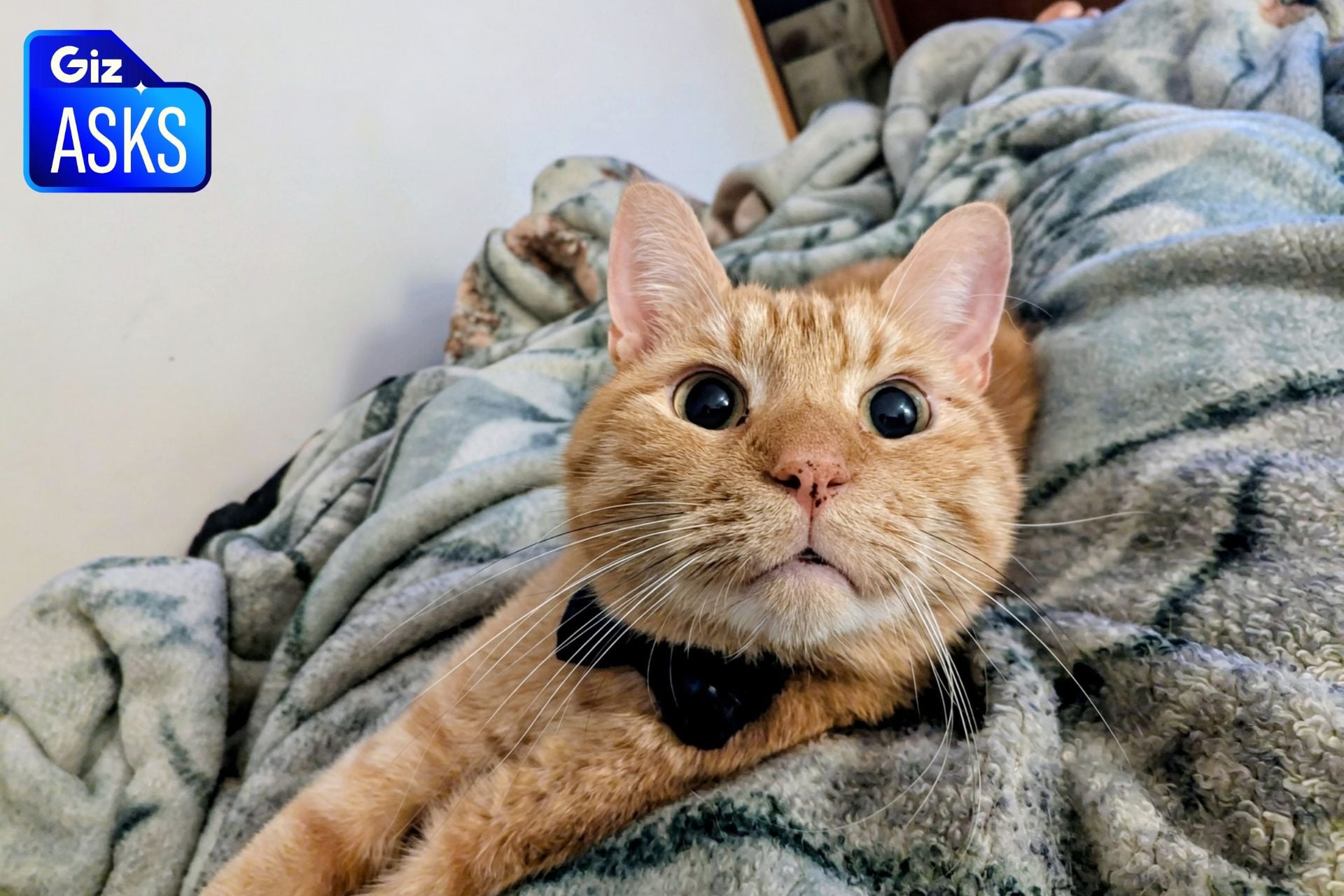 Cheddar “Chiz” Cara in one of his usual locations: on top of his owner’s body. © Ed Cara
.
.
Click the link below for the complete article:
.
__________________________________________


Leave a Reply