February 15, 2013
Mohenjo
Science
amazon, ancient civilization, Astronomy, aviation, cars, Curiosity Rover, Hotels, huffingtonpost, Mars, Mars Protuberance, Mars Rover, Mars Shiny Object, Mars Surface, myaol, NASA's Mars rover Curiosity, Olympus Mons, research, Science, Science News, shiny object, Space, Space Exploration, technology, transportation, travel, vacation, Video
FROM

Click link below picture
.
NASA’s Mars rover Curiosity has photographed a shiny, metallic-looking object that bears a passing resemblance to a door handle or a hood ornament.
The Curiosity rover has not stumbled onto evidence of an ancient civilization that took the family van to Olympus Mons for vacation, however. The object is simply a rock that the wind has sculpted into an interesting shape, scientists said.
.

NASA’s Mars rover Curiosity has photographed a shiny, metallic-looking object that bears a passing resemblance to a door handle or a hood ornament.
.
.Click link below for story, slideshow, video:
http://www.huffingtonpost.com/2013/02/12/mars-metal-shiny-object-nasa-curiosity-rover_n_2671432.html?icid=maing-grid7|myaol|dl5|sec1_lnk3%26pLid%3D269611
.
____________________________________________________
February 10, 2013
Mohenjo
Science
business, climate, Earth, Earth-observation satellite, Environment, environmental change, Health, huffingtonpost, Landsat, Landsat 1 launched in 1972, Landsat 11, Landsat Data Continuity Mission, landsat spacecraft, LDCM, manage their natural resources, monitor environmental change, most advanced and capable Landsat, NASA, natural resources, research, satellite nasa, Satellites, Science, Science News, Space, technology, travel, United States, vacation, vandenberg air force, vandenberg air force base, vandenberg air force base in california, Video
FROM
Click link below picture
.
NASA is gearing up for the Monday (Feb. 11) launch of an Earth-observation satellite that will continue a celebrated 40-year project to monitor our planet’s surface from space.
The Landsat Data Continuity Mission is slated to blast off Monday at 1:02 p.m. EST (1802 GMT/10:02 a.m. PST) from Vandenberg Air Force Base in California. The LDCM satellite is the eighth overall in the Landsat program, which has been scrutinizing Earth from orbit continuously since Landsat 1 launched in 1972.
Mission team members call LDCM the most advanced and capable Landsat spacecraft ever built. It should help the United States and other nations around the world monitor environmental change and better manage their natural resources, they say.
.

The payload faIring containing the Landsat Data Continuity Mission spacecraft arrives at Vandenberg Air Force Base’s Space Launch Complex-3E where it will be hoisted atop a United Launch Alliance Atlas V for launch. Image released Jan 25, 2013.
.
.Click link below for story, slideshow, and video:
http://www.huffingtonpost.com/2013/02/09/landsat-launch-earth-observing-satellite-nasa_n_2652621.html?ref=topbar
.
_____________________________________________________
February 10, 2013
Mohenjo
Science
aviation, business, Computer Science, Curtis Cooper, Daily Discovery, gaming, Gimps, great internet mersenne prime search, Great Internet Mersenne Prime Search (GIMPS), huffingtonpost, Largest Prime Number, Math, mathematician Curtis Cooper, Numbers, Prime Numbers, radio telescope data, research, Science, Science News, search for extraterrestrial intelligence, Search for Extraterrestrial Intelligence (SETI), Seti, SETI@Home, technology, transportation, travel, University Of Central Missouri, University of Central Missouri mathematician, vacation, Video
FROM
Click link below picture
.
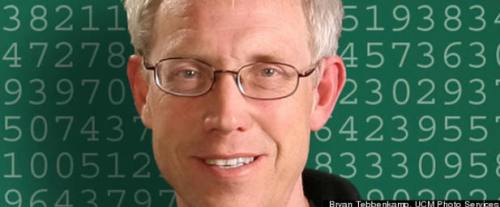
The largest prime number yet has been discovered — and it’s 17,425,170 digits long. The new prime number crushes the last one discovered in 2008, which was a paltry 12,978,189 digits long.
The number — 2 raised to the 57,885,161 power minus 1 — was discovered by University of Central Missouri mathematician Curtis Cooper as part of a giant network of volunteer computers devoted to finding primes, similar to projects like SETI@Home, which downloads and analyzes radio telescope data in the Search for Extraterrestrial Intelligence (SETI). The network, called the Great Internet Mersenne Prime Search (GIMPS) harnesses about 360,000 processors operating at 150 trillion calculations per second. This is the third prime number discovered by Cooper.
.
.
.Click link below for story, slideshow, and video:
http://www.huffingtonpost.com/2013/02/06/largest-known-prime-number-math_n_2623640.html?ref=topbar
.
______________________________________________________
February 10, 2013
Mohenjo
Science
44 percent less sperm, British, British Journal Of Sports Medicine, business, climate, Harvard, Harvard School of Public Health, harvard study, Health, huffingtonpost, Infertility, journal of sports medicine, Male Fertility, mental-health, politics, Reproductive Science, research, school of public health, Science, Science News, society, sperm, Sperm Count, Sperm Counts Declining, Sperm Production, technology, Television, Too Much Tv, travel, TV, TV might kill you sooner, TV Viewing, vacation, Video
FROM
Click link below picture
.
A few years ago, we learned that too much TV might kill you sooner. Now, a new Harvard study is telling us excessive TV-watching could slash men’s sperm count, too.
The Harvard School of Public Health’s sperm study, published this week in the British Journal of Sports Medicine, determined that guys glued to the tube more than 20 hours per week had 44 percent less sperm than those who watched no TV.
.

A new study on sperm counts suggests that excessive
TV-watching could slash men’s sperm count.
.
.Click link below for story, slideshow, and video:
http://www.huffingtonpost.com/2013/02/06/tv-sperm-count-harvard-study_n_2623238.html?ref=topbar
.
____________________________________________________
February 6, 2013
Mohenjo
Science
brains, brains and our minds, business, climate, connectome, focuses on the connections between neurons, Future, genome, Health, mapping, medicine, mental-health, Mind, minds, model of the brain, neuron, new model, new model of the brain, research, Science, Science News, Sebastian Seung, ted, travel, vacation, Youtube Videos

Click link below picture
.
Sebastian Seung is mapping a massively ambitious new model of the brain that focuses on the connections between each neuron. He calls it our “connectome,” and it’s as individual as our genome — and understanding it could open a new way to understand our brains and our minds.
.

.
.Click link below for Ted talk:
http://www.youtube.com/watch?v=HA7GwKXfJB0
.
____________________________________________________
February 5, 2013
Mohenjo
Science
amp, article requests, biology, brains, business, climate, connectome, Connectome Q&A, connectomics, consciousness, evolution, Facebook, first-ever official Connectome Q&A, Future, imaging, incoming questions, neuroanatomy, neurophysiology, queries, research, Science, Science News, technology, Technology News, travel, Twitter, vacation

Click link below picture
.
As promised, here’s the first-ever official Connectome Q&A! We’ve been getting lots of incoming questions on our Facebook and Twitter pages – some of them on the technical side; others of the more “general interest” variety. Most of these questions require pretty involved answers – and it’s important to me that each of them gets the full treatment it deserves.
So for today’s Q&A, I’ve decided to focus on just one question. That doesn’t mean we’ve forgotten the others, though – we keep everything archived, and we’ll be doing plenty more Q&As in the future. So keep sending those neuroscience queries and article requests our way.
.

.
.Click link below for article:
http://theconnecto.me/2012/11/qa-can-we-preserve-our-brains-after-death/
.
____________________________________________________
February 5, 2013
Mohenjo
Science
business, Chile in 1960, climate, current-events, earthquake prediction, earthquakes, earthquakes that rocked Tohoku, Environment, Future, Japan, magnitude 9, magnitude 9.0 or greater, master fault, old oceanic crust, recent earthquakes, research, Science, Science News, seismologist, Sumatra, Sumatra in 2004, superquakes, technology, tohoku japan, travel, vacation, Yahoo News

Click link below picture
.
The earthquakes that rocked Tohoku, Japan in 2011, Sumatra in 2004 and Chile in 1960 — all of magnitude 9.0 or greater — should not have happened, according to seismologist’s theories of earthquake cycles. And that might mean earthquake prediction needs an overhaul, some researchers say.
All three earthquakes struck along subduction zones, where two of Earth’s tectonic plates collide and one dives beneath the other. Earlier earthquakes had released the pent-up strain along Chile’s master fault, meaning no big quakes were coming, scientists had thought. Japan and Sumatra both sat above on old oceanic crust, thought to be too stiff for superquakes.
.

.
.Click link below for article:
http://news.yahoo.com/potential-superquakes-underestimated-recent-earthquakes-show-153606464.html
.
_____________________________________________________
January 31, 2013
Mohenjo
Science
bio-mechanical function, business, climate, cry because of emotion, crying, emotion, Health, human phenomenon, humans cry Tears, humans crying, language expert, Mail Online, mechanical function, Michael Trimble, oral language, Other animals shed tears, professor of neurology, research, Science, Science News, sciencetech, Tears, technology, travel, UCL Professor, uniquely human phenomenon of crying, vacation, Video, when we are overcome by emotion

Click link below picture
.
-
UCL Professor attempts to shed light on the mystery of why humans cry Tears were used to communicate as well as their bio-mechanical function
-
Other animals shed tears, but none appear to cry because of emotion
The uniquely human phenomenon of crying when we are overcome by emotion developed as a means to communicate our feelings before the emergence of language, an influential scientists claims.
Michael Trimble, a professor of neurology, suggests that there must have been a time in our evolution when tears took on a meaning beyond their simple bio-mechanical function – keeping the eyeballs moist.
.

.
.Click link below for article and video:
http://www.dailymail.co.uk/sciencetech/article-2270799/Why-humans-Shedding-anguished-tear-enabled-communicate-oral-language-expert-claims.html
.
_____________________________________________________
January 31, 2013
Mohenjo
Science
aviation, bbc, bbc news, black hole in the NGC4526 galaxy, black holes, business, climate, Environment, gaming, how massive supermassive black holes, how they affect galaxy evolution, infers a black hole's mass, NGC4526 galaxy, published in Nature, Science, Science News, supermassive black holes, technology, transportation, travel, vacation, weighs 450 million times our sun, www bbc co uk

Click link below picture
.
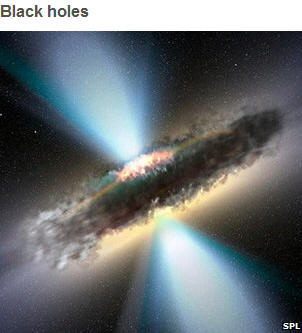
Researchers have proposed a new means for getting a measure of just how massive supermassive black holes are.
They are known to exist at the centres of most galaxies, but a puzzle remains as to how they affect galaxy evolution.
The approach, published in Nature, infers a black hole’s mass from the speed of molecules swirling around it.
It could help weigh hundreds of nearby black holes. Its first use suggests a black hole in the NGC4526 galaxy weighs 450 million times that of our Sun.
.
.
.Click link below for article:
http://www.bbc.co.uk/news/science-environment-21259221
.
____________________________________________________
January 31, 2013
Mohenjo
Science
alien planet, Alien Planets, Astronomy, business, climate, Environment, Exoplanet Habitable Zone, Exoplanets, far distances, goldilocks, Goldilocks Zone, Habitable Zone, Habitable Zone Planets, huffingtonpost, Paranormal, parent star, penn state university, research, Science, Science News, technology, travel, vacation, Video
FROM
Click link below picture
.
One of the most important characteristics of an alien planet is whether or not it falls into what’s called the habitable zone — a Goldilocks-like range of not-too-close, not-too-far distances from the parent star that might allow the planet to host life.
Now scientists have redefined the boundaries of the habitable zone for alien planets, potentially kicking out some exoplanaets that were thought to fall within it, and maybe allowing a few that had been excluded to squeeze in.
“This will have a significant impact on the number of exoplanets that are within habitable zone,” said research team leader Ravi Kumar Kopparapu of Penn State University.
.

A new definition of the habitable zone around planets, denoting where liquid water
could exist, shifts Earth toward the very edge of the solar system’s own habitable zone.
.
.Click link below for story, slideshow, and video:
http://www.huffingtonpost.com/2013/01/30/habitable-zone-alien-planet-exoplanet-goldilocks_n_2580640.html?utm_hp_ref=science
.
__________________________________________________
Older Entries
Newer Entries

