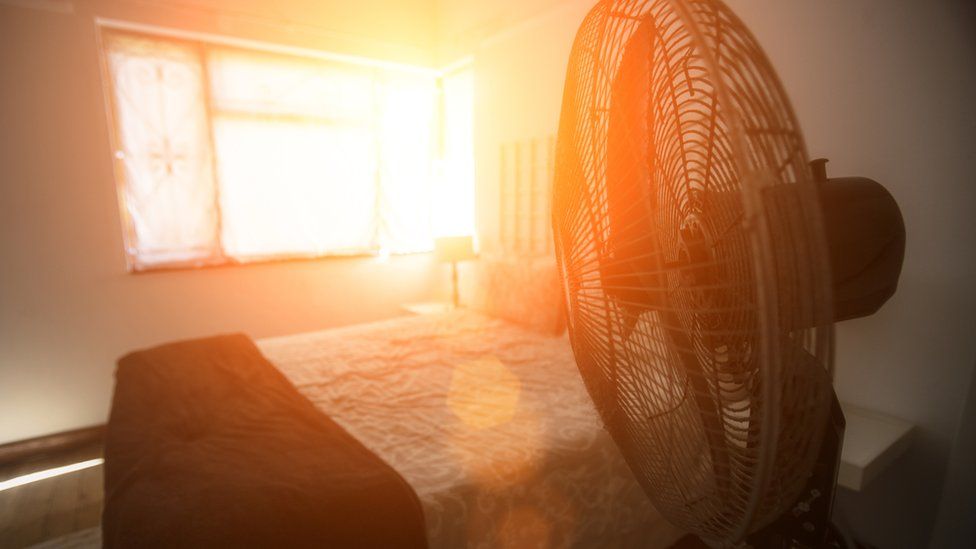
Does your home become unbearable in hot weather? Increasingly a hot home is an overheating office too.
During the pandemic, up to 30% of people in the UK were working from home compared with 5% in 2019.
But it’s hard to work if you live somewhere that becomes an oven in hot weather.
A recent government report into climate risks warned that unless homes can be kept cool in summer and warm in winter, health and productivity will suffer.
According to some forecasts, air conditioning alone could contribute to as much as a 0.5C increase in global warming by 2100.
The Passivhaus Trust works to promote buildings built to the Passivhaus standard, which means they are comfortable to live in while using very little energy for heating and cooling.
In 2019, the Stirling Prize for architecture went to Goldsmith Street in Norwich, a social housing scheme incorporating Passivhaus principles.
“Our existing housing stock is in many cases poorly prepared to deal with rising temperatures,” said the Passivhaus Trust’s John Palmer.
The government wants 300,000 new homes built every year, and Mr. Palmer says they must be designed to cope with the heat without using energy-consuming air-conditioning.
Some content on this page was disabled on April 15, 2025 as a result of a DMCA takedown notice from Guardian Media Group. You can learn more about the DMCA here:
Bill Chadwick has seen things you wouldn’t believe. He’s observed an undersea volcano oozing carbon dioxide, which turned into an eerie, milky liquid under intense water pressure. “That was crazy,” Chadwick tells Vox. He witnessed another eject a toxic plume that was killing and stunning fish and squid, which rained down to be eaten by crabs, worms, and shrimp.
Chadwick, a researcher at Oregon State University’s Hatfield Marine Science Center, has spent much of his career exploring the ocean’s depths as a seafloor geologist. He says nothing is quite as wondrous as an underwater volcano.
One of Chadwick’s all-time favorite expeditions was to the Mariana Arc, a chain of mostly submerged volcanoes south of Japan. Between 2004 and 2010, remotely operated vehicles (ROVs) glided around this previously unexplored realm, surveying its volcanic cathedrals — some nearly breaking the waves, some concealed a mile beneath. The eruption of an underwater Arc volcano known as NW Rota-1 — the same one emitting the plume that knocked out fish and squid — marked the first time a deep-sea volcano had been seen spewing molten rock.
.
Universal History Archive/Universal Images Group via Getty Images
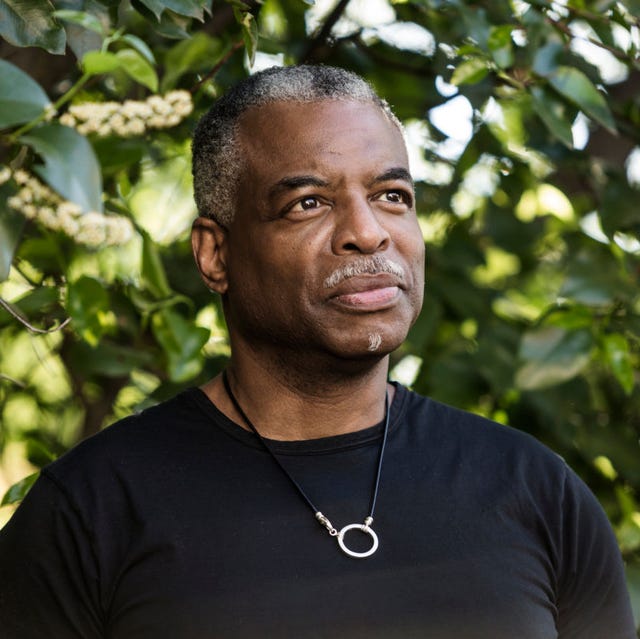
LeVar Burton’s turn behind the Jeopardy! the podium has been a long time coming. In 2013, Burton tweeted that his dream job would be to host Jeopardy!; in September 2020, he tweeted, “Not gonna lie, I feel like I’ve been preparing my whole life to occupy the Jeopardy! podium when Alex Trebek retires.” Then, the world turned upside down for devoted Jeopardy! viewers like Burton—in November 2020, Trebek died of pancreatic cancer, leaving a void in American life that seemingly no one could fill. But the show must go on, so Jeopardy! producers hired a revolving door of prominent broadcasters, athletes, and actors to moderate America’s favorite game show. “The guest hosts were a way to find a permanent replacement for Alex,” Burton told Esquire, “but also an appropriate way for America to get used to the fact that Alex wasn’t going to be there anymore.”
Now, Burton is stepping up to the plate as a Jeopardy! Season 37 guest host, while an announcement about the permanent host looms. Burton, the public intellectual who cultivated a love of reading and knowledge in an entire generation of Americans through the Peabody Award-winning series Reading Rainbow, seems an obvious successor to Trebek. But if he doesn’t get the gig, don’t worry about him. “If I don’t get it, I’ll be fine,” Burton told Esquire. “My life will go on.”
Last September, a wildfire tore through one of Dario Sattui’s Napa Valley wineries, destroying millions of dollars in property and equipment, along with 9,000 cases of wine.
November brought a second disaster: Mr. Sattui realized the precious crop of cabernet grapes that survived the fire had been ruined by the smoke. There would be no 2020 vintage.
A freakishly dry winter led to a third calamity: By spring, the reservoir at another of Mr. Sattui’s vineyards was all but empty, meaning little water to irrigate the new crop.
Finally, in March, came the fourth blow: Mr. Sattui’s insurers said they would no longer cover the winery that had burned down. Neither would any other company. In the patois of insurance, the winery will go bare into this year’s burning season, which experts predict to be especially fierce.
.
Stuart Smith, owner of Smith Madrone Vineyards & Winery, inspected burned tree stumps near his vineyards, which were charred in last year’s wildfires, in St. Helena, Calif.Credit…Mike Kai Chen for The New York Times
IQ is often hailed as a crucial driver of success, particularly in fields such as science, innovation, and technology. In fact, many people have an endless fascination with the IQ scores of famous people. But the truth is that some of the greatest achievements by our species have primarily relied on qualities such as creativity, imagination, curiosity, and empathy.
Many of these traits are embedded in what scientists call “cognitive flexibility” – a skill that enables us to switch between different concepts or to adapt behavior to achieve goals in a novel or changing environment. It is essentially about learning to learn and being able to be flexible about the way you learn. This includes changing strategies for optimal decision-making. In our ongoing research, we are trying to work out how people can best boost their cognitive flexibility.
Cognitive flexibility provides us with the ability to see that what we are doing is not leading to success and to make the appropriate changes to achieve it. If you normally take the same route to work, but there are now roadworks on your usual route, what do you do? Some people remain rigid and stick to the original plan, despite the delay. More flexible people adapt to an unexpected event and problem-solve to find a solution.
.
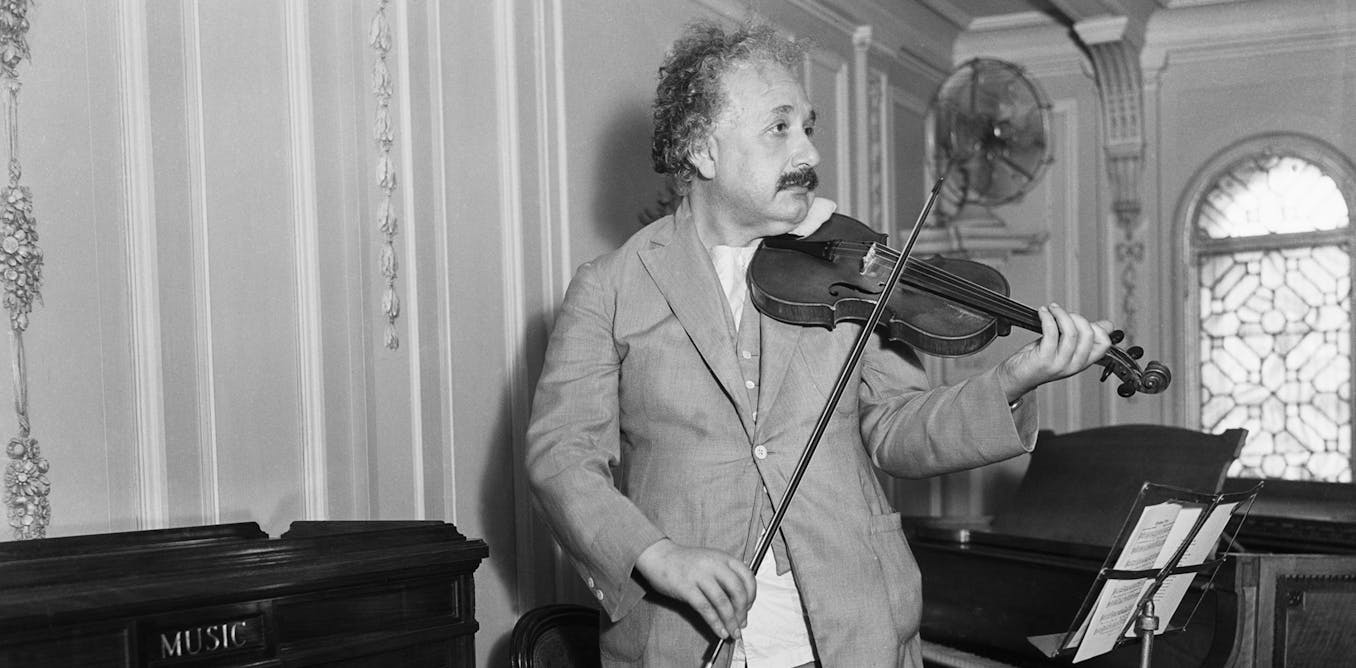
Einstein thought imagination was crucial. Robert and Talbot Trudeau/Flickr, CC BY-NC
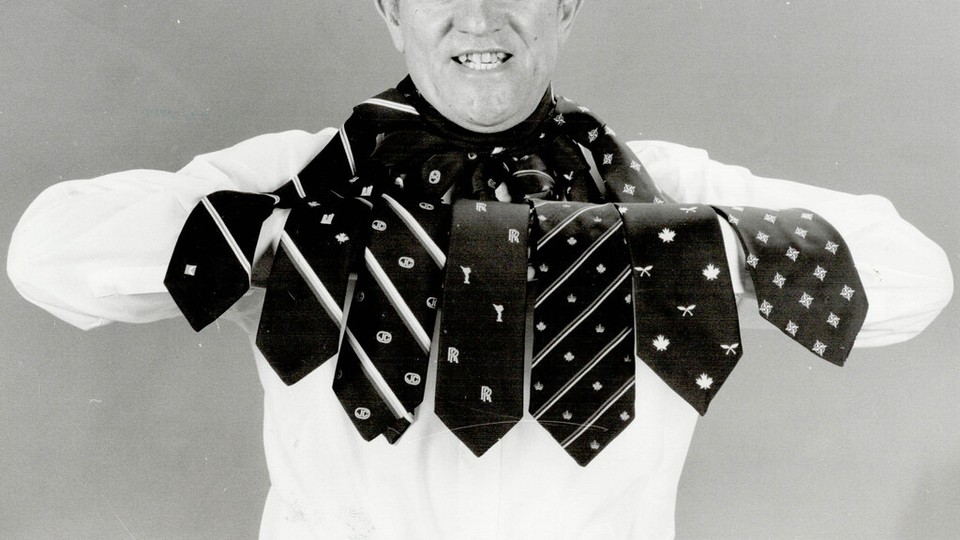
As America struggled to recover from a global pandemic, a shattered economy, and record unemployment levels, headlines despaired: “NECKTIES DOOMED.” Men were “slashing their clothing bills” to retailers’ chagrin, the Associated Press reported. Those who continued to wear ties were downgrading from colorful, expensive silk to plain, cheap cotton. The year was 1921, and reports of the tie’s death were premature, to say the least.
A century later, as Americans begin to emerge from another financially devastating pandemic, another rash of headlines is predicting the tie’s imminent demise. Last fall, the Financial Times wondered, “Is This the End of the Tie?” More recently, The Wall Street Journal asked, “Will Ties Ever Be Relevant Again?” For more than a year, many men who once felt bound to wear ties have shown up on Zoom each day wearing polos or even T-shirts. Now that they have tasted freedom from the necktie—and have seen their colleagues, clients, and bosses doing the same—how can they ever go back to working with their necks encumbered?
After this pandemic, many fewer men will have to. The arc of fashion has always bent toward informality (and androgyny—since the late 1800s, women have sometimes worn ties too). But a major disruption—like a war, a recession, or a global pandemic—can accelerate that natural change. Ties as an everyday accessory have certainly taken a hit, from which they’re unlikely to recover fully. The deeper functions that ties have long provided—such as social signaling and personal expression—will be absorbed by other garments. But ties will continue to be worn on the most formal occasions, and as quirky accoutrements for the self-consciously old-fashioned or whimsical. In other words, neckties are the new bow ties.
In the world, human beings are facing various problems. People who are full of greed, anger, and ignorance are seen to be fighting with each other in words and deeds. As the fighting continues, various problems such as civil wars, wars of aggression, and wars of aggression are occurring. As world peace is being destroyed, humans are facing unbearable problems. Innocent children and women are not getting the rights they deserve and deserve. I can't think of one thing every time. What is it? The United Nations. If we look at the responsibilities and duties of the United Nations, I think it is not suitable for solving the problems that are happening in the world today. In fact, the United Nations and the World Security Council, such an organization must rule the world, must be able to give orders, and must have various ways to obey orders. There must be no organization that can influence more than that organization. There should be experts from each country. They can even dominate the superpowers like the US, China, and Britain. Only then will global peace be achieved quickly. Now, if a country with power develops more militarily, economically, or socially than its own country, then powerful countries will jealously seek out enemies and wage war. Or they will attack with fighter jets. In this, innocent people are losing their lives. No one understands the value of a life. You should think about how to achieve global peace by controlling these. If the US continues to be the permanent president of the UN, world peace will never be achieved. If you think carefully, no one sees that they are working for the common good, but for their own benefit, for the benefit of their own country. The permanent president of the UN and the Security Council has rejected this, As a young Rohingya, I have come to realize that only by electing the president and secretary from among the countries in the world through a secret ballot system and governing the world fairly can we achieve global peace. The United Nations and the Security Council are organizations in which any country must govern, give orders, and make them obey their orders. For example, only when a defendant is tried in court can we hold the leaders of the countries in check and control them, can we achieve global peace smoothly. Otherwise, it will not be easy for powerful countries to use various excuses to end this war every year, every year, for the benefit of themselves and their countries. No country's leaders pay any attention to the words of the United Nations and the Security Council. If we look at it in practice, look at the Rohingya issue. Myanmar is a small country. Even that country has been under siege for 8 years. What action can be taken? Why is the UN and the Security Council Powerless? Without such Power, how can the organization bring about global peace? Everyone should think about it. Whether there is a veto or a strong one, all countries in the world can only achieve global peace if they are subject to the UN and the Security Council. Seek peace in the quiet embrace of nature. Peace is an indispensable need of the human race. It is not as if one person can kill another person, and it is as if one country can attack another country, but instead of trying to build peace, we must try to destroy the peace now, and the world is getting hotter and is on the verge of collapse. I especially appeal to all the world experts to urgently try to bring about peace in all parts of the world. Mr, Noor Muhamed Arkhan Rohingya Youth Myanmar
Film and Writing Festival for Comedy. Showcasing best of comedy short films at the FEEDBACK Film Festival. Plus, showcasing best of comedy novels, short stories, poems, screenplays (TV, short, feature) at the festival performed by professional actors.

 Getty Images

/cdn.vox-cdn.com/uploads/chorus_image/image/69570218/629464151t.0.jpg)




 Einstein thought imagination was crucial.
 Toronto Star Archives/Getty
