November 14, 2021
Mohenjo
Business, Food For Thought, Human Interest, Science, Technical
amazon, business, Business News, current-events, Future, Hotels, human-rights, medicine, mental-health, research, Science, Science News, technology, Technology News, travel, vacation

Click the link below the picture
.
Thinking about taking a Friday off to go to the beach, take a hike, or just sprawl on the couch reading and drinking iced coffee? Do it on a Wednesday instead.
If Monday through Friday is your normal work schedule, you’ll feel more relaxed and refreshed after a mid-week break than you will after a three-day weekend. There’s science to back that up.
The key is giving yourself a beat, a day to make your own pace, and to break the tyranny of the over-scheduled work week. Our human experience of time is ordered by “pacers,” both internal (like being a “morning person” or a “night owl”) and external, like the workweek or a deadline, says Dawna Ballard, a communications professor at University of Texas at Austin and a scholar of chronemics, the study of time and communication. “Everyone has a different chronotype. Some people are slower moving, some people are faster moving,” she told me over the phone. “Our work, though, just goes and throws that out the window and says actually, this is how fast you have to work, this is when you have to work.”
.
 AP Photo/Jens Meyer.
.
.
Click the link below for the article:
.
__________________________________________
November 14, 2021
Mohenjo
Business, Food For Thought, Human Interest, Science, Technical
amazon, business, Business News, current-events, Future, Hotels, human-rights, medicine, mental-health, research, Science, Science News, technology, Technology News, travel, vacation
Click the link below the picture
.
It’s official: burnout is a real condition. On May 25, the World Health Organization (WHO) formally defined the syndrome as energy depletion, exhaustion, and negativity resulting from chronic workplace stress.
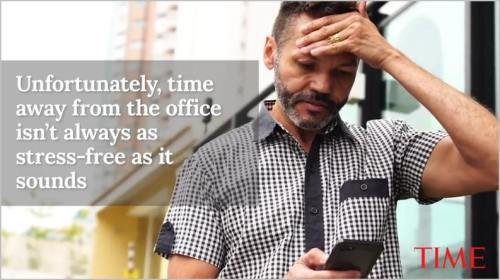
Taking a vacation when you feel burnt out is probably one of the most common remedies. Unfortunately, time away from the office isn’t always as stress-free as it sounds. A 2018 survey from the American Psychological Association (APA) found that 21% of U.S. adults felt stressed during their time off and 28% worked more than they thought they would on vacation — and this can have detrimental effects. Working while you’re supposed to be unwinding can negatively impact your relationships, take you away from the present moment and sink your mood, research finds.
In short: “Blurred boundaries between work and time off can be bad for your health,” says Kathleen Hall, founder, and CEO of the Mindful Living Network and the Stress Institute.
In order to relax fully on vacation, psychology experts say your employer must respect that time off (and your boundaries) while you’re away. But no matter your situation at work, these six strategies can help you unplug — and find a little more R&R — while you’re on vacation.
.
 .
.
.
Click the link below for the article (and 6 six strategies) :
.
__________________________________________
November 13, 2021
Mohenjo
Business, Food For Thought, Human Interest, Science, Technical
amazon, business, Business News, current-events, Future, Hotels, human-rights, medicine, mental-health, research, Science, Science News, technology, Technology News, travel, vacation

Click the link below the picture
.
Even before the coronavirus pandemic fundamentally changed how we live and work, Americans have never been very good at taking days off. The pandemic only further tipped the scales of our work-life imbalance.
“The concept of being totally removed from work has become really foreign,” says Andrea Bonior, a licensed clinical psychologist who writes an advice column, “Ask Dr. Andrea,” on The Lily. “We’ve been absorbed in this little work-life murky blob that swirled everything together.”
Because of lockdowns and travel restrictions, the potential for days off was limited. Many felt like vacation time would be wasted if it wasn’t spent traveling. But now with the world’s borders reopening for tourism, and the Centers for Disease Control and Prevention saying that vaccinated people are able to travel with less risk, taking PTO is looking more appealing than ever.
After a year of not going anywhere, travelers may have forgotten best practices for requesting time off — or have new anxieties due to the pandemic. Here’s what to keep in mind as you begin putting in your vacation requests.
.
 (iStock/Washington Post illustration)
.
.
Click the link below for the article:
.
__________________________________________
November 13, 2021
Mohenjo
Business, Food For Thought, Human Interest, Science, Technical
amazon, business, Business News, current-events, Future, Hotels, human-rights, medicine, mental-health, research, Science, Science News, technology, Technology News, travel, vacation

Click the link below the picture
.
It’s a Catch-22 millions of workers face: You plan a vacation to relax, rejuvenate, and forget all about the stresses of work. But being out of the office means cramming in extra work up until you leave — and making up for lost time once you return. So perhaps it’s little surprise that a study in the Netherlands found vacationers are no happier than non-vacationers after a break.
But this problem can be particularly acute in the United States, where the culture often pressures people not to take vacations at all: more than half (52%) of American workers leave at least some vacation time unused. Pre- and post-vacation stress is a major contributor to this problem. In a survey, 40% of men, and 46% of women said that just thinking about the “mountain of work” they’d return to was a major reason they hadn’t used their vacation days.
A different survey also found that taking time off was a source of anxiety, even though paid vacation was a benefit they’d earned. “In the past two weeks, I’ve worked 24 extra hours, at least,” said one respondent preparing for time away; another, who’d just returned from vacation, expressed the mirror-image problem: “I have felt very stressed about the amount of time it is taking to catch up.
”This reflects concerns I’ve heard as a meditation coach for people in all parts of the corporate world. I regularly hear from them when they’re most stressed — which, all too often, comes just before and after vacations. Over time, by advising clients and coming up with strategies for myself, I’ve pinpointed crucial steps that help minimize stress while maximizing productivity.
.
 Patrick George/Getty Images
.
.
Click the link below for the article:
.
__________________________________________
November 13, 2021
Mohenjo
Arts, Crime, Food For Thought, Human Interest, Medical, missed News, Political, Science, Technical
amazon, business, Business News, current-events, Future, Hotels, human-rights, medicine, mental-health, research, Science, Science News, technology, Technology News, travel, vacation

.
News You might have missed!
Use your browser or smartphone back arrow (<-) to return to this table for your next selection.
.
__________________________________________
November 12, 2021
Mohenjo
Business, Food For Thought, Human Interest, Science, Technical
amazon, business, Business News, current-events, Future, Hotels, human-rights, medicine, mental-health, research, Science, Science News, technology, Technology News, travel, vacation

Click the link below the picture
.
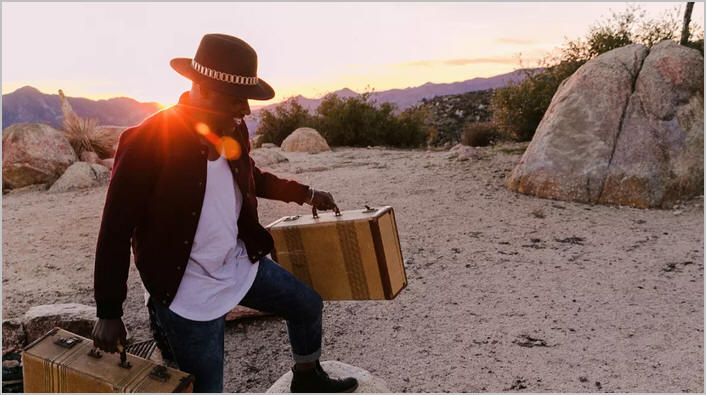
Vacations are pretty great already. But as psychological researchers discover more about how the human brain works, we’re gaining insights into exactly how to crank up the enjoyment factor–and why you should. Here are nine strategies for getting the most bliss out of your precious vacation days, and returning without needing a vacation from your vacation.
.
 [Photo: Cultura RM/Adam C Bartlett/Getty Images]
.
.
Click the link below for the article (nine strategies):
.
__________________________________________
November 12, 2021
Mohenjo
Business, Food For Thought, Human Interest, Science, Technical
amazon, business, Business News, current-events, Future, Hotels, human-rights, medicine, mental-health, research, Science, Science News, technology, Technology News, travel, vacation

Click the link below the picture
.
When the Navy pilot first spotted the strange object hovering in restricted airspace off the Atlantic Coast, he was stunned — no exhaust plume, no visible engine, and all the makings of something secret, something mysterious or something dangerous.
But years later, Ryan Graves sounded almost bored as he recounted for a national television audience his history with unidentified aerial phenomena — UAPs, better known as UFOs.
Perhaps because for him and some of his former Navy colleagues, such sightings became a regular occurrence.
“Every day,” Graves said in an interview with CBS’s “60 Minutes” that aired Sunday. “Every day for at least a couple years.”
The retired lieutenant’s matter-of-fact remark stopped “60 Minutes” correspondent Bill Whitaker, who cut in: “Wait a minute. Every day for a couple of years?”
.
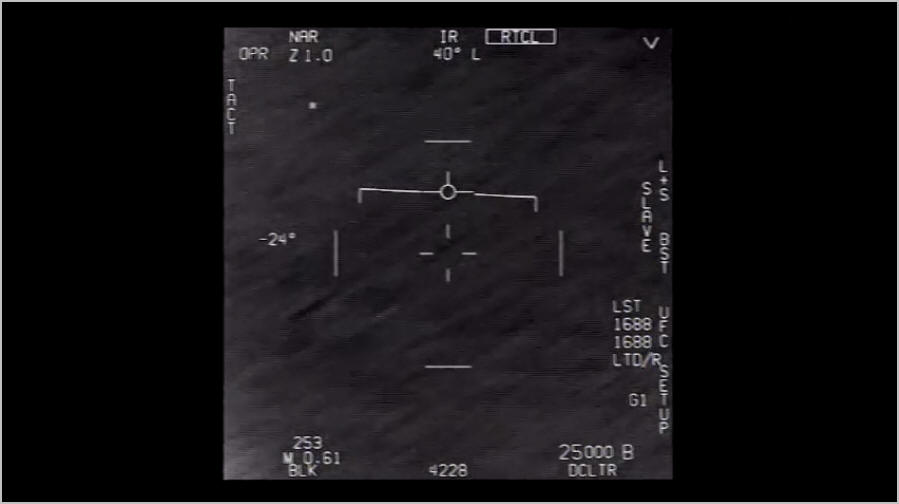 A F/A-18 Super Hornet military jet captured this infrared video from several miles away of an unidentified flying object moving at high speed. (To the Stars Academy of Arts & Science)
.
.
Click the link below for the article:
.
__________________________________________
November 12, 2021
Mohenjo
Crime, Food For Thought, Human Interest, Medical, missed News, Political, Science, Technical
amazon, business, Business News, current-events, Future, Hotels, human-rights, medicine, mental-health, research, Science, Science News, technology, Technology News, travel, vacation
.
News You might have missed!
Use your browser or smartphone back arrow (<-) to return to this table for your next selection.
.
__________________________________________
November 11, 2021
Mohenjo
Business, Enthralling, Food For Thought, Human Interest, Science, Technical
amazon, business, Business News, current-events, Future, Hotels, human-rights, medicine, mental-health, research, Science, Science News, technology, Technology News, travel, vacation



.
__________________________________________
November 11, 2021
Mohenjo
Arts, Business, Food For Thought, Human Interest, Science, Technical
amazon, business, Business News, current-events, Future, Hotels, human-rights, medicine, mental-health, research, Science, Science News, technology, Technology News, travel, vacation

Click the link below the picture
.
Mort Sahl, who died on Tuesday at 94, may be unknown to most people who are younger than half that age, but in his prime in the 1950s, he sparked a revolution in stand-up comedy that persists to this day.
Before Sahl, the headline comics performed on the Vegas strip or the Catskills circuit, reciting jokes—snappy setups and rim-shot punchlines—about wives, kids, and mothers-in-law. Sahl, who made his mark at the hungry I, a dank, dingy nightclub in San Francisco’s North Beach district, uncorked discursive monologues on politics and the era’s raft of social hypocrisies—the sorts of topics that polite people didn’t talk about in public. (Yes, Will Rogers poked fun at politicians, but in a genial manner; Sahl was out for blood.)
Sahl had the look and manner of a hip Berkeley professor, dressed not in a suit and tie but in chinos, a V-necked sweater, and a shirt with an open collar, bounding to the stage with a sly grin, a few newspapers and magazines tucked under his arm. (Many years later, he would teach a course on “the other America” at Claremont McKenna College.) With the cadence of a jazz musician, he would read from some of the articles, commenting sarcastically; digress to another issue; cackle at some improvised observation; then return to the topic after musing, “Now where were we?”
Other, similar comedians and satirists would soon emerge from similar scenes with their own forms of rebellion—Lenny Bruce, Jonathan Winters, Tom Lehrer—but Sahl was the first, the tone-setter, and the most enduringly influential. Without him, it is hard to imagine the likes of Woody Allen, George Carlin, Richard Pryor, Chris Rock, or Dave Chappelle.
.
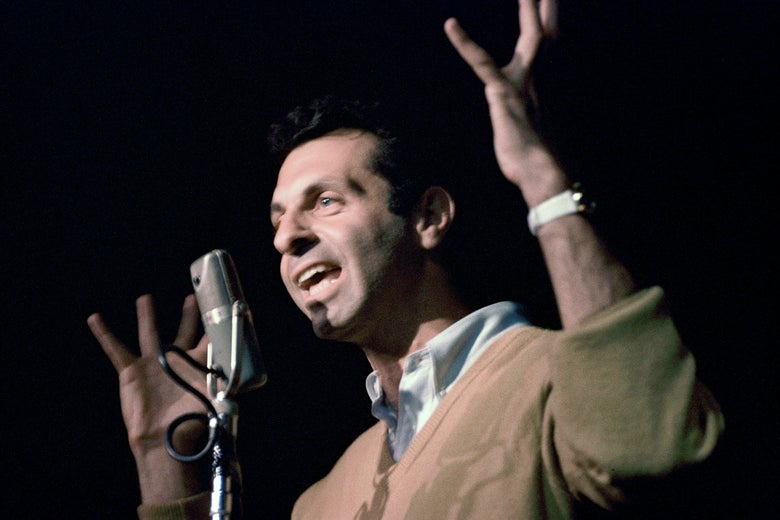 Sahl performing in 1961. MPTV/Reuters
.
.
Click the link below for the article:
.
__________________________________________
Older Entries
Newer Entries

