
.
News You might have missed!
Use your browser or smartphone back arrow (<-) to return to this table for your next selection.
.
__________________________________________
Assorted human interest posts.
November 19, 2021
Arts, Crime, Food For Thought, Human Interest, Medical, missed News, Political, Science, Technical amazon, business, Business News, current-events, Future, Hotels, human-rights, medicine, mental-health, research, Science, Science News, technology, Technology News, travel, vacation Leave a comment
.
.
__________________________________________
November 18, 2021
Business, Food For Thought, Human Interest, Science, Technical amazon, business, Business News, current-events, Future, Hotels, human-rights, medicine, mental-health, research, Science, Science News, technology, Technology News, travel, vacation Leave a comment

Click the link below the picture
.
You know what feels like a little bit of a rip-off? Sunday night prep. And I use that term liberally — I’m talking about meal planning, house cleaning, getting a jump-start on your work to-do list, even taking off chippy nail polish and replacing it with a fresh coat. Yes, I do all of these things because they are practical and they’re a good way to ease into Monday morning. I’m not disputing their usefulness — just that we have a limited number of weekend hours at our disposal, and yet we’ve all collectively decided to spend a chunk of them being weekday-style productive. Wouldn’t the weekend feel so much longer if we spent it, well, weekending?
Sort of. As it turns out, my bitterness is slightly, but not entirely, misplaced: Dedicating every Sunday evening to the same old routine really does make it seem like the weekend is rapidly disappearing from under you. But then again, lazing around in your pj’s has the same effect.
.
 Photo: Hero Images Inc./Getty Images
.
.
Click the link below for the article:
.
__________________________________________
November 18, 2021
Crime, Food For Thought, Human Interest, Medical, missed News, Political, Science, Technical amazon, business, Business News, current-events, Future, Hotels, human-rights, medicine, mental-health, research, Science, Science News, technology, Technology News, travel, vacation Leave a comment
.
.
__________________________________________
November 17, 2021
Business, Food For Thought, Human Interest, Science, Technical amazon, business, Business News, current-events, Future, Hotels, human-rights, medicine, mental-health, research, Science, Science News, technology, Technology News, travel, vacation Leave a comment

Click the link below the picture
.
Being a leader requires confidence, decisiveness, and quick thinking–none of which are served by overthinking every decision or scenario or worrying about every move you make. There’s a time to think, a time to act, a time to reflect, and a time to move forward.
Overthinking causes us to spend too much time thinking, getting stuck in a loop of inaction and turns positive reflection into debilitating worry. Not only does it not move us forward, it moves us backward and downward.
For three decades, I’ve been coaching employees and entrepreneurs with tendencies to overthink things, and I can share 11 mental tricks to dash the dissecting and stop the over scrutinizing.
.
 Photo by Maxiphoto/Getty Images
.
.
Click the link below for the article:
.
__________________________________________
November 17, 2021
Business, Food For Thought, Human Interest, Science, Technical amazon, business, Business News, current-events, Future, Hotels, human-rights, medicine, mental-health, research, Science, Science News, technology, Technology News, travel, vacation Leave a comment

Click the link below the picture
.
“There is no such thing as conversation,” the novelist and literary critic Rebecca West famously wrote in her collection of stories, The Harsh Voice. “It is an illusion. There are intersecting monologues, that is all.” In her opinion, our own words simply pass over the words of others without any profound communication taking place.
Who has not been able to empathize with this sentiment at some point in their life? Whether we’re making small talk with a barista, or meeting up with a close friend, we may hope to make a connection, only to leave the conversation feeling that our minds have failed to meet.
The pandemic has surely heightened our awareness of these sensations. After long periods of isolation, our hunger for social contact is greater than ever – and it is even more disappointing to feel that a void remains between us and others, even when rules of physical distancing have been lifted.
If this rings true for you, help may be at hand. During the past few years, psychologists studying the art of conversation have identified many of the barriers that stand in the way of a deeper connection, and the ways to remove them. Read on for the top five steps to better conversation.
.
 (Image credit: Getty)
.
.
Click the link below for the article:
.
__________________________________________
November 17, 2021
Arts, Food For Thought, Human Interest, Medical, missed News, Political, Science, sports, Technical amazon, business, Business News, current-events, Future, Hotels, human-rights, medicine, mental-health, research, Science, Science News, technology, Technology News, travel, vacation Leave a comment
.
__________________________________________
November 16, 2021
Crime, Food For Thought, Human Interest, Medical, missed News, Political, Science, sports, Technical amazon, business, Business News, current-events, Future, Hotels, human-rights, medicine, mental-health, research, Science, Science News, technology, Technology News, travel, vacation Leave a comment
.
.
__________________________________________
November 15, 2021
Business, Food For Thought, Human Interest, Science, Technical amazon, business, Business News, current-events, Future, Hotels, human-rights, medicine, mental-health, research, Science, Science News, technology, Technology News, travel, vacation Leave a comment

Click the link below the picture
.
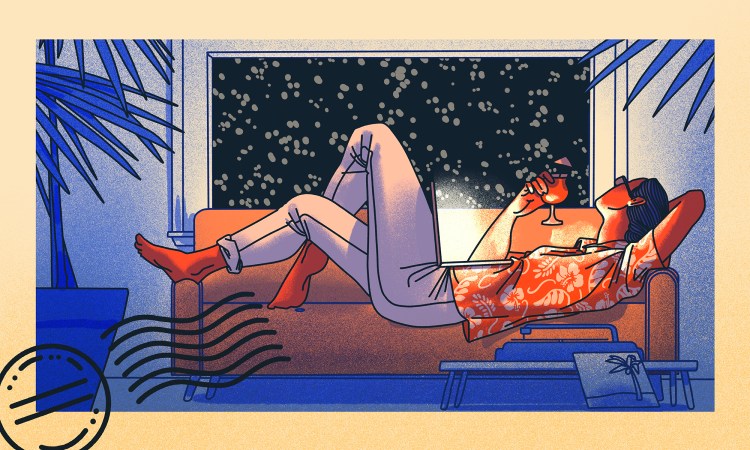
I need a vacation.
I know I’m not the only one feeling this right now. It’s a sentiment I’ve been hearing a lot from friends and on social media, and it’s no surprise given the strange and stressful circumstances we find ourselves in. The unpredictability of the pandemic and the global economy, coupled with the strain of adjusting to new realities of work, childcare, and school, have almost everyone I know craving an escape.
Yet with travel restricted in many places, a carefree getaway isn’t in the cards for most people.
Still, vacations are an important part of well-being. One study, for example, showed that when men at risk for heart disease didn’t take annual vacations, they had a 32 percent higher risk of having a fatal heart attack than those who did. Likewise, a study of women showed that those who took vacation rarely — i.e., once every six years or less often — were eight times more likely to develop heart disease. Other studies have shown an increase in sleep quality and an improvement in reaction times of up to 80 percent after taking a vacation.
Still, other research has shown that regular vacations are more important than money to overall well-being, so much that a regular vacationer making less than $24,000 a year might even be happier than a non-vacationer making more than $120,000 a year.
.
 Avalon Nuovo
.
.
Click the link below for the article:
.
__________________________________________
November 15, 2021
Business, Food For Thought, Human Interest, Science, Technical amazon, business, Business News, current-events, Future, Hotels, human-rights, medicine, mental-health, research, Science, Science News, technology, Technology News, travel, vacation Leave a comment

Click the link below the picture
.
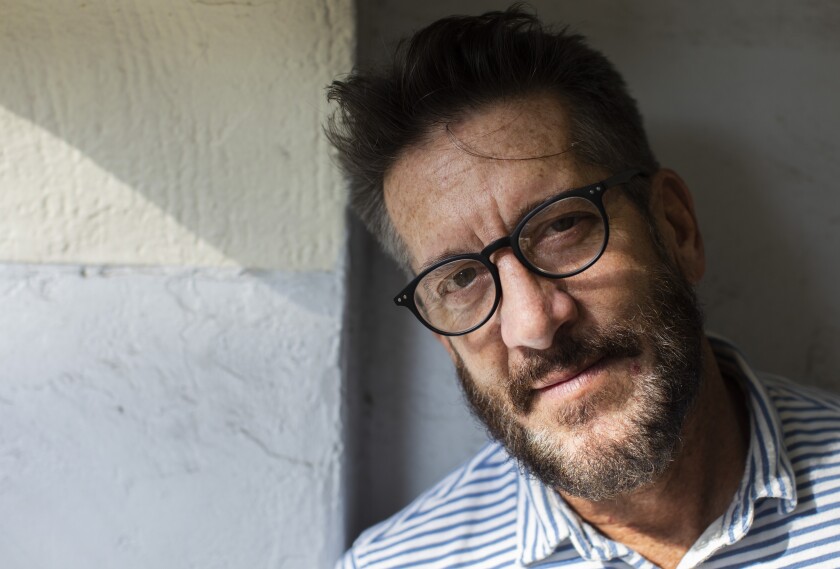
Neal W. Zoromski has spent three decades in Hollywood, working on movies big and small, but never on a western. So he was thrilled last month when he was asked to join the crew of an Alec Baldwin film in New Mexico.
The veteran prop master immediately told “Rust” production managers that he was interested in the job that would give him responsibility for the accoutrements of the Old West. Pistols, rifles, wagons, saddles, and flour sacks were needed to re-create 1880s Kansas for Baldwin, who was playing a grizzled outlaw named Harland Rust.
But during four days of informal discussions with film managers, Zoromski said he got a “bad feeling.”
“There were massive red flags,” he said in an interview Sunday with The Times.
.
.
.
Click the link below for the article:
.
__________________________________________
November 15, 2021
Crime, Food For Thought, Human Interest, Medical, missed News, Political, Science, Technical amazon, business, Business News, current-events, Future, Hotels, human-rights, medicine, mental-health, research, Science, Science News, technology, Technology News, travel, vacation Leave a comment
.
.
__________________________________________
Dragoste si lumina
Find the Best Forex Broker for Your Trading Success
AS HUMILDES OPINIÕES DE UMA MULHER DE CORAGEM QUE DIZ SIM À VIDA!
Să facem glume, nu război
In the world, human beings are facing various problems. People who are full of greed, anger, and ignorance are seen to be fighting with each other in words and deeds. As the fighting continues, various problems such as civil wars, wars of aggression, and wars of aggression are occurring. As world peace is being destroyed, humans are facing unbearable problems. Innocent children and women are not getting the rights they deserve and deserve. I can't think of one thing every time. What is it? The United Nations. If we look at the responsibilities and duties of the United Nations, I think it is not suitable for solving the problems that are happening in the world today. In fact, the United Nations and the World Security Council, such an organization must rule the world, must be able to give orders, and must have various ways to obey orders. There must be no organization that can influence more than that organization. There should be experts from each country. They can even dominate the superpowers like the US, China, and Britain. Only then will global peace be achieved quickly. Now, if a country with power develops more militarily, economically, or socially than its own country, then powerful countries will jealously seek out enemies and wage war. Or they will attack with fighter jets. In this, innocent people are losing their lives. No one understands the value of a life. You should think about how to achieve global peace by controlling these. If the US continues to be the permanent president of the UN, world peace will never be achieved. If you think carefully, no one sees that they are working for the common good, but for their own benefit, for the benefit of their own country. The permanent president of the UN and the Security Council has rejected this, As a young Rohingya, I have come to realize that only by electing the president and secretary from among the countries in the world through a secret ballot system and governing the world fairly can we achieve global peace. The United Nations and the Security Council are organizations in which any country must govern, give orders, and make them obey their orders. For example, only when a defendant is tried in court can we hold the leaders of the countries in check and control them, can we achieve global peace smoothly. Otherwise, it will not be easy for powerful countries to use various excuses to end this war every year, every year, for the benefit of themselves and their countries. No country's leaders pay any attention to the words of the United Nations and the Security Council. If we look at it in practice, look at the Rohingya issue. Myanmar is a small country. Even that country has been under siege for 8 years. What action can be taken? Why is the UN and the Security Council Powerless? Without such Power, how can the organization bring about global peace? Everyone should think about it. Whether there is a veto or a strong one, all countries in the world can only achieve global peace if they are subject to the UN and the Security Council. Seek peace in the quiet embrace of nature. Peace is an indispensable need of the human race. It is not as if one person can kill another person, and it is as if one country can attack another country, but instead of trying to build peace, we must try to destroy the peace now, and the world is getting hotter and is on the verge of collapse. I especially appeal to all the world experts to urgently try to bring about peace in all parts of the world. Mr, Noor Muhamed Arkhan Rohingya Youth Myanmar
Publicație umoristică dedicată glumeților de pretutindeni
Faith saved us from the savages that we were, losing faith makes us savages again
Where Trends Meet Truth
https://www.tangietwoods
Freelance poetry writing
Zalai Betti
INOVATION BLOG PEOPLE AND NEWS
Németh György
Konsultan Lingkungan Hidup di Lombok - NTB
Lea Krasznai (LeaArt21) – Idezetek (Idézetek) WordPress (Budapest, Hungary)
Appunti, spunti e passioni in liberta'
Gyorgy Nemeth
تعنى بتقديم نصائح للمعلمين المبتدئين، والطلبة الممتحنين، ومشاركة الاخرين تجربة الادخار في المال، بترشيد الاستهلاك المنزلي، وترتيب البيت، والحفاظ على البيئة، وتشجيع السيارات صديقةالبيئة، والسياحة والاسفار، ونماء رؤوس الاموال، والطب البديل وتشجيع التعليم الرقمي والذكاء الاصطناعي، والعناية بالنحل وتربية الاسماك، والاسثمار في رؤوس الاموال، الزراعة العضوية، والعناية باسنان الرضع، و صحة الحوامل، وتفسير القران
apprendre pour évoluer
Thoughts on books, language, meaning, and the culture around it.
Outdoor Recreation & Adventure in the Great Lakes Region
News, Info, Bio, Articles, Reviews, Lyrics, Technology, Science, Inspiration, Motivation, Philosphy and many more...
Christian Lifestyle Blogger
CEO and president of The Mullins Companies
Two Cultures. One Life. Endless Stories
Real Estate Development Specialist
¡Bienvenido de vuelta viajero!
so looking to the sky ¡ sing and from my heart to YOU ¡ bring...
CEO and Founder of Nsight Health
Catholic News, Prayers, HD Images, Rosary, Music, Videos, Holy Mass, Homily, Saints, Lyrics, Novenas, Retreats, Talks, Devotionals and Many More
Decoding Power. Defying Narratives.
A creative collaboration introducing the art of nature and nature's art.
The Home Of Entertainment News, Reviews and Reactions
•Whenever you are confronted with an opponent, conquer him with love.(Gandhi)
Algotrader at TRADING-CLUBS.COM
Film and Writing Festival for Comedy. Showcasing best of comedy short films at the FEEDBACK Film Festival. Plus, showcasing best of comedy novels, short stories, poems, screenplays (TV, short, feature) at the festival performed by professional actors.
Peace. Tranquility. Insanity.
Take a ride on the wild side
Découvre des musiques prometteuses (principalement) dans la sphère musicale française.
No tiene que Ser una Pesadilla.
Life in Kana-text (er... CONtext)
Where feelings meet metaphors and make questionable choices.

