February 25, 2022
Mohenjo
Business, Food For Thought, Human Interest, Overlooked Past Article, Science, Technical
amazon, business, Business News, current-events, Future, Hotels, human-rights, medicine, mental-health, research, Science, Science News, technology, Technology News, travel, vacation

Click the link below the picture
.
As racial unrest sweeps across major college campuses, and African-American students demand more equitable treatment, college administrators need look no farther than their own admissions offices to find one root of the problem.
The nation’s flagship public universities — large, taxpayer-funded institutions whose declared mission is to educate residents of their states — enroll far smaller proportions of black students than other colleges, and the number appears to be declining, according to federal records and college enrollment data analyzed by The Hechinger Report and The Huffington Post.
On average, just 5 percent of students at the nation’s flagship public universities are black. As recently as a decade ago, that figure was higher, although changing methods of counting racial categories makes a precise comparison difficult.
Even here at the University of Virginia, which prides itself on the diversity of its campus, just 8 percent of students are black. Just 5 percent are black Virginians, in a state where 22 percent of public high school graduates are African-American. (Low-income students are also underrepresented at top schools).
.
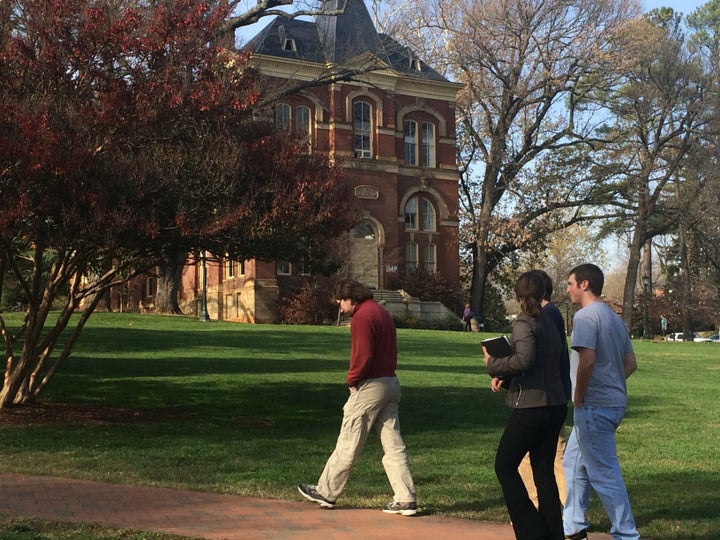 Meredith Kolodner / The Hechinger Report
.
.
Click the link below for the article:
.
__________________________________________
February 25, 2022
Mohenjo
Business, Food For Thought, Human Interest, Overlooked Past Article, Science, Technical
amazon, business, Business News, current-events, Future, Hotels, human-rights, medicine, mental-health, research, Science, Science News, technology, Technology News, travel, vacation

Click the link below the picture
.
Scientists at the University of New South Wales in Australia have made a stellar and rare discovery: The closest habitable planet to Earth is located 14 light-years away, which is eight light-years closer than scientists previously thought. The discovery is the result of a study from UNSW researchers, who found the planet located as part of a cluster of three others, all of which orbit the red dwarf star Wolf 1061. The new world is more than four times the size of Earth; researchers have named it Wolf 1061c.
“It is a particularly exciting find because all three planets are of low enough mass to be potentially rocky and have a solid surface, and the middle planet, Wolf 1061c, sits within the ‘Goldilocks’ zone where it might be possible for liquid water – and maybe even life — to exist,” said the UNSW study’s lead researcher Duncan Wright. “It is fascinating to look out at the vastness of space and think a star so very close to us — a near neighbor — could host a habitable planet.”
Prior to UNSW scientists’ discovery, the closest known habitable planet to Earth was Gliese 667Cc, according to the study, and is a planet four and a half times the size of earth that orbits another red dwarf star located 22 light-years away.
“The close proximity of the planets around Wolf 1061 means there is a good chance these planets may pass across the face of the star,” said Rob Wittenmyer, a member of the study’s research team at UNSW. “If they do, then it may be possible to study the atmospheres of these planets in the future to see whether they would be conducive to life.”
.
 Planet X
.
.
Click the link below for the article:
.
__________________________________________
February 25, 2022
Mohenjo
Arts, Crime, Food For Thought, Human Interest, Medical, missed News, Political, Science, Technical
amazon, business, Business News, current-events, Future, Hotels, human-rights, medicine, mental-health, research, Science, Science News, technology, Technology News, travel, vacation

.
News You might have missed!
Use your browser or smartphone back arrow (<-) to return to this table for your next selection.
.
__________________________________________
February 24, 2022
Mohenjo
Arts, Business, Food For Thought, Human Interest, Science, Technical
amazon, business, Business News, current-events, Future, Hotels, human-rights, medicine, mental-health, research, Science, Science News, technology, Technology News, travel, vacation

Click the link below the picture
.
Creating music in 21st-century Hollywood, as a composer for an Emmy-winning cable series put it, “feels like an underground, a real pimp situation.” He talked about long hours, low pay, and working under a martinet “lead composer”—his boss—who delegated the actual work of writing and recording. “One time he had a meltdown because the director was coming to hear what he had come up with and he didn’t have anything to play him,” the composer went on, “because my computer had all the music on it and it was on the fritz!” He laughed—c’est la guerre. But the irritation and dismay were palpable. Another Hollywood composer summed up the widespread feeling among the men and women who do the day-to-day work of bending melody, harmony, and rhythm to match pictures on a movie or television screen: “There’s no contract, there’s no union. You’re completely beholden to working with someone who’s completely unethical or not.”
“The ultimate prerequisite of a composer’s life,” said Henry Mancini, “is being able to make a living doing what you truly love to do: create music.” Mancini, who scored such films as Breakfast at Tiffany’s, The Pink Panther, and Victor/Victoria, winning four Oscars along the way, belongs to an all-time pantheon of film composers that includes Bernard Herrmann, John Williams, and, more recently, Hans Zimmer. We don’t talk about film composers much, but their work is essential to the cinematic experience. Try to imagine Psycho without Herrmann’s stabbing violins or Inception without Zimmer’s gut-rattling BRAAAM. As the director James Cameron once put it, “The score is the heart and soul of a film.”
.
 Illustration by Jorge Arévalo.
.
.
Click the link below for the article:
.
__________________________________________
February 24, 2022
Mohenjo
Business, Food For Thought, Human Interest, Overlooked Past Article, Science, Technical
amazon, business, Business News, current-events, Future, Hotels, human-rights, medicine, mental-health, research, Science, Science News, technology, Technology News, travel, vacation
Click the link below the picture
.
For everyone whoever answered “Astronaut!” to the “What Are You Going to Be When You Grow Up?” question, now is the time to make that dream come true: NASA is “looking for the best candidates to work in the best job on or off the planet,” according to a Dec. 14 job post. Until Feb. 18, 2016, all qualifying U.S. citizens may apply to join the National Aeronautics and Space Administration’s next class of astronauts on a red planet adventure.
“NASA is on an ambitious journey to Mars and we’re looking for talented men and women from diverse backgrounds and every walk of life to help get us there,” said Charles Bolden, NASA Administrator and real, live (former) astronaut, according to the job listing. “Today, we opened the application process for our next class of astronauts, extraordinary Americans who will take the next giant leap in exploration.
“The mission: According to Bolden, “this group will launch to space from U.S. soil on American-made spacecraft and blaze the trail on our journey to the Red Planet,” specifically, onboard Orion and two commercial crew space vehicles.
“NASA astronauts will again launch to the International Space Station from Florida’s Space Coast on American-made commercial spacecraft — Boeing’s CST-100 Starliner and the SpaceX Crew Dragon. These spacecraft will allow NASA to add a seventh crew member to each station mission, effectively doubling the amount of time astronauts will be able to devote to research in space, expanding scientific knowledge and demonstrating new technologies,” Bolden said in the listing.
.
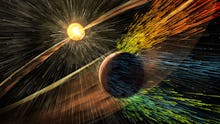 The Stars
.
.
Click the link below for the article:
.
__________________________________________
February 24, 2022
Mohenjo
Crime, Food For Thought, Human Interest, Medical, missed News, Political, Science, Technical
amazon, business, Business News, current-events, Future, Hotels, human-rights, medicine, mental-health, research, Science, Science News, technology, Technology News, travel, vacation
.
News You might have missed!
Use your browser or smartphone back arrow (<-) to return to this table for your next selection.
.
__________________________________________
February 24, 2022
Mohenjo
Business, Food For Thought, Human Interest, Science, Technical
amazon, business, Business News, current-events, Future, Hotels, human-rights, medicine, mental-health, research, Science, Science News, technology, Technology News, travel, vacation

Isaiah 5:20
New Living Translation
20 What sorrow for those who say
that evil is good and good is evil,
that dark is light and light is dark,
that bitter is sweet and sweet is bitter.
.
__________________________________________
February 23, 2022
Mohenjo
Business, Food For Thought, Human Interest, Overlooked Past Article, Science, Technical
amazon, business, Business News, current-events, Future, Hotels, human-rights, medicine, mental-health, research, Science, Science News, technology, Technology News, travel, vacation

Click the link below the picture
.
An intact 2,300-year-old Etruscan tomb recently discovered in Italy may help shed light on an ancient civilization that flourished centuries before the rise of the Roman Empire.
The tomb, found in a field near Città della Pieve, about 30 miles southwest of Perugia, had been partially buried in a landslide, according to local news outlet Perugia Today.
Inside, archaeologists have found a number of artifacts including urns and a marble head, as well as two sarcophagi:
A worker had been plowing the field above the tomb in October when the machine jammed, leading to the spectacular find, according to Italian news outlet Umbria24, which says the tomb is at the end of a corridor 40 feet deep.
“It was a totally unexpected discovery,” Clarita Natalini of the archaeological superintendency of Umbria told Discovery News. “The area is away from the sites visited by tomb robbers and indeed the burial is undisturbed.”
.
 2,300-year-old Etruscan tomb
.
.
Click the link below for the article:
.
__________________________________________
February 23, 2022
Mohenjo
Business, Food For Thought, Human Interest, Science, Technical
amazon, business, Business News, current-events, Future, Hotels, human-rights, medicine, mental-health, research, Science, Science News, technology, Technology News, travel, vacation
Click the link below the picture
.
Scientists at Australian National University may have discovered the oldest stars in the Milky Way, formed before the galaxy itself, a discovery they say is as likely as finding a “needle in a haystack.” The research adds to scientists’ growing understanding of how the galaxy came to be.
What researchers described as a groundbreaking study, published Wednesday in the journal Nature, details the discovery of nine stars found at the center of the Milky Way with traits suggesting they were some of the first stars ever formed. Scientists said the stars dated to roughly 13.6 billion years ago or some 200 million years — a relatively short time frame when talking about the universe — after the Big Bang, the leading theory of how the universe was born.
“These pristine stars are among the oldest surviving stars in the Universe, and certainly the oldest stars we have ever seen,” Louise Howes, the study’s lead author, said in a statement.
The fact that these stars were discovered in the center of the Milky Way alone suggests they’re older than most stars. Howes said the Milky Way formed around the galaxy’s oldest stars.
The makeup of a really old star: These newly discovered stars are mostly pure energy, with low levels of carbon and iron, which contradicts scientists’ theory the early universe was laden with these elements. It’s long been believed the first stars exploded as a supernova, which would make the stars dense with heavy elements and less energy.
.
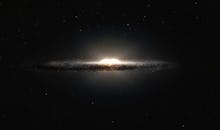 Milky Way
.
.
Click the link below for the article:
.
__________________________________________
February 23, 2022
Mohenjo
Crime, Food For Thought, Human Interest, Medical, missed News, Political, Science, Technical
amazon, business, Business News, current-events, Future, Hotels, human-rights, medicine, mental-health, research, Science, Science News, technology, Technology News, travel, vacation
.
News You might have missed!
Use your browser or smartphone back arrow (<-) to return to this table for your next selection.
.
__________________________________________
Older Entries
Newer Entries

