Police captured a suspect in what they called a “terror-related incident” in the transit system near Times Square during rush hour on Monday morning.
An improvised, low-tech pipe bomb device was affixed to his chest with Velcro and zip ties. The explosion, which occurred around 7:20 a.m. in the subway near Eighth Avenue and 42nd Street, immediately plunged the commuter hub into chaos.
Five people have been treated at two Mount Sinai hospitals for minor injuries related to the incident, the hospital said in a statement to HuffPost. They had all been released by about 5 p.m. local time.
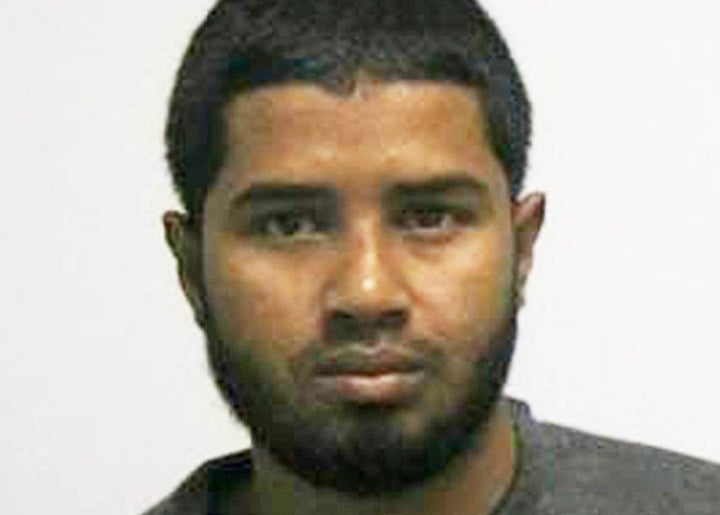
Police identified the suspect as 27-year-old Akayed Ullah, who they said is a U.S. resident from the Bangladeshi city of Chittagong. Ullah, who had no criminal record, allegedly triggered the bomb intentionally and mentioned the self-described Islamic State after his arrest. He last visited Bangladesh on Sept. 8, authorities said.
.
New York City Taxi and Limousine Commission/Handout/Reuters
Akayed Ullah, a Bangladeshi man who police say attempted to detonate a homemade bomb in New York City on Monday, in a photo released by the city’s Taxi and Limousine Commission.
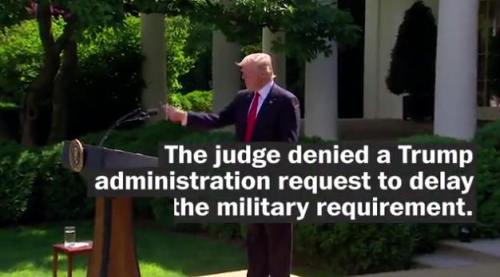
A federal judge on Monday denied the Trump administration’s request to delay an order requiring the military to begin accepting transgender recruits starting Jan. 1, saying the argument for more time seemed based on “vague claims.”
“The Court is not persuaded that Defendants will be irreparably injured by” meeting the New Year’s Day deadline, U.S. District Judge Colleen Kollar-Kotelly wrote.
The ruling from Kollar-Kotelly of the District of Columbia follows her earlier opinion blocking the president’s ban on military recruitment of transgender men and women that possibly would have forced the dismissal of current service members starting in March.
Sen. Cory Booker (D-N.J.) is calling on President Donald Trump to resign over the more than a dozen sexual misconduct allegations against him.
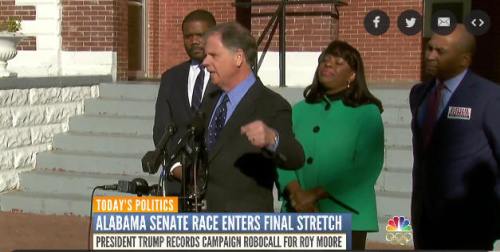
Booker made the comments Saturday during a campaign event in Alabama to support Doug Jones, the state’s Democratic candidate for Senate. Jones is engaged in a tight race against embattled Republican candidate Roy Moore, whose campaign has been dogged by sexual misconduct accusations.
Booker told VICE News that the sexual harassment allegations against Trump are “far more damning” than the claims against Sen. Al Franken (D-Minn.), who on Thursday announced his resignation from office after multiple women accused him of groping them.
“I just watched Al Franken do the honorable thing and resign,” Booker said. “My question is — why isn’t Donald Trump doing the same thing? Who has more serious allegations against him, with more women who have come forward.”
Here’s one way to put this extraordinary week into perspective, after sexual misconduct allegations felled three members of Congress: To find a comparable moment of mass resignations, you’d have to go back to the Civil War.
In the months leading up to that conflict, Southern senators resigned en masse from the U.S. Senate over disputes about slavery. In January 1861, five senators in one day left their jobs as their states seceded from the Union. Senators from Northern states expelled an additional 10 Southern senators before they could resign.
“I think it’s quite unprecedented,” said Brooklyn College historian and professor Robert David Johnson. “If you look over the history of the 20th century in Congress, there just is no comparable event.”
.
Sen. Al Franken (D-Minn.) leaves the Capitol after announcing his resignation Thursday. (Andrew Harnik/AP)
In one all-too-plausible worst-case scenario, millions die from mistakes and a tweet.
No one wants to fight a nuclear war. Not in North Korea, not in South Korea and not in the United States. And yet leaders in all three countries know that such a war may yet come — if not by choice then by mistake. The world survived tense moments on the Korean Peninsula in 1969 , 1994 and 2010. Each time, the parties walked to the edge of danger, peered into the abyss, then stepped back. But what if one of them stumbled, slipped over the edge and, grasping for life, dragged the others down into the darkness?
This is how that might happen, based on public statements, intelligence reports and blast-zone maps.
MARCH 2019: For years, North Korea had staged provocations — and South Korea had lived with them. The two had come close to war before: In 2010, a North Korean torpedo detonated just below a South Korean navy corvette, cutting the ship in two and sending 46 sailors to their deaths. Later that year, when North Korean artillery barraged a South Korean island and killed four more people, South Korean President Lee Myung-bak reportedly ordered aircraft to deliver a counter-strike deep inside North Korea, but the U.S. military held him back.
As President Donald Trump attends the opening of the Mississippi Civil Rights Museum on Saturday, lawyers for his Justice Department are defending a voting law in Texas that a district court judge found intentionally discriminated against black and Latino voters.
Trump’s presence at the ceremony has already attracted controversy, after civil rights icon Rep. John Lewis (D-Ga.) said he would not attend, saying Trump’s presence was an insult to the people of the civil rights movement. And the Texas case is just one of a series of examples of how the Trump administration so far has failed to advance a key civil right: the right to vote.
In the Jim Crow South, measures like poll taxes and literacy tests restricted African-Americans from casting ballots. As a result, voting rights were a key piece of the civil rights movement in Mississippi and across the country. In the summer of 1964, hundreds of volunteers came to Mississippi to increase black voter registration in the state. Three of those civil rights workers, James Chaney, Andrew Goodman, and Michael Schwerner were murdered that summer while working to extend the franchise. In 1965, Lewis was nearly killed during a march for voting rights in Alabama. The 1965 Voting Rights Act, a key plank of the civil rights movement, continues to be one of the most powerful tools for protecting the right to vote.
With Twitter as his Excalibur, the president takes on his doubters, powered by long spells of cable news and a dozen Diet Cokes. But if Mr. Trump has yet to bend the presidency to his will, he is at least wrestling it to a draw.
Around 5:30 each morning, President Trump wakes and tunes into the television in the White House’s master bedroom. He flips to CNN for news, moves to “Fox & Friends” for comfort and messaging ideas, and sometimes watches MSNBC’s “Morning Joe” because, friends suspect, it fires him up for the day.
Energized, infuriated — often a gumbo of both — Mr. Trump grabs his iPhone. Sometimes he tweets while propped on his pillow, according to aides. Other times he tweets from the den next door, watching another television. Less frequently, he makes his way up the hall to the ornate Treaty Room, sometimes dressed for the day, sometimes still in night clothes, where he begins his official and unofficial calls.
.
President Trump during a news conference in the Rose Garden last month.Credit Doug Mills/The New York Times
Britain agreed Friday to concessions to the European Union in negotiating its split from the bloc, leaders said, as Prime Minister Theresa May overcame bitter divisions at home to advance to a crucial new phase of talks.
The bargain amounted to a capitulation by May on issues dear to the European Union: preserving peace and open borders in Northern Ireland, guaranteeing rights for the 3 million E.U. citizens living in Britain, and living up to British funding commitments in Europe for years to come.
On those issues and a host of others, Britain has been forced to fold to the European Union after saying earlier this year that it held the upper hand in the negotiations. Instead, British negotiators have found a largely united bloc that sees little need to give in to London’s demands. Friday’s agreement appears likely to unlock the next phase of the Brexit negotiation, focused on trade between the European Union and an unfettered Britain after it exits in March 2019.
.
After months of deadlock, Britain and the E.U. reached an agreement on key issues, including the Irish border and rights for E.U. citizens in Britain.(Reuters)
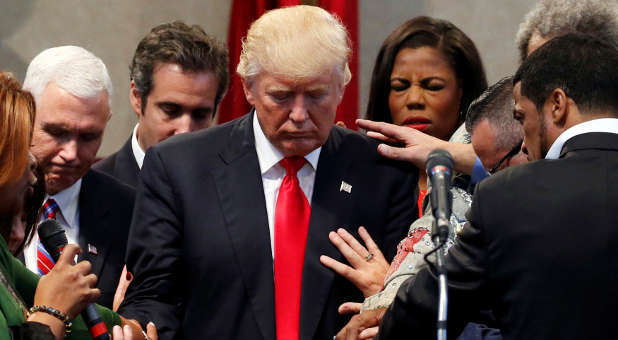
It’s been difficult to watch the Christian community embrace a person like Donald Trump. Evangelicals have had to perform mental gymnastics to pretend Donald Trump felt about religion anything close to what they claim to feel. This was supposed to be the “family values” party. Mike Pence, who won’t even have dinner with a woman other than his wife, suddenly doesn’t mind that Trump had babies with three different women and said on tape that he liked to grab women by the p***y.
Trump might be a lying, scheming, narcissistic con-artist but he doesn’t pretend to be religious. Sure, he faked it a couple of times by holding up a Bible with pages looking like they’d never been opened. He also tried quoting some scriptures but that went horribly wrong when he said “Two Corinthians” instead of “Second Corinthians.” But he doesn’t claim to consult God before making decisions.
As for family values, Trump’s been married three times, dumping each wife for the woman he was having an affair with. His wives raise his kids for him. On the Howard Stern show, Trump said “I mean, I won’t do anything to take care of them. I’ll supply funds and she’ll take care of the kids. It’s not like I’m gonna be walking the kids down Central Park.” Other than his adult children who run his businesses, we never see Trump spending time with his kids. There are a couple of photo-ops with his 10-year old, Barron. But instead of golfing at his resorts, shouldn’t Trump spend time with his, um, you know, 10 year old? He also has another daughter who is around so infrequently most people don’t remember her name. Obviously, Trump will never be mistaken for the dad from Leave It To Beaver.
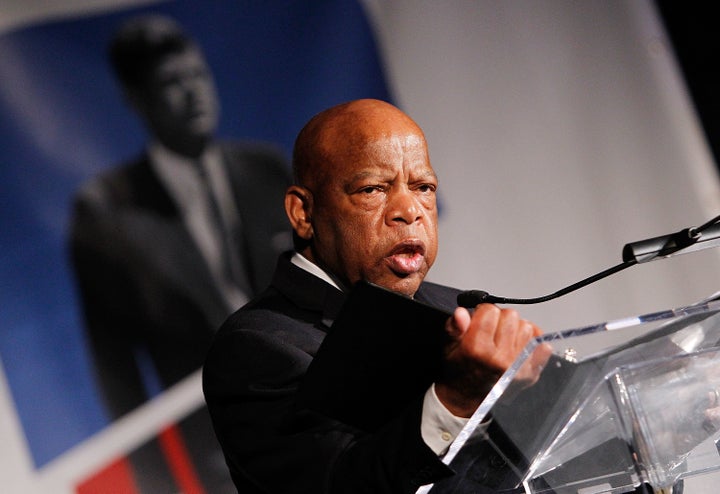
Rep. John Lewis (D-Ga.) said Thursday that he will not attend the opening of the Mississippi Civil Rights Museum this weekend because President Donald Trump’s “attendance and hurtful policies are an insult to the people portrayed” in the museum.
“After careful consideration and conversations with church leaders, elected officials, civil rights activists, and many citizens of our congressional districts, we have decided not to attend or participate in the opening of the Mississippi Civil Rights Museum,” Lewis, a hero of the civil rights movement, said in a statement.
Lewis said the president’s “disparaging comments about women, the disabled, immigrants, and National Football League players disrespect the efforts” of civil rights leaders.
“The struggles represented in this museum exemplify the truth of what really happened in Mississippi,” he added. “After President Trump departs, we encourage all Mississippians and Americans to visit this historic civil rights museum.”
.
Paul Morigi via Getty Images
Rep. John Lewis (D-Ga.) speaking at an event in Washington, D.C., in May. He announced on Thursday that he will not attend the opening of the Mississippi Civil Rights Museum this weekend.
Film and Writing Festival for Comedy. Showcasing best of comedy short films at the FEEDBACK Film Festival. Plus, showcasing best of comedy novels, short stories, poems, screenplays (TV, short, feature) at the festival performed by professional actors.


 .
.
 .
.

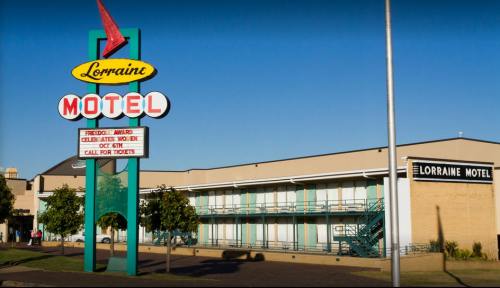 Civil Rights Museum


 James' World 2