In the weeks after he became the Republican nominee on July 19, 2016, Donald Trump was warned that foreign adversaries, including Russia, would probably try to spy on and infiltrate his campaign, according to multiple government officials familiar with the matter.
The warning came in the form of a high-level counterintelligence briefing by senior FBI officials, the officials said. A similar briefing was given to Hillary Clinton, they added. They said the briefings, which are commonly provided to presidential nominees, were designed to educate the candidates and their top aides about potential threats from foreign spies.
The candidates were urged to alert the FBI about any suspicious overtures to their campaigns, the officials said.
As revelations of sexual harassment break, women have been discussing the fallout and how to move forward. Here, women from across the working world take on this complicated conversation.
“Revolution will come in a form we cannot yet imagine,” the critical theorists Fred Moten and Stefano Harney wrote in their 2013 essay “The Undercommons,” about the need to radically upend hierarchical institutions. I thought of their prophecy in October, when a private document listing allegations of sexual harassment and abuse by dozens of men in publishing and media surfaced online.
The list — a Google spreadsheet initially shared exclusively among women, who could anonymously add to it — was created in the immediate aftermath of reports about sexual assault by Harvey Weinstein. The atmosphere among female journalists was thick with the tension of watching the press expose the moral wrongs of Hollywood while neglecting to interrogate our own. The existence of the list suggested that things were worse than we even imagined, given all that it revealed. It was horrifying to see the names of colleagues and friends — people you had mingled with at parties and accepted drinks from — accused of heinous acts.
.
Sarah Illenberger
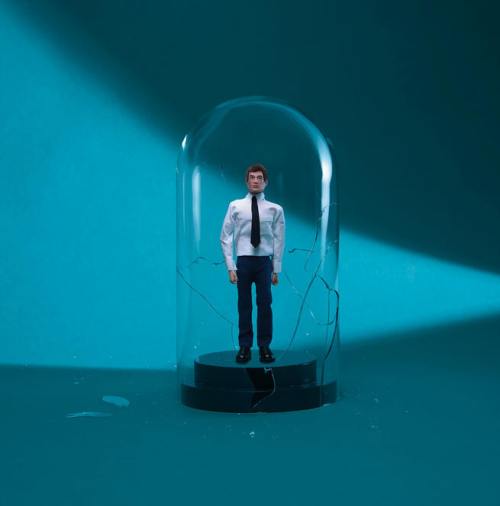
“Sexually offensive behavior by people in powerful positions has been protected for far too long. The shield is cracking, exposing the problem.”
When my parents went to law school in the 1980s, they took courses on contracts, torts, criminal law, constitutional law — the list goes on. While there were lessons on persuasion, to be sure, they never took a class on how to tell a story. And they certainly never learned how to make a film.
Today, however, a growing number of lawyers are creating empathetic biographical mini-documentaries, or “sentencing videos,” to reduce their clients’ prison sentences. Inspired by the storytelling techniques of traditional documentary film, some lawyers team up with independent filmmakers while others become filmmakers themselves. These films are made for an audience of one: the presiding judge.
.
To beg for leniency, defense attorneys are producing entire documentaries for an audience of one: the judge.Published OnCreditImage by Lance Oppenheim
The police in New York on Thursday said they were looking into claims that Russell Simmons, the co-founder of the pioneering hip-hop label Def Jam, had a history of violent sexual misconduct after mounting reports accusing him of rape.
A law enforcement official said that the Police Department was conducting a preliminary investigation into the allegations and was eager to hear from victims. But it was unclear whether any suspected conduct could be prosecuted because it was said to have occurred so long ago and was outside the statute of limitations, the source said. (As of 2006, New York State no longer has a statute of limitations on rape in the first degree and several other serious sexual offenses.)
“The N.Y.P.D. has received information regarding allegations involving Russell Simmons in the N.Y.C. area and our detectives are in the process of reviewing that information,” J. Peter Donald, assistant commissioner in the department’s public relations office, said in a statement.
.
Following mounting reports accusing the music mogul Russell Simmons of sexual misconduct, law enforcement is conducting a preliminary investigation.CreditScott Roth/Invision, via Scott Roth, via Invision, via Associated Press.
More than a decade after the improvised explosive device became the scourge of the wars in Iraq and Afghanistan, the Pentagon is battling another relatively rudimentary device that threatens to wreak havoc on American troops: the drone.
.
Raytheon has mounted a high-energy laser weapon on top of a militarized dune buggy that it says can be used to take out drones.
Daryl Davis’ home is filled with memories of the days he has spent with the Ku Klux Klan.
He is not a member of the white supremacist organization. He can’t be. Davis is the descendant of slaves. He’s a blues musician who has learned how to lift hate out of hearts, even from those who in other times might have been hell-bent on killing him or anyone who looked like him.
.
You could consider Davis a KKK whisperer, a man who’s spent decades talking to Imperial Wizards, Grand Dragons, and rank and file Klansmen.
.
Daryl Davis looks at his collection of KKK robes, given up by Klansmen he has befriended.
Back in September, Vox Day, a Gamergate holdover who has assumed the position of racist alt-right figurehead, published a handful of brief excerpts from what he described as the “Andrew Anglin” style guide. For the blissfully unaware, Anglin is a neo-Nazi troll and propagandist who runs The Daily Stormer, one of the more prominent sites of the white supremacist web. The passages selected by Vox Day in his blog post suggested that Anglin is persnickety about detail and presentation ― except on the subject of the Jews, who are to be blamed “for everything.”
HuffPost has acquired the 17-page document in its entirety, as well as transcripts from an IRC channel where the document was shared in an effort to recruit new writers. It’s more than a style guide for writing internet-friendly neo-Nazi prose; it’s a playbook for the alt-right.
The style guide, according to Vox Day, was a set of directives for whoever might be writing under Anglin’s name, the idea being that Anglin’s army of ghostwriters need to maintain some sense of consistent style. But the guide appears to be for all of the site’s writers, many of whom write under their own names (or at least their own pseudonyms).
Some content on this page was disabled on April 15, 2025 as a result of a DMCA takedown notice from Guardian Media Group. You can learn more about the DMCA here:
Republican Roy Moore faced serious accusations of sexual misconduct in his bid to become Alabama’s next senator. But instead of bowing down and backing out, he stayed in the race and went on the attack ― just like Trump did in last year’s presidential race. He accused the media and the establishment of orchestrating a conspiracy against him, and cast the race as pitting good against evil, Christians versus everyone else.
Both Trump and Moore bet that their conservative base would stick by them and push them to victory.
But on Tuesday, Alabama sent a message that this time it wouldn’t work, not even in a conservative state that Trump won by 28 percentage points in 2016.
.
Image: Breaking News and Opinion on The Huffington Post
Film and Writing Festival for Comedy. Showcasing best of comedy short films at the FEEDBACK Film Festival. Plus, showcasing best of comedy novels, short stories, poems, screenplays (TV, short, feature) at the festival performed by professional actors.

 .
.


 .
.



 Image: Breaking News and Opinion on The Huffington Post
 James' World 2