November 20, 2022
Mohenjo
Business, Food For Thought, Human Interest, Medical, Political, Science, Technical
amazon, business, Business News, current-events, Future, Hotels, human-rights, medicine, mental-health, research, Science, Science News, technology, Technology News, travel, vacation

Click the link below the picture
.
When I was 27, my mother told me she was dying of ALS, a fatal neurodegenerative disease with no cure. She died the following summer, and not long after, my father was diagnosed with cancer. He successfully completed treatment, but when the cancer returned, he didn’t survive.
From the moment my mother shared her diagnosis and leading up to my father’s funeral, it felt like my head was being held underwater. I could only surface for enough air to survive, but not long enough to understand the enormity of what had occurred. Before I could come to terms with one loss, I was experiencing another.
A prior history of grief can affect the current grieving process. One study found people who lost more than one person in a short time still grieved one loss at a time, and that multiple losses affected various aspects of the bereaved individual’s life, like their health, job, and marriage.
This mental health phenomenon is often referred to as cumulative grief. I spoke to five grief experts about cumulative grief, and how to understand and manage the feelings that may arise from it.
.
:format(webp)/cdn.vox-cdn.com/uploads/chorus_image/image/71621895/GettyImages_1353379474.0.jpg) Getty Images/iStockphoto
Getty Images/iStockphoto
.
.
Click the link below for the article:
.
__________________________________________
November 20, 2022
Mohenjo
Business, Crime, Food For Thought, Human Interest, Political, Science, Technical
amazon, business, Business News, current-events, Future, Hotels, human-rights, medicine, mental-health, research, Science, Science News, technology, Technology News, travel, vacation

Click the link below the picture
.
Ademola Adedeji tried to picture what the jury saw when they looked at him.
Could they tell that he was the school president? The captain of the rugby team? The older brother who made dinners for his siblings and read them bedtime stories?
Or did they see only Defendant No. 7 in a trial of 10 Black teenagers charged with conspiracy to murder? A gangster, the prosecutors claimed, who waged war on his rivals?
Mr. Adedeji, a very dark, very tall 18-year-old, had a lot riding on his testimony that morning in April this year. It was the sixth week of his trial, and this was his only chance to tell his side of the story.
If the jury believed him, he could graduate from high school and attend one of the universities that had offered him admission. If they didn’t, he could spend the next two decades in prison.
.

Ademola Adedeji in a park in Bolton, England, in April. Mr. Adedeji’s life changed on Nov. 5, 2020, when he got word that his childhood friend, John Soyoye, had been stabbed.Credit…Mary Turner for The New York Times
.
.
Click the link below for the article:
.
__________________________________________
November 19, 2022
Mohenjo
Business, Food For Thought, Human Interest, Political, Science, Technical
amazon, business, Business News, current-events, Future, Hotels, human-rights, medicine, mental-health, research, Science, Science News, technology, Technology News, travel, vacation

Click the link below the picture
.
Maybe your spouse did laundry and put something in the dryer that wasn’t supposed to go, or you simply got distracted and didn’t hear the timer go off. Accidents happen. If your favorite cashmere ends up looking like it belongs on your 6-year-old niece, remain calm. There is a solution, and it’s fairly simple.
First of all, take a deep breath. There’s no reason to dump that knit in the donation pile—yet. Try this trick to bring your sweaters, cotton T-shirts, and jeans back to their original state: (see article)
.
 Photo by Getty Images
.
.
Click the link below for the article:
.
__________________________________________
November 19, 2022
Mohenjo
Business, Food For Thought, Human Interest, Political, Science, Technical
amazon, business, Business News, current-events, Future, Hotels, human-rights, medicine, mental-health, research, Science, Science News, technology, Technology News, travel, vacation

Click the link below the picture
.
The holidays may be the most wonderful time of the year, but entertaining during them is stressful. “Sometimes the moment overwhelms people, and they forget to focus on the important thing, which is human connection,” says Daniel Post Senning, co-president of the Emily Post Institute and great-great-grandson of famed manners expert Emily Post. “The point of etiquette is to focus on relationships, and if you can do that during the holidays, you’ll be in good shape.”
In October, Senning and his cousin Lizzie Post marked the centennial of Emily Post’s Etiquette with the release of the guide’s 20th edition. It covers everything from thank-you notes (still relevant!) to how much to tip in a ride-share (10% to 20%). Senning spoke with Bloomberg Pursuits about avoiding common mistakes during festive entertaining.
The only wrong response to an invite is no response.
Hosts can take a no, but the guest who doesn’t reply is the biggest challenge. The place where people get into trouble is anxiety about coming and going, so be clear about expectations, both as a guest and a host, especially for overnight invitations—when am I supposed to arrive and when am I supposed to leave? The old expression that fish and house guests start to stink after three days is worth keeping in mind.
.
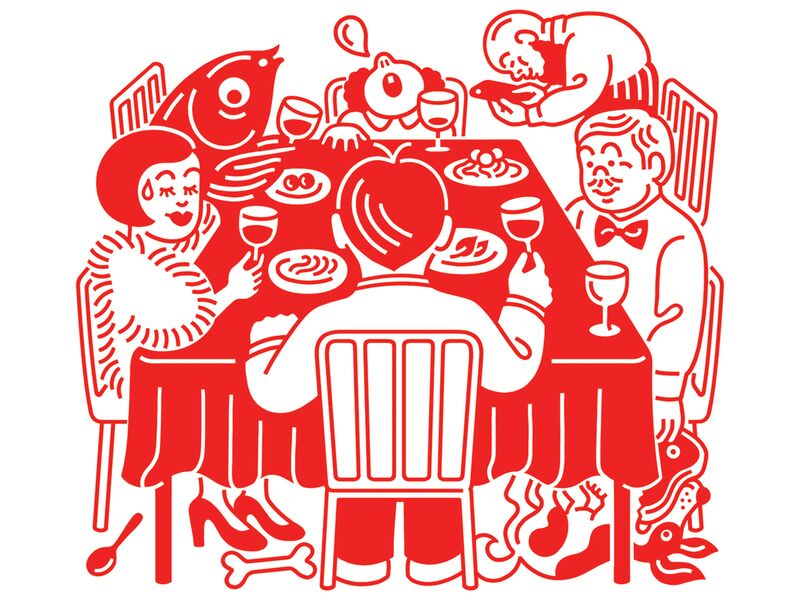 Illustration: Tomi Um
.
.
Click the link below for the article:
.
__________________________________________
November 19, 2022
Mohenjo
Crime, Food For Thought, Human Interest, Medical, missed News, Political, Science, Technical
amazon, business, Business News, current-events, Future, Hotels, human-rights, medicine, mental-health, research, Science, Science News, technology, Technology News, travel, vacation

.
News You might have missed!
Use your browser or smartphone back arrow (<-) to return to this table for your next selection.
.
__________________________________________
November 18, 2022
Mohenjo
Business, Food For Thought, Human Interest, Political, Science, Technical
amazon, business, Business News, current-events, Future, Hotels, human-rights, medicine, mental-health, research, Science, Science News, technology, Technology News, travel, vacation

Click the link below the picture
.
For some reason, negotiation tends to be considered a specialized professional skill instead of a basic life one. Business school students and salespeople learn tons about how to work out deals, but most of the rest of us never learn much about how to negotiate. That’s one reason why buying a major asset like a house or car is so stressful for regular folks—negotiating is mysterious to us.
But everyone negotiates on a constant basis, and learning some of the fundamentals of banging out a mutually-beneficial deal is a crucial skill we should all acquire. The challenges of learning how to bargain is often the mixture of emotion, psychology, and math. Leverage can swing back and forth between parties, and emotions can play as much of a role as finances (as anyone who has overpaid for a house because they “fell in love with it” can attest). That’s why learning some basic negotiation skills is essential—starting with why you should always seriously consider making the first offer.
The Anchoring Effect
You’ve probably heard that you should always make the first offer when negotiating, possibly with some vague explanation about setting the terms. This is, in fact, generally good advice—because of something called the Anchoring Effect.
.
 Photo: vchal (Shutterstock)
.
.
Click the link below for the article:
.
__________________________________________
November 18, 2022
Mohenjo
Business, Food For Thought, Human Interest, Political, Science, Technical
amazon, business, Business News, current-events, Future, Hotels, human-rights, medicine, mental-health, research, Science, Science News, technology, Technology News, travel, vacation

Click the link below the picture
.
Walking across spongy tundra, among bonsai shrubs on fire with autumn colors, I came upon a river too wide to cross. Gazing up the valley from which it flowed, I saw that the obstacle blocking my path was just one strand of a broad, braided system spread languidly across a floodplain in Denali National Park in Alaska. I watched the McKinley River’s fluid columns shift apart, then twine together. Although at that time I knew little about hydrology, the science of water, on some instinctual level I understood that this was a free river. Every other river I’d known was markedly subdued.
What does it mean for a river to be free? Today, most water is not in its natural state, especially in industrialized countries. It sounds obvious, but I hadn’t before given it much thought. Humans have filled in or drained 87 percent of the world’s wetlands. We’ve dammed and diverted two-thirds of the world’s largest rivers. What many of us think of as ‘river’ is a restricted, straightened canal that no longer wanders across its floodplains, depositing nutrient-rich, land-forming silt as it goes. The streams and wetlands that first attracted us to settle and build cities have long since been encased in pipes or filled with trash and dirt. In fact, the area of land, streams, and wetlands covered by cities’ pavement has doubled since 1992. In rural areas, too, we’ve uncurled creeks, drained and filled wetlands and lakes, and blocked off floodplains to create more farmland or real estate for new developments. These attempts at control affect not only where water flows, but greatly increase the speed at which it moves. Water is sped through our cities, and prevented from sinking underground where it could refill aquifers and cycle through local ecosystems.
The scale of our efforts to control water is vast. But control is illusory. Water does what it wants, as we are seeing increasingly often, as people around the world grapple with severe floods and droughts.
.
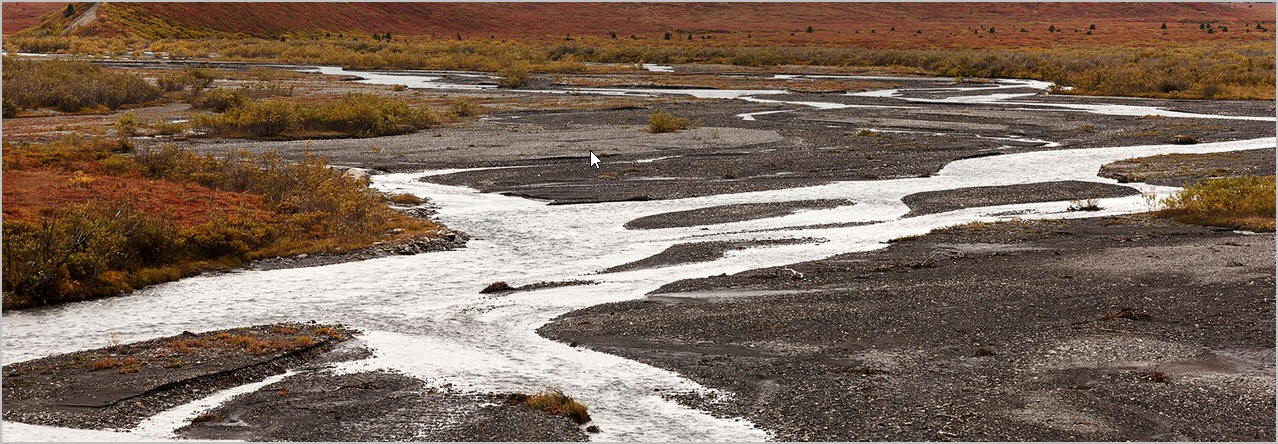 Denali National Park, Alaska. Photo by Christian Vorhofer/Getty
.
.
Click the link below for the article:
.
__________________________________________
November 18, 2022
Mohenjo
Crime, Food For Thought, Human Interest, Medical, missed News, Political, Science, Technical
amazon, business, Business News, current-events, Future, Hotels, human-rights, medicine, mental-health, research, Science, Science News, technology, Technology News, travel, vacation
.
News You might have missed!
Use your browser or smartphone back arrow (<-) to return to this table for your next selection.
.
__________________________________________
November 17, 2022
Mohenjo
Business, Food For Thought, Human Interest, Political, Science, Technical
amazon, business, Business News, current-events, Future, Hotels, human-rights, medicine, mental-health, research, Science, Science News, technology, Technology News, travel, vacation

Click the link below the picture
.
We spend a lot of energy looking for shortcuts to save time, and sure, those shortcuts add up. But when I look back, my biggest time regrets aren’t spending too much time on Twitter or mismanaging my daily tasks. Those are bad habits, but there are bigger, more systematic time wasters that have really gotten in the way. Fixing these will free up a massive amount of time and energy.
Not Asking for Help
My first week on my first job out of university, my boss handed me a huge spreadsheet. He told me to organize it in a way that made zero sense to me. Being a quiet, timid person, I simply nodded, walked back to my desk, and stared at that spreadsheet for like an hour, hoping to make some sense of it (yep, just like George Costanza and the Penske file).
Finally, my coworker came in, and I confessed I had no idea what to do. He broke it down for me, then dropped some advice that’s stuck with me ever since: “You might feel dumb asking questions, but you look dumber when you don’t get it because you failed to ask.”
.
 Wasting time
.
.
Click the link below for the article:
.
__________________________________________
November 17, 2022
Mohenjo
Business, Food For Thought, Human Interest, Political, Science, Technical
amazon, business, Business News, current-events, Future, Hotels, human-rights, medicine, mental-health, research, Science, Science News, technology, Technology News, travel, vacation
Click the link below the picture
.
An insurance policy for your home doesn’t just pay for necessary repairs when disaster strikes, it also can protect you in case of an accident on your property, such as a slip and fall. Peace of mind for major repairs and bad accidents is important—but there are some things you might be doing that can void your insurance that you might not even be aware of. Here are some things to avoid doing to keep your policy intact.
Running a home business
A common mistake you might be making is running a business out of your home. While side hustles abound, if you bring clients into your home, keep inventory there, or have expensive equipment, you might not be covered if something goes wrong. Damage or theft of any property pertaining to a business won’t be covered by your average policy, and liability for guests who are a part of your business operation is also likely not part of your coverage. If your insurance company discovers that you have made this mistake during the course of a claim, they could fine you or even cancel your policy altogether.
.
 Photo: Justin_Krug (Shutterstock)
.
.
Click the link below for the article:
.
__________________________________________
Older Entries
Newer Entries
 James' World 2