
Click the link below the picture
.
You’re halfway through a challenging exam when you notice your focus starting to slip. The words on the page blur together, and you find your mind wandering to what you’re going to have for dinner that night. Does that sound familiar? This mental fatigue isn’t a character flaw—it’s a universal human experience that reveals something essential about how people’s minds function.
We are behavioral scientists who study how economic circumstances shape human cognition and behavior. In a recent study of more than 1,600 children, we found that the ability to sustain mental effort over time—or “cognitive endurance”—functions much like physical stamina. Almost universally, the longer people spend on a task, the worse they perform on it. But just as athletes can train to run longer distances, kids are able to strengthen their capacity for sustained thinking through simple but dedicated practice, allowing them to continue to perform at a higher level for longer stretches of time. In an era of social media and short-form content designed to minimize mental friction and demand minimal effort, the capacity for sustained thinking may be getting less practice than ever—making it more important to understand how it develops and how it can be strengthened.
Could Environment Shape Concentration?
A few years ago, while we were analyzing standardized test results from around the world with our colleagues Christina Brown of the University of Chicago and Geeta Kingdon of University College London, we noticed a remarkably consistent pattern: students performed worse on questions that appeared later in exams, even after accounting for the difficulty of the questions.
This performance decline was much steeper among students from disadvantaged backgrounds. Children in poor countries showed three times the rate of performance decline compared with those in wealthy nations. This could be because disadvantaged children get fewer opportunities to train their focus. Cognitive skills generally improve with deliberate, focused and progressively more challenging training. And when looking at the activities the kids spent time on in school, we found that richer students were more likely to engage in independent, focused practice by doing activities such as working through problems on their own, reading silently, or concentrating on individual tasks. In contrast, students at disadvantaged schools were more likely to spend much of the day in passive activities such as listening to lectures, practicing rote memorization or copying from the board.
These patterns suggested that the school experience itself—particularly the amount of sustained mental effort the school day requires—could be molding students’ cognitive endurance.
Training the Mind Like a Muscle
To test whether cognitive endurance could be improved, we designed an experiment with 1,636 elementary school students in India. Students were randomly assigned to one of three groups during their study hall periods. Those in the control group continued with their usual routine—copying a few math problems from the board before spending most of the class time as they liked, resulting in minimal sustained mental effort.
In contrast, the other two “treatment” groups engaged in 20 minutes of continuous cognitive practice during these study hall periods. The members of one group solved math problems on tablets in a simple application that adapted to their ability level but didn’t have any gamified features to hold their attention. This gave these students focused practice in a specific subject area. But it was also possible that simply practicing concentration, regardless of the task, could increase mental endurance. To test that, the final group completed cognitively demanding games such as mazes and shape puzzles called tangrams that contained no academic content. These app-based games also adapted their difficulty based on performance, which kept them challenging for the students.
The results were striking. Both treatment groups showed significant improvements in their ability to maintain performance throughout tests, regardless of the type of training they had received. When students took listening comprehension, reasoning or math assessments, the performance of those who had received cognitive practice declined 22 percent more slowly than that of students in the control group. It didn’t matter whether the students had practiced with academic content or nonacademic games—the benefits were nearly identical for both groups. This suggests that the act of concentrating mattered more than what students were concentrating on.
The students who practiced concentrating also improved on standardized tests of sustained attention, including those that tested their reaction times or their ability to spot target symbols hidden in a grid. They also showed better focus in the classroom, according to ratings from their teachers—for example, they fidgeted less and followed through on multistep instructions. This seems to have translated to better grades across a wide range of subjects, too—students who received either form of cognitive practice earned grades that were about 0.09 standard deviations higher in Hindi, English, and math than those who didn’t. In comparison, this effect was roughly half to three-quarters as large as that of assigning a student to a class with seven fewer students per teacher. These were substantial improvements, considering the intervention required only 20 to 50 minutes per week over six months.
Beyond the Classroom
The implications of these findings extend beyond education. We also found evidence that disadvantaged groups, whose members are likely to have received less practice in sustaining focus, show more rapid declines in performance over time in other contexts. For example, we found that data entry workers made more errors as their shifts progressed and that less educated workers showed much steeper declines. Even voting behavior reflects these patterns: studies have found that, when a given proposition appears later in the ballot in California, voters are more likely to choose the default option. We showed that these declines are especially pronounced in lower-income neighborhoods.
.
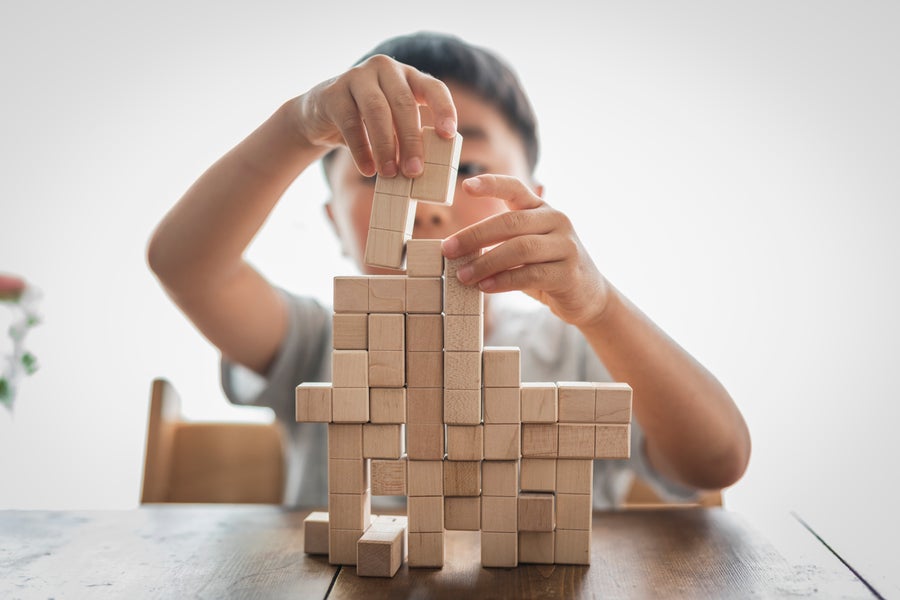 Kohei Hara/Getty Images
.
.
Click the link below for the complete article:
.
__________________________________________


Leave a comment