
Click the link below the picture
.
My father dedicated his life to studying the Guna people of Panama, and they may soon allow unprecedented development through their land. I went on a trek through the jungle to find out why.
In 1970, my father, a shaggy 25-year-old from the Chicago suburbs finishing his Ph.D. in anthropology, traveled with my mother to the Gunayala region of northeast Panama to ask its inhabitants, the Guna people, for permission to study them. The Guna lived on an archipelago of sandy, palm-covered islets along the Caribbean coast and had a reputation as prickly and disagreeable.
My parents went from village to village as my father, James, introduced himself in Spanish. He was not the first anthropologist the group had seen. The Guna had a long history of interacting with wagas, as they called non-Guna. Wagas tended to be struck by Guna independence. According to a U.S. government report in 1964, the Guna’s “chief characteristic has been and continues to be a persistent determination to preserve their cultural and racial structure against pressures from the outside.” That had been evident when, just a few years before my father arrived, an American businessman named W.D. Barton built a resort on one of Gunayala’s more than 350 uninhabited islands. The Guna burned it down. And when Barton tried to rebuild it, they burned it down again.
My father spent much of the 1970s regularly traveling to live with the Guna, joined for several months at a time by my mother, June, and then by me. Digandiggi, our home, was a village of 200 thatched-roof homes built on a coral reef, half a mile from the mainland jungle and the hulking silhouette of the Serranía de San Blas, a mountain range that is an extension of the Continental Divide.When I think of Digandiggi, I hear the thud of breakers and smell the burning of coconut husks in cooking fires. Our dirt-floored home, which we shared with a village chief, had a roof of palm fronds that crackled and popped in the afternoon heat. There was a fist-size hole in the corner leading to the lair of some nocturnal creature; afraid of snakes, I dared not ask what it might be. We had no privacy. The neighbors, whose roof almost touched ours, could hear every whisper through the cane walls. The only place on the entire island where I could find solitude was the communal outhouse, which stood over shallow water at the end of a narrow plank. I would hide there for hours, studying the mountains as clouds tumbled over the peaks.
Guna villages, hives of activity with dizzyingly high population density, tended to overheat my social circuits. But my father could be out all day and night making house calls, having his ear bent, hearing stories he’d already heard dozens of times. There was chemistry between him and the Guna. They liked to tell him their stories, especially the old shamans, who were running out of apprentices.
And my father liked to listen. Within a year, to the Guna’s astonishment, he became fluent in their language and a natural with their customs. “If you want to work with the Guna,” Dad says, “you have to spend a lot of time traveling around and explaining yourself.” This involved what I regard as heroic self-discipline, for as with human beings everywhere, the Guna currency of trust is food: If they offer it, you better eat it. And the Guna staple, proffered upon arrival in every household, is dulemasi (literally “people food”), a thin gray soup larded with plantains, fish and sometimes river snails. Thanks to dulemasi, I decided early on not to become an anthropologist. My father, as far as I can tell, doesn’t particularly enjoy the dish, either, but he won’t say. To insult it, even in private, would be to insult the Guna.
There were other reasons the Guna liked my father. He was an ally, not only agreeable but also loyal, returning decade after decade. He belonged to a wave of American anthropologists who, in the wake of the 1960s, saw themselves as not simply studying their subjects but standing with them against imperialism and colonialism. They were not simply detached observers; they were advocates and intermediaries, atoning for their predecessors’ misdeeds, if not their countries’.
My father, arriving in Gunayala on the cusp of this change, intended to study kinship, a staple of old-school anthropology. But he soon switched to the study of Guna exorcisms and puberty rituals, as well as their town-hall-style democracy. Above all, my father wanted to understand — and bolster, to whatever extent possible — the aspect of the Guna that has long fascinated outsiders: their resistance to external pressure.
Over the last 500-some years, the Guna have proved uniquely successful at keeping intruders at bay, at times through violence. Since fighting a brief war of independence in 1925, the Guna have enjoyed virtual autonomy, even after pledging nominal allegiance to the Republic of Panama. But Panama’s government has never stopped pressing for access to Guna land. Gunayala contains what may be the most pristine jungle in all of Latin America, and it includes hundreds of uninhabited islands that have been likened to remote parts of the Bahamas before tourism. Most valuable of all, perhaps, it controls land near the Panama-Colombia border, which includes vital access to a potential transit route for migration and commerce of all kinds.
.
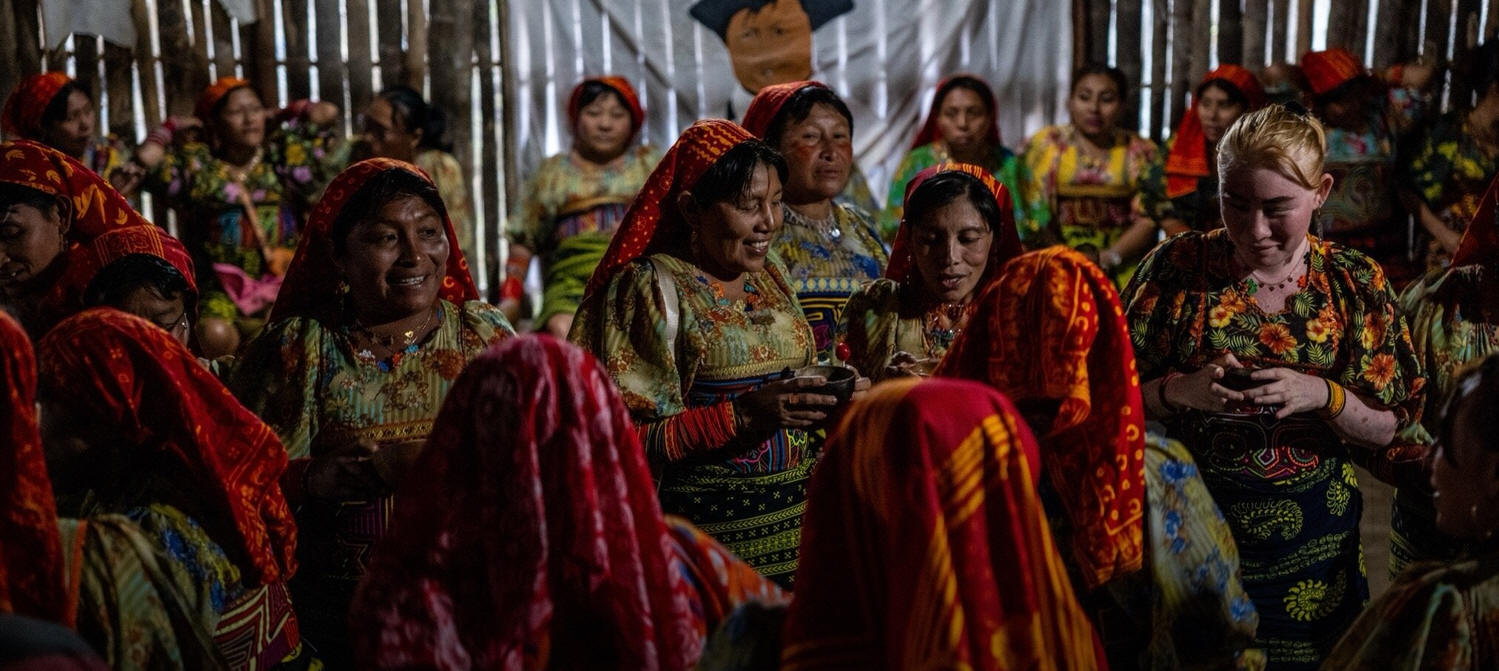 The Guna people in Panama inhabit what may be the most pristine jungle in all of Latin America, and for centuries they have been successful at keeping intruders at bay.
.
.
Click the link below for the complete article:
.
__________________________________________


Leave a Reply