When Hurricane Irma swept through the Florida Keys in September, it brought a vivid preview of the damage that climate change could inflict on the region in the decades ahead.
The storm washed out two sections of the highway connecting the Keys, leaving residents stranded for days. With ocean levels rising around these low-lying islands, however, that interruption could end up seeming minor: By 2030, almost half the county’s roads could be affected by flooding.
“We know that the water isn’t going away,” said Rhonda Haag, the sustainability director for Monroe County, which is preparing to elevate vulnerable roadways in the Keys. But the task is so costly, up to $7 million per mile of road, that the county may ultimately require outside help.
.
Flooded streets in Naples, Fla., the morning after Hurricane Irma swept through in September.CreditSpencer Platt/Getty Images
In 2006, the endowments of Indiana University and Texas Christian University invested millions of dollars in a partnership, hoping to mint riches from oil, gas and coal.
The partnership was formed by the Houston-based Quintana Capital Group, whose principals include Donald L. Evans, an influential Texan and longtime supporter of former President George W. Bush. Little more than a year earlier, Mr. Evans had left his cabinet position as commerce secretary.
Though the group had an impressive Texas pedigree, presidential cachet and ambitions for operations in the United States, the new partnership was established in the Cayman Islands. The founders promised their university and nonprofit investors that the partnership would try to avoid federal taxes by exploiting a loophole called “blocker corporations,” which are typically established in tax havens around the world.
.
Texas Christian University, which invested in an oil, gas and coal partnership established in the Cayman Islands, a tax haven.CreditCooper Neill for The New York Times
A Turkish banker was convicted on Wednesday of taking part in a billion-dollar scheme to evade American sanctions against Iran, in a case that painted a picture of high-level corruption in Turkey and heightened tensions between the United States and a NATO ally.
Turkey’s president, Recep Tayyip Erdogan, was not charged in the indictment, but he seemed to loom over the Federal District Court case in Manhattan during the monthlong trial and even before it began. Testimony suggested that he had approved the sanctions-busting scheme.
Mr. Erdogan and other Turkish officials had bitterly denounced the charges against the banker, Mehmet Hakan Atilla, and eight co-defendants, and repeatedly urged American officials to drop the case. Mr. Erdogan even took the matter up with President Trump.
.
A Halkbank branch in Istanbul. The defendant, Mehmet Hakan Atilla, was the bank’s deputy general manager for international banking.CreditChris Mcgrath/Getty Images
An enormous document leak of over 13 million files was revealed on Sunday, in what is being collectively referred to as the Paradise Papers. It’s one of the biggest data leaks in history, and involves the elaborate offshore assets of top politicians and corporations, as well as some of the world’s wealthiest individuals and celebrities.
Millions of the leaked files come from a single company, Appleby, which is based in Bermuda and offers offshore legal services. Appleby has denied any wrongdoing in relation to the findings from the documents.
The Paradise Papers closely resemble a document leak from last year known as the Panama Papers, which also detailed the offshore holdings and tax avoidance schemes of some of the world’s most powerful people.
The Panama Papers caused a significant international fallout when they were released in April 2016, even leading to the resignation of Iceland’s prime minister amid protests and the surrounding controversy. The effects of this new Paradise Papers leak remain to be seen, but it has already put increased scrutiny on high-profile figures including U.S. Commerce Secretary Wilbur Ross and Queen Elizabeth II.
.
Hannah Mckay / Reuters
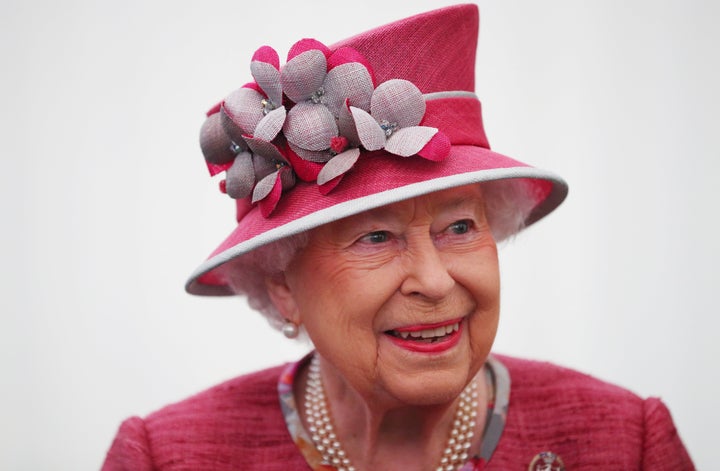
Britain’s Queen Elizabeth attends The King’s Troop Royal Horse Artillery 70th parade in Hyde Park in London on Oct. 19, 2017.
Centroamericano, a new variety of coffee plant, hasn’t sparked the buzz of, say, Starbucks’s latest novelty latte. But it may be the coolest thing in brewing: a tree that can withstand the effects of climate change.
Climate change could spell disaster for coffee, a crop that requires specific temperatures to flourish and that is highly sensitive to a range of pests. So scientists are racing to develop more tenacious strains of one of the world’s most beloved beverages.
In addition to Centroamericano, seven other new hybrid varieties are gradually trickling onto the market. And this summer, World Coffee Research — an industry-funded nonprofit group — kicked off field tests of 46 new varieties that it says will change coffee-growing as the world knows it.
.
Coffee is under attack from climate change and other woes. In the race to save America’s favorite beverage, science may offer a solution.(Kolin Pope/The Washington Post)
Invariably, someone brings up the anatomically-shaped balloons.
About a year ago, a bachelorette party from Texas rented a house through Airbnb on Ursulines Avenue in Treme, a residential neighborhood close to the bars and restaurants of the French Quarter.
The women tied inflatables shaped like penises to the front of the house, perhaps not realizing that the neighbors ― families and other longtime residents ― might mind.
“My oldest son woke up and there was an inflatable dildo taped to the house next door and I was like, ‘We’re out of here,’” said Christian Rhodes, a 36-year-old lawyer whose clients include the Greater New Orleans Hotel & Lodging Association and Uber.
He sold his house last year. “I’m not explaining to a 6-year-old what an inflatable dildo is.”
.
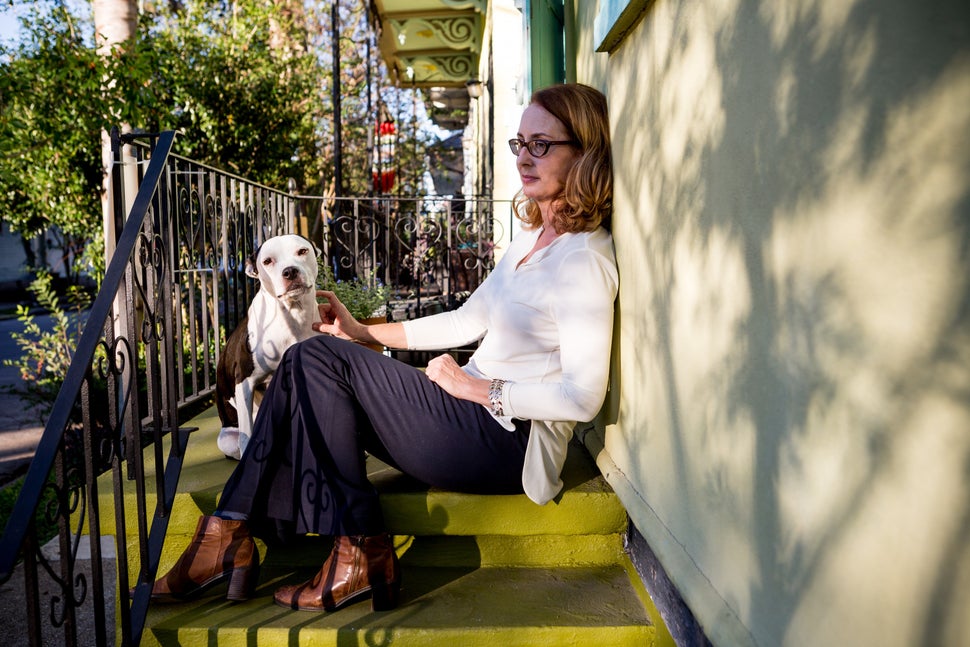
Meg Lousteau sits outside her home in the Treme neighborhood.
It is the question that pits neighbor against neighbor, tribe against tribe, and Republican against Republican.
.
Should America risk the last great salmon run on Earth to dig what could be the richest mine on the planet?
.
Should Alaska gamble the red gold that swims into their nets and feeds tens of millions to chase the yellow gold and copper craved by world markets?
.
At the center of this question is the proposed Pebble Mine, a massive mineral deposit worth between $300 billion and $500 billion being pursued by the Canadian mining company Northern Dynasty and intended to be built in southwestern Alaska.
.
It all began in the 1980s, when a helicopter survey team noticed a strange red spot on a windswept stretch of land north of the state’s Bristol Bay.
.
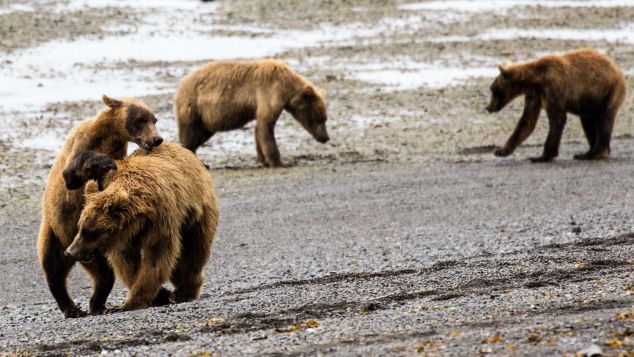
As salmon make their journeys to spawn, they provide nutrients that sustain a variety of Alaskan wildlife, including brown bears.
Sir Roger Moore, who embodied the heartthrob swagger of the world’s most famous spy “James Bond” for a dozen years, has died in Switzerland after a short battle with cancer, his family said Tuesday in a statement posted to Twitter.
Moore was 89.
“It is with a heavy heart that we must announce our loving father, Sir Roger Moore, has passed away today in Switzerland after a short but brave battle with cancer,” his family’s statement read. “The love with which he was surrounded in his final days was so great it cannot be quantified in words alone.”
After replacing Sean Connery in the James Bond films, Moore played the infamous British spy from 1973 until 1985. He made his 007 debut in the film “Live and Let Die,” and last appeared as the suave secret agent in “A View to a Kill.” He was the longest serving Bond in the film’s series.
. Roger Moore in the 1973 film “Live and Let Die” Courtesy Everett Collection
Even Stan Wawrinka had to smile before Sunday’s French Open final when the stadium announcer listed year-by-year each of the nine previous titles Rafael Nadal had won at Roland Garros.
Another one can now be added to the list — and it is one for the ages — after the Spaniard crushed Wawrinka 6-2 6-3 6-1 to become the first man to win the same grand slam on 10 occasions.
.
The ‘Decima.’
Indeed it is a feat that may never be duplicated.
.
He collapsed to the court when Wawrinka sent a backhand into the net and seconds later an emotional Nadal sunk his head into his towel while in his chair. He was soon cradling the famous trophy like a baby.
A simple tap from your finger may be enough to charge your portable device thanks to a discovery made at RMIT University and Australian National University.
In a crucial step towards the development of self-powering portable electronics, researchers at RMIT University in Melbourne have for the first time characterised the ability of piezoelectric thin films to turn mechanical pressure into electricity. The pioneering result is published in the 21 June Issue of the leading materials science journal, Advanced Functional Materials.
Lead co-author Dr Madhu Bhaskaran said the research combined the potential of piezoelectrics – materials capable of converting pressure into electrical energy – and the cornerstone of microchip manufacturing, thin film technology. “The power of piezoelectrics could be integrated into running shoes to charge mobile phones, enable laptops to be powered through typing or even used to convert blood pressure into a power source for pacemakers – essentially creating an everlasting battery,” she said.
.
Let your fingers do the charging. Photo by James Giggacher.
Film and Writing Festival for Comedy. Showcasing best of comedy short films at the FEEDBACK Film Festival. Plus, showcasing best of comedy novels, short stories, poems, screenplays (TV, short, feature) at the festival performed by professional actors.

 Flooded streets in Naples, Fla., the morning after Hurricane Irma swept through in September.CreditSpencer Platt/Getty Images





 Meg Lousteau sits outside her home in the Treme neighborhood.



 How clay helped Nadal
 Let your fingers do the charging. Photo by James Giggacher.
 James' World 2