A study led by The University of Western Australia has found plants have far more complex and developed senses than we thought with the ability to detect and respond to sounds to find water, and ultimately survive.
In the study “Tuned in: plant roots use sound to locate water” published in Oecologia, UWA researchers found that plants can sense sound vibrations from running water moving through pipes or in the soil, to help their roots move towards the source of water. The study also revealed that plants do not like certain noises and will move away from particular sounds.
Lead researcher Dr Monica Gagliano from UWA’s Centre of Evolutionary Biology at the School of Animal Biology said water was a basic need for a plant’s survival, and the study showed that sound plays a significant role in helping plants cater to this need.
“We used the common garden pea plant (Pisum sativum) as the model for our study and put the plant into a container which had two tubes at the base, giving it a choice of two directions for the growth of its roots.
A simple tap from your finger may be enough to charge your portable device thanks to a discovery made at RMIT University and Australian National University.
In a crucial step towards the development of self-powering portable electronics, researchers at RMIT University in Melbourne have for the first time characterised the ability of piezoelectric thin films to turn mechanical pressure into electricity. The pioneering result is published in the 21 June Issue of the leading materials science journal, Advanced Functional Materials.
Lead co-author Dr Madhu Bhaskaran said the research combined the potential of piezoelectrics – materials capable of converting pressure into electrical energy – and the cornerstone of microchip manufacturing, thin film technology. “The power of piezoelectrics could be integrated into running shoes to charge mobile phones, enable laptops to be powered through typing or even used to convert blood pressure into a power source for pacemakers – essentially creating an everlasting battery,” she said.
.
Let your fingers do the charging. Photo by James Giggacher.
An international team, led by a scientist from the University of Sussex, have today unveiled the first practical blueprint for how to build a quantum computer, the most powerful computer on Earth.
This huge leap forward towards creating a universal quantum computer is published today (1 February 2017) in the influential journal Science Advances (1). It has long been known that such a computer would revolutionise industry, science and commerce on a similar scale as the invention of ordinary computers. But this new work features the actual industrial blueprint to construct such a large-scale machine, more powerful in solving certain problems than any computer ever constructed before.
Once built, the computer’s capabilities mean it would have the potential to answer many questions in science; create new, lifesaving medicines; solve the most mind-boggling scientific problems; unravel the yet unknown mysteries of the furthest reaches of deepest space; and solve some problems that an ordinary computer would take billions of years to compute.
.
Prototype of the core of a trapped ion quantum computer. Credit: Ion Quantum Technology Group, University of Sussex.
Respiratory conditions could be better targeted and treated, thanks to the discovery of the vital molecule which regulates breathing – according to research by the University of Warwick.
Professor Nicholas Dale at the School of Life Sciences has exploited evolutionary principles to identify Connexin26 (Cx26) as a key molecule that reacts to CO2 in our bodies and activates breathing.
Cx26 molecules detect levels of CO2 in the blood-stream, and when levels reach a certain point, they tell our bodies to excrete the CO2 and take in oxygen – the vital life-preserving process that allows us to breathe, and creates blood flow to the brain.
Without this essential molecular function, harmful levels of CO2 would remain in the bloodstream, making breathing difficult or impossible.
Mutations in Cx26 are directly connected to a number of serious conditions – ranging from congenital deafness, to respiratory conditions, and serious syndromes that affect skin, vision and hearing. As Cx26 is vital to breathing well, people carrying these mutations may be at risk of sleep apnoea.
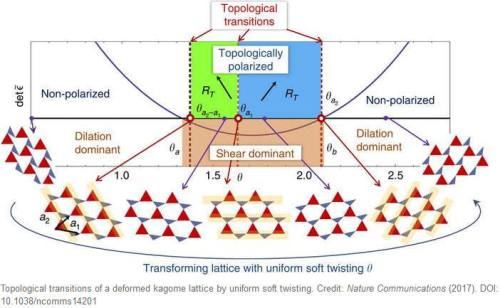
When a material is made, you typically cannot change whether that material is hard or soft. But a group of University of Michigan researchers have developed a new way to design a “metamaterial” that allows the material to switch between being hard and soft without damaging or altering the material itself.
Metamaterials are man-made materials that get their properties—in this case, whether a material is hard or soft—from the way the material is constructed rather than the material that constructs it. This allows researchers to manipulate a metamaterial’s structure in order to make the material exhibit a certain property.
In the group’s study, published in the journal Nature Communications, the U-M researchers discovered a way to compose a metamaterial that can be easily manipulated to increase the stiffness of its surface by orders of magnitude—the difference between rubber and steel.
Since these properties are “topologically protected,” meaning that the material’s properties come from its total structure, they’re easily maintained even as the material shifts repeatedly between its hard and soft states.
A chunk of ice half the size of Jamaica which is breaking away from West Antarctica is now attached to its parent ice shelf just by a thread, scientists reported Friday.
.Covering 5,000 square kilometres (1,900 square miles) and nearly 100 storeys deep, the formation is poised to snap off from Larsen C ice shelf, creating “one of the largest icebergs ever recorded,” the researchers said in a statement.
A widening rift running the length of the finger-shaped, 350-metre (1150-feet) -thick ice block grew 10 kilometres (six miles) longer some time during the last three weeks, satellite images revealed.
“The rift is likely to break off in the next few months—if it doesn’t, I’ll be amazed,” said Adrian Luckman, a professor at Swansea University in Wales, and leader of Britain’s Project Midas, which tracks changes in West Antarctic ice formations.
“It’s so close to calving that I think it’s inevitable,” he told AFP.
Researchers have found a way to trigger the innate, but previously hidden, ability of graphene to act as a superconductor – meaning that it can be made to carry an electrical current with zero resistance.
.
The finding, reported in Nature Communications, further enhances the potential of graphene, which is already widely seen as a material that could revolutionise industries such as healthcare and electronics. Graphene is a two-dimensional sheet of carbon atoms and combines several remarkable properties; for example, it is very strong, but also light and flexible, and highly conductive.
Since its discovery in 2004, scientists have speculated that graphene may also have the capacity to be a superconductor. Until now, superconductivity in graphene has only been achieved by doping it with, or by placing it on, a superconducting material – a process which can compromise some of its other properties.
Is there anybody out there? The question of whether Earthlings are alone in the universe has puzzled everyone from biologists and physicists to philosophers and filmmakers. It’s also the driving force behind San Francisco State University astronomer Stephen Kane’s research into exoplanets—planets that exist outside Earth’s solar system.
As one of the world’s leading “planet hunters,” Kane focuses on finding “habitable zones,” areas where water could exist in a liquid state on a planet’s surface if there’s sufficient atmospheric pressure. Kane and his team, including former undergraduate student Miranda Waters, examined the habitable zone on a planetary system 14 light years away. Their findings will appear in the next issue of Astrophysical Journal in a paper titled “Characterization of the Wolf 1061 Planetary System.”
“The Wolf 1061 system is important because it is so close and that gives other opportunities to do follow-up studies to see if it does indeed have life,” Kane said.
.
An artist’s rendering of an exoplanet is shown. An exoplanet is a planet that exists outside Earth’s solar system. Credit: NASA/Ames/JPL-Caltech
In the world, human beings are facing various problems. People who are full of greed, anger, and ignorance are seen to be fighting with each other in words and deeds. As the fighting continues, various problems such as civil wars, wars of aggression, and wars of aggression are occurring. As world peace is being destroyed, humans are facing unbearable problems. Innocent children and women are not getting the rights they deserve and deserve. I can't think of one thing every time. What is it? The United Nations. If we look at the responsibilities and duties of the United Nations, I think it is not suitable for solving the problems that are happening in the world today. In fact, the United Nations and the World Security Council, such an organization must rule the world, must be able to give orders, and must have various ways to obey orders. There must be no organization that can influence more than that organization. There should be experts from each country. They can even dominate the superpowers like the US, China, and Britain. Only then will global peace be achieved quickly. Now, if a country with power develops more militarily, economically, or socially than its own country, then powerful countries will jealously seek out enemies and wage war. Or they will attack with fighter jets. In this, innocent people are losing their lives. No one understands the value of a life. You should think about how to achieve global peace by controlling these. If the US continues to be the permanent president of the UN, world peace will never be achieved. If you think carefully, no one sees that they are working for the common good, but for their own benefit, for the benefit of their own country. The permanent president of the UN and the Security Council has rejected this, As a young Rohingya, I have come to realize that only by electing the president and secretary from among the countries in the world through a secret ballot system and governing the world fairly can we achieve global peace. The United Nations and the Security Council are organizations in which any country must govern, give orders, and make them obey their orders. For example, only when a defendant is tried in court can we hold the leaders of the countries in check and control them, can we achieve global peace smoothly. Otherwise, it will not be easy for powerful countries to use various excuses to end this war every year, every year, for the benefit of themselves and their countries. No country's leaders pay any attention to the words of the United Nations and the Security Council. If we look at it in practice, look at the Rohingya issue. Myanmar is a small country. Even that country has been under siege for 8 years. What action can be taken? Why is the UN and the Security Council Powerless? Without such Power, how can the organization bring about global peace? Everyone should think about it. Whether there is a veto or a strong one, all countries in the world can only achieve global peace if they are subject to the UN and the Security Council. Seek peace in the quiet embrace of nature. Peace is an indispensable need of the human race. It is not as if one person can kill another person, and it is as if one country can attack another country, but instead of trying to build peace, we must try to destroy the peace now, and the world is getting hotter and is on the verge of collapse. I especially appeal to all the world experts to urgently try to bring about peace in all parts of the world. Mr, Noor Muhamed Arkhan Rohingya Youth Myanmar
Film and Writing Festival for Comedy. Showcasing best of comedy short films at the FEEDBACK Film Festival. Plus, showcasing best of comedy novels, short stories, poems, screenplays (TV, short, feature) at the festival performed by professional actors.


 Let your fingers do the charging. Photo by James Giggacher.
 Prototype of the core of a trapped ion quantum computer. Credit: Ion Quantum Technology Group, University of Sussex.
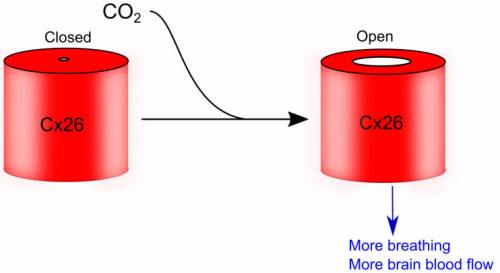 Credit: University of Warwick
 .
. Credit: Newcastle University
 Credit: AlexanderAlUS/Wikipedia/CC BY-SA 3.0
 An artist’s rendering of an exoplanet is shown. An exoplanet is a planet that exists outside Earth’s solar system. Credit: NASA/Ames/JPL-Caltech
