June 23, 2022
Mohenjo
Business, Food For Thought, Human Interest, Medical, Science, Technical
amazon, business, Business News, current-events, Future, Hotels, human-rights, medicine, mental-health, research, Science, Science News, technology, Technology News, travel, vacation

Click the link below the picture
.
The winner of our college essay contest explores how for her Syrian family, scattered by war, a WhatsApp group chat — rife with silly videos and often regrettable photos — is everything.
According to writer Gary Chapman, there are five love languages: words of affirmation, quality time, receiving gifts, physical touch, and acts of service.
I would like to add a sixth — let’s call it “WhatsApp intimacy” — for people like my extended family and me who love each other desperately but, because of war, can’t be together.
We are from Syria. As a young child, I spent summers in Damascus — bouncing between my parents’ childhood homes and the apartment they bought when my brother and I were born — and winters in the U.S., where they had immigrated.
.
 Brian Rea
.
.
Click the link below for the article:
.
__________________________________________
June 23, 2022
Mohenjo
Business, Food For Thought, Human Interest, Medical, Science, Technical
amazon, business, Business News, current-events, Future, Hotels, human-rights, medicine, mental-health, research, Science, Science News, technology, Technology News, travel, vacation

Click the link below the picture
.
As a parent, one of the most impactful things you can do is acknowledge your kids’ achievements and healthy habits. This is when you put your empathy muscles to work to encourage good behavior, self-confidence, and self-worth in your kids.
It’s important to accept, however, that no one is born perfect — your child will ultimately make bad choices. It’s how you handle and respond to the situation that determines whether or not they’ll make better decisions and develop healthy habits going forward.
.
 D3sign | Moment | Getty Images
.
.
Click the link below for the article:
.
__________________________________________
June 23, 2022
Mohenjo
Crime, Food For Thought, Human Interest, Medical, missed News, Political, Science, sports, Technical
amazon, business, Business News, current-events, Future, Hotels, human-rights, medicine, mental-health, research, Science, Science News, technology, Technology News, travel, vacation

.
News You might have missed!
Use your browser or smartphone back arrow (<-) to return to this table for your next selection.
.
__________________________________________
June 22, 2022
Mohenjo
Business, Enthralling, Human Interest, Photographs
amazon, business, Business News, current-events, Future, Hotels, human-rights, medicine, mental-health, research, Science, Science News, technology, Technology News, travel, vacation

Click the link below the picture
.
Krabi is the main town in the province of Krabi on the west coast of southern Thailand at the mouth of the Krabi River where it empties in Phang Nga Bay. As of 2020, the town had a population of 32,644. The town is the capital of Krabi Province and the 10 Krabi city sub-districts. Tourism is an important industry. Krabi is 783 km (487 mi) south of Bangkok by road. At the start of the Rattanakosin period in the late eighteenth century, when the capital was finally settled at Bangkok, an elephant kraal was established in Krabi by order of Chao Phraya Nakhon (Noi), the governor of Nakhon Si Thammarat, which was by then a part of the Thai Kingdom. He sent his vizier, the Phra Palad, to oversee this task, which was to ensure a regular supply of elephants for the larger town. So many followers immigrated in the steps of the Phra Palad that soon Krabi had a large community in three different boroughs: Pakasai, Khlong Pon, and Pak Lao. In 1872, King Chulalongkorn elevated these to town status, called Krabi, a word that preserves in its meaning the monkey symbolism of the old standard. The town’s first governor was Luang Thep Sena, though it continued for a while as a dependency of Nakhon Si Thammarat. This was changed in 1875 when Krabi was raised to a fourth-level town in the old system of Thai government. Administrators then reported directly to the central government in Bangkok, and Krabi’s history as an entity separate from other provinces had begun.
Much of the province has been given over to several national parks. Top destinations are Hat Noppharat Thara – Mu Ko Phi Phi National Park, Ao Nang, Railay, and Ko Phi Phi. The province includes over 80 smaller islands such as Ko Lanta and Phi Phi, well-known to adventurers, yachtsmen, scuba-divers, snorkelers, and day-trippers from Phuket. Krabi’s beaches attract both native Thai people and foreigners alike.
Ko Lanta National Park, also in Krabi Province, includes several coral-fringed islands with well-known diving sites. The largest island, Ko Lanta Yai, is the site of park headquarters and is also home to “Chao Le”, or sea gypsies, who sustain themselves largely through fishing. The islands are best visited during the drier months of October through April. Wikipedia
.
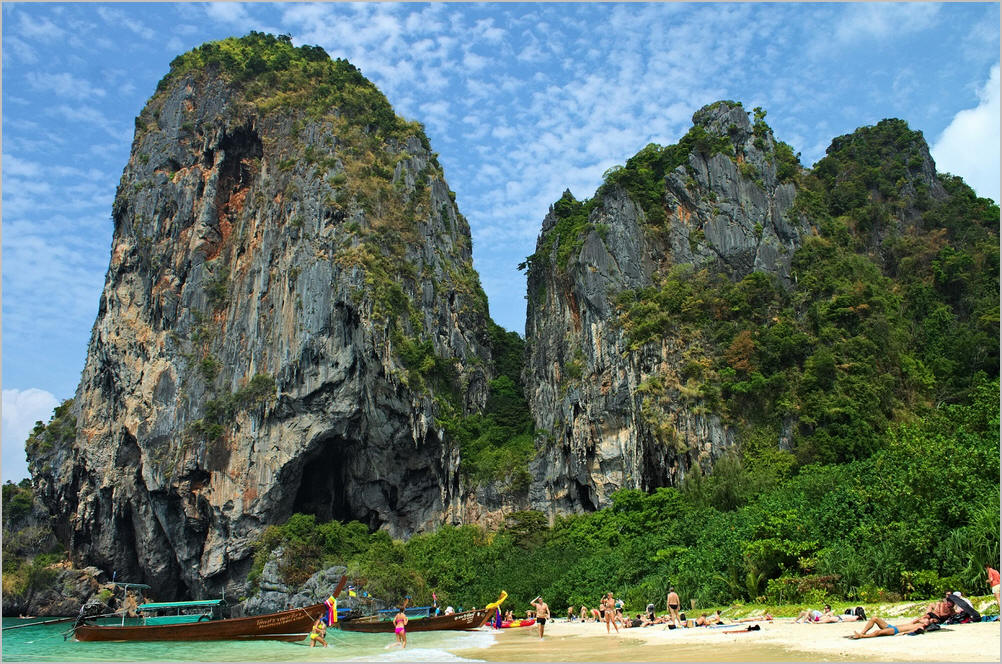 An image from Krabi Thailand
.
.
Click the link below for images:
.
__________________________________________
June 22, 2022
Mohenjo
Business, Food For Thought, Human Interest, Medical, Science, Technical
amazon, business, Business News, current-events, Future, Hotels, human-rights, medicine, mental-health, research, Science, Science News, technology, Technology News, travel, vacation

Click the link below the picture
.
At the beginning of the pandemic, I used to wake up frequently with an elevated heart rate, one eye barely open, already feeling like I’d lived an entire day, percolating with anxiety and dread before I’d even put a foot on the floor. There were an infinite number of moments when I was nursing a newborn with one arm, cradling a toddler with the other, and tapping out an email with whichever hand could best reach my laptop without disturbing this precarious scene.
In those days, I was utterly consumed by the act of mothering, engulfed in the relentless flames of parenthood in a way I had never anticipated. I also assumed I was totally alone in this experience. Only when we started admitting to each other out loud — on social media, in trend pieces, in our group chats — that parents, and moms, in particular, were not okay did it become clear how ruptured everything had become for all of us.
But it also felt like something important and necessary was being shattered around the idea of what a “mom” should be and how much she should carry.
.
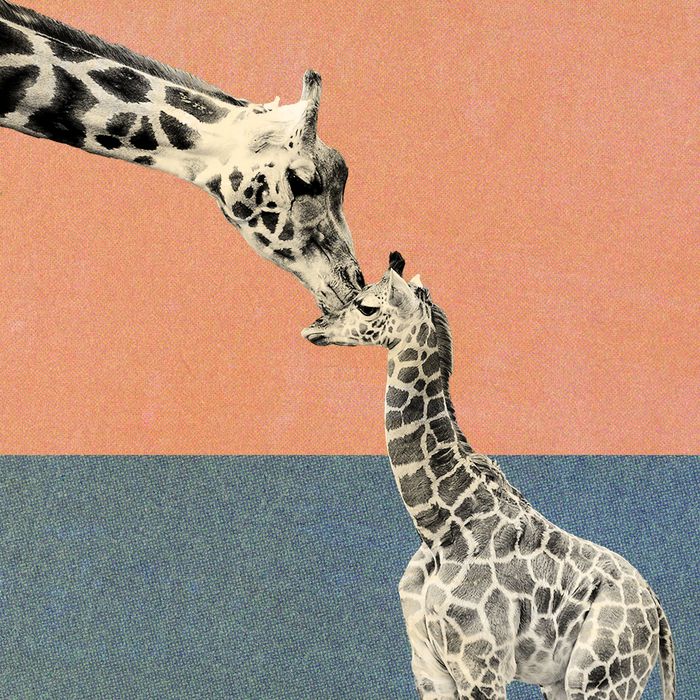 Photo-Illustration: by the Cut; Photos Getty Images
.
.
Click the link below for the article:
.
__________________________________________
June 22, 2022
Mohenjo
Business, Food For Thought, Human Interest, Medical, Science, Technical
amazon, business, Business News, current-events, Future, Hotels, human-rights, medicine, mental-health, research, Science, Science News, technology, Technology News, travel, vacation

Click the link below the picture
.
Terra Ziporyn Snider of Severna Park, Maryland, still remembers how difficult it was for her son to wake up for his 7:17 a.m. first-period class when he was in high school. There were times he’d turn on the shower, then head back to bed while waiting for the water to warm up, only to fall back asleep. One morning, he made it out the door but didn’t get far: He backed the car into the garage door because he’d forgotten to open it.
That was in 2012. And though the morning travails of her kids’ high-school years had prompted Ziporyn Snider to co-found the national nonprofit Start School Later around the same time, the school is only now set to shift to an 8:30 a.m. start time, effective this fall.
The American Academy of Pediatrics (AAP), which has called for later school start times since 2014, recommends that middle and high schools start no earlier than 8:30 a.m. But until recently, there’s been a patchwork approach to meeting that recommendation. The result: While various districts, cities, and counties have opted to make changes, the majority of middle and high schools still start too early. These start times make it nearly impossible for teens, whose body clock tends to shift to a later schedule at the onset of puberty, to get the eight to 10 hours of sleep recommended for their health and well-being.
.
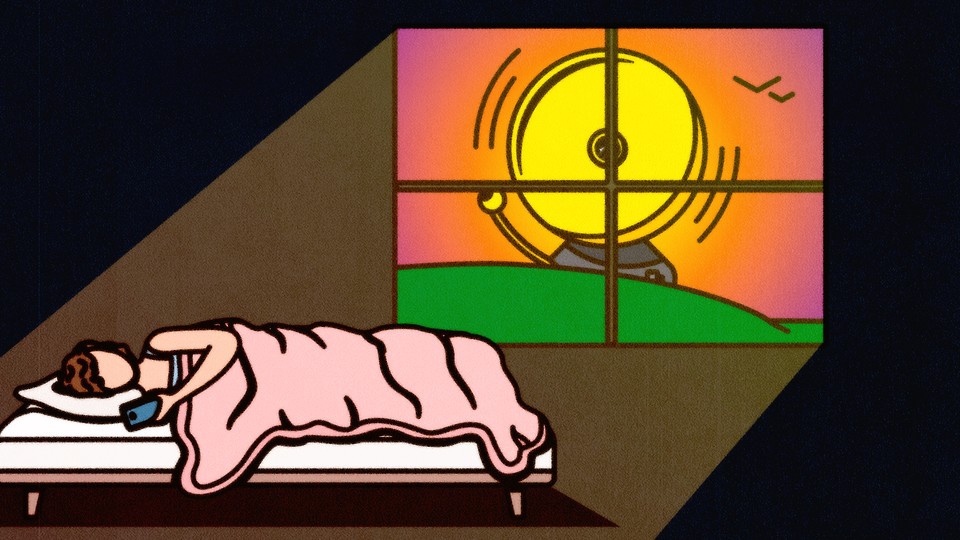 Getty / The Atlantic
.
.
Click the link below for the article:
.
__________________________________________
June 22, 2022
Mohenjo
Crime, Food For Thought, Human Interest, Medical, missed News, Political, Science, Technical
amazon, business, Business News, current-events, Future, Hotels, human-rights, medicine, mental-health, research, Science, Science News, technology, Technology News, travel, vacation
.
News You might have missed!
Use your browser or smartphone back arrow (<-) to return to this table for your next selection.
.
__________________________________________
June 21, 2022
Mohenjo
Business, Enthralling, Human Interest, Photographs
amazon, business, Business News, current-events, Future, Hotels, human-rights, medicine, mental-health, research, Science, Science News, technology, Technology News, travel, vacation
Click the link below the picture
.
Wuhan is the capital of Hubei Province in the People’s Republic of China. It is the largest city in Hubei and the most populous city in Central China, with a population of over eleven million, the ninth-most populous Chinese city, and one of the nine National Central Cities of China.
The name “Wuhan” came from the city’s historical origin from the conglomeration of Wuchang, Hankou, and Hanyang, which are collectively known as the “Three Towns of Wuhan” (武汉三镇). Wuhan lies in the eastern Jianghan Plain, at the confluence of the Yangtze river and its largest tributary, the Han River, and is known as “Nine Provinces’ Thoroughfare” (九省通衢).
Wuhan has historically served as a busy city port for commerce and trading. Other historical events taking place in Wuhan include the Wuchang Uprising of 1911, which led to the end of 2,000 years of dynastic rule. Wuhan was briefly the capital of China in 1927 under the left-wing of the Kuomintang (KMT) government. The city later served as the wartime capital of China for ten months in 1937 during the WWII. Wuhan is considered the political, economic, financial, commercial, cultural, and educational center of Central China. It is a major transportation hub, with dozens of railways, roads, and expressways passing through the city and connecting to other major cities. Because of its key role in domestic transportation, Wuhan is sometimes referred to as “the Chicago of China” by foreign sources. The “Golden Waterway” of the Yangtze River and the Han River traverse the urban area and divide Wuhan into the three districts of Wuchang, Hankou, and Hanyang. The Wuhan Yangtze River Bridge crosses the Yangtze in the city. The Three Gorges Dam, the world’s largest power station in terms of installed capacity, is located nearby. Historically, Wuhan has suffered risks of flooding, prompting the government to alleviate the situation by introducing ecologically friendly absorption mechanisms.
While Wuhan has been a traditional manufacturing hub for decades, it is also one of the areas promoting modern industrial changes in China. Wuhan has three national development zones, four scientific and technological development parks, over 350 research institutes, 1,656 high-tech enterprises, numerous enterprise incubators, and investments from 230 Fortune Global 500 firms. It produced GDP (nominal) of US$274 billion in 2021. The Dongfeng Motor Corporation, an automobile manufacturer, is headquartered in Wuhan. The city is home to multiple notable institutes of higher education, including Wuhan University and the Huazhong University of Science and Technology. Wuhan is a major city in the world by scientific research outputs and it ranks 14th globally and 5th in China (after Beijing, Shanghai, Nanjing, and Guangzhou). In 2017, Wuhan was designated as a Creative City by UNESCO, in the field of design. Wuhan is classified as a Beta- (global second tier) city together with seven other cities in China, including Changsha, Dalian, Jinan, Shenyang, Xiamen, Xi’an, and Zhengzhou by the Globalization and World Cities Research Network. Wuhan is also one of the world’s top 100 financial centers, according to the Global Financial Centres Index.
In December 2019, SARS-CoV-2, a novel coronavirus that caused the COVID-19 pandemic, was first discovered in Wuhan and the city was the location of the first lockdown of the pandemic in January 2020. Wikipedia
.
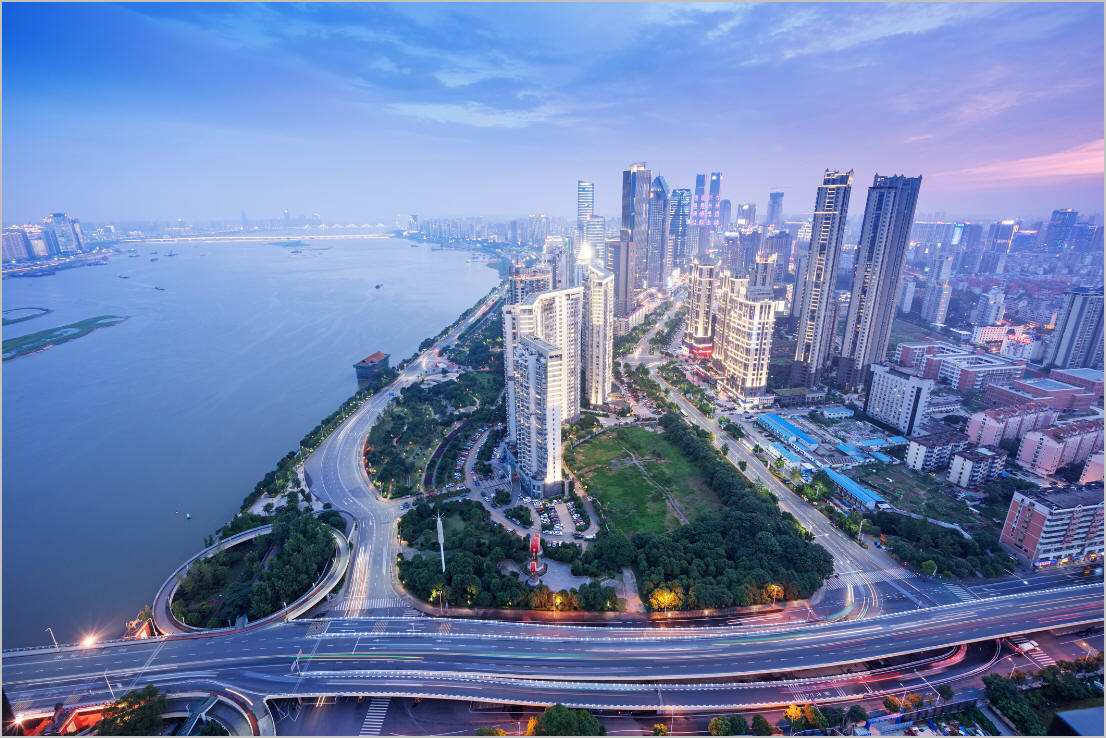 An image from Wuhan, China
.
.
Click the link below for images:
.
__________________________________________
June 21, 2022
Mohenjo
Business, Human Interest
amazon, business, Business News, current-events, Future, Hotels, human-rights, medicine, mental-health, research, Science, Science News, technology, Technology News, travel, vacation

Click the link below the picture
.
You’re exhausted and you can’t wait to go to bed. The second your head hits the pillow, you feel yourself drifting off, and before you know it, you’re in dreamland. That is until it’s 2 a.m.—suddenly you’re wide awake, staring at the ceiling and attempting to count sheep.
Sound familiar? Turns out, waking up at night is more common that you might think. According to a 2011 National Sleep Foundation poll, nearly 60 percent of Americans experience interrupted sleep in the middle of the night.
“My older clients have to take more frequent bathroom breaks, so they often have trouble staying asleep, as do those who work in stressful environments,” says Amanda Clark, a certified sleep coach at Equinox. The good news: Clark has a bevy of holistic methods up her sleeve to help her clients catch better z’s. She believes that there are certain things you can change in your daytime routine to make falling asleep—and staying asleep—easier.
.
 Photo by Laure Joliet.
.
.
Click the link below for the article:
.
__________________________________________
June 21, 2022
Mohenjo
Business, Food For Thought, Human Interest, Medical, Science, Technical
amazon, business, Business News, current-events, Future, Hotels, human-rights, medicine, mental-health, research, Science, Science News, technology, Technology News, travel, vacation

Click the link below the picture
.
In a new video on his YouTube channel, bodybuilder and physique coach Paul Revelia shares some simple advice for losing belly fat which he believes can be useful whether you’re a bodybuilder in a cut, or at the very start of your journey.
Firstly, he suggests using an app to track what you’re eating. “I wouldn’t recommend making any changes right away; in fact, do the opposite,” he says. “Go about your normal day, just start being accountable.” The commonly accepted wisdom is to eat a gram of protein per pound of your body weight. Revelia, on the other hand, believes you should be eating a gram of protein per pound of your goal weight.
.
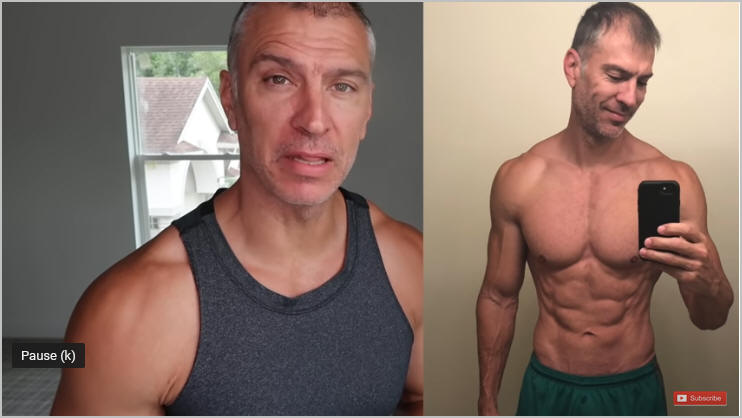 Lose Belly Fat
.
.
Click the link below for the article:
.
__________________________________________
Older Entries
Newer Entries

