
Click the link below the picture
.
Plainclothes thugs frog-marching a radio commentator from the microphone midbroadcast. An opposition activist dying after reportedly being barricaded in his house, which was then set on fire. Security forces raiding a powerful independent media company, cutting electricity and imposing a monthlong closure.
A reign of terror grips Uganda. Specifically, the reign of Gen. Muhoozi Kainerugaba, the country’s belligerent and erratic military chief, who also happens to be the only son of Yoweri Museveni, the octogenarian autocrat who’s ruled Uganda for four decades. Critics of General Kainerugaba, who recently announced his intention to become Uganda’s next president, risk finding themselves in the “basement,” his nickname for the torture chambers he brags about on social media.
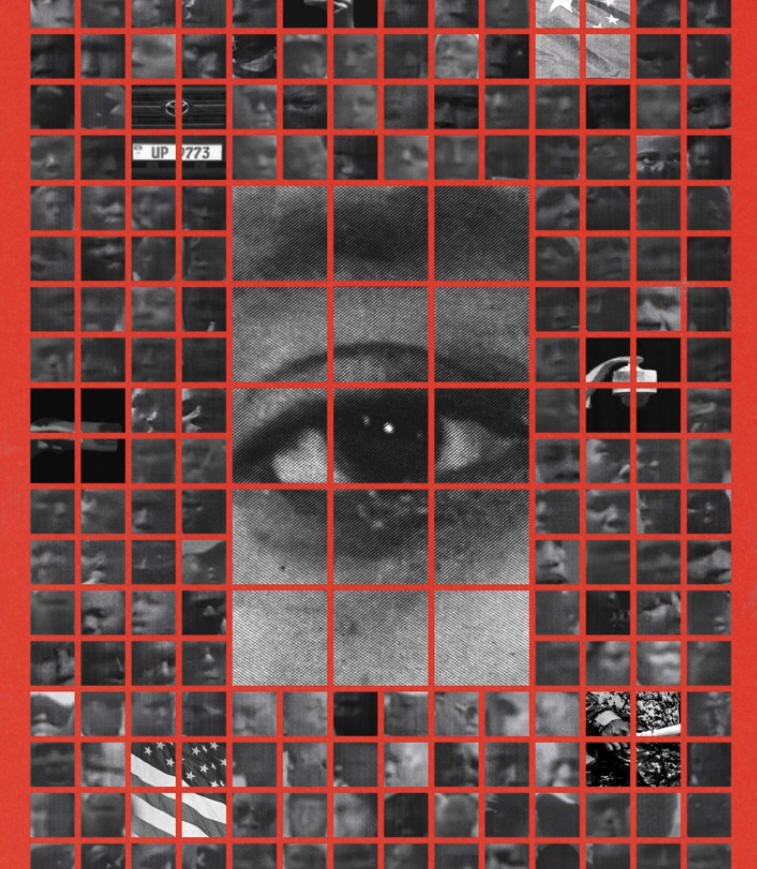
Ugandans have discovered that, increasingly, there is nowhere to hide. Civic life here is defined by thickening webs of state surveillance built with foreign help. Chinese cameras and facial-recognition software monitor the streets; Russian radio frequency chips implanted in license plates have been tracking cars in real time; Israeli software plunders the private contents of phones. Technology has created an intrusive eye that never blinks — a stealthy weapon for dictators keen to stifle speech and thought.
Welcome to our menacing new world, a place where authoritarians — established and aspiring alike — enjoy tolerance from the international community; wield cheaper, quieter and far more powerful surveillance tools at home; and reach across borders to help one another hang on to power.
Africa has become a testing ground for all of this. Authoritarianism is spreading on the continent, where Freedom House’s 2026 report found that only 10 percent of people now live in countries classified as “free,” a dismal statistic outdone only by the Middle East.
China has quietly fueled this political hardening. With unparalleled trade reach, a voracious appetite for natural resources and a compelling authoritarian model, Beijing has deepened its economic and political presence across Africa. Along the way, it has exported many of the technologies that the Communist Party uses for political and social control at home. African governments have spent at least $2 billion on the Chinese artificial-intelligence-powered surveillance systems that hound dissidents from Mozambique to Zimbabwe to the Republic of Congo.
China is not the only one. Israeli spyware such as the notorious Pegasus piracy software, which can use a phone to spy on its owner, has been snapped up by rulers around the world. And companies from the United States, Canada, Britain, France, Germany and other European states have exported surveillance technologies to Africa and other regions. Such tools have sometimes been used to target opposition figures, journalists and activists.
I visited Uganda recently to explore the aftermath of President Trump’s abrupt retreat from human rights, clean government and public diplomacy. I was told, over and over, that American silence during this clampdown has made it easier for other Western countries to remain similarly quiet and has radically emboldened an increasingly ruthless Ugandan regime.
This is not to overstate past U.S. altruism. America has always chased its interests overseas — sometimes violently, often cynically, selectively calling out the abuses of disfavored regimes while ignoring repression carried out by strategic allies. But it’s also true that America stood up for dissidents and human rights defenders when it was not inconvenient and sometimes when it was. It pressured despotic governments, criticized rigged elections and imposed sanctions on officials.
Now, suddenly, Beijing’s rules prevail: Make money, extract resources, turn economic ties into leverage. Whatever you do, respect local power; don’t criticize other governments for tyranny or abuse. Mr. Trump plays by those rules, too — “trade, not aid,” his administration pithily calls it.
“I really believe, if we look at the next 20 years, our politics will be influenced by the Chinese very, very much,” said Job Kiija.
I met Mr. Kiija in Kampala, the Ugandan capital, at a coffee shop wedged over a gas station on a ramshackle street fringed with palms and groaning with traffic. He runs Innovations for Democratic Engagement and Action, a civil society group that now works in the legal shadows since it was shuttered and defunded by government crackdowns.
He showed me threatening texts he’d been receiving on his phone (“U said some not nice things … U mayb in trouble soon”). He fretted about whether his group should publicly release an extensive report about the much-criticized elections this year that — yet again — kept Mr. Museveni in power.
To depend upon international law or support from friendly Western diplomats, Mr. Kiija said, is “no longer sustainable.”
“You live knowing you’re in danger,” he said. “But if you don’t do something about it, nobody will.”
It’s a mask-off moment in Uganda. For people caught in the cross hairs, these are days of dread.
Kakwenza Rukirabashaija has read the classified documents that list, in black and white, the arms of state power and surveillance tech that attacked him.
Mr. Rukirabashaija is a Ugandan lawyer and novelist. His first book, “The Greedy Barbarian,” is the sprawling, satirical story of a president who becomes a dictator, spiraling deep into greed and corruption until he is finally ousted by popular revolt.
.
 Marcel Top
.
.
Click the link below for the complete article:
.
__________________________________________


Leave a Reply