July 21, 2021
Mohenjo
Business, Enthralling, Human Interest, Photographs
amazon, business, Business News, current-events, Future, Hotels, human-rights, medicine, mental-health, research, Science, Science News, technology, Technology News, travel, vacation

Click the link below the picture
.
A mangrove is a shrub or small tree that grows in coastal saline or brackish water. The term is also used for tropical coastal vegetation consisting of such species. Mangroves occur worldwide in the tropics and subtropics, mainly between latitudes 30° N and 30° S, with the greatest mangrove area within 5° of the equator The total mangrove forest area of the world in 2000 was 137,800 km2 (53,200 sq mi), spanning 118 countries and territories.
Mangroves are salt-tolerant trees, also called halophytes, and are adapted to live in harsh coastal conditions. They contain a complex salt filtration system and complex root system to cope with salt water immersion and wave action. They are adapted to the low-oxygen conditions of waterlogged mud.
The word “mangrove” is used in at least three senses: (1) most broadly to refer to the habitat and entire plant assemblage or mangal, for which the terms mangrove forest biome, and mangrove swamp are also used, (2) to refer to all trees and large shrubs in a mangrove swamp, and (3) narrowly to refer just to “true” mangrove trees of the genus Rhizophora of the family Rhizophoraceae.
The mangrove biome, or mangal, is a distinct saline woodland or shrubland habitat characterized by depositional coastal environments, where fine sediments (often with high organic content) collect in areas protected from high-energy wave action. The saline conditions tolerated by various mangrove species range from brackish water, through pure seawater (3 to 4% salinity), to water concentrated by evaporation to over twice the salinity of ocean seawater (up to 9% salinity). Wikipedia
.
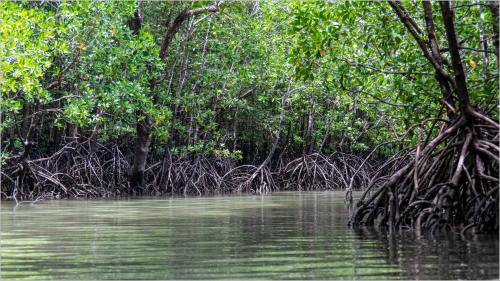 An image of Mangroves
.
.
Click the link below for images:
.
__________________________________________
July 21, 2021
Mohenjo
Business, Food For Thought, Human Interest, Science, Technical
amazon, business, Business News, current-events, Future, Hotels, human-rights, medicine, mental-health, research, Science, Science News, technology, Technology News, travel, vacation

Click the link below the picture
.
A suburban playground on a cold winter’s day. A man in his early 30s, wearing a beanie, leather jacket, and scarf, pushes a toddler on a swing, a dead look in his eyes. On the climbing frame, twins are jostling each other. Their mother stands underneath, hopping from foot to foot, her eyes darting from one girl to the next, issuing warnings, instructions; her voice rises anxiously in pitch. Looking around, I see only one adult smiling, but then she’s talking to her friend; their children are some way off, fighting each other with sticks.
There’s nothing particularly striking here. It could be any day of the week, in any town. And there’s nothing revelatory about the thought of parents secretly wishing they were anywhere else but the local playground, perhaps envying their childless friends; even wondering, during the sleepless nights, or in the aftermath of a fight with a recalcitrant teenager, why they had children at all. What is distinctive of our times is how few parents — still, even in our post-Freudian age — will openly admit to feelings of ambivalence towards their children. In an age where very little — from sex to money — is left a mystery, parental ambivalence remains one of the last taboos.
And yet the fact of parental ambivalence is a truth as old as mythology itself. Think how many fairytales begin with children being cast out by parents, either, as in the Brothers Grimm story ‘Brother and Sister’, being forced to leave on their own; or, like Hansel and Gretel, abandoned in a place from where they cannot find their way back. The fate reserved for older children, often adolescents, is usually more severe: the jealous queen in ‘Snow White’ orders her stepdaughter to be killed; and, in ‘The Three Languages’ by the Brothers Grimm, the king, frustrated by an adolescent son who persists in going against his wishes, eventually casts him out and orders his servants to do away with him. The narrative use of the wicked stepmother is worth noting here: it’s as if the child intuitively understands that his mother (and indeed father) can sometimes harbor hostile feelings towards him, but it’s safer to locate this cruelty in the figure of the stepmother, who can then be dispatched to a bloody end.
.

Image from Yapanda/Getty Images.
.
.
Click the link below for the article:
.
__________________________________________
July 21, 2021
Mohenjo
Business, Food For Thought, Human Interest, Science, Technical
amazon, business, Business News, current-events, Future, Hotels, human-rights, medicine, mental-health, research, Science, Science News, technology, Technology News, travel, vacation

Click the link below the picture
.
I was at a party for Bastille Day in Paris a few years back, and we were leaning over the balcony to watch the fireworks. A cute French girl sat next to me, but after a few flirty glances the moment was entirely ruined with the most basic of interactions: “What’s your name?” she asked in French. “Cody,” I said.
That was it. We were done. “Co-zee?” she said, sounding out the entirely foreign name, looking more disgruntled with each try. “Col-bee?” “Cot-ee?”
I tried a quick correction, but I probably should’ve just lied, said my name was Thomas or Pierre like I did whenever I ordered takeaway or made restaurant reservations. Not being able to pronounce a name spells a death sentence for relationships. That’s because the ability to pronounce someone’s name is directly related to how close you feel to that person. Our brains tend to believe that if something is difficult to understand, it must also be high-risk.
.

Photo by: Hannibal Hanschke / Reuters
.
.
Click the link below for the article:
.
__________________________________________
July 21, 2021
Mohenjo
Business, Food For Thought, Human Interest, Medical, missed News, Political, Science, sports, Technical
amazon, business, Business News, current-events, Future, Hotels, human-rights, medicine, mental-health, research, Science, Science News, technology, Technology News, travel, vacation

.
News You might have missed!
Use your browser or smartphone back arrow (<-) to return to this table for your next selection.
.
__________________________________________
July 20, 2021
Mohenjo
Business, Enthralling, Human Interest, Photographs
amazon, business, Business News, current-events, Future, Hotels, human-rights, medicine, mental-health, research, Science, Science News, technology, Technology News, travel, vacation

Click the link below the picture
.
The province of Udine was a province in the autonomous region Friuli-Venezia Giulia of Italy, bordering Austria and Slovenia. Its capital was the city of Udine, which has a population of 99,242 inhabitants. It had a total population of 530,849 inhabitants over an area of 4,907.24 square kilometers (1,894.70 sq mi). The province was abolished on 30 September 2017.
Not much information is known about Udine prior to its ownership by the episcopal see the Patriarchate of Aquileia in 983. The Patriarchate of Aquileia did not reside in Udine until after the 13th century, when they began by living in the castle of Udine, followed by its archiepiscopal palace. In 1350, Austria intervened in the region and caused a number of factional problems for residents. It was annexed by Venice in 1420 and control over Udine was granted to Tristano Savorgnan, the leader of a family in the city. His family had mostly been executed for opposing the Austrians and were allied with Venice.
Under the rule of Venice and the family of Savorgnan, Udine fell into decline due to neglect, although it continued to be ruled by Venice until the French forces of Napoleon conquered the region. Following this, Austria gained control over Udine in 1814 but this was not received well by residents; they announced independence from Austria in 1848 that resulted in the Austrians bombarding the city with its artillery. The unification of Italy in 1866 prevented any further Austrian rule. In World War I, Udine was the main base for the forces of Italy until Austria occupied the city in October 1917; it was liberated by Italy in November 1918. Wikipedia
.
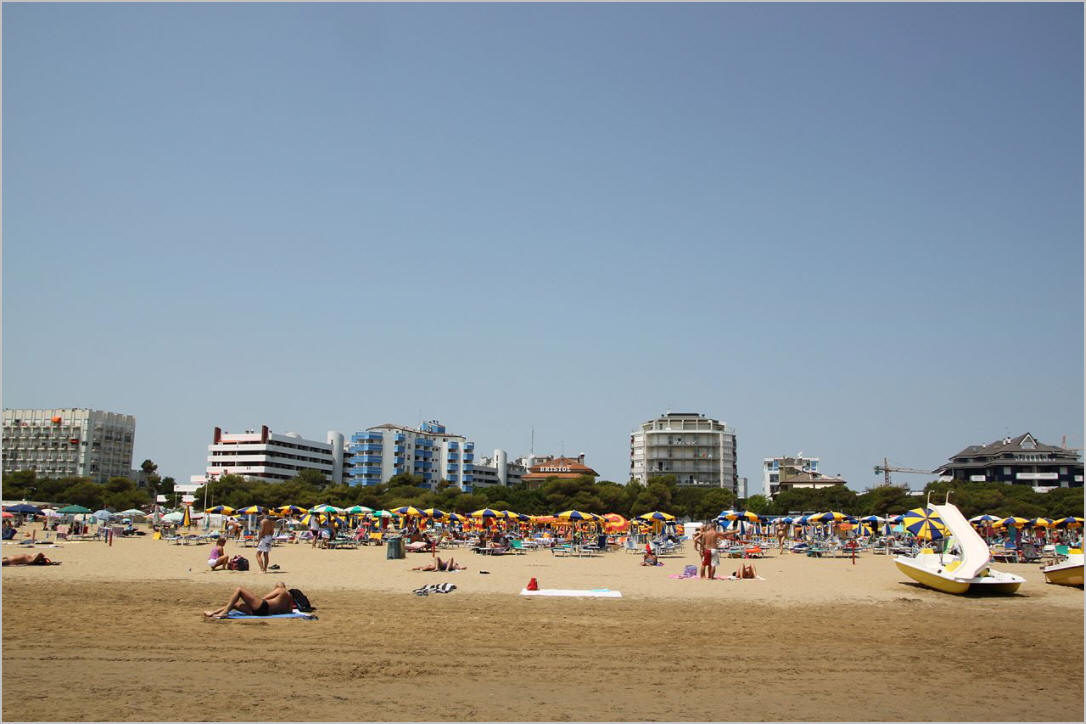 An image from Udine, Province of Udine, Italy
.
.
Click the link below for images:
.
__________________________________________
July 20, 2021
Mohenjo
Business, Food For Thought, Human Interest, Science, Technical
amazon, business, Business News, current-events, Future, Hotels, human-rights, medicine, mental-health, research, Science, Science News, technology, Technology News, travel, vacation

Click the link below the picture
.
Birth order, according to conventional wisdom, molds personality: Firstborn children, secure with their place in the family and expected to be the mature ones, grow up to be intellectual, responsible, and conformist. Younger siblings work harder to get their parents’ attention, take more risks and become creative rebels.
That’s the central idea in psychologist Frank J. Sulloway’s Born to Rebel, an influential book on birth order that burst, like a water balloon lobbed by an attention-seeking third-born, onto the pop psychology scene two decades ago. Sulloway’s account of the nuclear family claimed that firstborn children command their parents’ attention and resources, so later-borns must struggle to carve out their niche. Sibling behaviors then crystallize into adult personalities.
“I thought — and I still think — it’s very plausible and intuitive,” said Ralph Hertwig, a psychologist at the Max Planck Institute for Human Development in Berlin, who published a study on unequal parental investment with Sulloway in 2002.
The trouble is the growing pile of evidence, Hertwig’s included, that’s tilted against it.
.

Photo by amandafoundation.org/Getty Images
.
.
Click the link below for the article:
.
__________________________________________
July 20, 2021
Mohenjo
Business, Food For Thought, Human Interest, Science, Technical
amazon, business, Business News, current-events, Future, Hotels, human-rights, medicine, mental-health, research, Science, Science News, technology, Technology News, travel, vacation

Click the link below the picture
.
Humans are not all equal in every way. There are a few individuals who have achieved an unparalleled mastery in their field — and they are what I call the exceptionals. Put another way, they are the 1% of the 1% of the world’s most successful people.
Some examples include innovators like Elon Musk and Jeff Bezos, athletes like Michael Jordan and Serena Williams, and musicians like Mozart and Beethoven. Or they may be people you’ve never heard of who invented life-saving drugs or won Nobel Prizes by making fundamental advances in knowledge.
In my five-plus years of studying how to raise exceptional adults, I’ve found that almost all of them, at a young age, developed the skills to maximize the physical, mental and social potential available to them. In most cases, their parents had an enormous impact in creating an environment that allowed them to thrive.
.
.
.
Click the link below for the article:
.
__________________________________________
July 19, 2021
Mohenjo
Business, Enthralling, Human Interest, Photographs
amazon, business, Business News, current-events, Future, Hotels, human-rights, medicine, mental-health, research, Science, Science News, technology, Technology News, travel, vacation
Click the link below the picture
.
The Blue Ridge Mountains are a physiographic province of the larger Appalachian Mountains range. The mountain range is located in the eastern United States and extends 550 miles southwest from southern Pennsylvania through Maryland, West Virginia, Virginia, North Carolina, South Carolina, Tennessee, and Georgia. This province consists of northern and southern physiographic regions, which divide near the Roanoke River gap. To the west of the Blue Ridge, between it and the bulk of the Appalachians, lies the Great Appalachian Valley, bordered on the west by the Ridge and Valley province of the Appalachian range.
The Blue Ridge Mountains are noted for having a bluish color when seen from a distance. Trees put the “blue” in Blue Ridge, from the isoprene released into the atmosphere. This contributes to the characteristic haze on the mountains and their distinctive color.
Within the Blue Ridge province are two major national parks – the Shenandoah National Park in the northern section, and the Great Smoky Mountains National Park in the southern section. The eight national forests include George Washington and Jefferson, Cherokee, Pisgah, Nantahala, and Chattahoochee. The Blue Ridge Parkway, a 469-mile (755 km) long scenic highway, connects the two parks and runs along the ridge crest-lines, as does the Appalachian Trail. Wikipedia
.
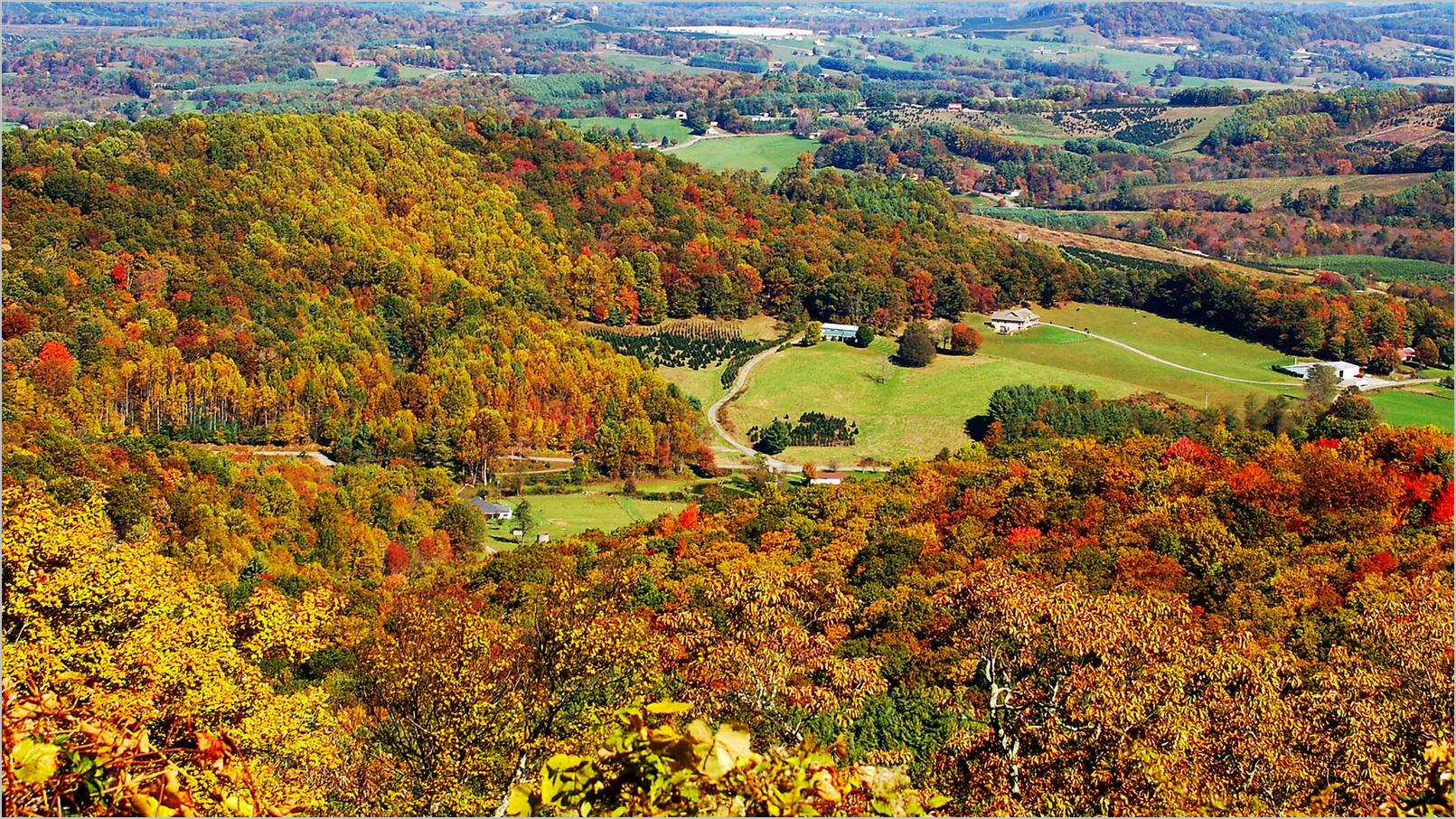 An image from Blue Ridge Mountains, North Carolina
.
.
Click the link below for images:
.
__________________________________________
July 19, 2021
Mohenjo
Business, Food For Thought, Human Interest, Science, Technical
amazon, business, Business News, current-events, Future, Hotels, human-rights, medicine, mental-health, research, Science, Science News, technology, Technology News, travel, vacation

Click the link below the picture
.
One of the most troubling features of the digital revolution is that some people pay to subject themselves to surveillance that others are forced to endure and would, if anything, pay to be free of.
Consider a GPS tracker you can wear around one of your arms or legs. Make it sleek and cool — think the Apple Watch or FitBit — and some will pay hundreds or even thousands of dollars for the privilege of wearing it. Make it bulky and obtrusive, and others, as a condition of release from jail or prison, being on probation, or awaiting an immigration hearing, will be forced to wear one — and forced to pay for it too.
In each case, the device collects intimate and detailed biometric information about its wearer and uploads that data to servers, communities, and repositories. To the providers of the devices, this data and the subsequent processing of it are the main reasons the devices exist. They are means of extraction: That data enables further study, prediction, and control of human beings and populations. While some providers certainly profit from the sale of devices, this secondary market for behavioral control and prediction is where the real money is — the heart of what Shoshana Zuboff rightly calls surveillance capitalism.
.
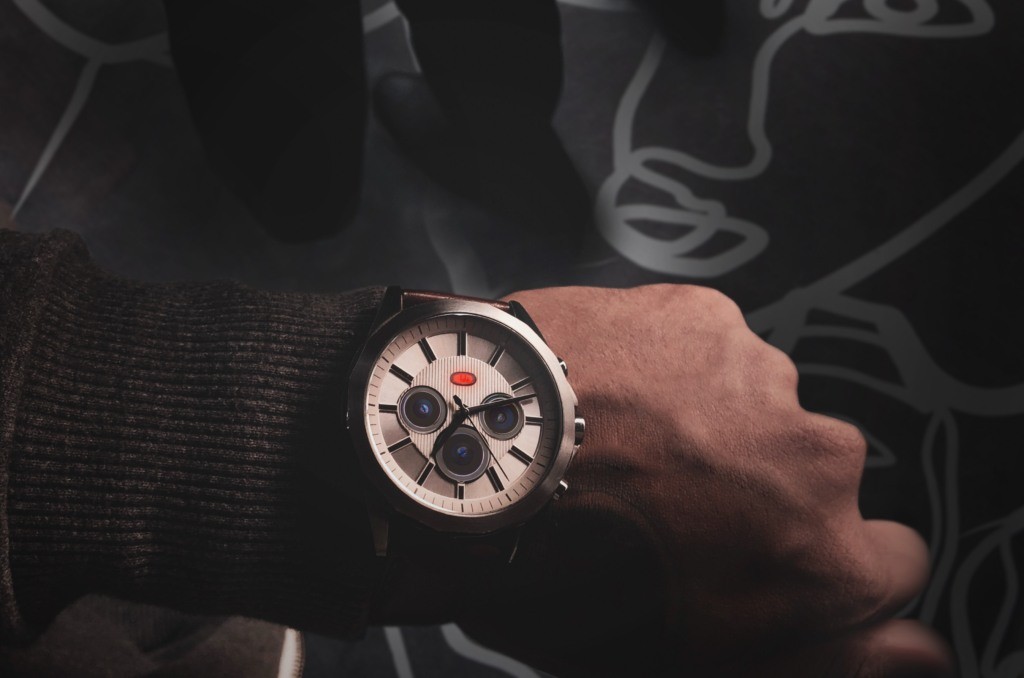 Image: By Russell Sadeghpour for Real Life.
.
.
Click the link below for the article:
.
__________________________________________
July 19, 2021
Mohenjo
Business, Food For Thought, Human Interest, Science, Technical
amazon, business, Business News, current-events, Future, Hotels, human-rights, medicine, mental-health, research, Science, Science News, technology, Technology News, travel, vacation

Click the link below the picture
.
Four years ago, Matice Ahnjamine filmed her first vlog. Ahnjamine, gorgeous in red lipstick and box braids, stands against a monochrome background and introduces herself to new viewers. “Welcome t-t-t-t-to my YouTube channel,” she says. “As you can ssssee I stutter, and that is why I wanted to start this YouTube channel.” Over the next five minutes, she describes how most of her life she felt alone until, at twenty-eight, she met another person who stuttered. It was exhilarating to encounter someone who spoke with “long pauses” and “made these crazy faces like me,” and now she wants to offer that same sense of connection to other people through her videos—to let us know we’re not alone.
I can imagine what Ahnjamine’s channel might have meant to me had it existed in those early, uncomfortable years of accepting and defining myself as a person who stutters. I had no role models to look to, and all the depictions of disfluency I saw came refracted through able-bodied performers in movies and on television—actors who wore disfluency as a costume. I only heard impressions of stutters, never real ones; I knew only characters who stuttered, not people.
This is still the case for most nonstutterers, whose points of reference for disfluency are usually either works of caricature or inspiration porn. The disclosure of my disfluency is sometimes met with invocations of scripted films: Oh, like The King’s Speech? like The Waterboy? like A Fish Called Wanda? But these are scripted stories, anchored by people pretending to talk like me. In these films stuttering is a dramatic obstacle, a tragic flaw, a character-defining challenge. Ahnjamine’s videos, on the other hand, give first-person insights into the experience of disfluency and impart that stuttering is what we do, not who we are.
.
 Screencap via Matice Ahnjamine/YouTube
.
.
Click the link below for the article:
.
__________________________________________
Older Entries
Newer Entries


