
Click the link below the picture
.
After nearly four years, the World Cup is back to take over the summer. But alongside celebration for the sumptuous soccer to come, there’s ample cause for consternation. This year’s tournament, jointly hosted by the United States, Mexico, and Canada, will play out against a backdrop of endemic FIFA corruption, President Trump’s depredations, and severely strained relations between the host nations.
To gauge the mood on the eve of the competition, we asked three writers — an American, a Mexican, a Canadian — what the World Cup means to them and their countries. Their varied responses testify to both the maddening complexity of contemporary life and the enduring wonder of world soccer.
It’s Not U.S. 1994, but It’s Something
It’s not easy to explain, to kids growing up today surrounded by screens and viral videos, the epiphanic force with which the men’s World Cup landed on American TV in 1994. It certainly did on the old Magnavox TV in my parents’ house in northern New England’s woods. Like many American kids in the waning years of the Cold War, I spent my Saturday mornings kicking a ball around American fields. I had joined a travel team whose sponsor’s logo (“CABOT: Cheese from Vermont”) vied for space with Adidas on our chests. But I’d never seen the game played at the highest level — until 1994.
To live in range of ABC’s coverage of the games that summer was to glimpse the world’s finest players and best-loved teams. It was also to be treated to vivid and at times incongruous tableaux of ethnic fervor and comity, involving not merely those teams but their impassioned fans, too. They filled America’s biggest arenas — green-clad Nigerians and sombrero-wearing Mexicans, Swedes in Viking hats and Argentines singing songs about Diego Maradona. Feelings of national rivalry and pride occasioned not war but play.
To take in those games, as ABC’s commentators informed us, was to watch telecasts also being absorbed by billions of other humans — and to participate in the world.
In 2026, the world doesn’t look like we hoped it might from the sunny vantage of the early 1990s, when history still felt like it was moving in a positive direction. The United States, which seemed destined to be increasingly open-minded, is more closed off. But the return of the World Cup, a competition founded in the same era as the League of Nations and involving a sport that Americans have now learned to love, will still channel conflicts between countries into “peaceful contests in the stadium,” as Jules Rimet, the man who masterminded the competition, once put it. As important, it will offer us all a chance to experience, even if just for a moment, a mighty form of communion.
In 1994, the Cold War was over, and America — notwithstanding Washington’s frequently awful proxy wars in developing countries — was admired as the global paragon of democracy and the rule of law. But the sporting culture in the United States was insular and jingoistic. It was defined by sports that Americans evolved from the games of our colonial masters: Gridiron football was a more dynamic and violent form of English rugby; baseball was an American riff on cricket. Americans took pride in the fact that few others in the world cared about or played our “national pastime.”
Association Football — a game with ancient global roots but whose modern form was, like rugby and cricket, codified in England — became the globe’s game thanks to factors both of history and of form. The British Empire brought British sailors, engineers, and miners to the world’s ports. The game they played by wharves from Buenos Aires to Accra to Hong Kong was embraced by people who founded clubs in those cities and a thousand more. Soccer became the 20th century’s pre-eminent way for people around the world to hail, as the soccer historian David Goldblatt put it, “the miracle of our own solidarities.”
Except in the United States — until 1994, anyway. That summer’s World Cup was the best-attended and most-watched tournament that soccer’s worldwide governing body, FIFA, had ever staged. This was the goal. FIFA and its partners, among them some of the world’s biggest companies and media conglomerates, aimed to make the globe’s best-loved sport a big business in the world’s richest market.
In the 32 years since the 1994 World Cup, the dreams of FIFA and its corporate cronies have in large part come to pass. We follow the world’s top leagues on TV, and our women’s team are worldbeaters. Soccer, according to one recent poll, has surpassed baseball as Americans’ third-favorite sport. Among teens, it comes close to rivaling the N.B.A. for hearts and eyeballs.
Now the World Cup is back. Since 1994, the reputations of both the United States and FIFA have taken some profound dings. FIFA’s corruption was never exactly a secret, but has now been exposed to the world. President Trump’s contempt for the rule of law and international norms has done vast damage to America’s global standing and American society alike.
The reason FIFA’s flagship event has returned to the world’s richest country, this time sharing hosting duties with our North American neighbors and cosignatories to NAFTA that Mr. Trump loves to hate, is the same reason that Gianni Infantino, FIFA’s unctuous current head, expanded this World Cup from 32 nations to 48: cash.
.
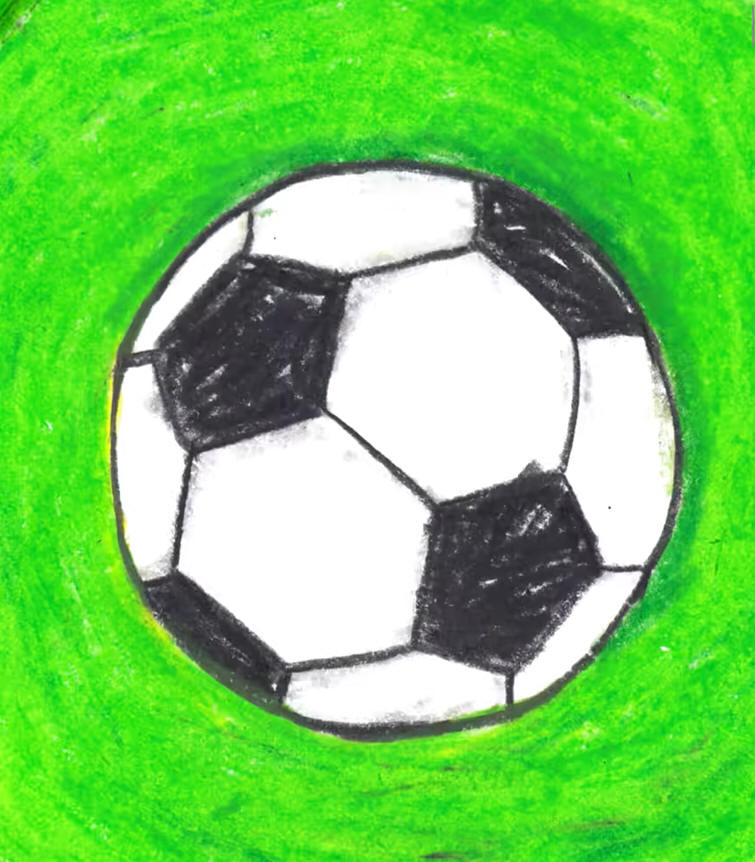 World Cup
.
.
Click the link below for the complete article:
.
__________________________________________
 James' World 2
Jun 11, 2026 @ 02:34:31
Very nice,
LikeLike
Jun 11, 2026 @ 03:05:58
Thanks for your comment sir!
LikeLiked by 1 person