July 31, 2022
Mohenjo
Business, Food For Thought, Human Interest, Political, Science, Technical
amazon, business, Business News, current-events, Future, Hotels, human-rights, medicine, mental-health, research, Science, Science News, technology, Technology News, travel, vacation

Click the link below the picture
.
As restaurants and bars slowly open back up and group outings have returned, I, Jazmín Aguilera, find myself wondering how it is that we as a society have lived through a deadly pandemic and reorganized our whole way of life — and have yet to definitively decide on what’s acceptable etiquette for splitting a dinner check.
Of course, that’s not for the lack of options available. There are countless tools and resources for money transfers or bill sharing, and very little resistance to incorporating Venmo or cash apps into our social lives. But those tools come into play after a group has decided on how to settle up.
Despite how easy it is to pay for your share, the social nuances of deciding how the check will be split are not so easy to sort out. Some folks want to pay for themselves only. Other folks don’t mind an even split to make the server’s life a little easier. Others prefer the most chaotic option: Oh, don’t worry about it. You just get the next one.
.
 Sol Cotti for NPR
.
.
Click the link below for the article:
https://www.npr.org/2021/12/02/1060996322/how-to-talk-about-money-privilege?utm_source=pocket_collection_story
.
__________________________________________
July 30, 2022
Mohenjo
Business, Enthralling, Human Interest, Photographs
amazon, business, Business News, current-events, Future, Hotels, human-rights, medicine, mental-health, research, Science, Science News, technology, Technology News, travel, vacation

Click the link below the picture
.
The Isle of Skye, or simply Skye, is the largest and northernmost of the major islands in the Inner Hebrides of Scotland. The island’s peninsulas radiate from a mountainous hub dominated by the Cuillin, the rocky slopes of which provide some of the most dramatic mountain scenery in the country. Although Sgitheanach has been suggested to describe a winged shape, no definitive agreement exists as to the name’s origins.
The island has been occupied since the Mesolithic period, and over its history has been occupied at various times by Celtic tribes including the Picts and the Gaels, Scandinavian Vikings, and most notably the powerful integrated Norse-Gaels clans of MacLeod and MacDonald. The island was considered to be under Norwegian suzerainty until the 1266 Treaty of Perth, which transferred control over to Scotland. The 18th-century Jacobite risings led to the breaking-up of the clan system and later clearances that replaced entire communities with sheep farms, some of which involved forced emigrations to distant lands. Resident numbers declined from over 20,000 in the early 19th century to just under 9,000 by the closing decade of the 20th century. Skye’s population increased by 4% between 1991 and 2001. About a third of the residents were Gaelic speakers in 2001, and although their numbers are in decline, this aspect of island culture remains important.
The main industries are tourism, agriculture, fishing, and forestry. Skye is part of the Highland Council local government area. The island’s largest settlement is Portree, which is also its capital, known for its picturesque harbor. Links to various nearby islands by ferry are available, and since 1995, to the mainland by a road bridge. The climate is mild, wet, and windy. The abundant wildlife includes the golden eagle, red deer, and Atlantic salmon. The local flora is dominated by heather moor, and nationally important invertebrate populations live on the surrounding sea bed. Skye has provided the locations for various novels and feature films and is celebrated in poetry and song.
The first written references to the island are Roman sources such as the Ravenna Cosmography, which refers to Scitis, and Scetis, which can be found on a map by Ptolemy. One possible derivation comes from skitis, an early Celtic word for “winged”, which may describe how the island’s peninsulas radiate out from a mountainous center. Subsequent Gaelic-, Norse- and English-speaking peoples have influenced the history of Skye; the relationships between their names for the island are not straightforward. Various etymologies have been proposed, such as the “winged isle” or “the notched isle”, but no definitive solution has been found to date; the place name may be from an earlier, non-Gaelic language. Wikipedia
.
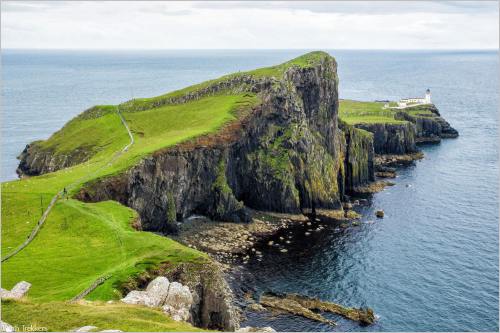 An image from Isle of Skye, Scotland
.
.
Click the link below for images:
.
__________________________________________
July 30, 2022
Mohenjo
Business, Food For Thought, Human Interest, Medical, Political, Science, Technical
amazon, business, Business News, current-events, Future, Hotels, human-rights, medicine, mental-health, research, Science, Science News, technology, Technology News, travel, vacation

Click the link below the picture
.
Summer is America’s season of pleasure—long weekends, refreshing swims, cold drinks—and the annual coronation of grilling as the seasonal king of cooking methods. It doesn’t feel like summer has truly arrived until you’re outside and your backyard is filled with the heady smoke of a grill. While you might already know your way around a grill, there are plenty of ways to make this outdoor cooking season your best yet. We tapped lifelong griller Bill Briand, a three-time James Beard nominee and the executive chef at Playa at Sportsman Marina and Fisher’s at Orange Beach Marina, for his top grilling secrets.
Grill and grill often
Whatever your favorite kind of grill is, Briand says, cook on it as much as you can while the weather holds out. The more comfortable you are with the grill, the more possibilities you can explore with this method of cooking. “I pretty much grill every night that I’m not cooking in the restaurant,” he says. For grilling novices (or experienced grillers looking for even more delicious and consistent results), Char-Broil TRU-Infrared cooking technology creates the closest thing to no-fail grilling. The magic lies just below the grates: a steel emitter plate retains the natural infrared heat of the flames and radiates that heat back to your food, yielding tastier, juicier meat, fish, vegetables, you name it.
.

Grilled chicken breasts mean it’s summertime. Photo by Char-Broil

Grill Often
.
.
Click the link below for the article:
.
__________________________________________
July 30, 2022
Mohenjo
Business, Food For Thought, Human Interest, Medical, Political, Science, Technical
amazon, business, Business News, current-events, Future, Hotels, human-rights, medicine, mental-health, research, Science, Science News, technology, Technology News, travel, vacation

Click the link below the picture
.
“Grief is a force of energy that cannot be controlled or predicted,” Elizabeth Gilbert reflected in the wake of losing the love of her life. “Grief does not obey your plans or your wishes. Grief will do whatever it wants to you, whenever it wants to. In that regard, Grief has a lot in common with Love.”
Like love, grief swells into an entire inner universe that comes to color the whole of the outside world. Like love — that rapturous raw material for most of the songs and poems and paintings our species has produced — grief lives itself through the grieving and can’t but speak its truth. Unlike love,our culture meets the voice of grief with an alloy of disquiet and denial. We want to make the sadness go away, to lift the sorrowing heart out of its sorrow immediately. Often, we mistake for personal failure our inability to salve another’s grief or mistake for their failure the inability to snap out of it on the timeline of our wishes.
.
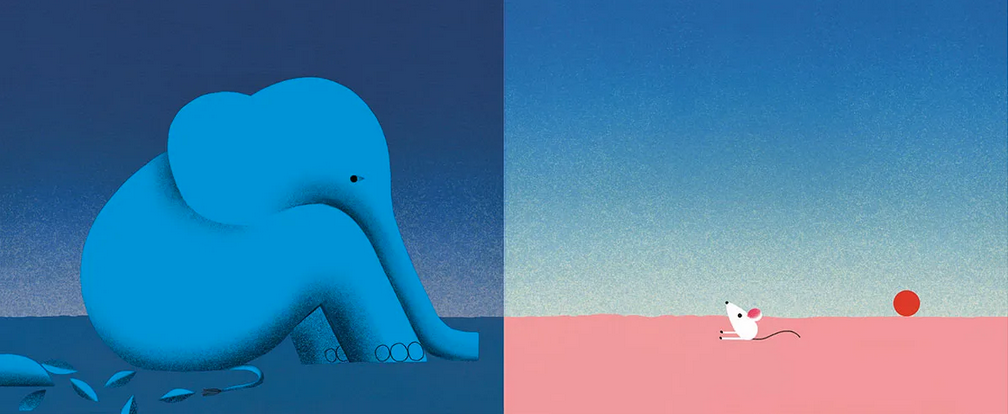
Art by Valerio Vidali from The Shadow Elephant by Nadine Robert — a subtle meditation on what it actually takes to unblue our sorrows.

.
.
Click the link below for the article:
.
__________________________________________
July 29, 2022
Mohenjo
Business, Crime, Food For Thought, Human Interest, Medical, Political, Science, Technical
amazon, business, Business News, current-events, Future, Hotels, human-rights, medicine, mental-health, research, Science, Science News, technology, Technology News, travel, vacation

Click the link below the picture
.
Burundi wants Germany and Belgium to pay €36 billion ($42.6 billion) in reparations for colonial rule, media reports published on Sunday said.
The country’s senate has put together a panel of experts to assess the damage done during colonialism and advise on the cost of damages, according to Radio France International.
The broadcaster said that once the amount has been decided, Burundi plans to send these recommendations to the German and Belgium governments.
The country also intends to demand the European countries return stolen historical artifacts and archive material.
From 1890, Germany colonized Burundi, which became part of German East Africa. After WWI, the country was ruled by Belgium, until it gained its independence in 1962.
.
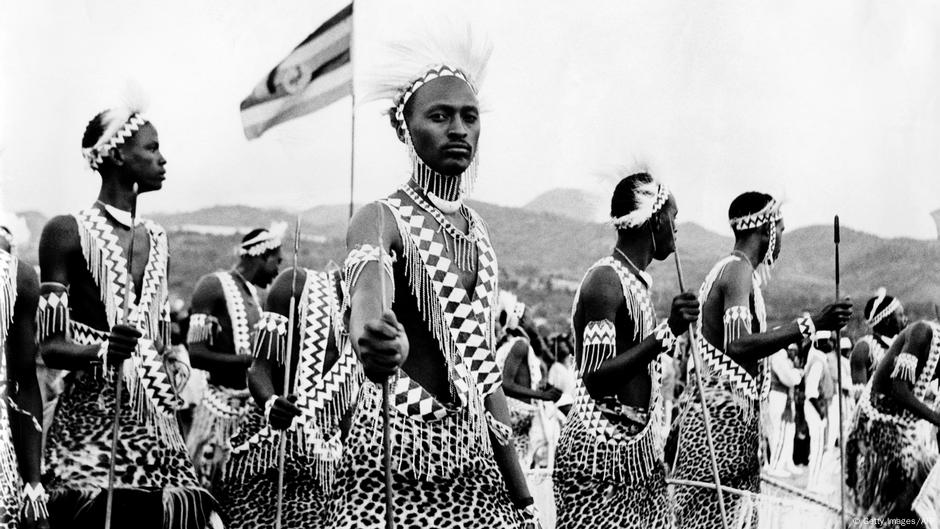
Dancers celebrate Burundi’s independence from Belgium in 1962
.
.
Click the link below for the article:
.
__________________________________________
July 29, 2022
Mohenjo
Business, Enthralling, Human Interest, Photographs
amazon, business, Business News, current-events, Future, Hotels, human-rights, medicine, mental-health, research, Science, Science News, technology, Technology News, travel, vacation
Click the link below the picture
.
Burundi, officially the Republic of Burundi, is a landlocked country in the Great Rift Valley where the African Great Lakes region and East Africa converge. It is bordered by Rwanda to the north, Tanzania to the east and southeast, and the Democratic Republic of the Congo to the west; Lake Tanganyika lies along its southwestern border. The capital cities are Gitega and Bujumbura, the latter of which is the country’s largest city.
The Twa, Hutu, and Tutsi peoples have lived in Burundi for at least 500 years. For more than 200 of those years, Burundi was an independent kingdom, until the beginning of the 20th century, when Germany ruled the region. After the First World War and Germany’s defeat, the League of Nations “mandated” the territory to Belgium. After the Second World War, this transformed into a United Nations Trust Territory. Both Germans and Belgians ruled Burundi and Rwanda as a European colony known as Ruanda-Urundi. Burundi and Rwanda had never been under common rule until the time of European invasion of Africa.
Burundi gained independence in 1962 and initially had a monarchy, but a series of assassinations, coups, and a general climate of regional instability culminated in the establishment of a republic and a one-party state in 1966. Bouts of ethnic cleansing and ultimately two civil wars and genocides during the 1970s and again in the 1990s resulted in hundreds of thousands of deaths, leaving the economy undeveloped and the population as one of the world’s poorest. The year 2015 witnessed large-scale political strife as President Pierre Nkurunziza opted to run for a third term in office, a coup attempt failed and the country’s parliamentary and presidential elections were broadly criticized by members of the international community.
The sovereign state of Burundi’s political system is that of a presidential representative democratic republic based upon a multi-party state. The president of Burundi is the head of state and head of government. There are currently 21 registered parties in Burundi. On 13 March 1992, Tutsi coup leader Pierre Buyoya established a constitution, which provided for a multi-party political process and reflected multi-party competition. Six years later, on 6 June 1998, the constitution was changed, broadening the National Assembly’s seats and making provisions for two vice-presidents. Because of the Arusha Accord, Burundi enacted a transitional government in 2000. In October 2016, Burundi informed the UN of its intention to withdraw from the International Criminal Court.
Burundi remains primarily a rural society, with just 13.4% of the population living in urban areas in 2019. The population density of around 315 people per square kilometer (753 per sq mi) is the second highest in Sub-Saharan Africa. Roughly 85% of the population are of Hutu ethnic origin, 15% are Tutsi, and fewer than 1% are indigenous Twa. The official languages of Burundi are Kirundi, French, and English, Kirundi being recognized officially as the sole national language.
One of the smallest countries in Africa, Burundi’s land is used mostly for subsistence agriculture and grazing, which has led to deforestation, soil erosion, and habitat loss. As of 2005, the country was almost completely deforested, with less than 6% of its land covered by trees and over half of that being commercial plantations.
Burundi is the poorest country according to gross domestic product (nominal) per capita, with $272 in 2022, and the least developed country facing poverty, corruption, instability, authoritarianism, illiteracy, and more.
Burundi is densely populated, and many young people emigrate in search of opportunities elsewhere. The World Happiness Report 2018 ranked the country as the world’s least happy with a rank of 156. Burundi is a member of the African Union, Common Market for Eastern and Southern Africa, United Nations, and the Non-Aligned Movement. Burundi has the lowest GDP per capita as of 2022. Wikipedia
.
 An image from Bujumbura Capital
.
.
Click the link below for images:
.
__________________________________________
July 29, 2022
Mohenjo
Business, Food For Thought, Human Interest, Medical, Political, Science, Technical
amazon, business, Business News, current-events, Future, Hotels, human-rights, medicine, mental-health, research, Science, Science News, technology, Technology News, travel, vacation

Click the link below the picture
.
With only 24 hours in a day, most of which are spent working and sleeping, it’s easy to feel as though free time is your most scarce resource. After factoring in everyday chores like grocery shopping, laundry, and cleaning your space, there’s hardly any time left for connecting with loved ones—and doing so is a key component of living a long, well life. The good news is it’s possible to connect while still ticking items off your person-chore list. Cue: errand dates.
Recently, my friends and I started going on these errand dates, which basically just involves hanging out while we tackle items on our respective to-do lists. In the last three months, I’ve gone on close to 10 errand dates with my best friend, my roommate, and my sister. I’ve gone on an errand date to get groceries, another for a car wash, one to shop for furniture, and another to the gym. And I’m a big fan.
“When you’re bringing your friends into things that you have to do already, it’s a way to fit people into your schedule and not feel more overwhelmed and time impoverished, and also connect with your friend and show them that you’re invested in them,” says psychologist and friendship expert Marisa Franco, Ph.D.
.
 Photo: Getty Images / Tom Werner
.
.
Click the link below for the article:
.
__________________________________________
July 29, 2022
Mohenjo
Business, Food For Thought, Human Interest, Medical, Overlooked Past Article, Political, Science, Technical
amazon, business, Business News, current-events, Future, Hotels, human-rights, medicine, mental-health, research, Science, Science News, technology, Technology News, travel, vacation

Click the link below the picture
.
An overlooked past article – Good anytime!
July Fourth is just around the corner, and so are the festivities: thundering fireworks, sunburned kids chasing each other through parks and our personal favorite, grilled foods galore.
Here’s a tip: Don’t wait until July 3 to start your food preparations. With a little planning, your Fourth of July spread will surely be the envy of your neighbors. Grilled items are essential, but don’t fret if you can’t access an outdoor grill. A grill pan can produce flavorful options.
Since the Fourth of July is a celebration of America, let your plate reflect our diverse country and its flavors. Spice up your grilled corn with an Indonesian peanut sauce or add a tart kick to your grilled eggplant, Afghan-style. If you need more ideas, check out our Recipe Finder and search for July Fourth.
.

(Tom McCorkle for The Washington Post/Food styling by Lisa Cherkasky for The Washington Post.)
.
.
Click the link below for the article:
.
__________________________________________
July 28, 2022
Mohenjo
Business, Enthralling, Human Interest, Photographs
amazon, business, Business News, current-events, Future, Hotels, human-rights, medicine, mental-health, research, Science, Science News, technology, Technology News, travel, vacation
Click the link below the picture
.
Punakaiki is a small village on the West Coast of the South Island of New Zealand. It is located between Westport and Greymouth on State Highway 6, the only through-road on the West Coast. Punakaiki is immediately adjacent to Paparoa National Park and is also the access point for a popular visitor attraction, the Pancake Rocks and Blowholes.
Punakaiki is located on State Highway 6 and is 46.3 kilometers (28.8 mi) north of Greymouth and 56.3 kilometers (35.0 mi) south of Westport. Because State Highway 6 is the only through-road on the West Coast, a large number of visitors pass through the town.
The village is on the southern border of Buller District, where it meets Grey District, and lies on the edge of Paparoa National Park. To the north is the sheer bluff Perpendicular Point, known as Te Miko. The settlement sits to the south, by the Pororari Lagoon at the mouth of the Porarari River. To the south of the village is Dolomite Point, site of the Pancake Rocks, and Razorback Point at the mouth of the Punakaiki River. A feature of this part of the West Coast are the steep forested bluffs and cliffs of the Paparoa Range, descending several hundred meters to small beaches and sheer headlands, with occasional flats and terraces in between.
The coastal caves and overhangs of the area bear traces of seasonal Māori occupation, and by the time Europeans arrived the area was the home of the Ngāti Waewae people, a hapū of Kai Tahu, who traded much-prized pounamu.
Early European explorers navigating the coast encountered sheer cliffs at Te Miko, navigable only by climbing ladders totaling 46 feet high (or so Haast estimated) made of harakeke and rotting rātā vine. Charles Heaphy noted in 1846 that “…as several of the rotten steps gave way under our feet, our position was far from being pleasant. A number of cormorants and other marine birds, too, that had their nests in the crevices of the rock were screaming and wheeling about us at the intrusion.” During the gold rush of the 1860s these were replaced by chain ladders, soon known as “Jacob’s Ladder”, but the wooden rungs were destroyed by overuse, and travelers slid down the chains instead or jammed sticks into the links.
There was, however, an inland trail crossing a higher terrace through rātā forest; prospector William Smart was guided through it by local Māori to avoid the “rotten” ladders. By October 1866 the authorities had cut a track to avoid the ladders, but it soon degenerated into a morass. In 1867 under-employed “diggers”(prospectors) were used to cut the “Razorback Road”, now known as the Inland Pack Track, to avoid the coast completely, heading up the Fox River, south through rough hill country, and emerging at the mouth of the Punakaiki River. The route which linked Cobden, north of Greymouth, with the gold workings at Brighton on the mouth of the Fox River, cost perhaps £10,000 and was completed by October 1867, but was not a success: it required too many river crossings that were difficult in times of flood, and after the gold rush ended and the diggers moved on it fell into disrepair. In January 1873 the Grey River Argus called the road “perfectly useless” and it was little used after the 1870s. Wikipedia
.
 An image from Punakaiki, West Coast, New Zealand
.
.
Click the link below for article:
.
__________________________________________
July 28, 2022
Mohenjo
Business, Food For Thought, Human Interest, Medical, Political, Science, Technical
amazon, business, Business News, current-events, Future, Hotels, human-rights, medicine, mental-health, research, Science, Science News, technology, Technology News, travel, vacation
Click the link below the picture
.
Chef Meherwan Irani’s marinade for these chicken skewers achieves the perfect balance of yogurt, lime, and spices. Cutting the chicken into strips rather than the traditional whole chunks allows the meat to cook faster without drying out, and as an added bonus, increases the surface area in contact with the marinade. The same marinade and technique can also be used for lamb (boneless or chops), steak, or paneer.
Look for jars of ginger-garlic paste at your local Indian grocery store. If you can’t find it, make your own by smashing 6 cloves of garlic with a 1½-inch piece of peeled ginger in a mortar and pestle, or by blending to a coarse paste in a food processor. Dried fenugreek leaves are a savory, aromatic herb reminiscent of maple syrup. Commonly used in Indian street food, chaat masala is a tangy mix of rock salt and spices including dried mango powder, asafetida, and black pepper.
.
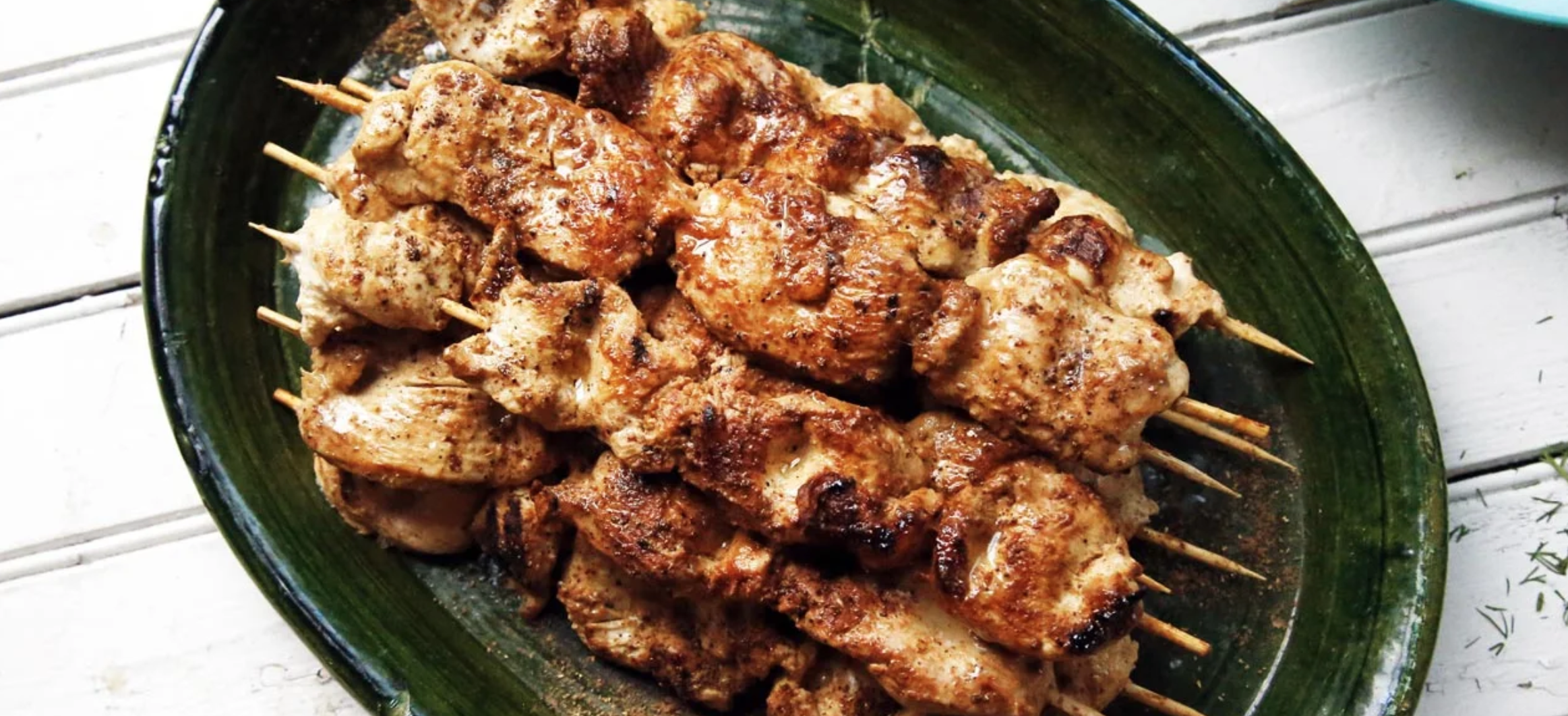 Photo by Thomas Payne
.
.
Click the link below for the article:
.
__________________________________________
Older Entries
Newer Entries

