
.
News You might have missed!
Use your browser or smartphone back arrow (<-) to return to this table for your next selection.
.
__________________________________________
Assorted human interest posts.
July 9, 2022
Crime, Food For Thought, Human Interest, Medical, missed News, Political, Science, Technical amazon, business, Business News, current-events, Future, Hotels, human-rights, medicine, mental-health, research, Science, Science News, technology, Technology News, travel, vacation Leave a comment
.
.
__________________________________________
July 8, 2022
Business, Enthralling, Human Interest, Photographs amazon, business, Business News, current-events, Future, Hotels, human-rights, medicine, mental-health, research, Science, Science News, technology, Technology News, travel, vacation Leave a comment

Click the link below the picture
.
Lusaka is the capital and largest city of Zambia. It is one of the fastest developing cities in southern Africa. Lusaka is in the southern part of the central plateau at an elevation of about 1,279 meters (4,196 ft). As of 2019, the city’s population was about 3.3 million, while the urban population is estimated at 2.5 million in 2018.Lusaka is the center of both commerce and government in Zambia and connects to the country’s four main highways heading north, south, east, and west. English is the official language of the city administration, while Nyanja and Bemba are the commonly spoken street languages.
The earliest evidence of settlement in the area dates to the 6th century AD, with the first known settlement in the 11th century. It was then home to the Lenje and Soli peoples from the 17th or 18th centuries. The founding of the modern city occurred in 1905 when it lay in the British protectorate of Northern Rhodesia, which was controlled by the British South African Company (BSAC). The BSAC built a railway linking their mines in the Copperbelt to Cape Town and Lusaka was designated as a water stop on that line, named after a local Lenje chief called Lusaaka. White Afrikaner farmers then settled in the area and expanded Lusaka into a regional trading center, taking over its administration. In 1929, five years after taking over control of Northern Rhodesia from the BSAC, the British colonial administration decided to move their capital from Livingstone to a more central location, and Lusaka was chosen. Town planners including Stanley Adshead worked on the project, and the city was built out over the subsequent decades.
Lusaka lost some of its status to Salisbury (now Harare in Zimbabwe) when the latter became the capital of the merged Federation of Rhodesia and Nyasaland in 1953 but regained it when it was named as the capital of newly independent Zambia in 1964. A large-scale building program in the city followed, including government buildings, the University of Zambia, and a new airport. Wealthy suburbs in Lusaka include Woodlands, Ibex Hill, and Rhodes Park. Large-scale migration of people from other areas of Zambia occurred both before and after independence, and a lack of sufficient formal housing led to the emergence of numerous unplanned shanty towns on the city’s western and southern fringes. Wikipedia
.
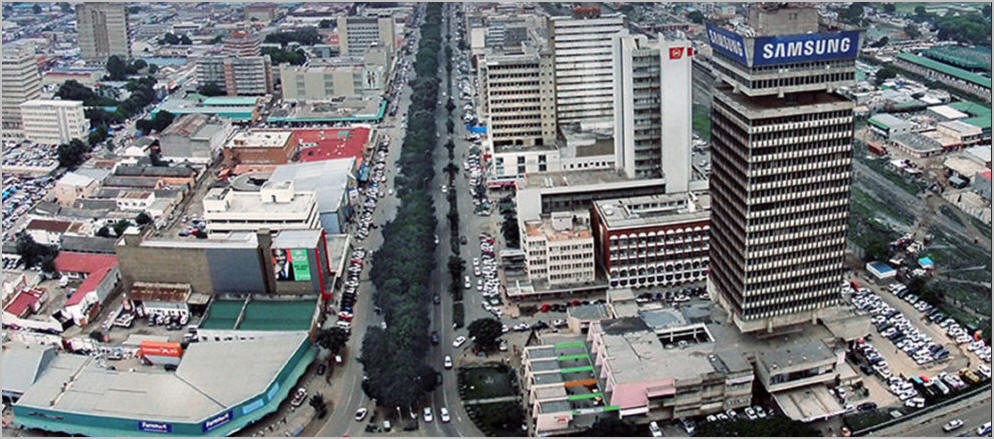 An image from Lusaka, South Africa
.
.
Click the link below for images:
.
__________________________________________
July 8, 2022
Business, Food For Thought, Human Interest, Medical, Political, Science, Technical amazon, business, Business News, current-events, Future, Hotels, human-rights, medicine, mental-health, research, Science, Science News, technology, Technology News, travel, vacation Leave a comment

Click the link below the picture
.
After the pandemic, the world of work changed. While in some ways work changed for the better, it didn’t stop the Great Resignation. Between 2020 and 2022, record numbers of professionals quit the workplace and sought better work arrangements either with different employers or independently.
While it might be tempting to follow your peers and go searching for better-looking opportunities, here are five reasons why staying in your current job can actually pay off.
.
 [Photo: Rawpixel]
.
.
Click the link below for the article:
.
__________________________________________
July 8, 2022
Business, Food For Thought, Human Interest, Science, Technical amazon, business, Business News, current-events, Future, Hotels, human-rights, medicine, mental-health, research, Science, Science News, technology, Technology News, travel, vacation Leave a comment

Click the link below the picture
.
Dear Kimberly,
This is a bit of an international question. I moved to Paris to pursue my dream of working in fashion. As a Latina moving to a different continent it has been challenging to compete with native French speakers and build my place in the industry. So far I’ve been successful working for small companies, but burnout comes from working in start-ups. I have too much on my plate. The expectations are way too high, and my paycheck isn’t high enough.
My current job title at a smaller company is quite senior. I am interviewing with a big company now where the pay is better but the title is more junior. Is it worth the change if I have to take a step back in title? The bigger company is more prestigious.
Thank you!
C
Combating cultural, language, and workplace norms in another country is a huge adjustment to make. A demanding workload on top of that can easily become the straw that breaks the camel’s back. Unfortunately, many start-ups are known for having heavy workloads. When a start-up is in the early stages of scaling, the focus is driving revenue while keeping costs low, which means that your salary may be lower. Is it fair? Not at all. But it’s the reality of many start-up environments until they get to a point where they are able to invest more heavily in their staff.
Now, let’s talk about your potential job opportunity. Titles are subjective in the workplace. A vice-president at one company may be doing the same level of work as a manager at another; it all depends on the hierarchy created within that organization and the title structure they have developed. Early on in my career when I transitioned from financial services to higher education, I worked as an assistant director of admissions at a college in the Bronx. It was my first time having “director” in my title, so I was ecstatic. However, when I looked at the job description, it was really an entry-level admissions-counselor job.
.
 Photo-Illustration: by The Cut; Photos: Getty Images
.
.
Click the link below for the article:
.
__________________________________________
July 8, 2022
Crime, Food For Thought, Human Interest, Medical, missed News, Political, Science, Technical amazon, business, Business News, current-events, Future, Hotels, human-rights, medicine, mental-health, research, Science, Science News, technology, Technology News, travel, vacation Leave a comment
.
.
__________________________________________
July 7, 2022
Business, Enthralling, Human Interest, Photographs amazon, business, Business News, current-events, Future, Hotels, human-rights, medicine, mental-health, research, Science, Science News, technology, Technology News, travel, vacation 2 Comments
Click the link below the picture
.
The Czech Republic, also known as Czechia is a landlocked country in Central Europe. Historically known as Bohemia, it is bordered by Austria to the south, Germany to the west, Poland to the northeast, and Slovakia to the southeast. The Czech Republic has a hilly landscape that covers an area of 78,871 square kilometers (30,452 sq mi) with a mostly temperate continental and oceanic climate. The capital and largest city is Prague; other major cities and urban areas include Brno, Ostrava, Plzeň, and Liberec.
The Duchy of Bohemia was founded in the late 9th century under Great Moravia. It was formally recognized as an Imperial State of the Holy Roman Empire in 1002 and became a kingdom in 1198. Following the Battle of Mohács in 1526, the whole Crown of Bohemia was gradually integrated into the Habsburg monarchy. The Protestant Bohemian Revolt led to the Thirty Years’ War. After the Battle of the White Mountain, the Habsburgs consolidated their rule. With the dissolution of the Holy Empire in 1806, the Crown lands became part of the Austrian Empire.
In the 19th century, the Czech lands became more industrialized, and in 1918 most of it became part of the First Czechoslovak Republic following the collapse of Austria-Hungary after World War I. Czechoslovakia was the only country in Central and Eastern Europe to remain a parliamentary democracy during the entirety of the interwar period. After the Munich Agreement in 1938, Nazi Germany systematically took control over the Czech lands. Czechoslovakia was restored in 1945 and became an Eastern Bloc communist state following a coup d’état in 1948. Attempts to liberalize the government and economy were suppressed by a Soviet-led invasion of the country during the Prague Spring in 1968. In November 1989, the Velvet Revolution ended communist rule in the country, and on 1 January 1993, Czechoslovakia was dissolved, with its constituent states becoming the independent states of the Czech Republic and Slovakia.
The Czech Republic is a unitary parliamentary republic and developed country with an advanced, high-income social market economy. It is a welfare state with a European social model, universal health care, and free-tuition university education. It ranks 12th in the UN inequality-adjusted human development and 24th in the World Bank Human Capital Index. It ranks as the 9th safest and most peaceful country and 31st in democratic governance. The Czech Republic is a member of NATO, the European Union, OECD, OSCE, and the Council of Europe. Wikipedia
.
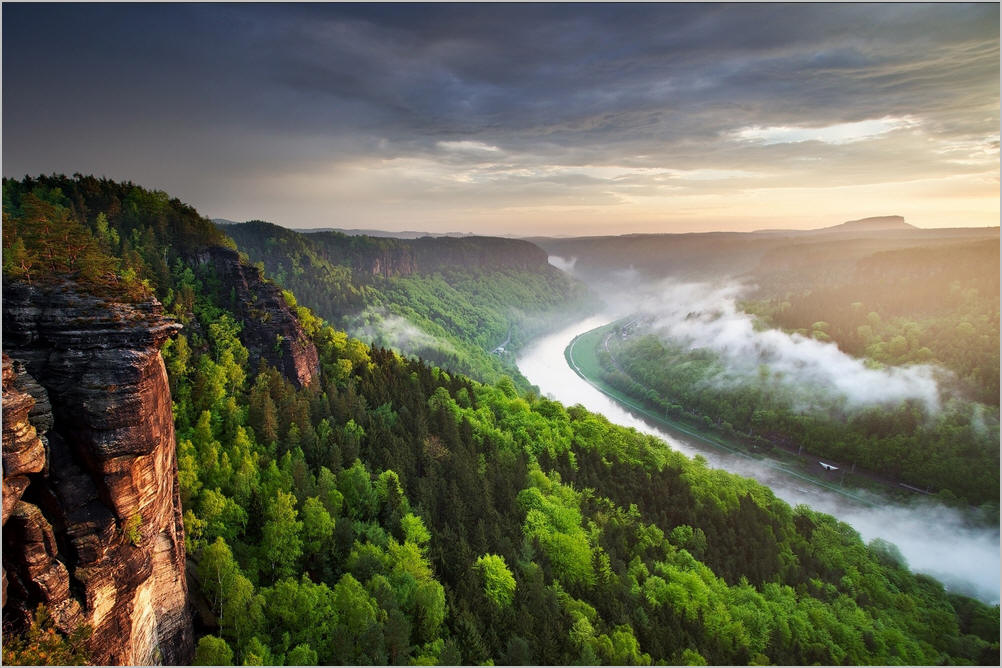 An image from Czech Republic Nature
.
.
Click the link below for images:
.
__________________________________________
July 7, 2022
Business, Food For Thought, Human Interest, Political, Science, Technical amazon, business, Business News, current-events, Future, Hotels, human-rights, medicine, mental-health, research, Science, Science News, technology, Technology News, travel, vacation Leave a comment

Click the link below the picture
.
A toxic work culture is the biggest reason why people quit, and it’s 10 times even more important than pay, according to research published in the MIT Sloan Management Review. But what exactly does a toxic workplace actually look like?
Researchers analyzed 1.4 million Glassdoor reviews from nearly 600 major U.S. companies and found employees describe toxic workplaces in five main ways: non-inclusive, disrespectful, unethical, cutthroat, and abusive.
“Employees can have hundreds of different criticisms about their organization that they discuss on Glassdoor,” from IT problems to clueless management, says Charlie Sull, a researcher on the analysis. “Most won’t have a powerful emotive effect on their assessment of the organization, but we’re looking at a small sample of topics that do have a large effect on a company’s Glassdoor rating.” Those same factors can cost companies billions of dollars in employees quitting.
.
 Monkeybusinessimages | Istock | Getty Images
.
.
Click the link below for the article:
.
__________________________________________
July 7, 2022
Business, Food For Thought, Human Interest, Science, Technical amazon, business, Business News, current-events, Future, Hotels, human-rights, medicine, mental-health, research, Science, Science News, technology, Technology News, travel, vacation Leave a comment

Click the link below the picture
.
Never mind reading generic guides or practicing with friends — Google is betting that algorithms can get you ready for a job interview. The company has launched an Interview Warmup tool that uses AI to help you prepare for interviews across various roles. The site asks typical questions (such as the classic “tell me a bit about yourself”) and analyzes your voiced or typed responses for areas of improvement. You’ll know when you overuse certain words, for instance, or if you need to spend more time talking about a given subject.
Interview Warmup is aimed at Google Career Certificates users hoping to land work, and most of its role-specific questions reflect this. There are general interview questions, though, and Google plans to expand the tool to help more candidates. The feature is currently only available in the US.
.
 AndreyPopov via Getty Images
.
.
Click the link below for the article:
.
__________________________________________
July 7, 2022
Crime, Food For Thought, Human Interest, Medical, missed News, Political, Science, Technical amazon, business, Business News, current-events, Future, Hotels, human-rights, medicine, mental-health, research, Science, Science News, technology, Technology News, travel, vacation Leave a comment
.
.
__________________________________________
July 6, 2022
Business, Enthralling, Human Interest, Photographs amazon, business, Business News, current-events, Future, Hotels, human-rights, medicine, mental-health, research, Science, Science News, technology, Technology News, travel, vacation Leave a comment
Click the link below the picture
.
Chengdu is a sub-provincial city which serves as the capital of the Chinese province of Sichuan. It is traditionally the hub in Southwest China. Chengdu is considered a “Beta + (global second-tier)” city classification (together with Barcelona and Washington, D.C.) according to the Globalization and World Cities Research Network. Chengdu is a leading financial center in the Asia-Pacific region and ranks 35th globally the 2021 Global Financial Centres Index.
Chengdu is located in central Sichuan. The surrounding Chengdu Plain is known as the “Country of Heaven” (Chinese: 天府之国; pinyin: Tiānfǔ zhi Guó) and the “Land of Abundance”. Its prehistoric settlers included the Sanxingdui culture. The site of Dujiangyan, an ancient irrigation system, is designated as a World Heritage Site. The Jin River flows through the city.
Founded by the state of Shu prior to its incorporation into China, Chengdu is unique as a major Chinese settlement that has maintained its name mostly unchanged throughout the imperial, republican, and communist eras. It was the capital of Liu Bei’s Shu Han during the Three Kingdoms Era, as well as several other local kingdoms during the Middle Ages. During World War II, refugees from eastern China fleeing from the Japanese settled in Chengdu. After the war, Chengdu’s importance as a link between Eastern and Western China expanded, with railways built to Chongqing in 1952, and Kunming and Tibet afterwards. In the 1960s, Chengdu became an important center of China’s national defense industry.
Chengdu is now one of the most important economic, financial, commercial, cultural, transportation, and communication centers in China. Its economy is diverse, characterized by the machinery, automobile, medicine, food, and information technology industries. Chengdu Shuangliu International Airport, a hub of Air China and Sichuan Airlines, is one of the 30 busiest airports in the world, and the Chengdu railway station is one of the six biggest in China. Chengdu also hosts many international companies and more than 16 consulates; more than 270 Fortune 500 companies have established branches in Chengdu. Chengdu is the seat of the Western Theatre Command region of the People’s Liberation Army. Chengdu hosted the FISU Summer World University Games, an international multi-sport event. It is considered one of the most livable cities in China.
Chengdu’s culture largely reflects that of its province, Sichuan; in 2011, it was recognized by UNESCO as a city of gastronomy. It is associated with the giant panda, a Chinese national symbol, which inhabits the area of Sichuan; the city is home to the Chengdu Research Base of Giant Panda Breeding.
Chengdu is one of the world’s top 40 cities by scientific research output, and home to the greatest number of universities and research institutes in Southwestern China, notably Sichuan University, University of Electronic Science and Technology of China, Southwestern University of Finance and Economics, Southwest Jiaotong University, Chengdu University of Technology, Sichuan Normal University, and Xihua University. Wikipedia
.
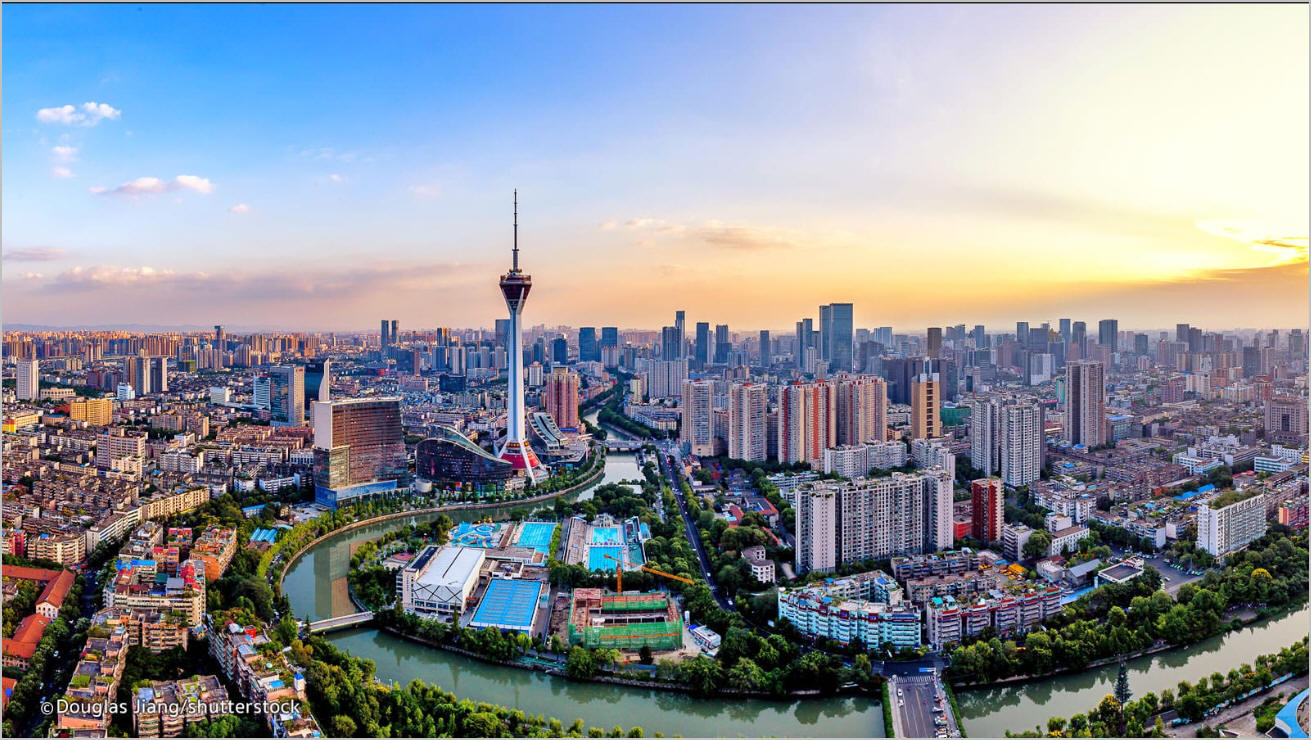 An image from Chengdu, China
.
.
Click the link below for images:
.
__________________________________________
Find the Best Forex Broker for Your Trading Success
AS HUMILDES OPINIÕES DE UMA MULHER DE CORAGEM QUE DIZ SIM À VIDA!
Să facem glume, nu război
In the world, human beings are facing various problems. People who are full of greed, anger, and ignorance are seen to be fighting with each other in words and deeds. As the fighting continues, various problems such as civil wars, wars of aggression, and wars of aggression are occurring. As world peace is being destroyed, humans are facing unbearable problems. Innocent children and women are not getting the rights they deserve and deserve. I can't think of one thing every time. What is it? The United Nations. If we look at the responsibilities and duties of the United Nations, I think it is not suitable for solving the problems that are happening in the world today. In fact, the United Nations and the World Security Council, such an organization must rule the world, must be able to give orders, and must have various ways to obey orders. There must be no organization that can influence more than that organization. There should be experts from each country. They can even dominate the superpowers like the US, China, and Britain. Only then will global peace be achieved quickly. Now, if a country with power develops more militarily, economically, or socially than its own country, then powerful countries will jealously seek out enemies and wage war. Or they will attack with fighter jets. In this, innocent people are losing their lives. No one understands the value of a life. You should think about how to achieve global peace by controlling these. If the US continues to be the permanent president of the UN, world peace will never be achieved. If you think carefully, no one sees that they are working for the common good, but for their own benefit, for the benefit of their own country. The permanent president of the UN and the Security Council has rejected this, As a young Rohingya, I have come to realize that only by electing the president and secretary from among the countries in the world through a secret ballot system and governing the world fairly can we achieve global peace. The United Nations and the Security Council are organizations in which any country must govern, give orders, and make them obey their orders. For example, only when a defendant is tried in court can we hold the leaders of the countries in check and control them, can we achieve global peace smoothly. Otherwise, it will not be easy for powerful countries to use various excuses to end this war every year, every year, for the benefit of themselves and their countries. No country's leaders pay any attention to the words of the United Nations and the Security Council. If we look at it in practice, look at the Rohingya issue. Myanmar is a small country. Even that country has been under siege for 8 years. What action can be taken? Why is the UN and the Security Council Powerless? Without such Power, how can the organization bring about global peace? Everyone should think about it. Whether there is a veto or a strong one, all countries in the world can only achieve global peace if they are subject to the UN and the Security Council. Seek peace in the quiet embrace of nature. Peace is an indispensable need of the human race. It is not as if one person can kill another person, and it is as if one country can attack another country, but instead of trying to build peace, we must try to destroy the peace now, and the world is getting hotter and is on the verge of collapse. I especially appeal to all the world experts to urgently try to bring about peace in all parts of the world. Mr, Noor Muhamed Arkhan Rohingya Youth Myanmar
Publicație umoristică dedicată glumeților de pretutindeni
Faith saved us from the savages that we were, losing faith makes us savages again
Where Trends Meet Truth
https://www.tangietwoods
Freelance poetry writing
Zalai Betti
INOVATION BLOG PEOPLE AND NEWS
Németh György
Konsultan Lingkungan Hidup di Lombok - NTB
Lea Krasznai (LeaArt21) – Idezetek (Idézetek) WordPress (Budapest, Hungary)
Appunti, spunti e passioni in liberta'
Gyorgy Nemeth
تعنى بتقديم نصائح للمعلمين المبتدئين، والطلبة الممتحنين، ومشاركة الاخرين تجربة الادخار في المال، بترشيد الاستهلاك المنزلي، وترتيب البيت، والحفاظ على البيئة، وتشجيع السيارات صديقةالبيئة، والسياحة والاسفار، ونماء رؤوس الاموال، والطب البديل وتشجيع التعليم الرقمي والذكاء الاصطناعي، والعناية بالنحل وتربية الاسماك، والاسثمار في رؤوس الاموال، الزراعة العضوية، والعناية باسنان الرضع، و صحة الحوامل، وتفسير القران
apprendre pour évoluer
Thoughts on books, language, meaning, and the culture around it.
Outdoor Recreation & Adventure in the Great Lakes Region
News, Info, Bio, Articles, Reviews, Lyrics, Technology, Science, Inspiration, Motivation, Philosphy and many more...
Christian Lifestyle Blogger
CEO and president of The Mullins Companies
Two Cultures. One Life. Endless Stories
Real Estate Development Specialist
¡Bienvenido de vuelta viajero!
so looking to the sky ¡ sing and from my heart to YOU ¡ bring...
CEO and Founder of Nsight Health
Catholic News, Prayers, HD Images, Rosary, Music, Videos, Holy Mass, Homily, Saints, Lyrics, Novenas, Retreats, Talks, Devotionals and Many More
Decoding Power. Defying Narratives.
A creative collaboration introducing the art of nature and nature's art.
The Home Of Entertainment News, Reviews and Reactions
•Whenever you are confronted with an opponent, conquer him with love.(Gandhi)
Algotrader at TRADING-CLUBS.COM
Film and Writing Festival for Comedy. Showcasing best of comedy short films at the FEEDBACK Film Festival. Plus, showcasing best of comedy novels, short stories, poems, screenplays (TV, short, feature) at the festival performed by professional actors.
Peace. Tranquility. Insanity.
Take a ride on the wild side
Découvre des musiques prometteuses (principalement) dans la sphère musicale française.
No tiene que Ser una Pesadilla.
Life in Kana-text (er... CONtext)
Where feelings meet metaphors and make questionable choices.
Finding hope and peace through writing, art, photography, and faith in Jesus.

