In September, Sinan Aral published The Hype Machine: How Social Media Disrupts Our Elections, Our Economy, and Our Health — and How We Must Adapt. Five months later, the book might be described as prophetic: This month alone at least two of Aral’s three predictions have come to fruition. First, there was the Capitol riot, fueled by months of lies about election fraud on social media, and then there was this week’s Wall Street meltdown, courtesy of Reddit message-board users who launched a fading retail company’s stock price higher than that of Apple. I spoke to Aral, director of MIT’s Initiative on the Digital Economy, about the gray area that is large coordinated stock buys and whether the Securities and Exchange Commission can do anything about it.
How did you see this coming? Has this sort of thing ever happened before? In my book, I start with the example from April 2013, when Syrian hackers infiltrated the Associated Press’s Twitter handle and put out a tweet that said, “Two explosions in the White House and Barack Obama is injured.” This tweet went viral and the market crashed — it lost about $140 billion worth of equity value in a matter of minutes. What we have to realize about examples like that is that social media doesn’t live in isolation. Companies like Dataminr and Ravn use algorithms that sift through the sentiment on social media, trying to find signals in the noise. And they’re connected to automated trading algorithms. They’re also giving buy/sell recommendations to institutional investors in real-time. There’s a feedback loop between social-media sentiment and trading already.
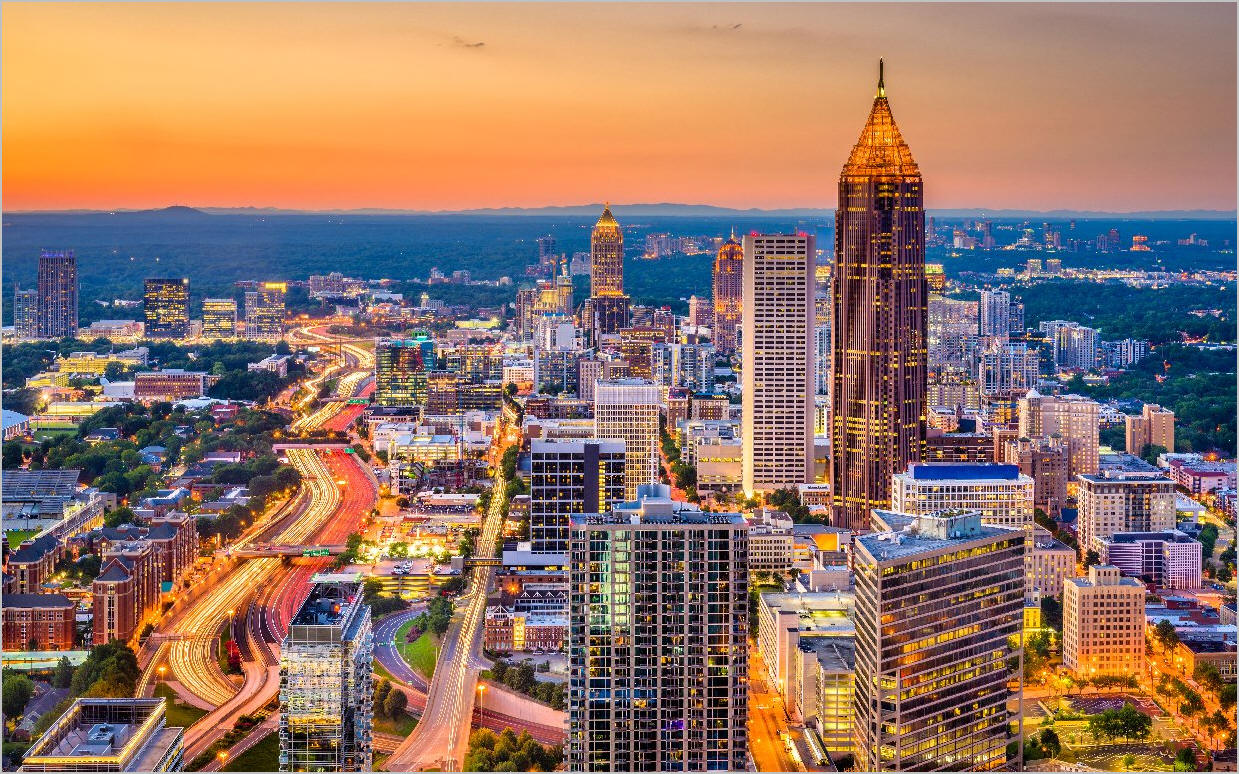
Atlanta is the capital and most populous city of the U.S. state of Georgia. With an estimated 2020 population of 515,439, it is also the 37th most populous city in the United States. The city serves as the cultural and economic center of the Atlanta metropolitan area, home to more than 6 million people and the ninth-largest metropolitan area in the nation. Atlanta is the seat of Fulton County, the most populous county in Georgia. Portions of the city extend eastward into neighboring DeKalb County. The city is situated among the foothills of the Appalachian Mountains and has the highest elevation among major cities east of the Mississippi River.
Some content on this page was disabled on April 15, 2025 as a result of a DMCA takedown notice from Guardian Media Group. You can learn more about the DMCA here:
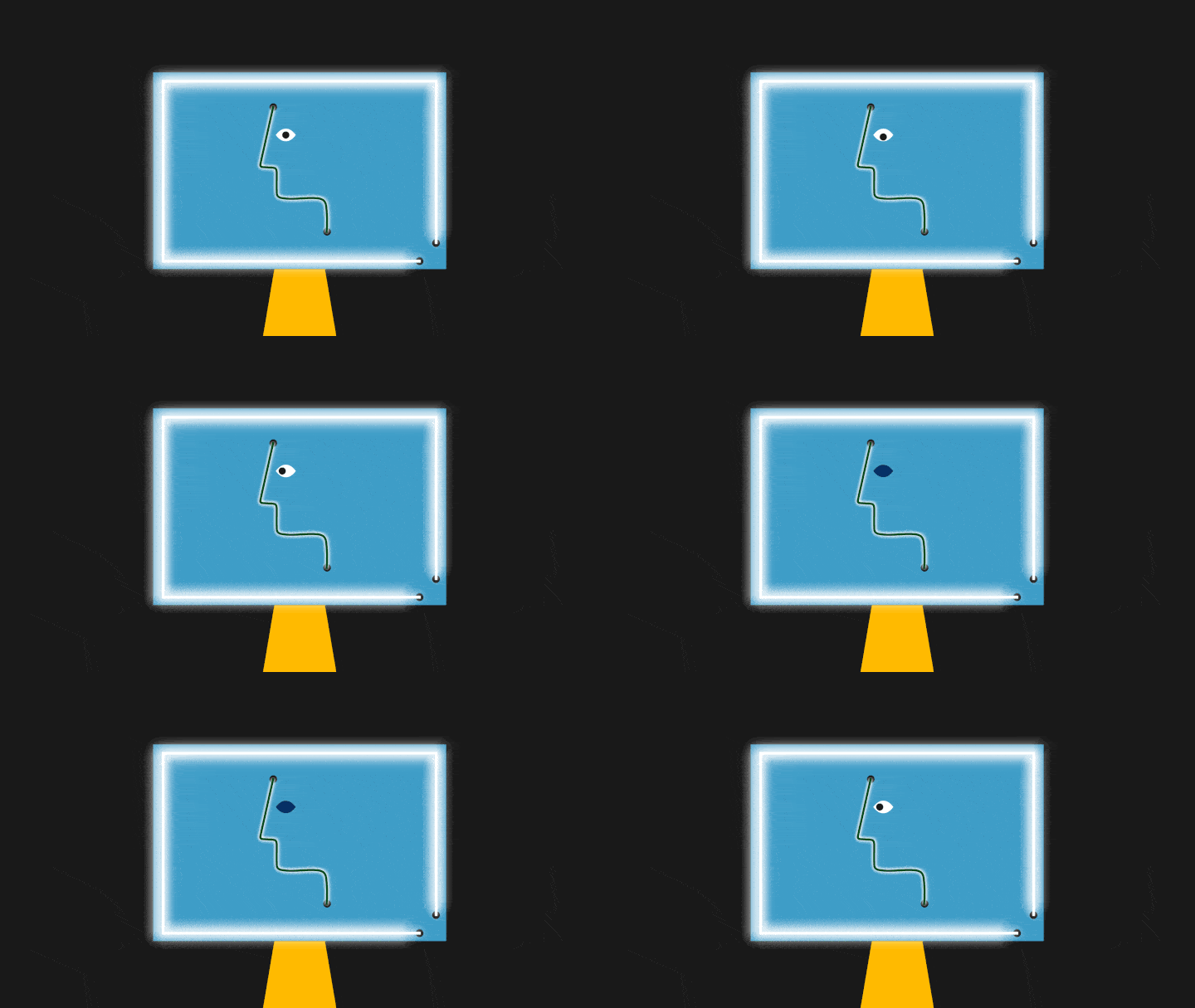
In the mid-2000s, news anchors found themselves with a problem: They didn’t look so hot anymore. Their real-life visages hadn’t changed, but the technology that beamed them into millions of households had outpaced their faces’ ability to keep up. High-definition cameras proliferated, as did the enormous HDTVs that render blemishes, pancake makeup, and flyaways in larger-than-life detail. Local newscasters with limited budgets fretted over judgment from viewers. CNN’s Anderson Cooper considered plastic surgery. Makeup and lighting crews scrambled to adjust.
When the pandemic hit, the same thing happened to millions of Americans. This was hardly our worst problem in March, but it was a problem nonetheless. While people had been living their in-person life, blissfully unaware of their expression at any given moment, the cameras around them had been multiplying and improving. Once office work and socializing went online, everyone looked terrible. Americans had spent the past decade mastering the momentary muscle movements of a good selfie, but starring in a high-quality live video in front of co-workers or romantic prospects for hours at a time is a different beast entirely. People had no idea how to contend with broadcasting their own face—weird shadows, awkward backdrops, and under-the-chin shots from low-slung laptops abounded.
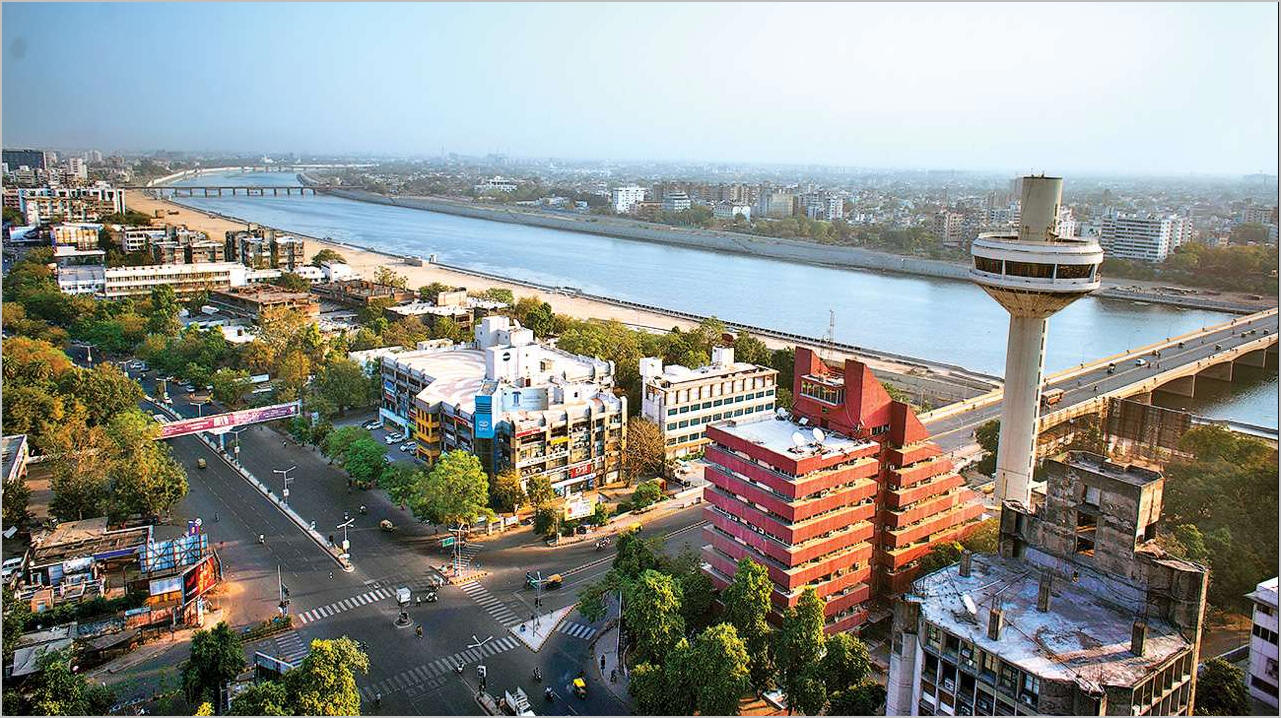
Ahmedabad is the largest city and former capital of the Indian state of Gujarat. It is the administrative headquarters of the Ahmedabad district and the seat of the Gujarat High Court. Ahmedabad’s population of 5,633,927 (as per 2011 population-census) makes it the fifth-most populous city in India, and the encompassing urban agglomeration population estimated at 6,357,693 is seventh-most populous in India. Ahmedabad is located on the banks of the Sabarmati River, 23 km (14 mi) from the state capital Gandhinagar, which is its twin city.
The story of the making of the 2000 movie The Emperor’s New Groove is actually the story of the making of three movies, only one of which can be legally seen today. First, there is The Kingdom of the Sun, an epic tale incorporating Inca myths, which was to be directed by The Lion King’s Roger Allers and would have starred Owen Wilson as a lowly llama herder bound to switch lives with a selfish, vain prince voiced by David Spade. The soundtrack was set to feature a whole series of songs written by Sting. The legendary Eartha Kitt would be the voice of a villainous sorceress determined to blot out the sun.
But after years of production snafus — of doubt-filled meetings and catastrophic screenings and arguments — Kingdom of the Sun was, in a stunning move, shelved. In its place came The Emperor’s New Groove, a raucous comedy directed by Mark Dindal, starring Spade as a selfish, vain emperor who involuntarily transforms into a llama and winds up befriending a kindly peasant, this one played by John Goodman. Eartha Kitt remained as the villain, now joined by a delightfully conflicted henchman voiced by Seinfeld’s Patrick Warburton. New Groove would ultimately feature only two songs written by Sting — one, a Vegas-style number performed by Tom Jones, and the other, a closing credits song performed by Sting himself (for which he was nominated for an Oscar). Racing against an impossible deadline rumored to be imposed by an impending Happy Meal deal, the final film was, in the words of one its co-creators, the result of the “funniest writers’ room you could possibly have. A table of people who had nothing to lose.”
.
This is the story of one strange moment in animation history, two reluctantly warring teams of animators, and three movies, only one of which you can see today. Photo: Buena Vista Pictures/Everett Collection
Robinhood is a stock-trading app that exists to “democratize finance” — but will also, on occasion, prohibit you from buying stocks because democratically unaccountable experts have declared them overpriced.
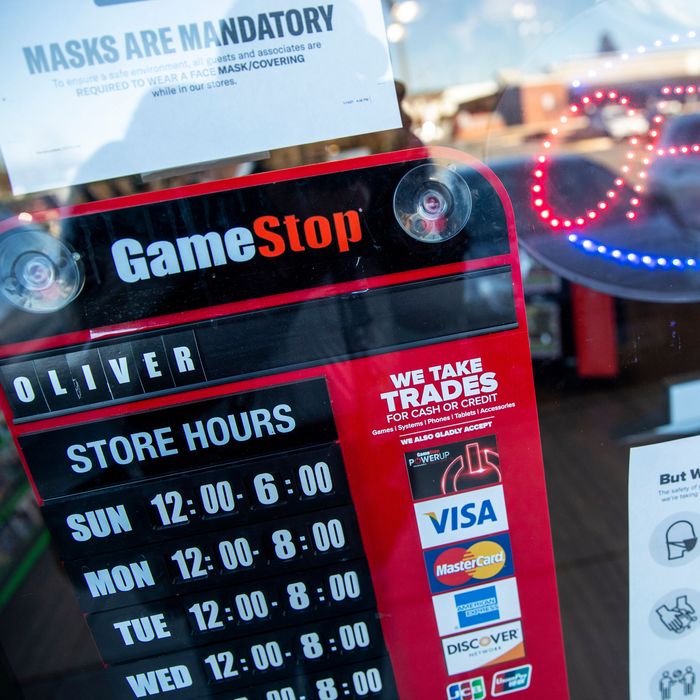
This was the befuddling message that Robinhood sent to its readers Thursday morning, as the most befuddling stock craze in modern memory pushed the price of a GameStop share above $440.
As of this writing, the GameStop rally appears to be fading. But the questions the phenomenon has raised — about the ethics of gamified stock-trading apps, the inequalities between large and small investors, how share prices are actually determined, and what the stock market is for — seem to grow more numerous and vexing by the hour. Fortunately, Chris Arnade may have some answers. The former bond trader spent two decades on Wall Street before growing disillusioned with his profession’s culture of cynicism and greed. In recent years, he’s invested the bulk of his time into photography and writing, typically about social class and poverty in the U.S. But he’s hedged these productive activities with no small amount of leisurely lurking on Reddit. Which makes his brain all the more fit for picking.
Film and Writing Festival for Comedy. Showcasing best of comedy short films at the FEEDBACK Film Festival. Plus, showcasing best of comedy novels, short stories, poems, screenplays (TV, short, feature) at the festival performed by professional actors.

 Photo: AFP via Getty Images



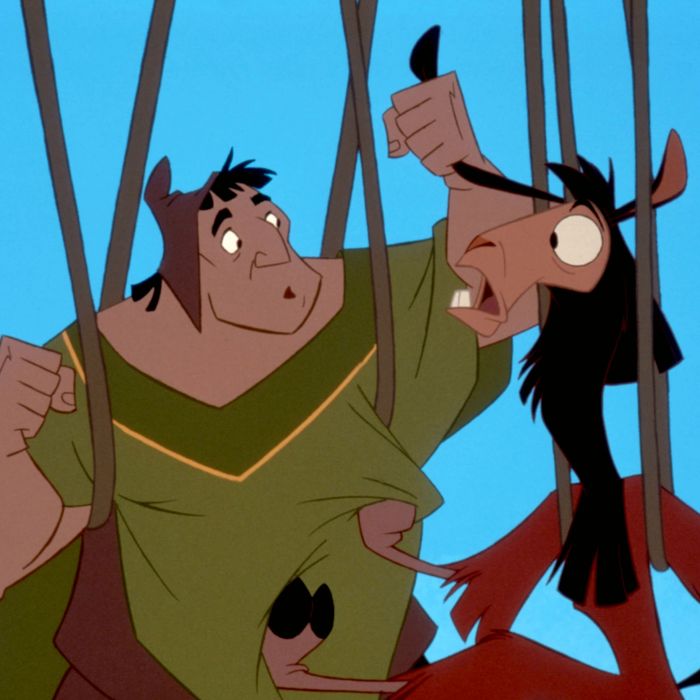 This is the story of one strange moment in animation history, two reluctantly warring teams of animators, and three movies, only one of which you can see today.
  Can’t stop, won’t stop.
