
Click the link below the picture
.
Peter Jones once treated a patient with strikingly vivid hallucinations of animals. During ward visits, the patient would stroke and interact with the critters “in as real a way as he was with me,” says Jones, an academic psychiatrist at the University of Cambridge in England.
Antipsychotic drugs did nothing to dissolve these Snow White-esque visions. But when the patient received-plasma exchange –– a treatment normally reserved for a misbehaving immune system –– his hallucinations dissipated.
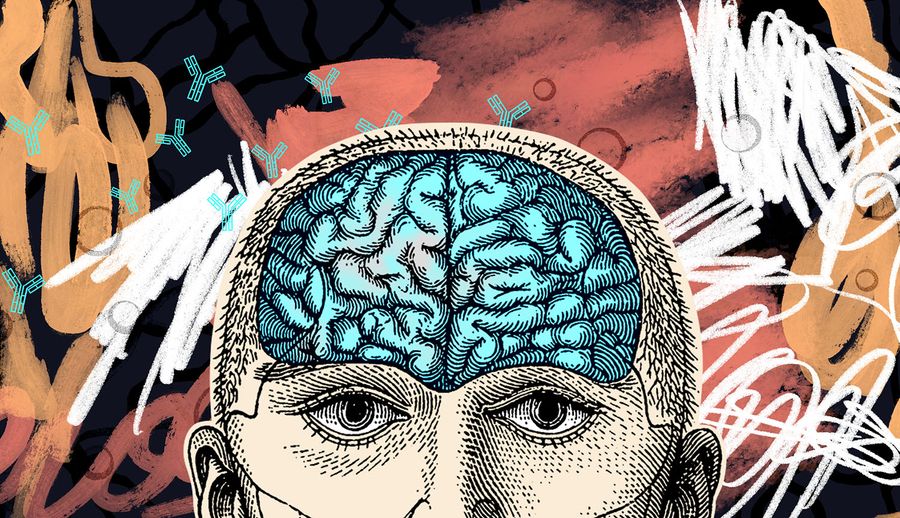
Clearly, this was not a textbook case of schizophrenia. Rather, the patient’s symptoms stemmed from autoimmune encephalitis, a rare form of brain inflammation that can, in some cases, cause hallucinations and other symptoms of psychosis. When these patients are treated with drugs that tamp down the immune system, the psychotic symptoms often disappear.
Autoimmune encephalitis is usually first identified through testing blood or spinal fluid for certain types of antibodies. If patients test positive for these antibodies, it’s a sign that their immune system may be attacking the brain. Other signs can help to solidify diagnosis: bright patches of inflammation on MRI scans, quickly worsening psychotic symptoms and — importantly — clear neurological symptoms such as seizures.
But Jones’ patient didn’t have those obvious neurological symptoms. If Jones hadn’t suspected an autoimmune cause, the case likely would have been missed.
Some experts suspect that the field of psychiatry is overlooking a small number of patients like this, and they are working to find more of them. They’re considering screening a broader array of psychiatric patients and seeking out new antibodies that may be involved in autoimmune encephalitis.
At the same time, many worry that there’s a risk of planting false hopes and diverting patients from the psychiatric treatments the vast majority will actually need, should autoimmune encephalitis become over-diagnosed.
Landmark research paper
The “artificial divide” between the body and the mind that separates the fields of psychiatry and neurology is starting to break down, says Michael Zandi, a neurologist at University College London. Psychosis, for example, can be caused by a mix of mental and biological factors, from psychological trauma to drug abuse to physical diseases or infections (such as syphilis) that alter brain activity. Around 3 percent of people will experience a psychotic episode in their lifetime.
Brain inflammation caused by the body assaulting itself, as in autoimmune encephalitis, has been recognized for the past couple of decades. In the early stages of this condition, many patients develop the core features of psychosis –– hallucinations, delusions and agitation –– and so are initially sent to psychiatric services.
A landmark paper about this condition came in 2007, when researchers described the cases of 12 women with autoimmune encephalitis. Nine of the patients initially presented with a number of psychosis-like symptoms, while the others mainly had memory loss. All but one devolved into seizures. The researchers found that the women’s conditions were caused by antibodies that bind to the brain’s NMDA receptors, proteins that are involved in many processes in the brain, such as learning and the formation of memories.
The trigger for autoimmune encephalitis, in this case, seemed to be tumors in these patients, 90 percent of which were ovarian. All five tumors the researchers examined contained nerve tissue complete with NMDA receptors. This confused the immune system, which came to recognize the NMDA receptor as foreign and ramped up the manufacture of antibodies that bind to it.
But those antibodies also bound to NMDA receptors in healthy brain tissue, interfering with brain function. Other cells of the immune system gathered to the area, sparking inflammation that, in many of these cases, caused psychosis.
.
.
.
Click the link below for the complete article:
.
__________________________________________


Leave a comment