
.
News You might have missed!
Use your browser or smartphone back arrow (<-) to return to this table for your next selection.
.
__________________________________________
Assorted human interest posts.
July 5, 2022
Crime, Food For Thought, Human Interest, Medical, missed News, Political, Science, Technical amazon, business, Business News, current-events, Future, Hotels, human-rights, medicine, mental-health, research, Science, Science News, technology, Technology News, travel, vacation Leave a comment
.
.
__________________________________________
July 4, 2022
Business, Enthralling, Human Interest, Photographs amazon, business, Business News, current-events, Future, Hotels, human-rights, medicine, mental-health, research, Science, Science News, technology, Technology News, travel, vacation Leave a comment

Click the link below the picture
.
Zimbabwe, officially the Republic of Zimbabwe, is a landlocked country located in Southeast Africa, between the Zambezi and Limpopo Rivers, bordered by South Africa to the south, Botswana to the south-west, Zambia to the north, and Mozambique to the east. The capital and largest city is Harare. The second-largest city is Bulawayo. A country of roughly 15 million people, Zimbabwe has 16 official languages, with English, Shona, and Ndebele the most common. It was once known as the “Jewel of Africa” for its great prosperity.
Zimbabwe first became a major trade route in the 11th century. Beginning in the 9th century, during its late iron age, the Gokomere, the Bantu people who would become the ethnic Shona, built the city-state of Great Zimbabwe, which was one of the major African trade centers, controlling the gold, ivory, and copper trades with the Swahili coast, which were connected to Arab and Indian states. By the mid-15th century, the city-state had been abandoned. From there, the Kingdom of Zimbabwe was established, followed by the Rozvi and Mutapa empires.
The British South Africa Company of Cecil Rhodes first demarcated the present territory during 1890 when they conquered Mashonaland and later in 1893 Matabeleland after a fierce resistance by Matabele people known as the First Matabele War. Company rule ended in 1923 with the establishment of Southern Rhodesia as a self-governing British colony. In 1965, the conservative white minority government unilaterally declared independence as Rhodesia. The state endured international isolation and a 15-year guerrilla war with black nationalist forces; this culminated in a peace agreement that established universal enfranchisement and de jure sovereignty as Zimbabwe in April 1980. Zimbabwe then joined the Commonwealth of Nations, from which it was suspended in 2002 for breaches of international law by its then-government under Robert Mugabe, and from which it withdrew in December 2003.
Robert Mugabe became Prime Minister of Zimbabwe in 1980 when his ZANU–PF party won the elections following the end of white minority rule; he was the President of Zimbabwe from 1987 until his resignation in 2017. Under Mugabe’s authoritarian regime, the state security apparatus dominated the country and was responsible for widespread human rights violations. From 2000 to 2009 the economy experienced decline and hyperinflation before rebounding after the use of currencies other than the Zimbabwean dollar was permitted, though growth has since faltered. On 15 November 2017, in the wake of over a year of protests against his government as well as Zimbabwe’s rapidly declining economy, Mugabe was placed under house arrest by the country’s national army in a coup d’état and eventually resigned six days later. Emmerson Mnangagwa has since served as Zimbabwe’s president.
Zimbabwe is a member of the United Nations, the Southern African Development Community (SADC), the African Union (AU), and the Common Market for Eastern and Southern Africa (COMESA). Wikipedia
.
 An image from Zimbabwe
.
.
Click the link below for images:
.
__________________________________________
July 4, 2022
Business, Food For Thought, Human Interest, Medical, Political, Science, Technical amazon, business, Business News, current-events, Future, Hotels, human-rights, medicine, mental-health, research, Science, Science News, technology, Technology News, travel, vacation Leave a comment

Click the link below the picture
.
Ever since COVID-19 reared its ugly head and upended our world, long-lasting symptoms of the virus have been varied and hard to pinpoint—until now. “A survey conducted by Dr. Natalie Lambert of Indiana University School of Medicine and Survivor Corps analyzed the long-term experiences COVID-19 survivors are having with the virus. The COVID-19 ‘Long Hauler’ Symptoms Survey Report identified 98 long-lasting symptoms.” And ever since the report came out last year, it’s held up. Click through from least common to most common to see if you’ve experienced any. Read on, and to ensure your health and the health of others, don’t miss these 35 Places You’re Most Likely to Catch COVID.
.
 Shutterstock
.
.
Click the link below for the article:
.
__________________________________________
July 4, 2022
Business, Food For Thought, Human Interest, Political, Science, Technical amazon, business, Business News, current-events, Future, Hotels, human-rights, medicine, mental-health, research, Science, Science News, technology, Technology News, travel, vacation Leave a comment

Click the link below the picture
.
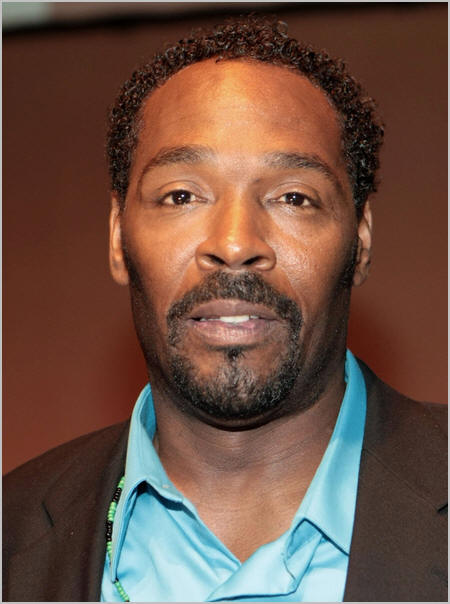
If you were paying attention in the spring of 1992, you probably remember this quote coming from the mouth of Rodney King. His broadcast appeal to the violent masses was made halfway through the six-day-long rioting in Los Angeles.
And to be fair, “Can’t we all just get along?” were not his words. These were:
“People, I just want to say, you know, can we all get along? Can we get along?”
Frankly, I prefer the way our collective brains have chosen to remember what we think he said on May 1st, 1992: more eloquent.
Mr. King’s (mis)quote came to mind the other day when I read a similar appeal from a women who is part of a discussion group on social media. In so many words, she suggested that the members of the discussion group stop being “negative.” Based on her post, I concluded that she didn’t like the tone and tenor of some of the comments from some of the others and was appealing to their “better selves” to be more “positive” in the expression of their ideas and opinions.
.

 .
.
.
Click the link below for the article:
.
__________________________________________
July 4, 2022
Business, Food For Thought, Human Interest, Medical, Science, Technical amazon, business, Business News, current-events, Future, Hotels, human-rights, medicine, mental-health, research, Science, Science News, technology, Technology News, travel, vacation Leave a comment

Click the link below the picture
.
Workplace stress is increasingly becoming a larger part of the conversation since the pandemic. And against the backdrop of hustle culture, reports indicate that the number of people seeking help with stress or anxiety has increased by 55%, according to a study by a mental health services provider in the United Kingdom. The British Health and Safety Executive indicates that in 2021 alone, 822,000 workers in the U.K. suffered from work-related stress, depression, or anxiety.
I entered law—the second most stressed-out professional in Britain, according to insurance company, Protectivity—in 2009 as an ambitious high-achiever. As a career defined by its high standards and perfectionism, it is often home to high-achievers and the ambitious few who are willing to burn the candle at both ends and make the sacrifice required to progress. But the impact stress was having on my life nearly resulted in my leaving the profession altogether. I know I am not alone.
For many in professional services and other demanding industries that attract high achievers, these statistics may come as no surprise. Reflective of my experience as a lawyer, I’m sure they are no stranger to the long hours, competitive work environments, and the monumental pressure of meeting targets. And, while some thrive under this intensity, many are battling with burnout.
.
 [Source illustration: Malte Mueller/Getty images]
.
.
Click the link below for the article:
.
__________________________________________
July 4, 2022
Business, Food For Thought, Human Interest, Medical, Science, Technical amazon, business, Business News, current-events, Future, Hotels, human-rights, medicine, mental-health, research, Science, Science News, technology, Technology News, travel, vacation Leave a comment

Click the link below the picture
.
Bosses want video call cameras on. But workers may have a strong argument against appearing on screen when they don’t want to..
“Good morning, team! If we could all turn our cameras on for this meeting, that’d be great.” It’s a line that’s become a common refrain in the remote work era – but one that many employees dread.
Platforms such as Zoom were a blessing when Covid-19 lockdowns hit, allowing many people to work from home. But, two and a half years into the pandemic, that same technology has become something of a curse, too. These days, millions of workers spend hours each day on video calls, exhausting themselves trying to decode colleagues’ body language or distracted by their own image on screen.
Having a camera on can often be seen as a sign of engagement; proof an employee really is committed to their work. But experts also suggest turning off cameras could, along with mitigating the annoyance of always appearing on screen, improve worker wellbeing – and makes meetings more efficient, to boot.
How cameras on became the norm
“At the beginning of the pandemic, it made a lot of sense that people wanted to be on camera because we were living under the premise that this was going to be a two-week pause of our lives – and so we were like, ‘We want to see everybody, we want to connect’,” says Allison Gabriel, professor of management and organizations at the University of Arizona, US, who’s studied the effects of Zoom fatigue.
.

.
.
Click the link below for the article:
.
__________________________________________
July 4, 2022
Human Interest, missed News amazon, business, Business News, current-events, Future, Hotels, human-rights, medicine, mental-health, research, Science, Science News, technology, Technology News, travel, vacation Leave a comment
.
.
__________________________________________
July 3, 2022
Business, Food For Thought, Human Interest, Medical, Science, Technical amazon, business, Business News, current-events, Future, Hotels, human-rights, medicine, mental-health, research, Science, Science News, technology, Technology News, travel, vacation Leave a comment

Click the link below the picture
.
Last week, publisher Aspyr officially acknowledged the existence of a game-breaking glitch in the recent Switch port of Star Wars: Knights of the Old Republic II. That glitch, which crashes the game after the “Basilisk Crash” cutscene on the planet Onderon, has the inconvenient side effect of making the Switch version completely unbeatable.
While Aspyr promised this game-breaking glitch would be fixed in the game’s next downloadable patch, plenty of game developers in the past haven’t had that option. KOTOR II on the Switch is the latest in a long line of games that were literally impossible to complete (or to get a full, 100 percent completion rate) when they launched.
Here, we’re not talking about games like The Sims or Tetris that are designed not to have a win condition and/or always end in failure for the player (though some games that seem like they fall in that category are surprisingly beatable). We’re also not talking about games where the player is forced to reset after accidentally stumbling into an in-game predicament where they can no longer make progress (TV Tropes has a massive list of games that fit this description).
No, instead we’re talking about games that are supposed to be beatable but, for one reason or another, can’t be fully completed regardless of what the player does (short of using external cheats). While gaming’s short history has seen plenty of these games, here are a few notable examples that should make Aspyr feel a little better about its recent KOTOR problems.
.
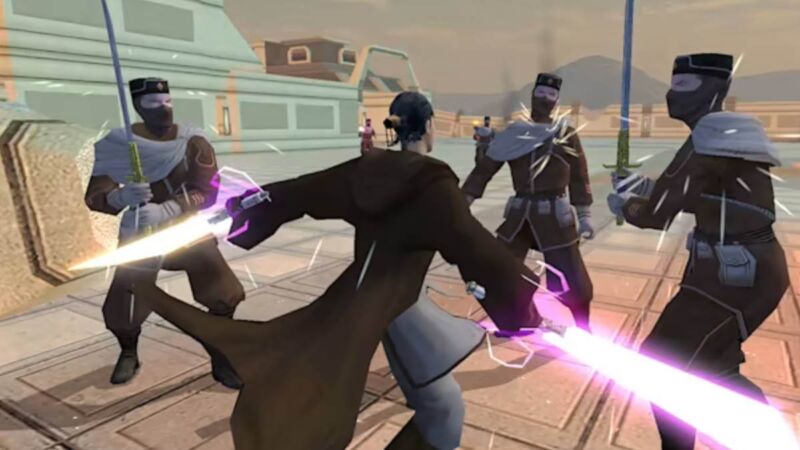 A promised patch should soon allow KOTOR II players to beat the game on Switch.
.
.
Click the link below for the article:
.
__________________________________________
July 3, 2022
Business, Food For Thought, Human Interest, Medical, Science, Technical amazon, business, Business News, current-events, Future, Hotels, human-rights, medicine, mental-health, research, Science, Science News, technology, Technology News, travel, vacation Leave a comment

Click the link below the picture
.
My Indian immigrant parents instilled in me an incredible and intense work ethic. I watched them put in long hours, with a relentless commitment to achieving their dreams. My father always said, “Keep your head down, work hard, and work some more, and you will be recognized.”
And yet, his advice to only work hard hasn’t always served me well at work.
Early in my career, I presented my company’s brand forecast at monthly senior leadership meetings. I spent hours and hours preparing and over-preparing, working into the early hours of the morning. The actual presentations were never more than 10 minutes long. On one occasion, overloaded on caffeine and sleep deprivation, I completely blanked when the vice president asked me a question, and I stood there frozen in front of the senior leadership team.
I was working hard, but not on the right things. I struggled with being over-prepared and striving for perfection. Without much coaching or guidance from my bosses, I wasted hours on details that didn’t matter,
on pulling and analyzing the wrong data sets, and on answering the wrong questions. Some might argue that these are simple mistakes we make in the course of our careers, and mistakes can help us learn and be better leaders. Yet research shows that contrary to what so many of us have been taught, the errors we make need to be close to the right answer in order to be educational. This is what helps us to learn and improve our memory to retain the correct information — and then ultimately do things differently.
.
 Brand X Pictures/Getty Images
.
.
Click the link below for the article:
.
__________________________________________
July 2, 2022
Business, Enthralling, Human Interest, Photographs amazon, business, Business News, current-events, Future, Hotels, human-rights, medicine, mental-health, research, Science, Science News, technology, Technology News, travel, vacation Leave a comment
Click the link below the picture
.
Salar de Uyuni (or “Salar de Tunupa”) is the world’s largest salt flat, or playa, at over 10,000 square kilometers (3,900 sq mi) in area. It is in the Daniel Campos Province in Potosí in southwest Bolivia, near the crest of the Andes at an elevation of 3,656 m (11,995 ft) above sea level.
The Salar was formed as a result of transformations between several prehistoric lakes that existed around forty thousand years ago but had all evaporated over time. It is now covered by a few meters of salt crust, which has an extraordinary flatness with the average elevation variations within one meter over the entire area of the Salar. The crust serves as a source of salt and covers a pool of brine, which is exceptionally rich in lithium. The large area, clear skies, and exceptional flatness of the surface make the Salar ideal for calibrating the altimeters of Earth observation satellites. Following rain, a thin layer of dead calm water transforms the flat into the world’s largest mirror, 129 km (80 mi) across.
The Salar serves as the major transport route across the Bolivian Altiplano and is a prime breeding ground for several species of flamingos. Salar de Uyuni is also a climatological transitional zone since the towering tropical cumulus congestus and cumulonimbus incus clouds that form in the eastern part of the salt flat during the summer cannot permeate beyond its drier western edges, near the Chilean border and the Atacama Desert.
Salar has been used as a filming location for movies such as Star Wars: The Last Jedi (2017; as planet Crait), The Fall (2006), Salt and Fire (2016), The Unseen (2017), and several others.
Salar de Uyuni is part of the Altiplano of Bolivia in South America. The Altiplano is a high plateau, which was formed during uplift of the Andes mountains. The plateau includes fresh and saltwater lakes as well as salt flats and is surrounded by mountains with no drainage outlets.
The geological history of the Salar is associated with a sequential transformation between several vast lakes. Some 30,000 to 42,000 years ago, the area was part of a giant prehistoric lake, Lake Minchin. Its age was estimated by radiocarbon dating shells from outcropping sediments and carbonate reefs and varies between reported studies. Lake Minchin (named after Juan B. Minchin of Oruro) later transformed into Paleo Lake Tauca having a maximal depth of 140 meters (460 ft), and an estimated age of 13,000 to 18,000 or 14,900 to 26,100 years, depending on the source. The youngest prehistoric lake was Coipasa, which was radiocarbon dated to 11,500 to 13,400 years ago. When it dried, it left behind two modern lakes, Poopó and Uru Uru, and two major salt deserts, Salar de Coipasa and the larger Salar de Uyuni. Salar de Uyuni spreads over 10,582 km2, which is roughly 100 times the size of the Bonneville Salt Flats in the United States. Lake Poopó is a neighbor of the much larger Lake Titicaca. During the wet season, Titicaca overflows and discharges into Poopó, which in turn, floods Salar De Coipasa and Salar de Uyuni.
Lacustrine mud that is interbedded with salt and saturated with brine underlies the surface of Salar de Uyuni. The brine is a saturated solution of sodium chloride, lithium chloride, and magnesium chloride in water. It is covered with a solid salt crust varying in thickness between tens of centimeters and a few meters. The center of the Salar contains a few islands, which are the remains of the tops of ancient volcanoes submerged during the era of Lake Minchin. They include unusual and fragile coral-like structures and deposits that often consist of fossils and algae.
.
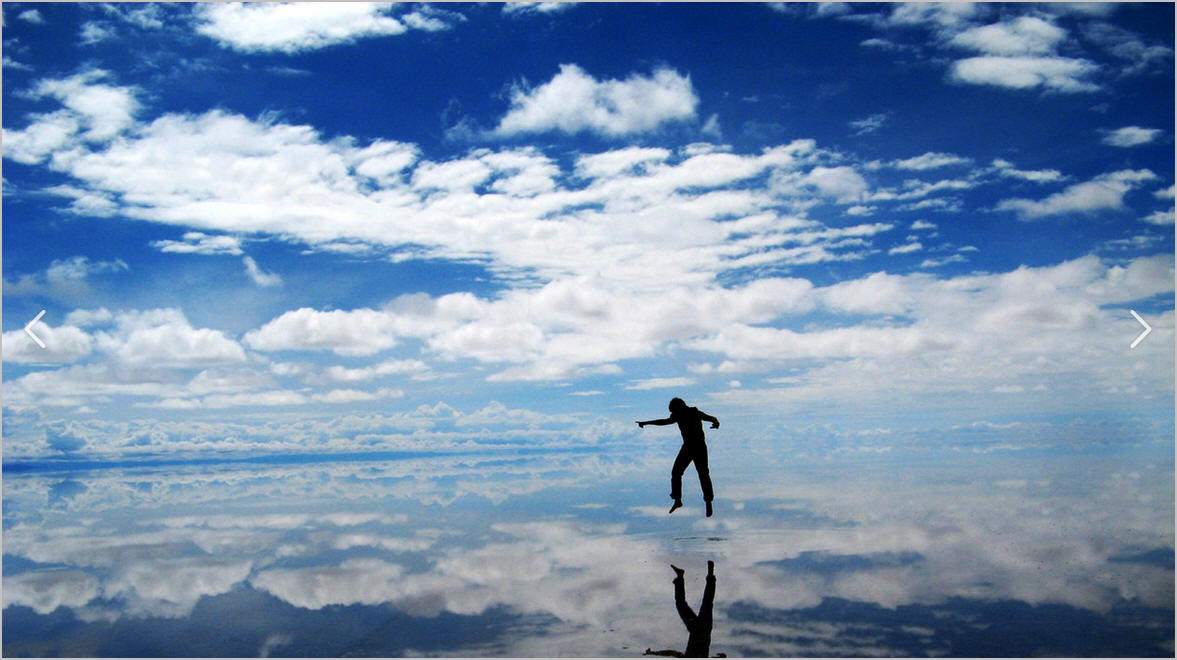 An image from Salar De Uyuni Reflection
.
.
Click the link below for images:
.
__________________________________________
Să facem glume, nu război
In the world, human beings are facing various problems. People who are full of greed, anger, and ignorance are seen to be fighting with each other in words and deeds. As the fighting continues, various problems such as civil wars, wars of aggression, and wars of aggression are occurring. As world peace is being destroyed, humans are facing unbearable problems. Innocent children and women are not getting the rights they deserve and deserve. I can't think of one thing every time. What is it? The United Nations. If we look at the responsibilities and duties of the United Nations, I think it is not suitable for solving the problems that are happening in the world today. In fact, the United Nations and the World Security Council, such an organization must rule the world, must be able to give orders, and must have various ways to obey orders. There must be no organization that can influence more than that organization. There should be experts from each country. They can even dominate the superpowers like the US, China, and Britain. Only then will global peace be achieved quickly. Now, if a country with power develops more militarily, economically, or socially than its own country, then powerful countries will jealously seek out enemies and wage war. Or they will attack with fighter jets. In this, innocent people are losing their lives. No one understands the value of a life. You should think about how to achieve global peace by controlling these. If the US continues to be the permanent president of the UN, world peace will never be achieved. If you think carefully, no one sees that they are working for the common good, but for their own benefit, for the benefit of their own country. The permanent president of the UN and the Security Council has rejected this, As a young Rohingya, I have come to realize that only by electing the president and secretary from among the countries in the world through a secret ballot system and governing the world fairly can we achieve global peace. The United Nations and the Security Council are organizations in which any country must govern, give orders, and make them obey their orders. For example, only when a defendant is tried in court can we hold the leaders of the countries in check and control them, can we achieve global peace smoothly. Otherwise, it will not be easy for powerful countries to use various excuses to end this war every year, every year, for the benefit of themselves and their countries. No country's leaders pay any attention to the words of the United Nations and the Security Council. If we look at it in practice, look at the Rohingya issue. Myanmar is a small country. Even that country has been under siege for 8 years. What action can be taken? Why is the UN and the Security Council Powerless? Without such Power, how can the organization bring about global peace? Everyone should think about it. Whether there is a veto or a strong one, all countries in the world can only achieve global peace if they are subject to the UN and the Security Council. Seek peace in the quiet embrace of nature. Peace is an indispensable need of the human race. It is not as if one person can kill another person, and it is as if one country can attack another country, but instead of trying to build peace, we must try to destroy the peace now, and the world is getting hotter and is on the verge of collapse. I especially appeal to all the world experts to urgently try to bring about peace in all parts of the world. Mr, Noor Muhamed Arkhan Rohingya Youth Myanmar
Publicație umoristică dedicată glumeților de pretutindeni
Faith saved us from the savages that we were, losing faith makes us savages again
Where Trends Meet Truth
https://www.tangietwoods
Freelance poetry writing
Zalai Betti
INOVATION BLOG PEOPLE AND NEWS
Németh György
Konsultan Lingkungan Hidup di Lombok - NTB
Lea Krasznai (LeaArt21) – Idezetek (Idézetek) WordPress (Budapest, Hungary)
Appunti, spunti e passioni in liberta'
Gyorgy Nemeth
تعنى بتقديم نصائح للمعلمين المبتدئين، والطلبة الممتحنين، ومشاركة الاخرين تجربة الادخار في المال، بترشيد الاستهلاك المنزلي، وترتيب البيت، والحفاظ على البيئة، وتشجيع السيارات صديقةالبيئة، والسياحة والاسفار، ونماء رؤوس الاموال، والطب البديل وتشجيع التعليم الرقمي والذكاء الاصطناعي، والعناية بالنحل وتربية الاسماك، والاسثمار في رؤوس الاموال، الزراعة العضوية، والعناية باسنان الرضع، و صحة الحوامل، وتفسير القران
apprendre pour évoluer
Thoughts on books, language, meaning, and the culture around it.
Outdoor Recreation & Adventure in the Great Lakes Region
News, Info, Bio, Articles, Reviews, Lyrics, Technology, Science, Inspiration, Motivation, Philosphy and many more...
Christian Lifestyle Blogger
CEO and president of The Mullins Companies
Two Cultures. One Life. Endless Stories
Real Estate Development Specialist
¡Bienvenido de vuelta viajero!
so looking to the sky ¡ sing and from my heart to YOU ¡ bring...
CEO and Founder of Nsight Health
Catholic News, Prayers, HD Images, Rosary, Music, Videos, Holy Mass, Homily, Saints, Lyrics, Novenas, Retreats, Talks, Devotionals and Many More
Decoding Power. Defying Narratives.
A creative collaboration introducing the art of nature and nature's art.
The Home Of Entertainment News, Reviews and Reactions
•Whenever you are confronted with an opponent, conquer him with love.(Gandhi)
Algotrader at TRADING-CLUBS.COM
Film and Writing Festival for Comedy. Showcasing best of comedy short films at the FEEDBACK Film Festival. Plus, showcasing best of comedy novels, short stories, poems, screenplays (TV, short, feature) at the festival performed by professional actors.
Peace. Tranquility. Insanity.
Take a ride on the wild side
Découvre des musiques prometteuses (principalement) dans la sphère musicale française.
No tiene que Ser una Pesadilla.
Life in Kana-text (er... CONtext)
Where feelings meet metaphors and make questionable choices.
Finding hope and peace through writing, art, photography, and faith in Jesus.
Eyasu
Eyasu The Wonderful

