When NASA astronauts return to the Moon in a few years, they will do so inside a lander that dwarfs that of the Apollo era. SpaceX’s Starship vehicle measures 50 meters from its nose cone to landing legs. By contrast, the cramped Lunar Module that carried Neil Armstrong and Buzz Aldrin down to the Moon in 1969 stood just 7 meters tall.
This is but one of many genuinely shocking aspects of NASA’s decision a week ago to award SpaceX—and only SpaceX—a contract to develop, test, and fly two missions to the lunar surface. The second flight, which will carry astronauts to the Moon, could launch as early as 2024.
NASA awarded SpaceX $2.89 billion for these two missions. But this contract would balloon in amount should NASA select SpaceX to fly recurring lunar missions later in the 2020s. And it has value to SpaceX and NASA in myriad other ways. Perhaps most significantly, with this contract, NASA has bet on a bold future of exploration. Until now, the plans NASA had contemplated for human exploration in deep space all had echoes of the Apollo program. NASA talked about “sustainable” missions and plans in terms of cost, but they were sustainable in name only.
.
In the future, what might lunar exploration look like if NASA can send multiple Starships there each year? This SpaceX rendering offers a vision of one such future.
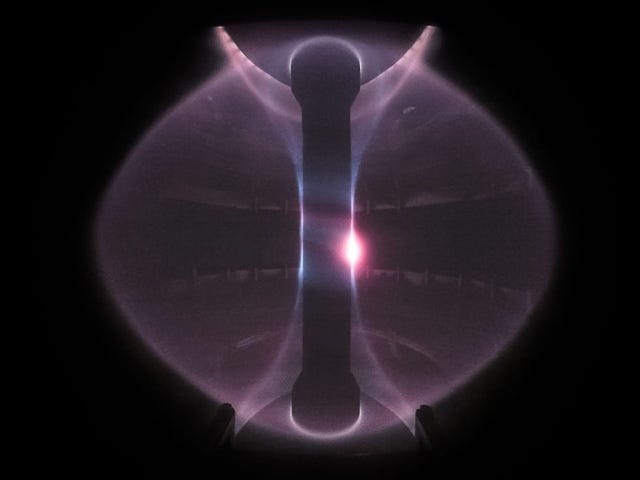
With a revolutionary new heat exhaust system, scientists in England might have just found the key to unlocking a cooler future for nuclear fusion—and brought the world one step closer to actually realizing the long-promised next frontier for energy.
Scientists have worked for decades on different tokamak reactors, or donut-shaped chambers in which atoms are combined (fused, for fusion) to generate plentiful energy. The white-hot plasma can reach 100 million degrees Fahrenheit or more, causing heavy wear and tear on all the components of these reactors.
There are downsides and controversial elements to fusion research. So far, no tokamak reactor has “recouped” its own energy cost—not even close!—so no one has demonstrated that nuclear fusion even works as an energy source, let alone the plentiful source its advocates say it will be.
.
U.K. Atomic Energy Authority/Culham Centre for Fusion Energy/EUROFusion
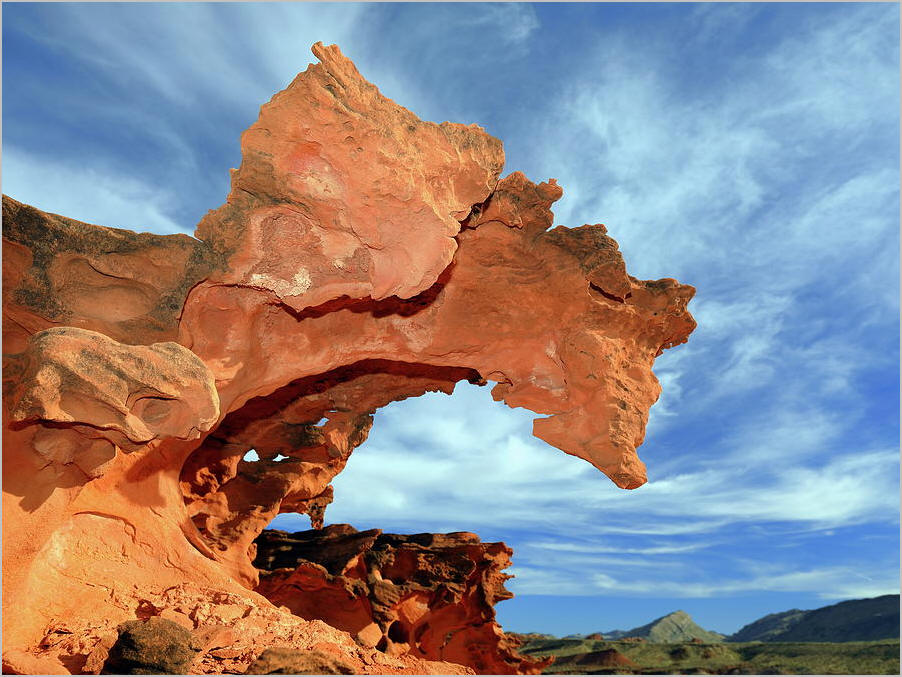
Gold Butte National Monument is a United States national monument located in Clark County, Nevada, northeast of Las Vegas and south of Mesquite and Bunkerville. The monument protects nearly 300,000 acres of desert landscapes featuring a wide array of natural and cultural resources, including rock art, sandstone towers, and important wildlife habitat for species including the Mojave Desert tortoise (a threatened species), bighorn sheep, and mountain lion. The area also protects historic ranching and mining sites such as the ghost town of Gold Butte, although little but mine openings, cement foundations, and a few pieces of rusting equipment remain. The monument is managed by the Bureau of Land Management.
The monument consists of 296,937 acres (120,166 ha). The Gold Butte National Monument fills a gap between Lake Mead National Recreation Area and Grand Canyon-Parashant National Monument, creating a continuous swath of conserved land and establishing a wildlife corridor. Significant wildlife within the borders of the park includes Mojave Desert tortoise (a threatened species), bighorn sheep, and mountain lion, as well as Gambel’s quail and chukar partridge. Important cultural and natural resources within the monument include rock art and sandstone formations. Within the park, “weather-chiseled red sandstone is incised with ancient rock art, and the remains of rock shelters and hearths, agave roasting pits and projectile points” may be found. Wikipedia
Scientists at the Large Hadron Collider (LHC) have recorded some highly unusual data that could point to an entirely new force of nature, which would mean a whole new area of physics. The secret lies in an elusive, unstable particle called a B meson, which isn’t biodegrading according to plan.
The scientists at the European Organization for Nuclear Research (CERN) call B mesons “tantalizing tensions,” since the particles break apart into different amounts of electrons and muons than the standard model of physics predicts they should.
B mesons are paired quarks that move together and rapidly decay. While scientists have noticed several previous anomalies in B mesons, this latest observation in decay mode is an even bigger deal. As the B mesons decay in the LHC, there are more electrons and fewer muons than there should be.
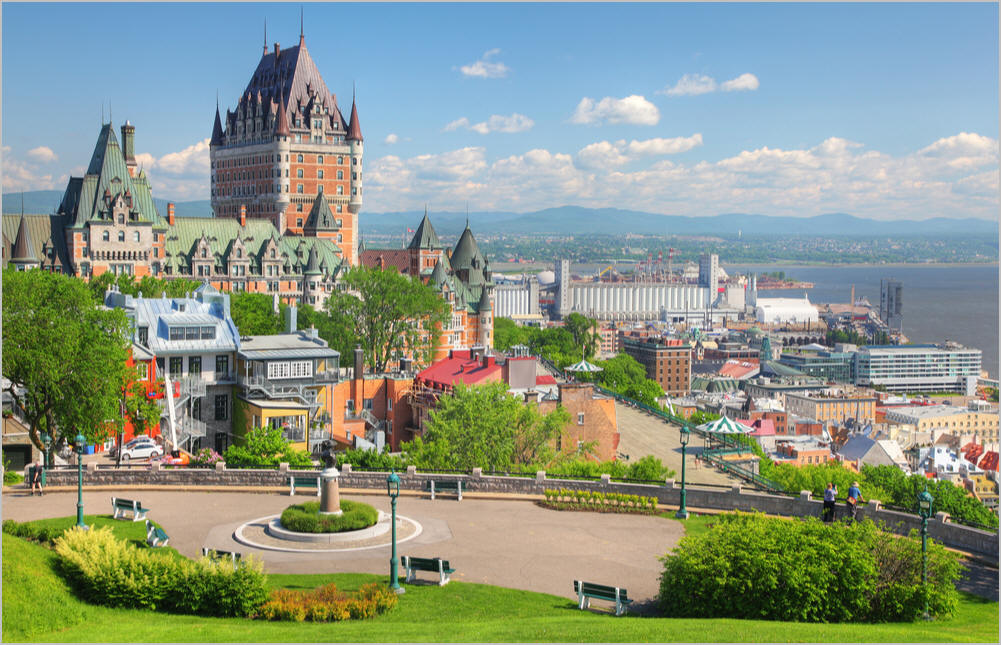
Quebec City is the capital city of the Canadian province of Quebec. As of July 2016, the city had a population of 531,902, and the metropolitan area had a population of 800,296. It is the eleventh-largest city and the seventh-largest metropolitan area in Canada. It is also the second-largest city in the province after Montreal.
The Algonquian people had originally named the area Kébec, an Algonquin word meaning “where the river narrows”, because the Saint Lawrence River narrows proximate to the promontory of Quebec and its Cape Diamant. Explorer Samuel de Champlain founded a French settlement here in 1608 and adopted the Algonquin name. Quebec City is one of the oldest European cities in North America. The ramparts surrounding Old Quebec (Vieux-Québec) are the only fortified city walls remaining in the Americas north of Mexico. This area was declared a World Heritage Site by UNESCO in 1985 as the “Historic District of Old Québec”. Wikipedia
“WHO ORDERED that?” This was the reaction, famous in particle-physics circles, of Isidor Isaac Rabi to the discovery of the muon. Rabi, a Nobel laureate who helped America develop the atom bomb, was reflecting physicists’ general surprise that muons, which are, to all intents and purposes, just heavy and unstable versions of electrons, actually exist. To an orderly physicist’s mind, they somehow seemed superfluous to Nature’s requirements.
Establishing the muon’s nature was, though, an important part of the creation of what is known as the Standard Model of particle physics. This, along with Einstein’s general theory of relativity (actually a theory of gravity), is one of the two foundation stones on which modern physics is built. Yet the Standard Model is known to be incomplete for several reasons, one of which is precisely the fact that it does not yet embrace gravity.
A quarter of the deep links in The New York Times articles are now rotten, leading to completely inaccessible pages, according to a team of researchers from Harvard Law School, who worked with the Times’ digital team. They found that this problem affected over half of the articles containing links in the NYT’s catalog going back to 1996, illustrating the problem of link rot and how difficult it is for context to survive on the web.
The study looked at over 550,000 articles, which contained over 2.2 million links to external websites. It found that 72 percent of those links were “deep,” or pointing to a specific page rather than a general website. Predictably, it found that, as time went on, links were more likely to be dead: 6 percent of links in 2018 articles were inaccessible, while a whopping 72 percent of links from 1998 were dead. For a recent, widespread example of link rot in practice, just look at what happened when Twitter banned Donald Trump: all of the articles that were embedded in his tweets were littered with gray boxes.
The team chose TheNew York Times in part because the paper is known for its archiving practices, but it’s not suggesting the Times is all that unusual in its link rot problems. Rather, it’s using the paper of record as an example of a phenomenon that happens all across the internet. As time goes by, the websites that once provided valuable insight, important context, or proof of contentious claims through links will be bought and sold, or simply just stop existing, leaving the link to lead to an empty page — or worse.
Film and Writing Festival for Comedy. Showcasing best of comedy short films at the FEEDBACK Film Festival. Plus, showcasing best of comedy novels, short stories, poems, screenplays (TV, short, feature) at the festival performed by professional actors.

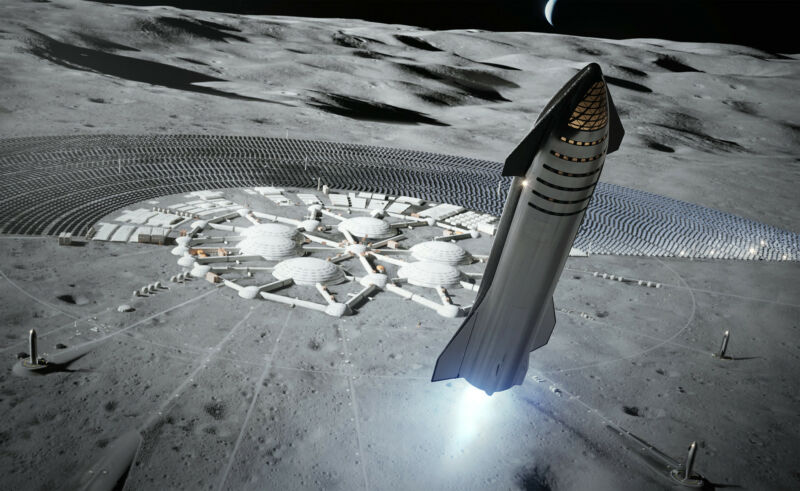 In the future, what might lunar exploration look like if NASA can send multiple Starships there each year? This SpaceX rendering offers a vision of one such future.



 Cindy Arnold Fermilab
/cdn.vox-cdn.com/uploads/chorus_image/image/69325497/VRG_ILLO_4489_003.0.jpg)

