
.
News You might have missed!
Use your browser or smartphone back arrow (<-) to return to this table for your next selection.
.
__________________________________________
Assorted human interest posts.
February 19, 2022
Crime, Food For Thought, Human Interest, Medical, missed News, Political, Science, Technical amazon, business, Business News, current-events, Future, Hotels, human-rights, medicine, mental-health, research, Science, Science News, technology, Technology News, travel, vacation Leave a comment
.
.
__________________________________________
February 19, 2022
Food For Thought, Human Interest amazon, business, Business News, current-events, Future, Hotels, human-rights, medicine, mental-health, research, Science, Science News, technology, Technology News, travel, vacation Leave a comment

.
The Highway to hell is bumper to bumper these days with suicide murderers, crazy lying politicians, unjustified murders, rapists, pedophiles, sociopaths, psychopaths, etc., etc., etc., etc…
.
 .
.
__________________________________________
February 18, 2022
Business, Enthralling, Human Interest, Photographs amazon, business, Business News, current-events, Future, Hotels, human-rights, medicine, mental-health, research, Science, Science News, technology, Technology News, travel, vacation Leave a comment

Click the link below the picture
.
Hungary is a landlocked country in Central Europe. Spanning 93,030 square kilometers (35,920 sq mi) of the Carpathian Basin, it is bordered by Slovakia to the north, Ukraine to the northeast, Romania to the east and southeast, Serbia to the south, Croatia and Slovenia to the southwest, and Austria to the west. Hungary has a population of nearly 10 million, mostly ethnic Hungarians and a significant Romani minority. Hungarian, the official language, is the world’s most widely spoken Uralic language and among the few non-Indo-European languages widely spoken in Europe. Budapest is the country’s capital and largest city; other major urban areas include Debrecen, Szeged, Miskolc, Pécs, and Győr.
The territory of present-day Hungary has for centuries been a crossroads for various peoples, including Celts, Romans, Germanic tribes, Huns, West Slavs, and the Avars. The foundations of the Hungarian state were established in the late ninth century AD with the conquest of the Carpathian Basin by Hungarian grand prince Árpád. His great-grandson Stephen I ascended the throne in 1000, converting his realm to a Christian kingdom. By the 12th century, Hungary became a regional power, reaching its cultural and political height in the 15th century. Following the Battle of Mohács in 1526, it was partially occupied by the Ottoman Empire (1541–1699). Hungary came under Habsburg rule at the turn of the 18th century, later joining with the Austrian Empire to form Austria-Hungary, a major power into the early 20th century.
Austria-Hungary collapsed after World War I, and the subsequent Treaty of Trianon established Hungary’s current borders, resulting in the loss of 71% of its territory, 58% of its population, and 32% of ethnic Hungarians. Following the tumultuous interwar period, Hungary joined the Axis Powers in World War II, suffering significant damage and casualties. Postwar Hungary became a satellite state of the Soviet Union, leading to the establishment of the Hungarian People’s Republic. Following the failed 1956 revolution, Hungary became a comparatively freer, though still repressive, member of the Eastern Bloc. The removal of Hungary’s border fence with Austria accelerated the collapse of the Eastern Bloc, and subsequently the Soviet Union. On 23 October 1989, Hungary became a democratic parliamentary republic. Hungary joined the European Union in 2004 and has been part of the Schengen Area since 2007.
Hungary is a middle power in international affairs, owing mostly to its cultural and economic influence. It is considered a developed country with a high-income economy and ranks 40th in the Human Development Index, with citizens enjoying universal health care and free-tuition secondary education. Hungary has a long history of significant contributions to arts, music, literature, sports, science, and technology. It is the thirteenth-most popular tourist destination in Europe, drawing 15.8 million international tourists in 2017. It is a member of numerous international organizations, including the United Nations, NATO, WTO, World Bank, IIB, the AIIB, the Council of Europe, and the Visegrád Group. Wikipedia
.
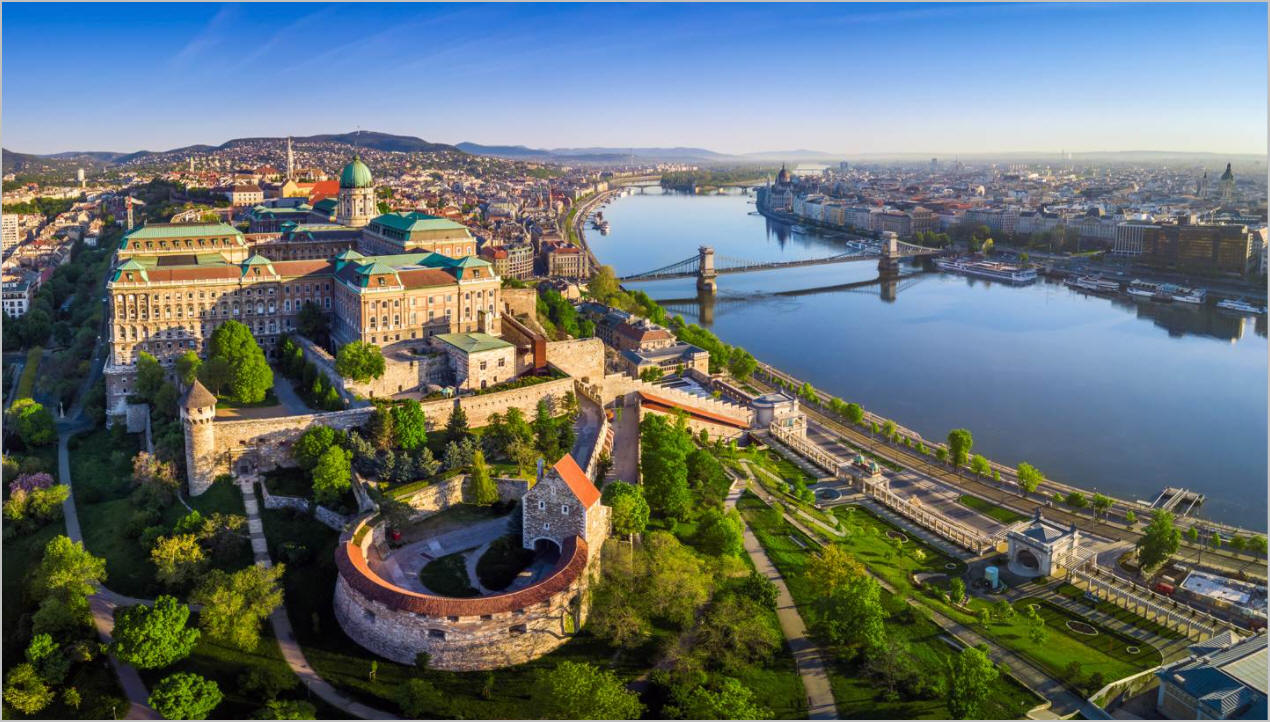 An image from Hungary
.
.
Click the link below for images:
.
__________________________________________
February 18, 2022
Business, Crime, Food For Thought, Human Interest, Medical, Science, Technical amazon, business, Business News, current-events, Future, Hotels, human-rights, medicine, mental-health, research, Science, Science News, technology, Technology News, travel, vacation 2 Comments

Click the link below the picture
.
A South Carolina psychologist tried to intervene with Dylann Storm Roof four months before Roof killed nine black worshipers at a Charleston church in 2015, but the attempt failed, according to newly unsealed federal court documents.
Roof, 22, who is white, was sentenced to death last month after his conviction on 33 federal hate crime charges in the massacre on June 17, 2015, at Emanuel African Methodist Episcopal Church, known as Mother Emanuel, one of the nation’s oldest and most revered historically black congregations.
According to some of the more than 170 previously, secret documents unsealed this week by U.S. District Judge Richard Gergel, several medical and psychological specialists concluded that Roof suffered from a variety of mental disorders. They include depression, social anxiety disorder and substance abuse, as well as possible autistic spectrum disorder, according to the documents.
A court-appointed psychologist concluded that Roof’s “high IQ is compromised by a significant discrepancy between his ability to comprehend and to process information and a poor working memory,” according to one of the documents, which was filed shortly before his trial began in December.
More dramatic was the intended testimony of Dr. Thomas Hiers, a board member and former director of the Charleston/Dorchester Community Mental Health Center.
.
 Police lead suspected shooter Dylann Roof into court after his capture in Shelby, North Carolina, on June 18, 2015.Jason Miczek / Reuters file
.
.
Click the link below for the article:
.
__________________________________________
February 18, 2022
Business, Food For Thought, Human Interest, Medical, Science, Technical amazon, business, Business News, current-events, Future, Hotels, human-rights, medicine, mental-health, research, Science, Science News, technology, Technology News, travel, vacation Leave a comment

Click the link below the picture
.
The wooly mammoth’s curving tusks and towering skeleton captures people’s imagination, as does the mystery of their extinction: Did human hunters kill the species? Did the end of the Ice Age and a changing climate decimate their food of choice? Now researchers have added a new theory to the list of potential mammoth killers. These titans may have had bones too weak to let them survive.
Sergei Leshchinskiy of Russia’s Tomsk State University analyzed more than 23,500 mammoth bones and teeth from several sites and found bone disease in 90 percent of them, reports Kate Horowitz for Mental Floss. This disease is most likely from nutrient deficiencies.
“Even the bones from baby mammoths were brittle and weak, which suggests their mothers weren’t getting the nutrients they needed,” Horowitz writes.
The new theory could tie up all of the stories about potential causes for mammoth demise into one tidy package: A period of changing climate could have leached minerals from the soil, resulting in osteoporosis and other bone diseases Leshchinskiy found. Weak bones would have made the beasts easier to hunt and kill, leaving mammoths on track for extinction.
.
/https://tf-cmsv2-smithsonianmag-media.s3.amazonaws.com/filer/74/44/74445303-eed6-42a5-8f16-60888ee31f6e/42-34917765.jpg) Science Picture Co./Corbis
Science Picture Co./Corbis
.
.
Click the link below for the article:
.
__________________________________________
February 18, 2022
Arts, Food For Thought, Human Interest, Medical, missed News, Political, Science, sports, Technical amazon, business, Business News, current-events, Future, Hotels, human-rights, medicine, mental-health, research, Science, Science News, technology, Technology News, travel, vacation Leave a comment
.
.
__________________________________________
February 17, 2022
Business, Enthralling, Human Interest, Photographs amazon, business, Business News, current-events, Future, Hotels, human-rights, medicine, mental-health, research, Science, Science News, technology, Technology News, travel, vacation Leave a comment
Click the link below the picture
.
Punta Gorda is a city in Charlotte County, Florida, United States. As of the 2010 U.S. Census, the city had a population of 16,641. It is the county seat of Charlotte County and the only incorporated municipality in the county. Punta Gorda is the principal city of the Punta Gorda, Florida Metropolitan Statistical Area and is also in the Sarasota-Bradenton-Punta Gorda Combined Statistical Area.
Punta Gorda was the scene of massive destruction after Charley, a Category 4 hurricane, came through the city on August 13, 2004. Charley was the strongest tropical system to hit Florida since Hurricane Andrew in 1992, and the first hurricane since Hurricane Donna in 1960 to make a direct hit on Florida’s southwest coast. In the immediate years following the storm, buildings were restored or built to hurricane-resistant building codes. The new buildings, restorations, and amenities concurrently preserved the city’s past while showcasing newer facilities. During this time, Laishley Park Municipal Marina was built and the Harborwalk, Linear Park, and various trails were created throughout the city for bicycle and pedestrian traffic.
Before the arrival of European explorers and settlers, the region centered on present-day Punta Gorda was home to the Calusa people. The name Punta Gorda (“Fat Point”) has been on maps at least since 1851, referring to a point of land that juts into Charlotte Harbor, an estuary off the Gulf of Mexico. It was in the late 1800s that early white settlers began to arrive in what is the present-day Punta Gorda area.
Frederick and Jarvis Howard, Union Army veterans, homesteaded an area south of the Peace River near present-day Punta Gorda about a decade after the close of the Civil War. In 1876, James and Josephine Lockhart bought land and built a house on property which is now at the center of the city. Approximately two years later Lockhart sold his claim to James Madison Lanier, a hunter and trapper, who lived there two years.
In 1879, a charter for a railroad with termini at Charlotte Harbor and Lake City, Florida was established under the name Gainesville, Ocala, and Charlotte Harbor Railroad. It was taken over by the Florida Southern Railroad, which reaffirmed Charlotte Harbor as a terminus in its own charter. 30.8 acres (12.5 ha) Then in 1883, Lanier sold his land to Isaac Trabue, who purchased additional property along the harbor and directed the platting of a town (by Kelly B. Harvey) named “Trabue”. Harvey recorded the plat on February 24, 1885. At the time, Isaac was in Kentucky, and his cousin, John Trabue, was in charge of selling lots. To insure success of his development, Trabue convinced the Florida Southern Railway to bring their road to his town on the south side of Charlotte Harbor. Wikipedia
.
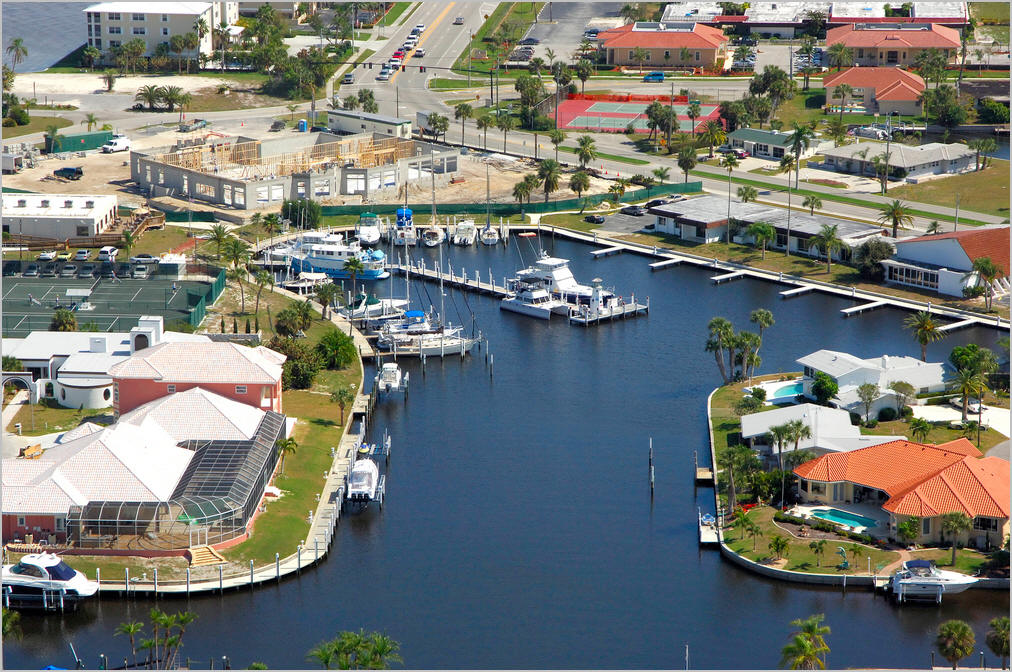 An image from Punta Gorda, Florida
.
.
Click the link below for article:
.
__________________________________________
February 17, 2022
Business, Enthralling, Food For Thought, Human Interest, Photographs, Political, Technical amazon, business, Business News, current-events, Future, Hotels, human-rights, medicine, mental-health, research, Science, Science News, technology, Technology News, travel, vacation Leave a comment

Click the link below the picture
.
I remember the moment the world got its first look at Kate Middleton’s Alexander McQueen lace gown like it was yesterday. On the day of her wedding to Prince William, the future king of England, I was in a conference room in the middle of the night breathlessly covering the event for the magazine website I was in charge of at the time. My team and I, quite literally, squealed when we saw it and then rushed to get our post up as quickly as possible.
Seven years later, I woke up in Los Angeles, where I was vacationing, to watch an American feminist/former Suits star marry my longest-term fictional boyfriend, my ginger prince, Henry Albert Charles David, a.k.a Harry. I was giddy with excitement for both if only being paid to wake up for one.
I truly won’t soon forget these iconic wedding images: of Meghan and her mother, Doria Ragland, driving to the church. Or, the vision of Pippa Middleton fixing her sister’s dress with their father by her side, not knowing she was about to make global headlines herself.
But my royal obsession goes back even further than that—to Princess Diana, who wed William and Harry’s father in 1981, and Grace Kelly, who married Prince Rainier III of Monaco in 1956. It didn’t matter that I was very young for Diana’s nuptials—and not even close to alive for Grace’s—they are part of our collective cultural memory for all time. Thanks to a weekly dose of People magazine, these bridal moments (and dresses) burned into my brain as a pop culture and royalty-obsessed child.
.
 Royal Weddings
.
.
Click the link below for the article:
.
__________________________________________
February 17, 2022
Business, Food For Thought, Human Interest, Science, Technical amazon, business, Business News, current-events, Future, Hotels, human-rights, medicine, mental-health, research, Science, Science News, technology, Technology News, travel, vacation Leave a comment

Click the link below the picture
.
Climate change is unforgiving when it comes to the world’s most enigmatic species. Penguins have been forced to climb cliffs to breed as sea ice melts. Polar bears are starving to death as they lose the means to hunt. And coral reefs around the globe are turning ghostly white.
Now, according to a report released this week by the World Wildlife Fund, we have another creature to add to a growing list of the imperiled. Populations of snow leopards, considered among the most elusive big cats on the planet, have declined more than 20 percent over the past 16 years. Should climate change continue unchecked, more than a third of the animals’ limited habitat may disappear.
The conservation group calls for urgent international action to protect these “ghost cats,” which live some 3,000 meters above sea level in the rocky mountains of Central Asia. There may be fewer than 4,000 snow leopards left in the wild. The animals have been classified by the International Union for Conservation of Nature as endangered since the mid-1980s.
Some of the prime drivers of the species’ decline are familiar — hunting, poaching, retribution killing by communities that lose livestock. But snow leopards are highly adapted to the snow-covered peaks far from humanity, with a coat that makes them near invisible when the weather is right.
Because climate change poses such a great threats to the planet’s cold places, including arid Asian mountain biomes, the cats themselves are at the mercy of a warming world.
.
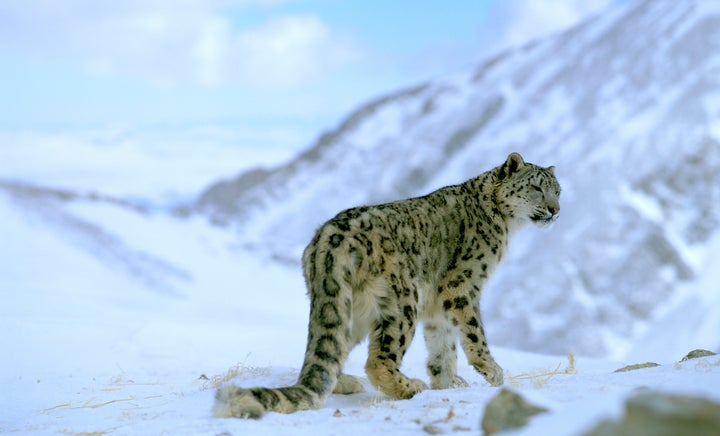 Credit: ©naturepl.com / Reinhard / ARCO / WWF
.
.
Click the link below for the article:
.
__________________________________________
February 17, 2022
Food For Thought, Human Interest, Medical, missed News, Political, Science, Technical amazon, business, Business News, current-events, Future, Hotels, human-rights, medicine, mental-health, research, Science, Science News, technology, Technology News, travel, vacation Leave a comment
.
.
__________________________________________
Find the Best Forex Broker for Your Trading Success
AS HUMILDES OPINIÕES DE UMA MULHER DE CORAGEM QUE DIZ SIM À VIDA!
Să facem glume, nu război
In the world, human beings are facing various problems. People who are full of greed, anger, and ignorance are seen to be fighting with each other in words and deeds. As the fighting continues, various problems such as civil wars, wars of aggression, and wars of aggression are occurring. As world peace is being destroyed, humans are facing unbearable problems. Innocent children and women are not getting the rights they deserve and deserve. I can't think of one thing every time. What is it? The United Nations. If we look at the responsibilities and duties of the United Nations, I think it is not suitable for solving the problems that are happening in the world today. In fact, the United Nations and the World Security Council, such an organization must rule the world, must be able to give orders, and must have various ways to obey orders. There must be no organization that can influence more than that organization. There should be experts from each country. They can even dominate the superpowers like the US, China, and Britain. Only then will global peace be achieved quickly. Now, if a country with power develops more militarily, economically, or socially than its own country, then powerful countries will jealously seek out enemies and wage war. Or they will attack with fighter jets. In this, innocent people are losing their lives. No one understands the value of a life. You should think about how to achieve global peace by controlling these. If the US continues to be the permanent president of the UN, world peace will never be achieved. If you think carefully, no one sees that they are working for the common good, but for their own benefit, for the benefit of their own country. The permanent president of the UN and the Security Council has rejected this, As a young Rohingya, I have come to realize that only by electing the president and secretary from among the countries in the world through a secret ballot system and governing the world fairly can we achieve global peace. The United Nations and the Security Council are organizations in which any country must govern, give orders, and make them obey their orders. For example, only when a defendant is tried in court can we hold the leaders of the countries in check and control them, can we achieve global peace smoothly. Otherwise, it will not be easy for powerful countries to use various excuses to end this war every year, every year, for the benefit of themselves and their countries. No country's leaders pay any attention to the words of the United Nations and the Security Council. If we look at it in practice, look at the Rohingya issue. Myanmar is a small country. Even that country has been under siege for 8 years. What action can be taken? Why is the UN and the Security Council Powerless? Without such Power, how can the organization bring about global peace? Everyone should think about it. Whether there is a veto or a strong one, all countries in the world can only achieve global peace if they are subject to the UN and the Security Council. Seek peace in the quiet embrace of nature. Peace is an indispensable need of the human race. It is not as if one person can kill another person, and it is as if one country can attack another country, but instead of trying to build peace, we must try to destroy the peace now, and the world is getting hotter and is on the verge of collapse. I especially appeal to all the world experts to urgently try to bring about peace in all parts of the world. Mr, Noor Muhamed Arkhan Rohingya Youth Myanmar
Publicație umoristică dedicată glumeților de pretutindeni
Faith saved us from the savages that we were, losing faith makes us savages again
Where Trends Meet Truth
https://www.tangietwoods
Freelance poetry writing
Zalai Betti
INOVATION BLOG PEOPLE AND NEWS
Németh György
Konsultan Lingkungan Hidup di Lombok - NTB
Lea Krasznai (LeaArt21) – Idezetek (Idézetek) WordPress (Budapest, Hungary)
Appunti, spunti e passioni in liberta'
Gyorgy Nemeth
تعنى بتقديم نصائح للمعلمين المبتدئين، والطلبة الممتحنين، ومشاركة الاخرين تجربة الادخار في المال، بترشيد الاستهلاك المنزلي، وترتيب البيت، والحفاظ على البيئة، وتشجيع السيارات صديقةالبيئة، والسياحة والاسفار، ونماء رؤوس الاموال، والطب البديل وتشجيع التعليم الرقمي والذكاء الاصطناعي، والعناية بالنحل وتربية الاسماك، والاسثمار في رؤوس الاموال، الزراعة العضوية، والعناية باسنان الرضع، و صحة الحوامل، وتفسير القران
apprendre pour évoluer
Thoughts on books, language, meaning, and the culture around it.
Outdoor Recreation & Adventure in the Great Lakes Region
News, Info, Bio, Articles, Reviews, Lyrics, Technology, Science, Inspiration, Motivation, Philosphy and many more...
Christian Lifestyle Blogger
CEO and president of The Mullins Companies
Two Cultures. One Life. Endless Stories
Real Estate Development Specialist
¡Bienvenido de vuelta viajero!
so looking to the sky ¡ sing and from my heart to YOU ¡ bring...
CEO and Founder of Nsight Health
Catholic News, Prayers, HD Images, Rosary, Music, Videos, Holy Mass, Homily, Saints, Lyrics, Novenas, Retreats, Talks, Devotionals and Many More
Decoding Power. Defying Narratives.
A creative collaboration introducing the art of nature and nature's art.
The Home Of Entertainment News, Reviews and Reactions
•Whenever you are confronted with an opponent, conquer him with love.(Gandhi)
Algotrader at TRADING-CLUBS.COM
Film and Writing Festival for Comedy. Showcasing best of comedy short films at the FEEDBACK Film Festival. Plus, showcasing best of comedy novels, short stories, poems, screenplays (TV, short, feature) at the festival performed by professional actors.
Peace. Tranquility. Insanity.
Take a ride on the wild side
Découvre des musiques prometteuses (principalement) dans la sphère musicale française.
No tiene que Ser una Pesadilla.
Life in Kana-text (er... CONtext)
Where feelings meet metaphors and make questionable choices.
Finding hope and peace through writing, art, photography, and faith in Jesus.

