Years ago, when my husband and I were dating, we were out at a concert when he headed to get us drinks. When I asked for an amaretto sour, I saw a shadow cross his face. A frisson of horror. A slight greening around the gills.
It turned out there had been an incident. He prefers not to speak of it, but for him, the amaretto sour would be more accurately called the Trigger Warning.
My husband is not alone. I’ve asked the question of many friends over the years, and it always brings forth a torrent of nostalgia laced with the farcical comedy of remembered shame. The question: Is there a drink that you have sworn off drinking again?
Why do corporations exist? These hierarchical, self-contained assemblies of labour, capital and know-how have been with us for so long that by now they seem almost ‘natural’. But apart from what they make or do or sell, the very structure of the company has a history.
The clearest rationale for corporations comes from the Nobel prizewinning economist Ronald Coase and his 1937 theory of the firm. Imagine you want to make money by selling widgets. What’s the best strategy: sign up talent individually and on a needs-only basis, or hire staff to do the various jobs in-house? Coase showed that it made more economic sense to incorporate as a company, because it allowed you to minimise three very important costs. The first reduction would come from resourcing: it’s less expensive to find and recruit people with the right skills and knowledge from inside the company than to look for them externally every time you want something done. The second line-item is transacting, or managing processes and resources: it’s less of an administrative burden to have teams in-house than to keep an eye on multiple external contractors. And finally there’s contracting: every time work takes place within a company, the rules and conditions are implied in the employment contract, not negotiated afresh each time. By reducing these three costs, Coase claimed, corporations are the optimal structures for increasing economic activity.
.
Going down? A businessman in the City financial district of London, UK Photo by Chris Ratcliffe/Bloomberrg/Getty
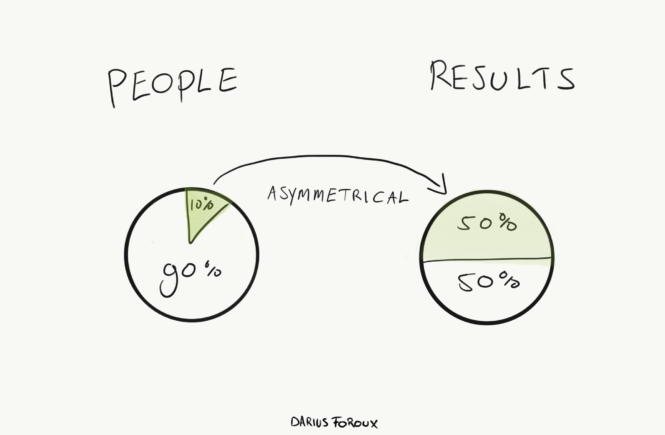
At my first sales job, I had about 25 colleagues who did the same work. After the first month, I noticed something peculiar.
Only 4 of my co-workers brought in more than half of the total sales. I was 17 years old at the time, and I had no idea why that was. These folks were the superstars on the floor — the untouchables.
Little did I know that this relation holds true for almost everything in business. It’s called Price’s square root law, and it originates from academia.
.
Example of how Price’s Law works in a field/company with 100 people
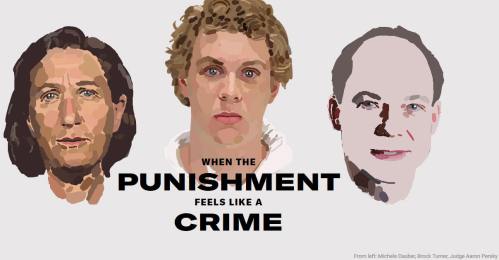
It didn’t take long for them to find her. Soon after Michele Dauber started teaching at Stanford Law School in the fall of 2001, a few female students came to her office and told her they had been sexually assaulted. After a time, she came to expect that if she kept her door open, especially in the first three months of the school year, a girl she had never met would come in, crying. “I know before she’s made it all the way through the door what she’s going to say,” Dauber said.
Dauber, now 53, is small and intense, with a wavy mop of graying hair. She seemed to understand the students’ distress in a way that other professors didn’t. She fought for the students in Stanford’s byzantine system; then, when recourse failed to come, she fought to change the system. The students in her class on college sexual assault, many of whom were themselves survivors, seemed “in awe” of her, a friend told me. Once, Dauber even let a student who no longer felt safe on campus live for a while in her Palo Alto home, along with her family, four chickens and a rescued cat. And then, on January 18, 2015, a friend of Dauber’s own daughter was assaulted—by a 19-year-old Stanford student named Brock Turner.
.
Brock Turner’s twisted legacy—and a Stanford professor’s relentless pursuit of justice
What started as a routine traffic stop for a broken taillight in Springfield, Massachusetts, has escalated into a succession of grisly discoveries that have shaken the blue-collar city.
Three bodies have been discovered at the home of an ex-con already at the center of a kidnapping and torture case — spurring authorities on Friday to use underground radar to search for more remains. A preliminary inspection found no additional bodies, officials said.
All three corpses were found “in and around” the home of Stewart Weldon, 40, who was arrested Sunday after the traffic stop when he bolted and led police on a chase that ended when he crashed into a patrol car, NBC10 Boston reported.
.
3 bodies found at Massachusetts home of an alleged kidnapper
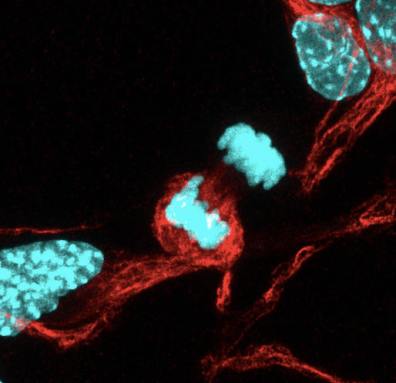
Darcie Moore is an expert on cargo. Not the kind you’d find on a freight train, though—it’s the cargo you’d find in stem cells, the kind that can transform into the different types of cells your body needs in your brain, skin, hair follicles, and lots of other places. They’re especially critical when we’re developing at an early age, but adults have them, too.
As stem cells grow and replicate, they can accumulate misfolded proteins and other gunk—“cargo”—that harms their function by, in Moore’s words, “exhausting” them. Nautilus caught up with Moore, a neuroscientist at the University of Wisconsin-Madison, to talk about how she investigates stem cell exhaustion and how it contributes to the puzzle of aging.
What do stem cells have to do with aging?
The theory is that during aging, your stem cells begin to dysfunction. For example, you begin to lose the ability to make pigment in your hair with aging due to melanocyte stem cells becoming depleted. Some of the concepts that apply to stem cell aging have been initially studied quite a bit in yeast, including the work my lab does, and it’s only recently that this work has started to take off in mammalian systems.
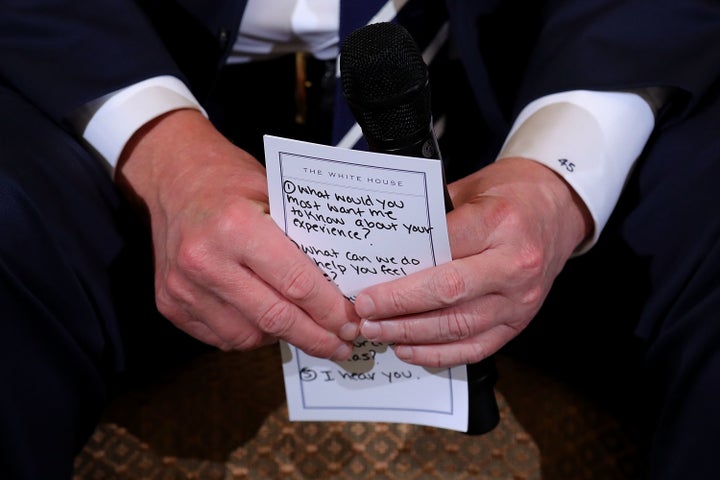
When President Donald Trump on Thursday met with victims, families and others affected by the shooting at Santa Fe High School in Texas, which left 10 people dead and 13 wounded, at least one parent was not impressed with his demeanor, continuing a pattern of the president failing to show empathy during tragedies.
Rhonda Hart, whose daughter, Kimberly Vaughan, was among eight students who died in the shooting last month, told The Associated Press her conversation with Trump “was like talking to a toddler.”
According to Hart, Trump repeatedly brought up arming teachers, a policy proposal he has frequently promoted after school shootings.
Hart, an Army veteran, said she also suggested employing veterans as sentinels in schools. She said Trump responded, “And arm them?” She replied, “No,” but said Trump “kept mentioning” arming classroom teachers. “It was like talking to a toddler,” Hart said.
She said the president also focused on the shooter and his appearance, repeatedly describing him as “wacky.”
.
Chip Somodevilla via Getty Images
Trump received backlash after being seen holding a notecard reminding him to tell shooting victims and families that “I hear you.”
Surveillance systems that track the locations of cellphone users and spy on their calls, texts and data streams are being turned against Americans as they roam the country and the world, say security experts and U.S. officials.
Federal officials acknowledged the privacy risk to Americans in a previously undisclosed letter from the Department of Homeland Security to Sen. Ron Wyden (D-Ore.) last week, saying they had received reports that “nefarious actors may have exploited” global cellular networks “to target the communications of American citizens.”
The letter, dated May 22 and obtained by The Washington Post, described surveillance systems that tap into a global messaging system that allows cellular customers to move from network to network as they travel. The decades-old messaging system, called SS7, has little security, allowing intelligence agencies and some criminal gangs to spy on unwitting targets — based on nothing more than their cellphone numbers.
Mario Batali, the world-famous chef and restaurateur who has been accused by at least 11 women of sexual misconduct, is the subject of an ongoing investigation by the New York Police Department into allegations of criminal sexual misconduct.
News of the investigation was first reported by the CBS news show “60 Minutes” this evening. A source at the NYPD confirmed the investigation to HuffPost but declined to elaborate further.
Sexual misconduct allegations against Batali first surfaced in December when Eater published a story detailing four women’s allegations against Batali that included sexual assault. At the time, Batali acknowledged that he engaged in inappropriate behavior and took leave from his restaurant group.
With each new school shooting — the latest left 10 dead Friday in Santa Fe, Texas — the routine of death and grief grows numbingly familiar, and so does the inescapable question: Is there any way for schools to stop them?
School districts trying to avoid becoming next on the list are urgently chasing answers, with an increasing number staking their hopes on high-tech security systems originally developed for the military, police and private industry.
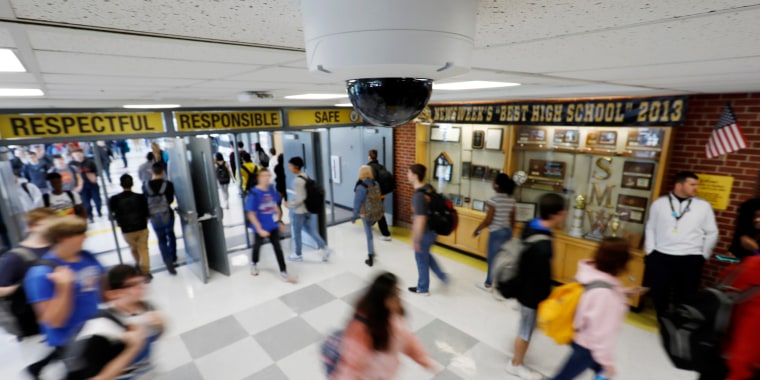
These modern tools range from instant background checks for visitors and social-media monitoring software to gunshot-detection sensors and ID cards equipped with panic buttons. They’re driving a rapidly growing school security market, which has ballooned to a multibillion-dollar industry — despite little proof that the new methods prevent violence.
.
One of more than 100 security cameras keeps watch during a class change at Shawnee Mission West High School, in Shawnee Mission, Kansas, on April 23, 2018.Colin E. Braley / for NBC News
In the world, human beings are facing various problems. People who are full of greed, anger, and ignorance are seen to be fighting with each other in words and deeds. As the fighting continues, various problems such as civil wars, wars of aggression, and wars of aggression are occurring. As world peace is being destroyed, humans are facing unbearable problems. Innocent children and women are not getting the rights they deserve and deserve. I can't think of one thing every time. What is it? The United Nations. If we look at the responsibilities and duties of the United Nations, I think it is not suitable for solving the problems that are happening in the world today. In fact, the United Nations and the World Security Council, such an organization must rule the world, must be able to give orders, and must have various ways to obey orders. There must be no organization that can influence more than that organization. There should be experts from each country. They can even dominate the superpowers like the US, China, and Britain. Only then will global peace be achieved quickly. Now, if a country with power develops more militarily, economically, or socially than its own country, then powerful countries will jealously seek out enemies and wage war. Or they will attack with fighter jets. In this, innocent people are losing their lives. No one understands the value of a life. You should think about how to achieve global peace by controlling these. If the US continues to be the permanent president of the UN, world peace will never be achieved. If you think carefully, no one sees that they are working for the common good, but for their own benefit, for the benefit of their own country. The permanent president of the UN and the Security Council has rejected this, As a young Rohingya, I have come to realize that only by electing the president and secretary from among the countries in the world through a secret ballot system and governing the world fairly can we achieve global peace. The United Nations and the Security Council are organizations in which any country must govern, give orders, and make them obey their orders. For example, only when a defendant is tried in court can we hold the leaders of the countries in check and control them, can we achieve global peace smoothly. Otherwise, it will not be easy for powerful countries to use various excuses to end this war every year, every year, for the benefit of themselves and their countries. No country's leaders pay any attention to the words of the United Nations and the Security Council. If we look at it in practice, look at the Rohingya issue. Myanmar is a small country. Even that country has been under siege for 8 years. What action can be taken? Why is the UN and the Security Council Powerless? Without such Power, how can the organization bring about global peace? Everyone should think about it. Whether there is a veto or a strong one, all countries in the world can only achieve global peace if they are subject to the UN and the Security Council. Seek peace in the quiet embrace of nature. Peace is an indispensable need of the human race. It is not as if one person can kill another person, and it is as if one country can attack another country, but instead of trying to build peace, we must try to destroy the peace now, and the world is getting hotter and is on the verge of collapse. I especially appeal to all the world experts to urgently try to bring about peace in all parts of the world. Mr, Noor Muhamed Arkhan Rohingya Youth Myanmar
Film and Writing Festival for Comedy. Showcasing best of comedy short films at the FEEDBACK Film Festival. Plus, showcasing best of comedy novels, short stories, poems, screenplays (TV, short, feature) at the festival performed by professional actors.

 (Washington Post Illustration/iStock)
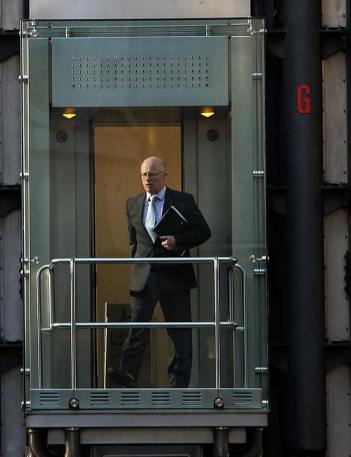 Going down? A businessman in the City financial district of London, UK Photo by Chris Ratcliffe/Bloomberrg/Getty




 .
.


 .
.
 One of more than 100 security cameras keeps watch during a class change at Shawnee Mission West High School, in Shawnee Mission, Kansas, on April 23, 2018.
