May 2, 2023
Mohenjo
Business, Food For Thought, Human Interest, Political, Science, Technical
amazon, business, Business News, current-events, Future, Hotels, human-rights, medicine, mental-health, research, Science, Science News, technology, Technology News, travel, vacation

Click the link below the picture
.
Dinosaurs have always seemed larger than life. They lived during a time when almost everything seemed bigger—titanic herbivores stretching more than 80 feet long were not uncommon, and nine-ton carnivores had to feast on hundreds of pounds of flesh each day to survive. This popular view of the Age of Dinosaurs overlooks the innumerable small species that lived alongside Stegosaurus and Triceratops, just as we’re surrounded by insects, birds, rodents, and other small animals today. It also falsely frames the end of this era as an end to the heyday of gigantism—but that’s only an illusion.
Life didn’t shrink after the end of the Cretaceous. Long past the Age of Dinosaurs, Earth saw the evolution of impressive birds, snakes, crocodiles, rhinos, and more, including the largest animals of all time. While the broader story of life on Earth may best be told through the diminutive and meek creatures that are often overlooked, here are ten animals that underscore the fact that remarkable body size was not just the domain of the dinosaurs.
.
:focal(800x602:801x603)/https://tf-cmsv2-smithsonianmag-media.s3.amazonaws.com/filer_public/4c/6d/4c6dfe2d-e3c8-4860-8b6f-b3997144b335/animalsafterdinos-v2_web.jpg) Many giant animals roamed the Earth after non-avian dinosaurs went extinct. Illustration by Emily Lankiewicz / Dmitry Bogdanov via Wikipedia under CC BY-SA 3.0 / Dmitry Bogdanov via Wikipedia under CC BY-SA 3.0 / Pagodroma721 via Wikipedia under CC BY-SA 4.0 / Sergiodlarosa via Wikipedia under CC BY-SA 4.0 / public domain
Many giant animals roamed the Earth after non-avian dinosaurs went extinct. Illustration by Emily Lankiewicz / Dmitry Bogdanov via Wikipedia under CC BY-SA 3.0 / Dmitry Bogdanov via Wikipedia under CC BY-SA 3.0 / Pagodroma721 via Wikipedia under CC BY-SA 4.0 / Sergiodlarosa via Wikipedia under CC BY-SA 4.0 / public domain
.
.
Click the link below for the article:
.
__________________________________________
May 2, 2023
Mohenjo
Business, Food For Thought, Human Interest, Political, Science, Technical
amazon, business, Business News, current-events, Future, Hotels, human-rights, medicine, mental-health, research, Science, Science News, technology, Technology News, travel, vacation

Click the link below the picture
.
Imagine an electron as a spherical cloud of negative charge. If that ball were ever so slightly less round, it could help explain fundamental gaps in our understanding of physics, including why the universe contains something rather than nothing.
Given the stakes, a small community of physicists has been doggedly hunting for any asymmetry in the shape of the electron for the past few decades. The experiments are now so sensitive that if an electron were the size of Earth, they could detect a bump on the North Pole the height of a single sugar molecule.
The latest results are in The electron is rounder than that.
The updated measurement disappoints anyone hoping for signs of new physics. But it still helps theorists to constrain their models for what unknown particles and forces may be missing from the current picture.
“I’m sure it’s hard to be the experimentalist measuring zero all the time, [but] even a null result in this experiment is really valuable and really teaches us something,” said Peter Graham, a theoretical physicist at Stanford University. The new study is “a technological tour de force and also very important for new physics.”
Poaching Elephants
The Standard Model of Particle Physics is our best roster of all the particles that exist in the universe’s zoo. The theory has held up exceptionally well in experimental tests over the past few decades, but it leaves some serious “elephants in the room,” said Dmitry Budker, a physicist at the University of California, Berkeley.
.
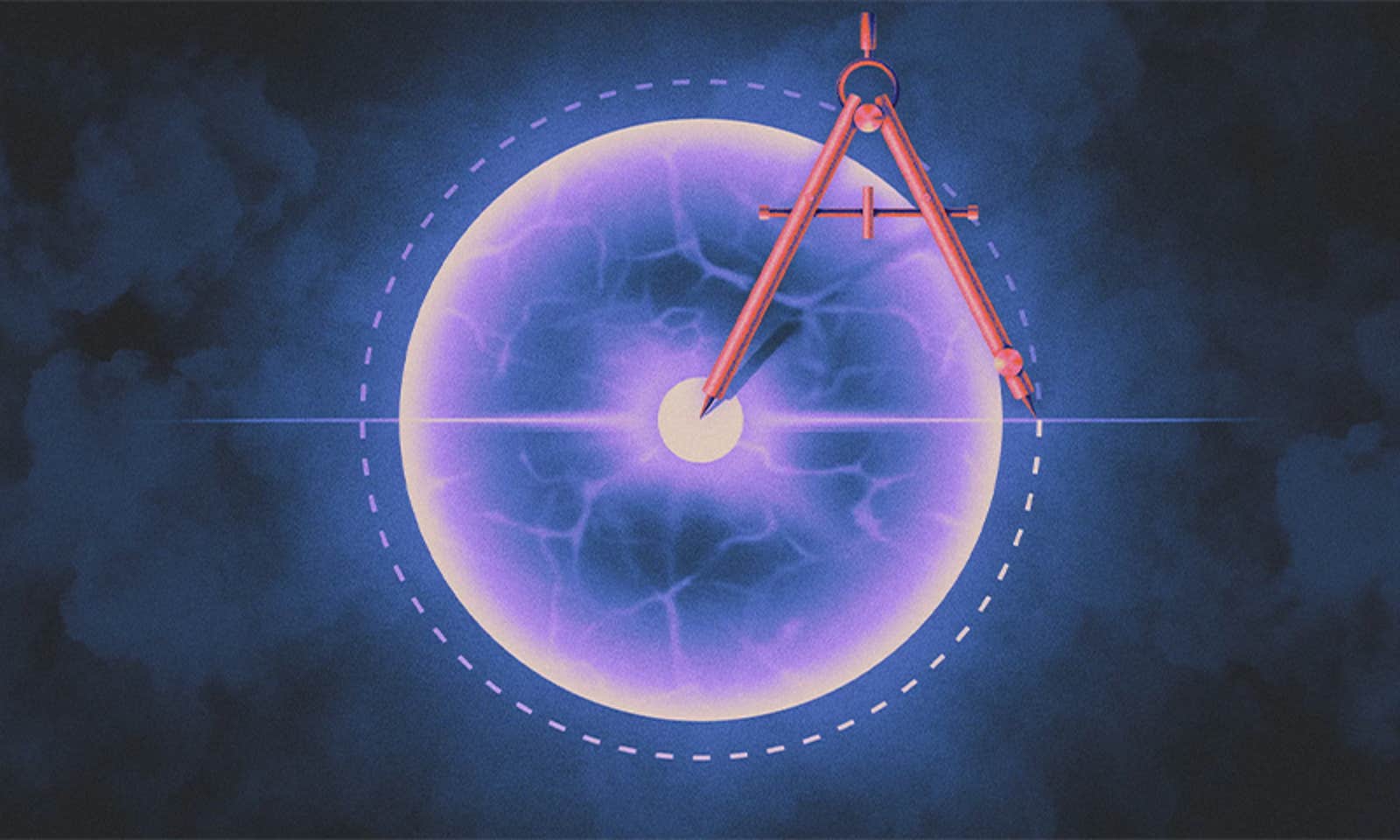 If the electron’s charge wasn’t perfectly round, it could reveal the existence of hidden particles. A new measurement approaches perfection.
.
.
Click the link below for the article:
.
__________________________________________
May 1, 2023
Mohenjo
Business, Food For Thought, Human Interest, Political, Science, Technical
amazon, business, Business News, current-events, Future, Hotels, human-rights, medicine, mental-health, research, Science, Science News, technology, Technology News, travel, vacation

Click the link below the picture
.
Jean-Marie Robine is not impressed by your centenarian grandma. Sure, she’s sprightly for her age, but how unusual is making it to 100, really? Robine is a demographer and longevity researcher, and in his home country of France alone there are 30,000 centenarians; 30 times more than there were half a century ago. Add up all the centenarians worldwide and you get to 570,000—an entire Baltimore’s worth of extremely long-lived humans. Having a birthday cake with 100 candles is nice, but nowadays it’s nothing special.
To really pique Robine’s interest we need to up the longevity stakes a little. He is an expert in supercentenarians: people who live to 110 or even longer. In the 1990s Robine helped validate the age of the oldest person who ever lived. Born in 1875, Jeanne Calment lived through 20 French presidents before dying in 1997 at the age of 122, five months, and 15 days. Since then Robine has become a collector of the super long-lived, helping run one of the largest and most detailed databases of extremely old people.
For Robine, each supercentenarian is a crucial data point in the quest to answer a big question: Is there an upper limit to the human lifespan? “There are still many things we don’t know. And we hate that,” says Robine. But there is an even more fundamental question that undercuts the whole field of longevity research. What if—in our quest to push the limits of human lifespan—we’re looking for answers in all the wrong places?
If you’ve ever read an interview with a supercentenarian, there is one question that will inevitably come up: What’s the secret? Well, take your pick. The secret is kindness. Not having children. Connecting with nature. Avoiding men. Or, being married. Smoking 30 cigarettes a day. Not smoking 30 cigarettes a day. Drinking whisky. Abstaining from alcohol altogether. We mine the lives of the super-old for hints on how we should live our own.
.
 Photograph: adventtr/Getty Images
.
.
Click the link below for the article:
.
__________________________________________
May 1, 2023
Mohenjo
Business, Food For Thought, Human Interest, Political, Science, Technical
amazon, business, Business News, current-events, Future, Hotels, human-rights, medicine, mental-health, research, Science, Science News, technology, Technology News, travel, vacation

Click the link below the picture
.
Hope feels elusive in America right now. Suicides and fatal drug overdoses—so-called deaths of despair resulting from a seeming lack of hope—are at unprecedented levels. Mental-health problems are on the rise: A recent CDC study of teenagers found a significant increase in sadness and vulnerability to suicide over the past decade, particularly among teen girls—a trend that began well before the coronavirus pandemic. In a recent Gallup poll, only 19 percent of Americans said they believe the country is going in the right direction.
What can our society do to encourage hope and combat despair? We might typically think of hope as a touchy-feely emotion that, almost by definition, is divorced from real-life experience. In fact, as more research is beginning to show, hope is an important scientific concept—something we can define, measure, analyze, and ultimately cultivate. Emotions are crucial to a range of human behaviors that have broader economic, social, and political consequences. And hope might just be the most important emotion in that equation, offering a new (if also ancient) way to think about issues such as health, poverty, inequality, education, and despair-related deaths.
.
 Illustration By Paul Spella / The Atlantic; Getty
.
.
Click the link below for the article:
.
__________________________________________
May 1, 2023
Mohenjo
Business, Food For Thought, Human Interest, Political, Science, Technical
amazon, business, Business News, current-events, Future, Hotels, human-rights, medicine, mental-health, research, Science, Science News, technology, Technology News, travel, vacation

Click the link below the picture
.
In modern times, clocks underpin everything people do, from work to school to sleep. Timekeeping is also the invisible structure that makes modern infrastructure work. It forms the foundation of the high-speed computers that conduct financial trading and even the GPS system that pinpoints locations on Earth’s surface with unprecedented accuracy.
But humans have likely lived by some version of the clock for a very long time. The ancient Egyptians invented the first water clocks and sundials more than 3,500 years ago. Before that, people likely tracked time with devices that did not survive in the archaeological record—such as an upright stick in the dirt that acted as a primitive sundial—or no device at all, says Rita Gautschy, an archeoastronomer at the University of Basel in Switzerland.
“It’s really difficult to get a grip on when people started with timekeeping,” Gautschy says. Simply by observing the location of the sunrise and the sunset each day and by watching how high the sun reaches in the sky, a person can construct a primitive calendar. These early human efforts at understanding the flow of time left no trace at all, she says.
.
 An ancient Chinese sundial is located at the Beijing Ancient Observatory in China. Credit: Penn Song/Getty Images
.
.
Click the link below for the article:
.
__________________________________________
April 30, 2023
Mohenjo
Business, Food For Thought, Human Interest, Political, Science, Technical
amazon, business, Business News, current-events, Future, Hotels, human-rights, medicine, mental-health, research, Science, Science News, technology, Technology News, travel, vacation

Click the link below the picture
.
By the time they enter kindergarten, most American children believe that being “thin” makes them more valuable to society, writes journalist Virginia Sole-Smith. By middle school, Sole-Smith says, more than a quarter of kids in the U.S. will have been put on a diet.
Sole-Smith produces the newsletter and podcast Burnt Toast, where she explores fatphobia, diet culture, parenting, and health. In her new book, Fat Talk: Parenting in the Age of Diet Culture, she argues that efforts to fight childhood obesity have caused kids to absorb an onslaught of body-shaming messages.
“The chronic experience of weight stigma … is similar to the research we see on chronic experiences of racism or other forms of bias,” Sole-Smith says. “This raises your stress level. This has you in a constant state of fight-or-flight, and stress hormones are elevated. That takes a toll on our bodies for sure.”
Sole-Smith says parents can combat American diet culture by reclaiming — and normalizing — the word “fat.” Instead of shushing a child in the grocery store who asks why a stranger is so fat, she advises parents to explain that bodies come in lots of shapes and sizes, some fat, some thin.
.
 Getty Images
.
.
Click the link below for the article:
.
__________________________________________
April 30, 2023
Mohenjo
Business, Food For Thought, Human Interest, Political, Science, Technical
amazon, business, Business News, current-events, Future, Hotels, human-rights, medicine, mental-health, research, Science, Science News, technology, Technology News, travel, vacation

Click the link below the picture
.
My first child, Penelope, was born at 6 a.m. As a result, our insurance covered two nights in the hospital. On our second night—when my husband had gone home to rest and prepare the house for our return—the nurses took Penelope for some tests and returned her at 2 a.m. I was sleeping. The nurse switched on the light and rolled the bassinet in; in addition to Penelope, the bassinet had a little sign: Breastfeeding Only.
“We weighed her,” the nurse said, “and she’s lost 11 percent of her body weight. Our limit is 10 percent, so you’ll have to start supplementing with formula. If you don’t, you probably won’t get to take her home tomorrow.” I felt rising panic—not take her home?—and also some confusion. 10 percent versus 11 percent? These seemed pretty similar—was that one percent really enough to prevent an otherwise healthy baby from coming home?
Obviously, you want your baby to thrive, and weight is an important metric. But many new parents are not expecting the tremendous focus doctors and hospital staff place on infant weight gain or loss. If you have happily given birth to a healthy baby after a relatively uneventful delivery, the vast majority of your hospital conversations will now revolve around the baby’s feeding and weight. That might sound like a fine idea, but remember this is not a moment you are at your most laissez-faire. When you’re just postpartum and trying to breastfeed for the first time, it can be incredibly tense. It can feel like you are failing—you did such a great job growing this baby inside you, and now that it’s out, you are a failure. (You’re not!! That’s just how it feels.)
.
 Illustration by Doris Liou.
.
.
Click the link below for the article:
.
__________________________________________
April 29, 2023
Mohenjo
Business, Food For Thought, Human Interest, Political, Science, Technical
amazon, business, Business News, current-events, Future, Hotels, human-rights, medicine, mental-health, research, Science, Science News, technology, Technology News, travel, vacation

Click the link below the picture
.
Life doesn’t always go your way. This is one of the hardest and most universal lessons we learn as we move out of toddlerhood and into childhood and later adulthood. While it’s normal for a small child to throw a tantrum when they don’t get what they want when they want it, as kids get bigger, the ability to tolerate discomfort is an important skill to master. They need to wait their turn, lose gracefully, deal with hunger, sensory stimulation, and have someone side with someone else’s argument.
If your child seems to lose their cool more often than their peers or be unable to “deal” with aggravation or irritation in a developmentally appropriate way, you may want to help them build their frustration tolerance. We spoke with psychiatrist and parent coach Jess Beachkofksy about ways you can help your child grow these skills.
Spotting frustration before they blow
You know what a tantrum looks like, but to help your child build frustration tolerance, begin to notice early signs that they are getting overwhelmed and likely to have a meltdown. Then, help them start to notice how they feel in these moments so they can start to find ways to cope. “Kids need to be able to identify when they are getting frustrated so that they can implement the skills that will help them work through it,” Beachkofsky says.
.
 Photo: Prostock-studio (Shutterstock)
.
.
Click the link below for the article:
.
__________________________________________
April 29, 2023
Mohenjo
Business, Food For Thought, Human Interest, Political, Science, Technical
amazon, business, Business News, current-events, Future, Hotels, human-rights, medicine, mental-health, research, Science, Science News, technology, Technology News, travel, vacation

Click the link below the picture
.
The world will be watching as King Charles III is crowned in a ceremony steeped in ancient tradition on 6 May. But in other monarchies around the globe, there are equally extraordinary coronation moments.
From calfskin crowns to a throne so sacred it can never be sat on, here’s a look at how some of the world’s remaining monarchies celebrate their kings and queens.
“Monarchy runs on ritual and ceremony”, says Dr. Elena Woodacre, a reader in renaissance history at the University of Winchester.
“There are elements you tend to see in different coronations”, she explains, “there’s always some kind of installation or enthronement. There’s usually regalia or ritual clothing and the sacred elements like the anointing.”
“These elements are important both for reaffirming the sovereign’s role but also reaffirming the relationship between the monarch and the subject”, she adds.
.
 Elephants parade near the Grand Palace in Bangkok to celebrate the Thai King’s coronation
.
.
Click the link below for the article:
.
__________________________________________
April 29, 2023
Mohenjo
Crime, Food For Thought, Human Interest, Medical, missed News, Political, Science, Technical
amazon, business, Business News, current-events, Future, Hotels, human-rights, medicine, mental-health, research, Science, Science News, technology, Technology News, travel, vacation

.
News You might have missed!
Use your browser or smartphone back arrow (<-) to return to this table for your next selection.
.
__________________________________________
Older Entries
Newer Entries
 James' World 2