October 17, 2015
Mohenjo
Science
amazon, business, Business News, Europe, Hotels, human-rights, Late Permian, Lystrosaurus, medicine, mental-health, paleontologist Peter Roopnarine, Permian, research, Science, Science News, Siberia, technology, Technology News, the “Great Dying” extinction event, travel, vacation

Click link below picture
.
Scientists know it as “the Great Dying.”
It happened in a geologic blink of an eye 252 million years ago. A vast volcanic vent in Siberia belched noxious gases and enough lava to build a new continent the size of Europe. The air grew warmer and drier, wildfires ravaged the landscape, and the oceans turned toxic. Over the course of a few tens of thousands of years 90 percent of all ocean species and three quarters of life on land was lost.
“It was devastating,” said paleontologist Peter Roopnarine. “The closest life on Earth has ever gotten to vanishing completely.”
.
An artist’s reconstruction of the Late Permian, showing a lucky Lystrosaurus and various Permian vegetation. The Lystrosaurus was one of the few species to survive the “Great Dying” extinction event, which wiped out nearly all life on Earth. (Marlene Hill Donnelly)
.
.
Click link below for article:
http://www.washingtonpost.com/news/morning-mix/wp/2015/10/08/who-dies-and-who-survives-during-a-mass-extinction-a-tantalizing-clue/
.
__________________________________________
October 17, 2015
Mohenjo
Science
October 11, 2015
Mohenjo
Science
amazon, ant island, ant raft, ants, business, Business News, fire ants, floating ant raft, Hotels, human-rights, medicine, mental-health, research, Science, Science News, South Carolina, south carolina ants, south carolina flooding, technology, Technology News, travel, vacation
FROM

Click link below picture
.
As South Carolina recovers from heavy rain and flooding, one insect is showing off its clever strategy for survival.
Fox Carolina’s Adrian Acosta recorded footage of a group of fire ants clinging together to form a life raft as they float on the water.
Acosta said he initially thought he was looking at a pile of mud, but closer examination revealed a swarm of ants.
.
 .
.
.
Click link below for story, video and slideshow:
http://www.huffingtonpost.com/entry/fire-ant-island-flooding_5613c59ce4b022a4ce5f569a?cps=gravity_5027_-4949409254678072809
.
__________________________________________
October 7, 2015
Mohenjo
Science
 James' World

Click link below picture
.
A 9,000-year-old skull found during an excavation of Brazilian ruins represents the earliest known instance of ritual decapitation in the Americas, researchers have determined. The skull was found in 2007, at a dig site in central eastern Brazil known as Lapa do Santo, but studies of it have only just been completed, and were published Wednesday in the journal PLoS One.
André Strauss and colleagues from Germany’s Max Planck Institute for Evolutionary Anthropology examined the skull and nearby bones and objects minutely and tested their age with radiocarbon dating. The remains were found to be between 9,127 and 9,438 years old — 4,000 years older than the earliest known decapitation in South America, and 1,000 years older than that from North America.
.
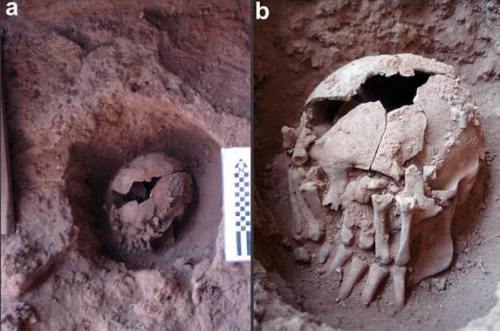 The skull of Burial 26. The right hand was removed and placed on the face, apparently as part of the burial ritual.
View original post 16 more words
October 6, 2015
Mohenjo
Science
amazon, Andromede Oceanology Ltd, business, Business News, coelacanth, dinosaur age, extant coelacanth L. chalumnae, Hotels, human-rights, medicine, mental-health, Mesozoic era, nonavian dinosaurs, research, Science, Science News, Sodwana Bay in South Africa, technology, Technology News, travel, vacation

Click link below picture
.
Before the dinosaur age, the coelacanth — a hefty, mysterious fish that now breathes with its gills — sported a well-developed lung, a new study finds.
This lung likely helped the fish survive in low-oxygen, shallow waters hundreds of millions of years ago, the researchers said. During the Mesozoic era, more commonly known as the dinosaur age, it’s likely that some species of coelacanth (see-leh-kanth) moved to deeper waters, stopped using their lungs and began relying exclusively on their gills to breathe, the researchers said.
This adaptation to deep water likely helped coelacanths survive the asteroid that slammed into ancient Earth and killed the nonavian dinosaurs, the researchers said. The fish’s gill- and lung-breathing relatives were not as lucky; during the Late Cretaceous period, about 66 million years ago, coelacanths living in shallow waters disappear from the fossil record, they said.
.
 At a 427-foot depth off Sodwana Bay in South Africa, the extant coelacanth L. chalumnae swims in its natural environment. Laurent Ballesta / Andromede Oceanology Ltd
.
.
Click link below for article:
http://www.nbcnews.com/science/weird-science/ancient-human-size-fish-breathed-lungs-n428416
.
__________________________________________
September 30, 2015
Mohenjo
Science
amazon, Archaeology, business, Business News, Egypt, Hotels, huffingtonpost, human-rights, King Tut, king tut's tomb, medicine, mental-health, queen nefertiti, research, Science, Science News, Slideshow, technology, Technology News, travel, Tutankhamun, vacation, Video
FROM

Click link below picture
.
King Tut’s tomb may be hiding a huge secret.
Egyptian officials said on Monday there’s evidence of two hidden chambers behind the tomb’s famous painted walls — and one expert believes those secret rooms could be the long-lost final resting place of Queen Nefertiti.
Monday’s inspection of the walls of the 3,300-year-old tomb revealed scratches and other markings.
“This indicates that the western and northern walls of Tutankhamun’s tomb could hide two burial chambers,” Mamdouh Eldamaty, Egypt’s antiquities minister, told Ahram Online.
.
 ASSOCIATED PRESS
King Tut’s tomb seen in a 2007 file photo. Egyptian officials believe there may be two hidden burial chambers beyond the walls of the tomb.
.
.
Click link below for story and video:
http://www.huffingtonpost.com/entry/king-tuts-tomb-secret-chambers_560a0aece4b0af3706dda13b?cps=gravity_2692_-7347363654480353748
.
__________________________________________
September 24, 2015
Mohenjo
Science
amazon, American Southwest, business, Business News, Hotels, human-rights, Mars, medicine, mental-health, NASA's Curiosity rover, Petrified Sand Dunes on Mars, research, ridge on a lower slope of Mars' Mount Sharp, Science, Science News, Stimson unit, technology, Technology News, travel, vacation

Click link below picture
.
While petrified sand dunes can be found in the American Southwest, these ones were spotted a little farther from home — on the lower slopes of Mount Sharp on Mars.
.
Captured in late August by NASA’s Curiosity rover, this image shows a layer of sandstone that researchers are calling the “Stimson unit.” It sits over a layer of mudstone, which was deposited there long ago in a “lake environment.”
NASA believes they formed much like petrified sand dunes on Earth, created by blowing winds and then cemented into rock.
.
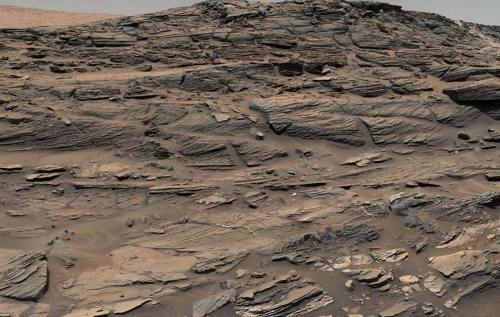 Large-scale crossbedding in the sandstone of this ridge on a lower slope of Mars’ Mount Sharp is common in petrified sand dunes. JPL / NASA
.
.
Click link below for article:
http://www.nbcnews.com/science/space/petrified-sand-dunes-mars-captured-nasas-curiosity-rover-n426016
.
__________________________________________
September 18, 2015
Mohenjo
Science
amazon, business, Business News, Hotels, human-rights, medicine, mental-health, research, Science, Science News, technology, Technology News, travel, vacation
FROM
Click link below picture
.
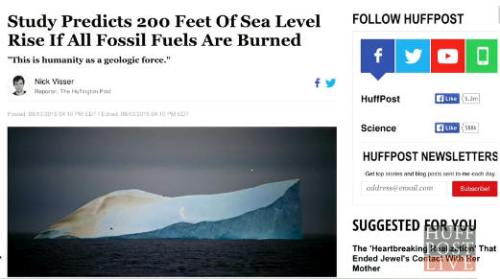
“To be blunt: If we burn it all, we melt it all.”
So says Ricarda Winkelmann, the lead author of a new paper that paints a dire picture of our planet should we continue to extract and burn the world’s coal, oil and natural gas reserves.
Published Friday in the journal Science Advances, the study forecasts sea levels rising more than 200 feet should all fossil fuels be used by humanity. In such a scenario, the entire ice sheet covering Antarctica, as well as every bit of land ice on Earth, would melt.
.
 .
.
.
Click link below for story and video:
http://www.huffingtonpost.com/entry/fossil-fuels-sea-levels-study_55f5c683e4b063ecbfa4aa76
.
__________________________________________
September 12, 2015
Mohenjo
Science
September 12, 2015
Mohenjo
Science
amazon, anthropology, Archeology, business, Business News, Daily Discovery, evolution, fossil, Hotels, human-origins, human-rights, medicine, mental-health, research, Science, Science News, technology, Technology News, travel, Unearthed, vacation
FROM
Click link below picture
.
Fossils belonging to a previously unknown species of human relative have been discovered in a cave system northwest of Johannesburg, South Africa, an international team of scientists announced Thursday.
The discovery of Homo naledi is expected to shed new light on the human family tree, according to a written statement released by the National Geographic Society, the University of Witwatersrand, and the South African Department of Science and Technology.
What’s more, the fossils seem to indicate that H. naledi deposited the bodies of its dead in a remote part of the cave — a behavior previously believed to have been practiced only by humans. In all, an astonishing 1,550 fossils belonging H. naledi were found in the Rising Star cave system.
.

.
.
Click link below for story, video and photos:
http://www.huffingtonpost.com/entry/new-species-of-human-relative-discovered_55f09c1ce4b093be51bd679f
.
__________________________________________
Older Entries
Newer Entries




 Herbal Insect Repellents
 James' World 2