With a revolutionary new heat exhaust system, scientists in England might have just found the key to unlocking a cooler future for nuclear fusion—and brought the world one step closer to actually realizing the long-promised next frontier for energy.
Scientists have worked for decades on different tokamak reactors, or donut-shaped chambers in which atoms are combined (fused, for fusion) to generate plentiful energy. The white-hot plasma can reach 100 million degrees Fahrenheit or more, causing heavy wear and tear on all the components of these reactors.
There are downsides and controversial elements to fusion research. So far, no tokamak reactor has “recouped” its own energy cost—not even close!—so no one has demonstrated that nuclear fusion even works as an energy source, let alone the plentiful source its advocates say it will be.
.
U.K. Atomic Energy Authority/Culham Centre for Fusion Energy/EUROFusion
“WHO ORDERED that?” This was the reaction, famous in particle-physics circles, of Isidor Isaac Rabi to the discovery of the muon. Rabi, a Nobel laureate who helped America develop the atom bomb, was reflecting physicists’ general surprise that muons, which are, to all intents and purposes, just heavy and unstable versions of electrons, actually exist. To an orderly physicist’s mind, they somehow seemed superfluous to Nature’s requirements.
Establishing the muon’s nature was, though, an important part of the creation of what is known as the Standard Model of particle physics. This, along with Einstein’s general theory of relativity (actually a theory of gravity), is one of the two foundation stones on which modern physics is built. Yet the Standard Model is known to be incomplete for several reasons, one of which is precisely the fact that it does not yet embrace gravity.
A quarter of the deep links in The New York Times articles are now rotten, leading to completely inaccessible pages, according to a team of researchers from Harvard Law School, who worked with the Times’ digital team. They found that this problem affected over half of the articles containing links in the NYT’s catalog going back to 1996, illustrating the problem of link rot and how difficult it is for context to survive on the web.
The study looked at over 550,000 articles, which contained over 2.2 million links to external websites. It found that 72 percent of those links were “deep,” or pointing to a specific page rather than a general website. Predictably, it found that, as time went on, links were more likely to be dead: 6 percent of links in 2018 articles were inaccessible, while a whopping 72 percent of links from 1998 were dead. For a recent, widespread example of link rot in practice, just look at what happened when Twitter banned Donald Trump: all of the articles that were embedded in his tweets were littered with gray boxes.
The team chose TheNew York Times in part because the paper is known for its archiving practices, but it’s not suggesting the Times is all that unusual in its link rot problems. Rather, it’s using the paper of record as an example of a phenomenon that happens all across the internet. As time goes by, the websites that once provided valuable insight, important context, or proof of contentious claims through links will be bought and sold, or simply just stop existing, leaving the link to lead to an empty page — or worse.
With the caye split into two and corals smashed into rubble, the underwater world at Laughing Bird Caye National Park off the coast of Belize looked nothing like the vibrant and colorful place that had thrived with life before Hurricane Iris swept across it in 2001. The storm left the water murky and muddy while rotting dead creatures washed ashore.
When Lisa Carne first visited the island in 1994, there were so many large, bright reddish-orange interlocking elkhorn corals that she could hardly swim through or around them. The reef was abundant in fish, corals, lobsters, crabs, sponges, and sea turtles. But after the hurricane, all of this was destroyed. With only a few surviving corals, the scene looked more like a graveyard.
It was not the first time Carne had seen a dead reef. In 1995, she moved full-time to Belize from California and volunteered as a research assistant at Carrie Bow Cay, a Smithsonian field station. She witnessed the effects of the first coral bleaching event in Belize, home to the second-longest barrier reef in the world. Bleaching events leave the structure of corals intact, but strip it of the algae that live in an endosymbiotic relationship with the coral polyps. Some coral recover from such events as the algae returns, although many die.
In the world, human beings are facing various problems. People who are full of greed, anger, and ignorance are seen to be fighting with each other in words and deeds. As the fighting continues, various problems such as civil wars, wars of aggression, and wars of aggression are occurring. As world peace is being destroyed, humans are facing unbearable problems. Innocent children and women are not getting the rights they deserve and deserve. I can't think of one thing every time. What is it? The United Nations. If we look at the responsibilities and duties of the United Nations, I think it is not suitable for solving the problems that are happening in the world today. In fact, the United Nations and the World Security Council, such an organization must rule the world, must be able to give orders, and must have various ways to obey orders. There must be no organization that can influence more than that organization. There should be experts from each country. They can even dominate the superpowers like the US, China, and Britain. Only then will global peace be achieved quickly. Now, if a country with power develops more militarily, economically, or socially than its own country, then powerful countries will jealously seek out enemies and wage war. Or they will attack with fighter jets. In this, innocent people are losing their lives. No one understands the value of a life. You should think about how to achieve global peace by controlling these. If the US continues to be the permanent president of the UN, world peace will never be achieved. If you think carefully, no one sees that they are working for the common good, but for their own benefit, for the benefit of their own country. The permanent president of the UN and the Security Council has rejected this, As a young Rohingya, I have come to realize that only by electing the president and secretary from among the countries in the world through a secret ballot system and governing the world fairly can we achieve global peace. The United Nations and the Security Council are organizations in which any country must govern, give orders, and make them obey their orders. For example, only when a defendant is tried in court can we hold the leaders of the countries in check and control them, can we achieve global peace smoothly. Otherwise, it will not be easy for powerful countries to use various excuses to end this war every year, every year, for the benefit of themselves and their countries. No country's leaders pay any attention to the words of the United Nations and the Security Council. If we look at it in practice, look at the Rohingya issue. Myanmar is a small country. Even that country has been under siege for 8 years. What action can be taken? Why is the UN and the Security Council Powerless? Without such Power, how can the organization bring about global peace? Everyone should think about it. Whether there is a veto or a strong one, all countries in the world can only achieve global peace if they are subject to the UN and the Security Council. Seek peace in the quiet embrace of nature. Peace is an indispensable need of the human race. It is not as if one person can kill another person, and it is as if one country can attack another country, but instead of trying to build peace, we must try to destroy the peace now, and the world is getting hotter and is on the verge of collapse. I especially appeal to all the world experts to urgently try to bring about peace in all parts of the world. Mr, Noor Muhamed Arkhan Rohingya Youth Myanmar
Film and Writing Festival for Comedy. Showcasing best of comedy short films at the FEEDBACK Film Festival. Plus, showcasing best of comedy novels, short stories, poems, screenplays (TV, short, feature) at the festival performed by professional actors.

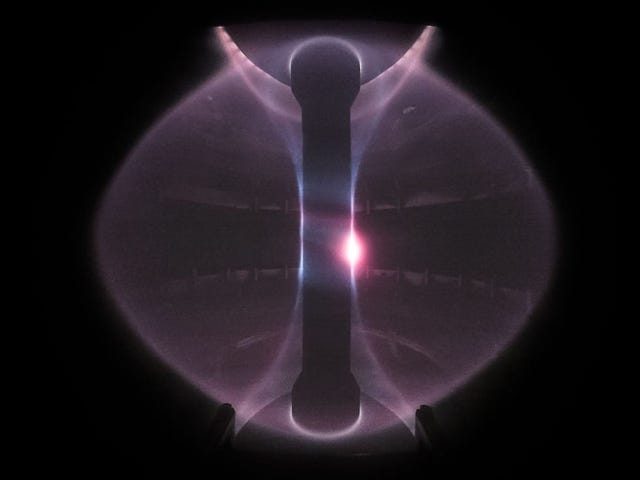 U.K. Atomic Energy Authority/Culham Centre for Fusion Energy/EUROFusion




 Cindy Arnold Fermilab