
.
News You might have missed!
Use your browser or smartphone back arrow (<-) to return to this table for your next selection.
.
__________________________________________
Assorted human interest posts.
September 26, 2021
Crime, Finance, Food For Thought, Human Interest, Medical, missed News, Political, Science, Technical amazon, business, Business News, current-events, Future, Hotels, human-rights, medicine, mental-health, research, Science, Science News, technology, Technology News, travel, vacation Leave a comment
.
.
__________________________________________
September 25, 2021
Business, Food For Thought, Human Interest, Science, sports, Technical amazon, business, Business News, current-events, Future, Hotels, human-rights, medicine, mental-health, research, Science, Science News, technology, Technology News, travel, vacation Leave a comment

Click the link below the picture
.
Ten days before our interview, Venus Williams made it clear how she handles the press: “I know every single person asking me a question can’t play as well as I can and never will.” Sitting in a media room at the French Open, eyes shadowed by a baseball cap, she scanned the room. “No matter what you say or what you write, you’ll never light a candle to me.”As the mic drop reverberated across the internet, it dawned on me that I would have to be the one to pick said mic back up and ask Venus to elaborate. Some writers may have found that intimidating, but I felt the opposite—her words made me feel confident, empowered. Black women are often taught that we have to be “twice as good to get half as far” as our white counterparts in any given industry, and we rarely get to say aloud what it means when we succeed—that we are, in fact, the baddest bitch in the room (or as track and field star Sha’Carri Richardson would later succinctly put it, “that girl”).
That’s why I was fully prepared, as I opened my laptop for our Zoom, to honor the fact that Venus would once again be the best in the “room.” What I wasn’t prepared for, before I even asked my first question, was a compliment. “Your articles are beautiful,” Venus said, sitting in front of her laptop in a silky pajama-style top, hair pulled back in a low bun, ornate chandelier casually twinkling behind her. “As someone who can’t write, I admire those who have that skill.” The thousands of miles between her chic Paris hotel room and my apartment in California weren’t enough to dull my shock. Venus Williams had just thrown me off my game and we weren’t even on a court. Still, I felt it again: empowered. Here was one of the world’s greatest athletes going out of her way to acknowledge the singular thing I do better than she does—the thing that I, too, had to work twice as hard on to meet her at this moment. Of course, I’m guessing that was her point.
.

.
.
Click the link below for the article:
.
__________________________________________
September 25, 2021
Business, Food For Thought, Human Interest, Science, Technical amazon, business, Business News, current-events, Future, Hotels, human-rights, medicine, mental-health, research, Science, Science News, technology, Technology News, travel, vacation Leave a comment

Click the link below the picture
.
We spend a lot of energy looking for shortcuts to save time, and sure, those shortcuts add up. But when I look back, my biggest time regrets aren’t spending too much time on Twitter or mismanaging my daily tasks. Those are bad habits, but there are bigger, more systematic time wasters that have really gotten in the way. Fixing these will free up a massive amount of time and energy.
Not Asking for Help
My first week on my first job out of university, my boss handed me a huge spreadsheet. He told me to organize it in a way that made zero sense to me. Being a quiet, timid person, I simply nodded, walked back to my desk, and stared at that spreadsheet for like an hour, hoping to make some sense of it (yep, just like George Costanza and the Penske file).
Finally, my coworker came in, and I confessed I had no idea what to do. He broke it down for me, then dropped some advice that’s stuck with me ever since: “You might feel dumb asking questions, but you look dumber when you don’t get it because you failed to ask.”
.
 Not asking (one of many)
.
.
Click the link below for the article:
.
__________________________________________
September 25, 2021
Crime, Food For Thought, Human Interest, missed News, Science, Technical amazon, business, Business News, current-events, Future, Hotels, human-rights, medicine, mental-health, research, Science, Science News, technology, Technology News, travel, vacation Leave a comment
.
.
__________________________________________
September 24, 2021
Business, Food For Thought, Human Interest, Science, sports, Technical amazon, business, Business News, current-events, Future, Hotels, human-rights, medicine, mental-health, research, Science, Science News, technology, Technology News, travel, vacation Leave a comment

Click the link below the picture
.
Let’s start here: Paul Pierce isn’t sorry.
Not for the video, that minutes-long clip that made the rounds on social media, the one that cost Pierce his job at ESPN. Honestly, Pierce didn’t even know he made a video. Here’s what happened: In April, Pierce was playing poker at a friend’s house in Los Angeles. There was drinking. And smoking. And strippers. And after a little too much drinking and smoking, Pierce decided to start an Instagram Live and, well, show off the strippers. He went on for a few minutes, riffing, he thought, for a couple hundred people. When he finished, he deleted it. He didn’t know IG Lives can be recorded (they can) and reposted (it was). Pierce went home that night thinking no one noticed. He woke up the next day and discovered everyone had.
Still . . . sorry? “For what?” asks Pierce. It’s early July, and Pierce is reclining in a straight-backed chair at The Spot, a hookah lounge tucked into a strip mall in Encino, Calif. Around him, clusters of 20- and 30-somethings, many on laptops huddled over glowing screens, oblivious to the presence of basketball royalty. Hours earlier, Pierce was at home, a tailor dispatched by the Basketball Hall of Fame taking measurements for a suit to fit Pierce’s 6’7” frame. “I haven’t bought a new suit since I retired,” says Pierce. But he needed something to wear in September for his enshrinement in Springfield, Mass., 90 miles from where he spent the bulk of his 19-year NBA career.
.
 Kohjiro Kinno/Sports Illustrated
.
.
Click the link below for the article:
.
__________________________________________
September 24, 2021
Business, Food For Thought, Human Interest, Science, Technical amazon, business, Business News, current-events, Future, Hotels, human-rights, medicine, mental-health, research, Science, Science News, technology, Technology News, travel, vacation Leave a comment

Click the link below the picture
.
The idea that materialistic values can obstruct our path to happiness dates back hundreds of years. The Buddha encouraged a balance between asceticism and pleasure; early Christian monasticism preached spiritual transformation through simple living; philosopher Lao Tzu warned that if you chase after money, “your heart will never unclench.”
Centuries later, the question of whether money can bring us happiness remains a subject of intense debate. After all, as our culture of consumption expands exponentially, our lives increasingly revolve around money-earning it, spending it, and saving it.
Consider the numbers. Between 1901 and 2003, U.S. household spending increased 53-fold, from $769 to $40,748 (that’s $2,000 in 1901 dollars). And what we spend on has also changed. Today, the average American family spends about 50 percent of their income on necessities like food and shelter, compared to almost 80 percent in 1901. That means more discretionary spending on consumer goods and services, including the 11.3 million tons of clothing and 27 million tons of plastics that end up in U.S. landfills every year.
.

Some of these things will make you genuinely happy. PopSci/Unsplash
.
.
Click the link below for the article:
.
__________________________________________
September 24, 2021
Arts, Crime, Food For Thought, Human Interest, Medical, missed News, Political, Science, Technical amazon, business, Business News, current-events, Future, Hotels, human-rights, medicine, mental-health, research, Science, Science News, technology, Technology News, travel, vacation Leave a comment
.
.
__________________________________________
September 23, 2021
Business, Food For Thought, Human Interest, Science, Technical amazon, business, Business News, current-events, Future, Hotels, human-rights, medicine, mental-health, research, Science, Science News, technology, Technology News, travel, vacation Leave a comment
Click the link below the picture
.
There are few aspects of life where you can fail seven out of 10 times and still be considered great at what you do. With a 30 percent score on the MCAT, you wouldn’t get into medical school. You’d likely lose money if you only won 30 percent of your Super Bowl bets. But in baseball, if you get a hit 30 percent of the time you step up to the plate, you might be headed to the Hall of Fame—and that’s because it’s perhaps the most difficult thing to do in any major sport.
Ted Williams, for instance, one of the greatest hitters to ever play Major League Baseball, finished his 19-year career playing for the Boston Red Sox with a .344 batting average. That’s a 34 percent success rate, tied for seventh-best in the sport’s history. But even he famously said that hitting a baseball is the hardest thing to do in sports. So why is that the case?
For one, the physics are extreme. The velocity of the average fastball in the Major Leagues is more than 90 miles per hour. When the ball whizzes in at that speed from less than 60 feet away, the hitter has about 150 milliseconds to decide whether they want to swing. That’s literally the blink of an eye.
.
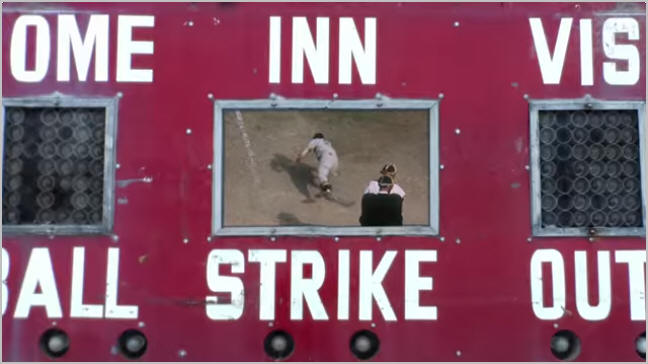 Batting
.
.
Click the link below for the article and video:
.
__________________________________________
September 23, 2021
Business, Finance, Food For Thought, Human Interest, Science, Technical amazon, business, Business News, current-events, Future, Hotels, human-rights, medicine, mental-health, research, Science, Science News, technology, Technology News, travel, vacation Leave a comment

Click the link below the picture
.
America’s roaring real estate boom is leaving millions of would-be homebuyers out in the cold. The problem is most severe in that corner of the market that once propelled the American dream: the small entry-level home.
“I would like to a have a space with a yard, like 900 square feet,” says Mat Pergens, 39, who repairs and installs garage doors in and around Reno, Nev. “Simple cabinets, simple countertops, Shag carpeting. I don’t care. I just want four walls and a roof that I can afford.”
But his aspiration for a modest starter home is completely out of reach. The country is nearly 4 million homes short of demand, according to the mortgage giant Freddie Mac.
Like many American cities, Reno is undergoing a homebuying frenzy, with rapidly escalating prices. Home values in Reno have gone up 27% in the past year. With an influx of affluent Silicon Valley workers driving the market, luxury is trumping affordability.
.

Mat Pergens just wants “four walls and a roof that I can afford” for himself, his wife, his 6-year-old daughter, and his baby on the way. But even that modest of a dream is out of reach these days. Zac Visco for NPR
.
.
Click the link below for the article:
.
__________________________________________
September 23, 2021
Arts, Food For Thought, Human Interest, Medical, missed News, Political, Science, Technical amazon, business, Business News, current-events, Future, Hotels, human-rights, medicine, mental-health, research, Science, Science News, technology, Technology News, travel, vacation Leave a comment
.
.
__________________________________________
Dragoste si lumina
Find the Best Forex Broker for Your Trading Success
AS HUMILDES OPINIÕES DE UMA MULHER DE CORAGEM QUE DIZ SIM À VIDA!
Să facem glume, nu război
In the world, human beings are facing various problems. People who are full of greed, anger, and ignorance are seen to be fighting with each other in words and deeds. As the fighting continues, various problems such as civil wars, wars of aggression, and wars of aggression are occurring. As world peace is being destroyed, humans are facing unbearable problems. Innocent children and women are not getting the rights they deserve and deserve. I can't think of one thing every time. What is it? The United Nations. If we look at the responsibilities and duties of the United Nations, I think it is not suitable for solving the problems that are happening in the world today. In fact, the United Nations and the World Security Council, such an organization must rule the world, must be able to give orders, and must have various ways to obey orders. There must be no organization that can influence more than that organization. There should be experts from each country. They can even dominate the superpowers like the US, China, and Britain. Only then will global peace be achieved quickly. Now, if a country with power develops more militarily, economically, or socially than its own country, then powerful countries will jealously seek out enemies and wage war. Or they will attack with fighter jets. In this, innocent people are losing their lives. No one understands the value of a life. You should think about how to achieve global peace by controlling these. If the US continues to be the permanent president of the UN, world peace will never be achieved. If you think carefully, no one sees that they are working for the common good, but for their own benefit, for the benefit of their own country. The permanent president of the UN and the Security Council has rejected this, As a young Rohingya, I have come to realize that only by electing the president and secretary from among the countries in the world through a secret ballot system and governing the world fairly can we achieve global peace. The United Nations and the Security Council are organizations in which any country must govern, give orders, and make them obey their orders. For example, only when a defendant is tried in court can we hold the leaders of the countries in check and control them, can we achieve global peace smoothly. Otherwise, it will not be easy for powerful countries to use various excuses to end this war every year, every year, for the benefit of themselves and their countries. No country's leaders pay any attention to the words of the United Nations and the Security Council. If we look at it in practice, look at the Rohingya issue. Myanmar is a small country. Even that country has been under siege for 8 years. What action can be taken? Why is the UN and the Security Council Powerless? Without such Power, how can the organization bring about global peace? Everyone should think about it. Whether there is a veto or a strong one, all countries in the world can only achieve global peace if they are subject to the UN and the Security Council. Seek peace in the quiet embrace of nature. Peace is an indispensable need of the human race. It is not as if one person can kill another person, and it is as if one country can attack another country, but instead of trying to build peace, we must try to destroy the peace now, and the world is getting hotter and is on the verge of collapse. I especially appeal to all the world experts to urgently try to bring about peace in all parts of the world. Mr, Noor Muhamed Arkhan Rohingya Youth Myanmar
Publicație umoristică dedicată glumeților de pretutindeni
Faith saved us from the savages that we were, losing faith makes us savages again
Where Trends Meet Truth
https://www.tangietwoods
Freelance poetry writing
Zalai Betti
INOVATION BLOG PEOPLE AND NEWS
Németh György
Konsultan Lingkungan Hidup di Lombok - NTB
Lea Krasznai (LeaArt21) – Idezetek (Idézetek) WordPress (Budapest, Hungary)
Appunti, spunti e passioni in liberta'
Gyorgy Nemeth
تعنى بتقديم نصائح للمعلمين المبتدئين، والطلبة الممتحنين، ومشاركة الاخرين تجربة الادخار في المال، بترشيد الاستهلاك المنزلي، وترتيب البيت، والحفاظ على البيئة، وتشجيع السيارات صديقةالبيئة، والسياحة والاسفار، ونماء رؤوس الاموال، والطب البديل وتشجيع التعليم الرقمي والذكاء الاصطناعي، والعناية بالنحل وتربية الاسماك، والاسثمار في رؤوس الاموال، الزراعة العضوية، والعناية باسنان الرضع، و صحة الحوامل، وتفسير القران
apprendre pour évoluer
Thoughts on books, language, meaning, and the culture around it.
Outdoor Recreation & Adventure in the Great Lakes Region
News, Info, Bio, Articles, Reviews, Lyrics, Technology, Science, Inspiration, Motivation, Philosphy and many more...
Christian Lifestyle Blogger
CEO and president of The Mullins Companies
Two Cultures. One Life. Endless Stories
Real Estate Development Specialist
¡Bienvenido de vuelta viajero!
so looking to the sky ¡ sing and from my heart to YOU ¡ bring...
CEO and Founder of Nsight Health
Catholic News, Prayers, HD Images, Rosary, Music, Videos, Holy Mass, Homily, Saints, Lyrics, Novenas, Retreats, Talks, Devotionals and Many More
Decoding Power. Defying Narratives.
A creative collaboration introducing the art of nature and nature's art.
The Home Of Entertainment News, Reviews and Reactions
•Whenever you are confronted with an opponent, conquer him with love.(Gandhi)
Algotrader at TRADING-CLUBS.COM
Film and Writing Festival for Comedy. Showcasing best of comedy short films at the FEEDBACK Film Festival. Plus, showcasing best of comedy novels, short stories, poems, screenplays (TV, short, feature) at the festival performed by professional actors.
Peace. Tranquility. Insanity.
Take a ride on the wild side
Découvre des musiques prometteuses (principalement) dans la sphère musicale française.
No tiene que Ser una Pesadilla.
Life in Kana-text (er... CONtext)
Where feelings meet metaphors and make questionable choices.

