
.
News You might have missed!
Use your browser or smartphone back arrow (<-) to return to this table for your next selection.
.
__________________________________________
Assorted human interest posts.
October 1, 2021
Crime, Finance, Food For Thought, Human Interest, Medical, missed News, Political, Science, sports, Technical amazon, business, Business News, current-events, Future, Hotels, human-rights, medicine, mental-health, research, Science, Science News, technology, Technology News, travel, vacation Leave a comment
.
.
__________________________________________
September 30, 2021
Business, Food For Thought, Human Interest, Science, Technical amazon, business, Business News, current-events, Future, Hotels, human-rights, medicine, mental-health, research, Science, Science News, technology, Technology News, travel, vacation Leave a comment

Click the link below the picture
.
About 66 million years ago, an estimated 6-mile-wide (9.6 kilometers) object slammed into Earth, triggering a cataclysmic series of events that resulted in the demise of non-avian dinosaurs.
Now, scientists think they know where that object came from.
According to new research, the impact was caused by a giant dark primitive asteroid from the outer reaches of the solar system‘s main asteroid belt, situated between Mars and Jupiter. This region is home to many dark asteroids — space rocks with a chemical makeup that makes them appear darker (reflecting very little light) compared with other types of asteroids.
.
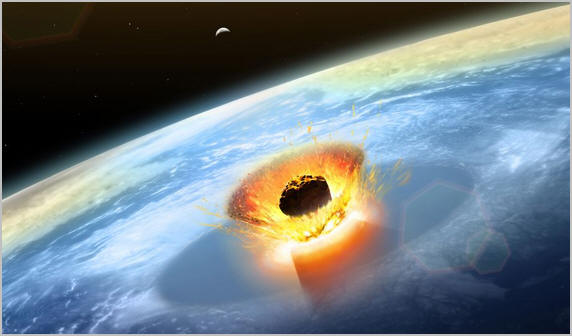
Dinosaur-ending asteroid
.
.
Click the link below for the article:
.
__________________________________________
September 30, 2021
Business, Food For Thought, Human Interest, Science, Technical amazon, business, Business News, current-events, Future, Hotels, human-rights, medicine, mental-health, research, Science, Science News, technology, Technology News, travel, vacation Leave a comment

Click the link below the picture
.
Match the following figures – Albert Einstein, Thomas Edison, Guglielmo Marconi, Alfred Nobel, and Nikola Tesla – with these biographical facts:
- Spoke eight languages
- Produced the first motor that ran on AC current
- Developed the underlying technology for wireless communication over long distances
- Held approximately 300 patents
- Claimed to have developed a “superweapon” that would end all war
The match for each, of course, is Tesla. Surprised? Most people have heard his name, but few know much about his place in modern science and technology.
The 75th anniversary of Tesla’s death on Jan. 7, 2018, provides an opportunity to review the life of a man who came from nowhere yet became world-famous; claimed to be devoted solely to discovery but relished the role of a showman; attracted the attention of many women but never married; and generated ideas that transformed daily life and created multiple fortunes but died nearly penniless.
.

The inventor at rest, with a Tesla coil (thanks to a double exposure). Photo from Dickenson V. Alley, Wellcome Collection, CC BY.
.
.
Click the link below for the article:
.
__________________________________________
September 30, 2021
Arts, Food For Thought, Human Interest, Medical, missed News, Political, Science, sports, Technical amazon, business, Business News, current-events, Future, Hotels, human-rights, medicine, mental-health, research, Science, Science News, technology, Technology News, travel, vacation Leave a comment
.
.
__________________________________________
September 29, 2021
Crime, Finance, Food For Thought, Human Interest, Medical, missed News, Political, Science, sports, Technical amazon, business, Business News, current-events, Future, Hotels, human-rights, medicine, mental-health, research, Science, Science News, technology, Technology News, travel, vacation Leave a comment
.
.
__________________________________________
September 28, 2021
Business, Food For Thought, Human Interest, Science, Technical amazon, business, Business News, current-events, Future, Hotels, human-rights, medicine, mental-health, research, Science, Science News, technology, Technology News, travel, vacation Leave a comment

Click the link below the picture
.
After we got married, my husband would forget … a lot. He’d take out the trash and forget to put a new bag in the bin. He’d jot down a grocery list, hop in his car, and take off … sans grocery list. He’d drop the kids off to school and jet off to work, forgetting to mention that they’d decided to be car riders, not bus riders. These slips drove me bonkers.
To make matters worse, I wasn’t faultless either. I had a habit of overbooking appointments, once even quadruple booking us to be in different places across town in a single afternoon. I was tired of bickering, exhausted of upsetting friends I’d promised to carve time for, and completely over my husband’s and my endless cycle of forgetfulness.
One day, I reached my wit’s end. I’d triple booked, committing to a birthday party, a lunch date with friends, and dinner at my mom’s all without realizing until the day of. By the time we arrived at my mom’s, we learned she’d left on a grocery run and locked her keys inside the home. Even better, my husband’s forgetfulness kicked in. He reassured her he had her spare set stowed in our glove compartment, but after scouring the car in a frenzy, muttering he knew they were there somewhere, he turned up empty-handed. In the end, I jumped the fence and learned how to jimmy open a window, tearing my favorite skirt in the process.
By the time we made it home, we fell into bed exhausted by the spectacle that had become our lives. I began wondering if, in this age of technology, there was a magical app for couples like us who had trouble keeping our heads on straight. Full disclaimer: I get that “there’s an app for that,” and there are people for that app—I’m just not one of them. (I still use the browser version of YouTube on my phone!) However, users downloaded over 36 billion apps from Google Play and the Apple App Store combined in just the first quarter of 2021. And I was about to become one of them.
After a bit of research, I found a few apps that let every family member (and even babysitters) with a smartphone keep in sync with one another.
.
 Photograph: Getty Images
.
.
Click the link below for the article:
.
__________________________________________
September 28, 2021
Business, Food For Thought, Human Interest, Science, Technical amazon, business, Business News, current-events, Future, Hotels, human-rights, medicine, mental-health, research, Science, Science News, technology, Technology News, travel, vacation Leave a comment

Click the link below the picture
.
Emergencies often are unpredictable. But you can still plan for them.
During this week alone, millions of people across the country experienced catastrophic emergencies. Hurricane Ida left millions of Louisiana residents without power or without access to food and water. Flash floods in New Jersey and New York caught many people off guard. Near Lake Tahoe, some residents evacuated in less than an hour after an evacuation order as fires threatened their homes. In August, flash floods ravaged Central Tennessee, and earlier this year, millions of people in Texas were left without electricity and water following a winter storm.
Unfortunately, climate scientists now warn that weather emergencies like these may be the new normal, as global warming leads to heavier rains, stronger hurricanes, more tornadoes, and bigger wildfires. The average number of climate- and weather-related disasters per decade has increased nearly 35 percent since the 1990s, according to the World Disasters Report.
.
 Credit…Eden Weingart
.
.
Click the link below for the article:
.
__________________________________________
September 28, 2021
Arts, Crime, Food For Thought, Human Interest, Medical, missed News, Science, sports, Technical amazon, business, Business News, current-events, Future, Hotels, human-rights, medicine, mental-health, research, Science, Science News, technology, Technology News, travel, vacation Leave a comment
.
.
__________________________________________
September 27, 2021
Business, Food For Thought, Human Interest, Science, Technical amazon, business, Business News, current-events, Future, Hotels, human-rights, medicine, mental-health, research, Science, Science News, technology, Technology News, travel, vacation Leave a comment

Click the link below the picture
.
The year was 1993 and, aged 16, I was about to sit my Geography GCSE exam. This was an ‘old school’ style public examination, held in the school’s gymnasium. A stifling odor of floor wax and dust hung heavy in the air. Victorian-era single desks featuring ink wells that had been utterly redundant for about three generations were arranged into rows with unerring precision. The silence was so unnatural and oppressive, it seemed to have a tangible density.
Nonetheless, I had crammed for this exam like a champion and was feeling confident. I took a deep breath, opened my examination booklet, and glanced over the first page of questions. A gut-wrenching realization quickly dawned on me, captured perfectly by a single piece of graffiti etched into the haggard surface of my desk. It read: ‘Oh Sh*t! There goes college, 1992.’
Clearly, I hadn’t been the only one whose confidence in their exam preparation was misplaced. However, it wouldn’t be until I started teaching psychology some 12 years later that I fully understood why. Here’s the bad news: research from psychology indicates that our ability to accurately monitor and evaluate our level of knowledge or skill (referred to as metacognitive ability) is often flawed. These flaws tend to give us an inflated perception of our knowledge and understanding, encouraging us to persevere with ineffective methods of studying that quietly, but persistently, undermine our efforts to learn. It’s easy to demonstrate this by examining some preferred study practices and considering the misconceptions about learning that they reflect. Let’s kick off things by looking at that perennial favorite: cramming.
.
 Photo by Piotr Malecki/Panos Pictures
.
.
Click the link below for the article:
.
__________________________________________
September 27, 2021
Business, Crime, Food For Thought, Human Interest, missed News, Political, Science, Technical amazon, business, Business News, current-events, Future, Hotels, human-rights, medicine, mental-health, research, Science, Science News, technology, Technology News, travel, vacation Leave a comment
.
.
__________________________________________
Dragoste si lumina
Find the Best Forex Broker for Your Trading Success
AS HUMILDES OPINIÕES DE UMA MULHER DE CORAGEM QUE DIZ SIM À VIDA!
Să facem glume, nu război
In the world, human beings are facing various problems. People who are full of greed, anger, and ignorance are seen to be fighting with each other in words and deeds. As the fighting continues, various problems such as civil wars, wars of aggression, and wars of aggression are occurring. As world peace is being destroyed, humans are facing unbearable problems. Innocent children and women are not getting the rights they deserve and deserve. I can't think of one thing every time. What is it? The United Nations. If we look at the responsibilities and duties of the United Nations, I think it is not suitable for solving the problems that are happening in the world today. In fact, the United Nations and the World Security Council, such an organization must rule the world, must be able to give orders, and must have various ways to obey orders. There must be no organization that can influence more than that organization. There should be experts from each country. They can even dominate the superpowers like the US, China, and Britain. Only then will global peace be achieved quickly. Now, if a country with power develops more militarily, economically, or socially than its own country, then powerful countries will jealously seek out enemies and wage war. Or they will attack with fighter jets. In this, innocent people are losing their lives. No one understands the value of a life. You should think about how to achieve global peace by controlling these. If the US continues to be the permanent president of the UN, world peace will never be achieved. If you think carefully, no one sees that they are working for the common good, but for their own benefit, for the benefit of their own country. The permanent president of the UN and the Security Council has rejected this, As a young Rohingya, I have come to realize that only by electing the president and secretary from among the countries in the world through a secret ballot system and governing the world fairly can we achieve global peace. The United Nations and the Security Council are organizations in which any country must govern, give orders, and make them obey their orders. For example, only when a defendant is tried in court can we hold the leaders of the countries in check and control them, can we achieve global peace smoothly. Otherwise, it will not be easy for powerful countries to use various excuses to end this war every year, every year, for the benefit of themselves and their countries. No country's leaders pay any attention to the words of the United Nations and the Security Council. If we look at it in practice, look at the Rohingya issue. Myanmar is a small country. Even that country has been under siege for 8 years. What action can be taken? Why is the UN and the Security Council Powerless? Without such Power, how can the organization bring about global peace? Everyone should think about it. Whether there is a veto or a strong one, all countries in the world can only achieve global peace if they are subject to the UN and the Security Council. Seek peace in the quiet embrace of nature. Peace is an indispensable need of the human race. It is not as if one person can kill another person, and it is as if one country can attack another country, but instead of trying to build peace, we must try to destroy the peace now, and the world is getting hotter and is on the verge of collapse. I especially appeal to all the world experts to urgently try to bring about peace in all parts of the world. Mr, Noor Muhamed Arkhan Rohingya Youth Myanmar
Publicație umoristică dedicată glumeților de pretutindeni
Faith saved us from the savages that we were, losing faith makes us savages again
Where Trends Meet Truth
https://www.tangietwoods
Freelance poetry writing
Zalai Betti
INOVATION BLOG PEOPLE AND NEWS
Németh György
Konsultan Lingkungan Hidup di Lombok - NTB
Lea Krasznai (LeaArt21) – Idezetek (Idézetek) WordPress (Budapest, Hungary)
Appunti, spunti e passioni in liberta'
Gyorgy Nemeth
تعنى بتقديم نصائح للمعلمين المبتدئين، والطلبة الممتحنين، ومشاركة الاخرين تجربة الادخار في المال، بترشيد الاستهلاك المنزلي، وترتيب البيت، والحفاظ على البيئة، وتشجيع السيارات صديقةالبيئة، والسياحة والاسفار، ونماء رؤوس الاموال، والطب البديل وتشجيع التعليم الرقمي والذكاء الاصطناعي، والعناية بالنحل وتربية الاسماك، والاسثمار في رؤوس الاموال، الزراعة العضوية، والعناية باسنان الرضع، و صحة الحوامل، وتفسير القران
apprendre pour évoluer
Thoughts on books, language, meaning, and the culture around it.
Outdoor Recreation & Adventure in the Great Lakes Region
News, Info, Bio, Articles, Reviews, Lyrics, Technology, Science, Inspiration, Motivation, Philosphy and many more...
Christian Lifestyle Blogger
CEO and president of The Mullins Companies
Two Cultures. One Life. Endless Stories
Real Estate Development Specialist
¡Bienvenido de vuelta viajero!
so looking to the sky ¡ sing and from my heart to YOU ¡ bring...
CEO and Founder of Nsight Health
Catholic News, Prayers, HD Images, Rosary, Music, Videos, Holy Mass, Homily, Saints, Lyrics, Novenas, Retreats, Talks, Devotionals and Many More
Decoding Power. Defying Narratives.
A creative collaboration introducing the art of nature and nature's art.
The Home Of Entertainment News, Reviews and Reactions
•Whenever you are confronted with an opponent, conquer him with love.(Gandhi)
Algotrader at TRADING-CLUBS.COM
Film and Writing Festival for Comedy. Showcasing best of comedy short films at the FEEDBACK Film Festival. Plus, showcasing best of comedy novels, short stories, poems, screenplays (TV, short, feature) at the festival performed by professional actors.
Peace. Tranquility. Insanity.
Take a ride on the wild side
Découvre des musiques prometteuses (principalement) dans la sphère musicale française.
No tiene que Ser una Pesadilla.
Life in Kana-text (er... CONtext)
Where feelings meet metaphors and make questionable choices.

